


Brass Bound Cistern
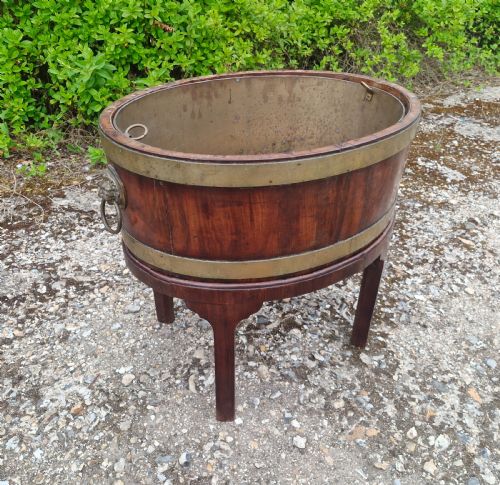
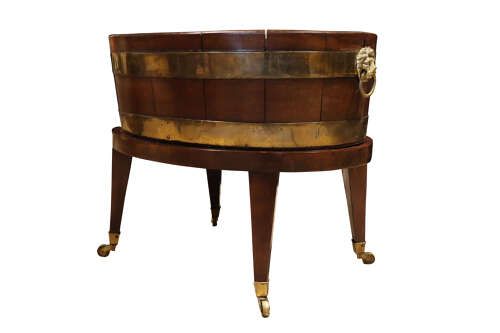
A brass bound cistern is a substantial vessel designed for chilling wine or holding plants, defined by timber staves and heavy metal bands.
Brass Bound Cistern
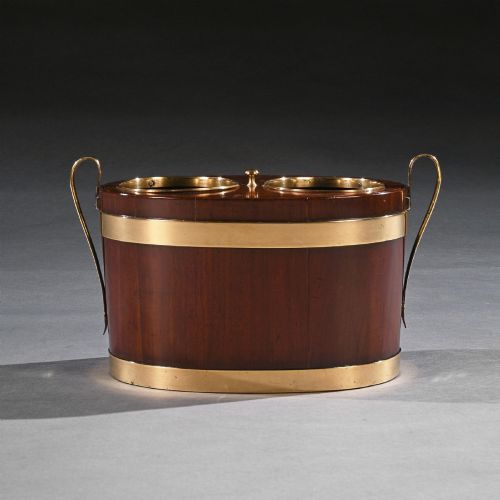
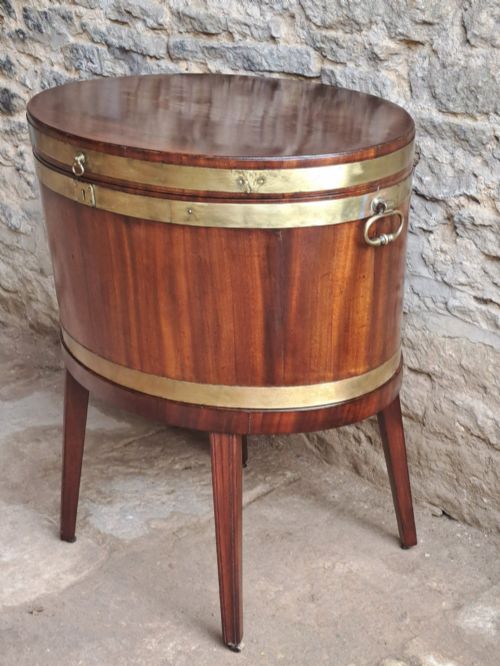
When you examine a brass bound cistern, you are looking at heavy timber vessels that served dining rooms from the eighteenth century onwards. The examples gathered here span George II, George III, Regency, and Victorian periods, alongside later revivals.
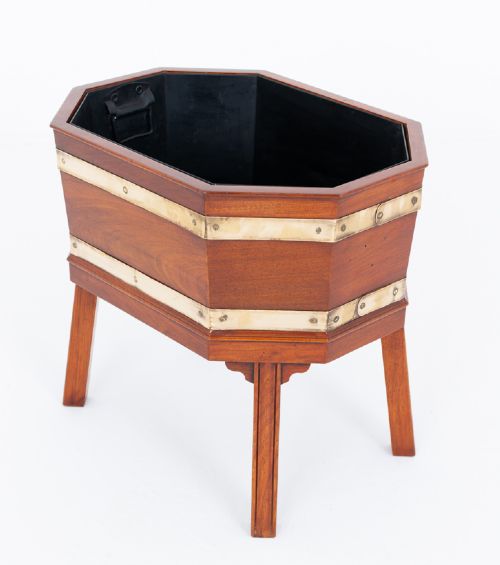
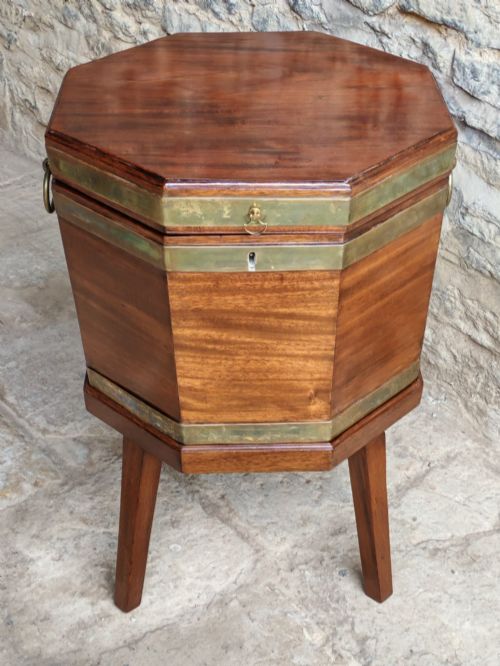
You will most commonly meet mahogany wine coolers and cellarettes, often shaped as ovals or octagons with tight coopered staves. Many rest upon distinct original stands or function as plant jardinieres.
The selection ranges from early Georgian forms through to nineteenth-century copper and brass water barrels and later twentieth-century interpretations.
Materials and construction
The foundation of these pieces relies upon cabinet making and cooperage, predominantly utilising solid mahogany or walnut staves assembled to hold liquid or earth. Metal bands in brass and copper encircle the timber, secured tightly to maintain structural integrity.
Interiors often incorporate zinc linings to protect the wood from moisture during use as a wine cooler or planter, sometimes supplemented by boxwood inlay on the exterior surfaces.
Listings feature mahogany, walnut, copper, and zinc across eighteenth and nineteenth-century periods.
Judging execution
Quality rests upon the precision of the cooperage and the richness of the timber grain, where tight joints and substantial brass work indicate superior workshop production. Pieces retaining their original matching stands demonstrate greater integrity than those altered over time.
The refinement of details such as brass handles, escutcheons, and inlaid boxwood stringing separates utilitarian vessels from high-status dining room furnishings.
Samual Norman
The Brass Bound Cistern Glossary
- Coopered
- Made by a cooper using curved wooden staves bound together with metal hoops. This technique ensures watertight construction for vessels holding ice or wine.
- Cellarette
- A lockable container used for storing bottles of wine beneath the dining room sideboard. They frequently share the brass-bound construction seen in larger cisterns.
- Jardiniere
- An ornamental pot or stand designed to hold plants or flowers. Many surviving wine coolers were later adapted for this domestic purpose.
- Escutcheon
- A protective plate surrounding a keyhole or serving as a decorative mount for drop handles. On these pieces, brass mounts often match the structural bands.
Brass Bound Cistern: Frequently Asked Questions
What is a brass bound cistern?
A brass bound cistern is a coopered wooden vessel traditionally utilised for chilling wine with ice or serving as an indoor planter.
These items date predominantly from the Georgian and Victorian eras, constructed with structural metal bands around mahogany or walnut staves.
How do I use one today?
Modern interiors utilise these vessels as wine buckets during dining, floor-standing plant holders, or magazine repositories.
Their substantial timber forms and metal bands suit both traditional rooms and contemporary spaces needing textured storage.
How can I tell the period?
Dating relies upon timber choice, joinery techniques, and the profile of the brass banding and accompanying stands.
Eighteenth-century examples display distinct Georgian proportions and hand-beaten metalwork, while later Victorian and revival pieces show different secondary woods.
Why do some have stands?
Original stands elevate the vessel to a comfortable height beside the dining table for serving bottled beverages.
Many pieces survive detached from their bases or were constructed as low floor-standing open buckets.