




Brass Bound Barrel Stand
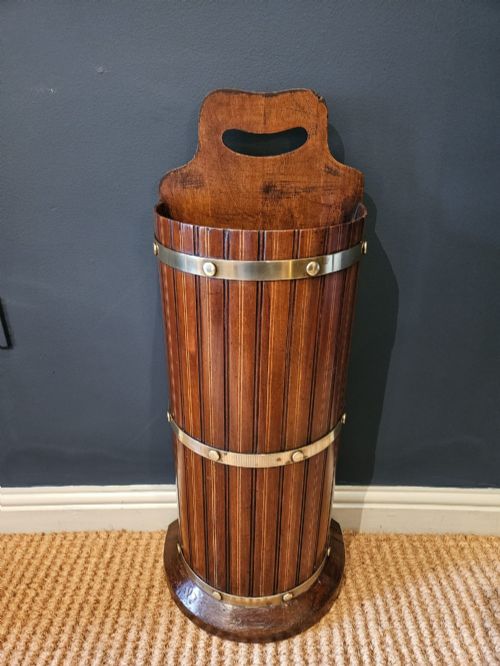
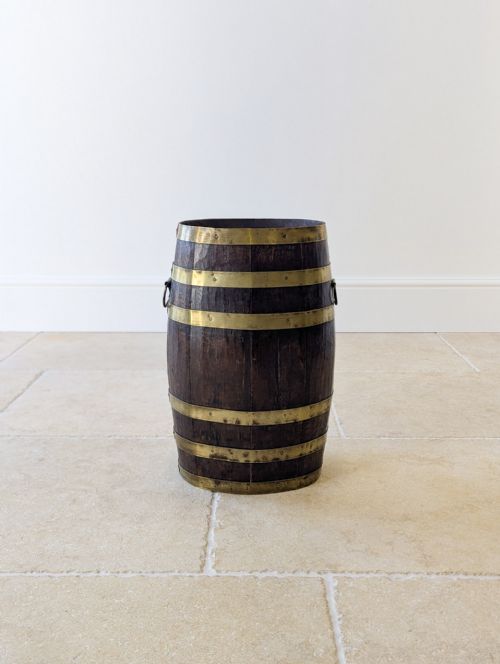
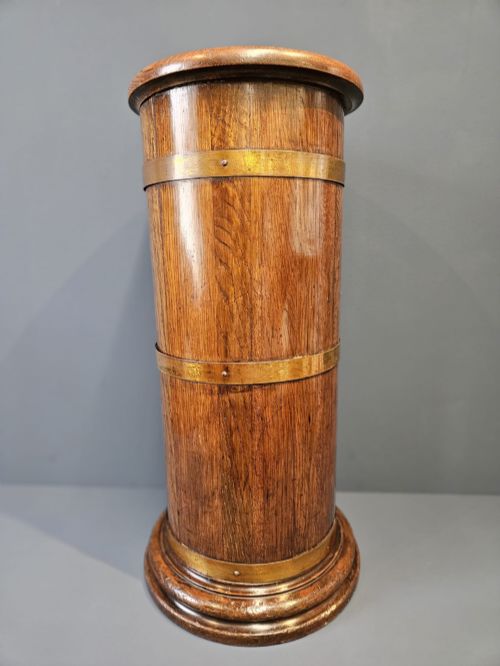
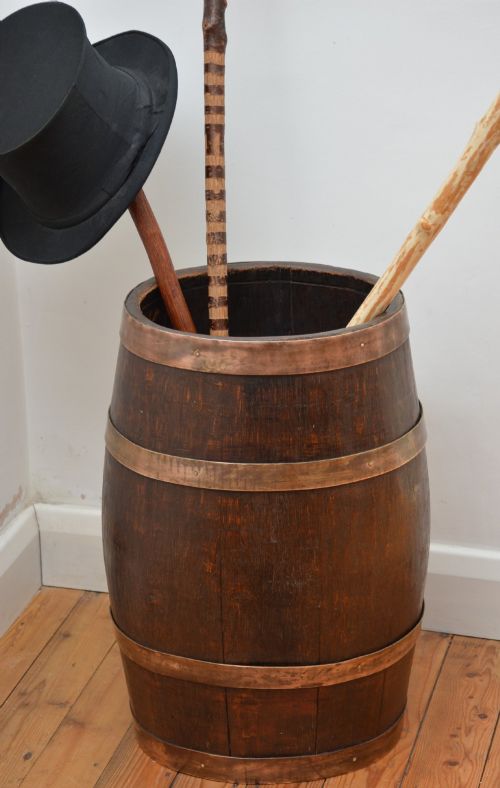
A brass bound barrel stand brings robust utility and timber warmth to an entrance, turning coopered staves and metal bands into a practical holder for walking sticks and umbrellas.
Brass Bound Barrel Stand
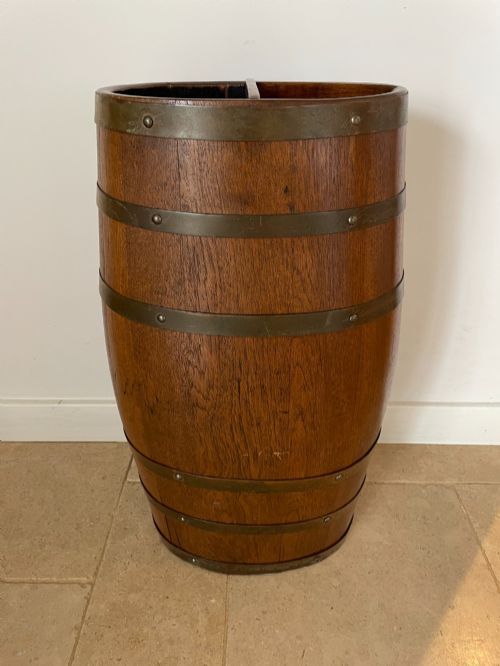
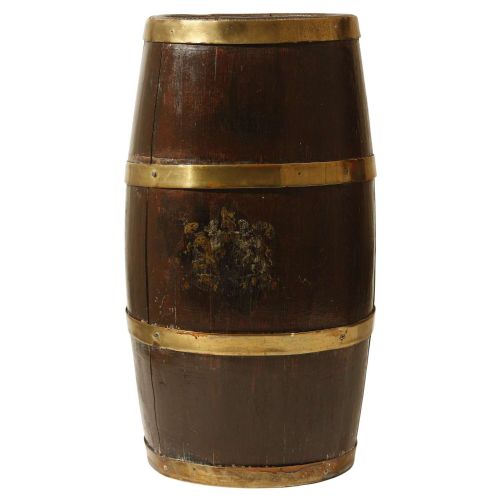
A brass bound barrel stand is a coopered vessel designed for holding walking sticks and umbrellas, constructed from vertical staves and secured with metal hoops. The examples appearing across these listings draw largely from the Victorian and Edwardian periods, stretching from the nineteenth century into the early twentieth century.
Most pieces seen here utilise oak or mahogany, fashioned into round or oval bodies that reflect traditional cask-making techniques. Alongside standard stick and umbrella stands, the search phrase encompasses related forms such as coopered plant stands, jardiniere stands, and water barrels.
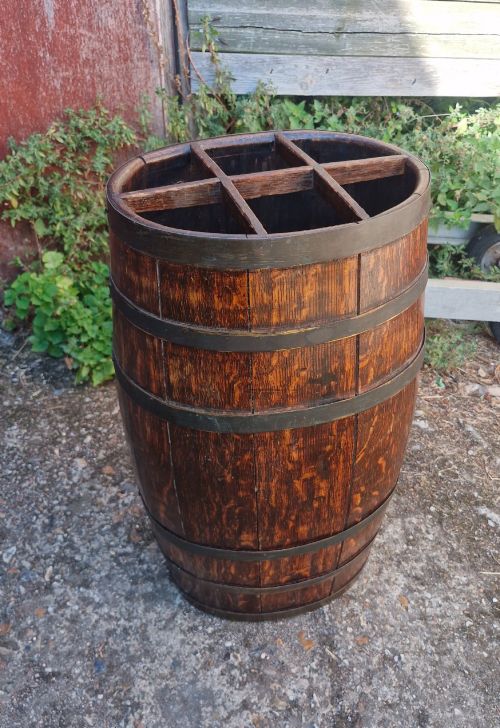
The prevailing style is English country or domestic vernacular, though occasional variants include Arts and Crafts designs or Black Forest stands. Buyers meet both straightforward cylindrical barrels and oval shapes fitted with internal divisions or umbrella loops.
Materials and construction methods
Construction relies on cooperage, where shaped timber staves are fitted together tightly without glue to form a self-supporting cylinder or oval vessel. Hardwoods such as oak and mahogany provide the structural body, selected for their grain and durability in daily domestic service.
Metal components typically consist of brass or copper bands, which are driven onto the wooden staves to hold the assembly under constant tension. Additional elements include metal braces, applied coats of arms, and fitted stands that elevate the barrel from the floor.
Listed items span from 1800 through the Edwardian era, incorporating oak, mahogany, copper, and painted finishes.
Distinguishing quality in coopered vessels
Quality rests heavily on the precision of the cooperage and the selection of the timber, where tight stave joints and well-figured oak grain elevate a piece above utilitarian workshop output. The weight and gauge of the brass bands also matter, as heavier, securely pinned hoops demonstrate superior craftsmanship compared to thin, stamped metal replacements.
The integrity of the internal structure and the presence of original stands or specialised mounts define the better examples. Pieces that retain their original oval form, defining umbrella loops, or distinct secondary supports like Black Forest frames command greater interest than plain, heavily restored cylinders.
Lister and Co·R.A. Lister
The Brass Bound Barrel Stand Glossary
- Coopered
- Made by a cooper using curved wooden staves bound together with metal hoops to form a watertight or hollow vessel. This traditional method forms the structural basis of every barrel stand.
- Staves
- The narrow, tapered strips of oak, mahogany, or hardwood that are edge-joined to create the curved body of a barrel. Their precise bevelling determines the final shape of the stand.
- Jardiniere
- An ornamental pot or stand designed to hold growing plants or flowers. In these listings, coopered versions often share identical construction methods with umbrella stands.
- Black Forest
- A nineteenth-century style of carved wooden woodwork originating in Central Europe, known for naturalistic motifs and animal carvings. Stands in this style feature decorative supports beneath the barrel.
Brass Bound Barrel Stand: Frequently Asked Questions
What is a brass bound barrel stand used for?
These pieces function primarily as hallway holders for walking sticks, parasols, and umbrellas, keeping wet items contained and organised.
Alternative forms identified in the records also serve as planters or decorative jardiniere stands within domestic interiors.
How do I tell Victorian stands from Edwardian ones?
Victorian examples tend to feature heavy oak construction with dark patination and traditional coopered body lines dating back through the nineteenth century.
Edwardian pieces often display cleaner interior arrangements or specific maker stamps, aligning with the output of early twentieth-century workshops.
Are all these stands made of oak?
Oak is the predominant timber seen across the listings, valued for its strength and traditional use in cooperage.
Mahogany and general hardwoods also appear, alongside occasional copper bodies paired with brass bands.
Where should I place a barrel stand at home?
Entrances, hallways, and boot rooms suit these stands best, providing immediate access for wet umbrellas and walking sticks upon entering the house.
Planter variants find a natural home in living spaces or conservatories to display potted greenery.