




Brass Bottle Stand
A brass bottle stand is a sturdy piece designed to hold vessels securely, combining practical utility with period craftsmanship.

Brass Bottle Stand
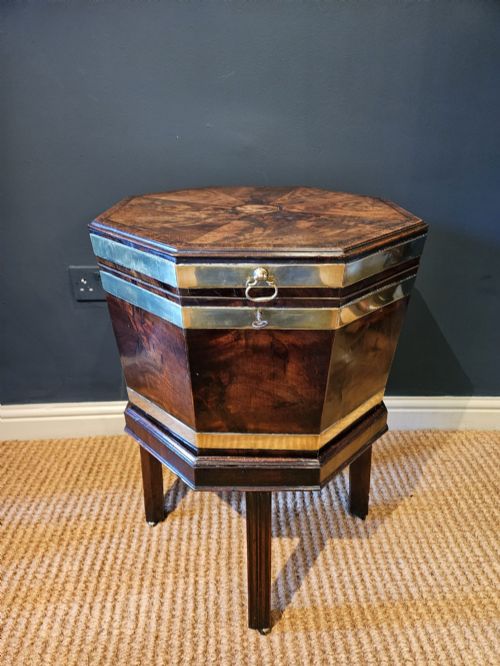
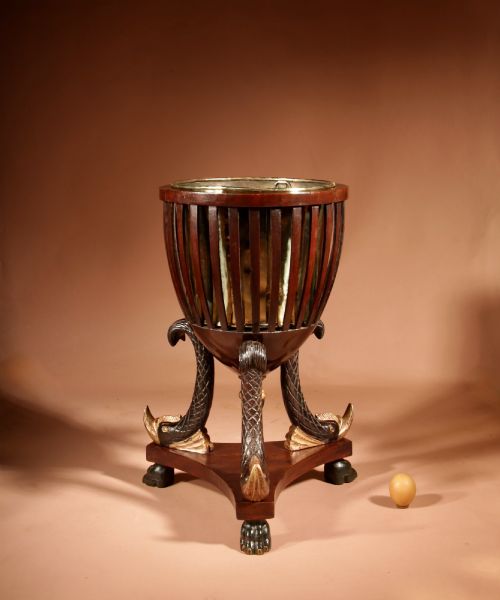
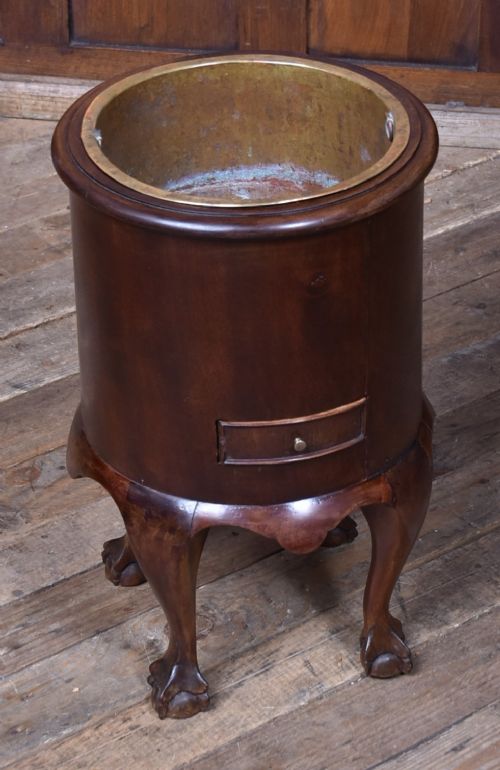
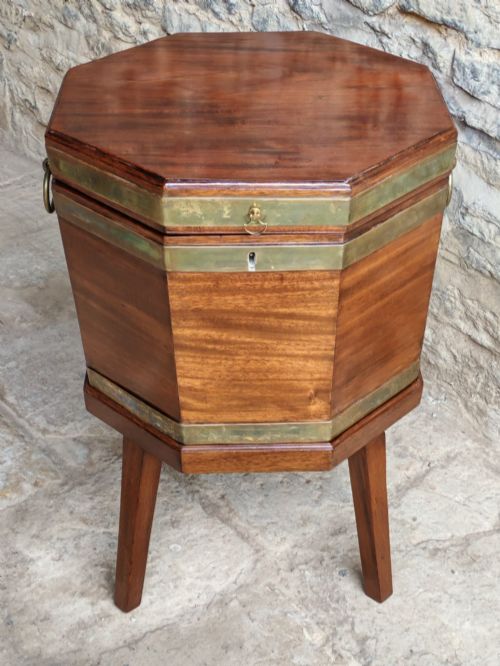
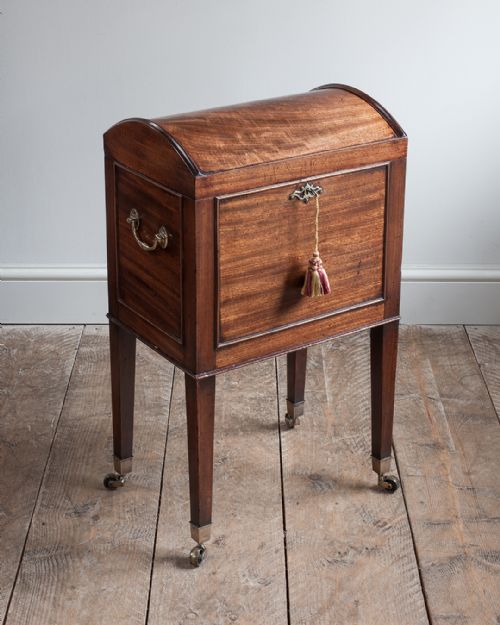
When you search for a brass bottle stand, you encounter pieces designed to hold bottles, decanters, or inkwells securely. The selection on this page largely spans wine coolers, cellarettes, and tantalus stands from the eighteenth century onwards.
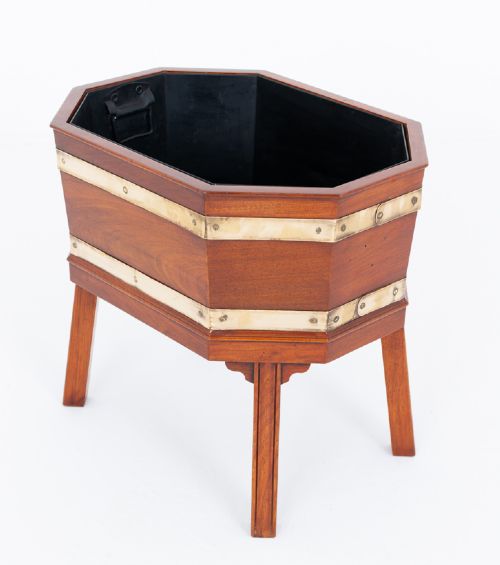
You are most likely to meet mahogany wine coolers and cellarettes bound in brass, alongside oak, walnut, and tole ware variations. These items originated to serve dining and study rooms in Georgian and Victorian households.
The objects range from open oval champagne buckets to compartmented tantalus frames fitted with glass bottles. Each iteration reflects the specific domestic requirements of its period, whether for dining room hospitality or desk organisation.
How they were made
Cabinet makers constructed the bodies primarily from dense timbers such as mahogany, oak, padouk, and walnut, frequently shaping them into octagonal or oval forms. Metal components like brass bands, rims, and mounts were then fitted to reinforce the timber structures and secure the contents.
Cut glass and zinc liners were integrated into the wooden frames to hold liquids safely without damaging the wood. Artisans also utilised ebonised wood, papier mache, and tole to create varied exterior surfaces, applying brass handles and bottle holders as functional decoration.
Listings span multiple eras from the mid-eighteenth century through the Georgian and Victorian periods up to the 1930s.
What varies in quality
Superior execution shows in the depth of the timber patina and the matching of grain across octagonal or oval forms. The presence of original fitted glass bottles, intact liners, and well-cast hardware elevates a piece above standard domestic utilitarian ware.
James Cartland and Sons
The Brass Bottle Stand Glossary
- Cellarette
- A lockable container used for storing wine bottles in the dining room. They often sat beneath the sideboard and were frequently bound in brass.
- Tantalus
- A wooden stand that holds decanters behind a locking metal bar. This allowed hosts to display their spirits while preventing unauthorised access by staff.
- Tole
- Painted or enamelled sheet metal used for decorative domestic items. It appears on grocery hoppers and bottle holders from the nineteenth century.
- Jardiniere
- An ornamental stand or pot for holding plants or flowers. Several examples double as open wine coolers or bottle stands.
- Padouk
- A heavy, durable tropical hardwood with a reddish tint. It was used in eighteenth-century Anglo-Indian cabinet making.
Brass Bottle Stand: Frequently Asked Questions
What is a brass bottle stand?
A brass bottle stand is a container or frame reinforced with metal, designed to hold wine bottles, decanters, or inkwells safely.
These pieces range from eighteenth-century mahogany cellarettes to nineteenth-century tantalus frames and tole ware holders.
How were these stands used?
They were used in dining rooms and studies to keep bottles upright, cool, or locked away from domestic staff.
Wine coolers held ice and bottles during meals, while inkstands and tantalus frames organised desks and sideboards.
What materials are common?
The primary materials are solid timber such as mahogany, oak, and walnut, combined with brass bands and mounts.
Many examples also include cut glass bottles, zinc liners, and papier mache elements depending on the period.
How do I date a piece?
Dating relies on the joinery, timber selection, and prevailing style, such as Georgian proportions or Victorian oak carving.
Makers often used brass binding techniques and hardware styles that shifted from the eighteenth century into the 1900s.
Can I use them today?
Yes, many collectors use antique wine coolers and tantalus stands for their original purpose of holding bottles.
They also function as decorative plant stands, jardiniere displays, or desk tidies in modern interiors.