





Vintage Brass Bottle Stand
A vintage brass bottle stand brings heavy metalwork and timber together to hold your wine, spirits, or ink.

Vintage Brass Bottle Stand
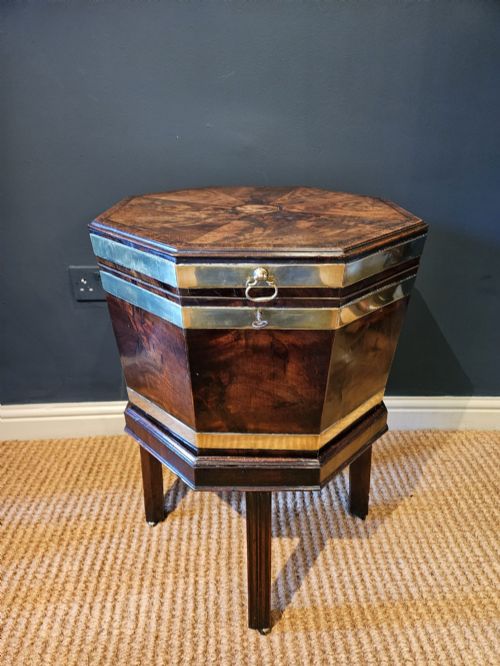
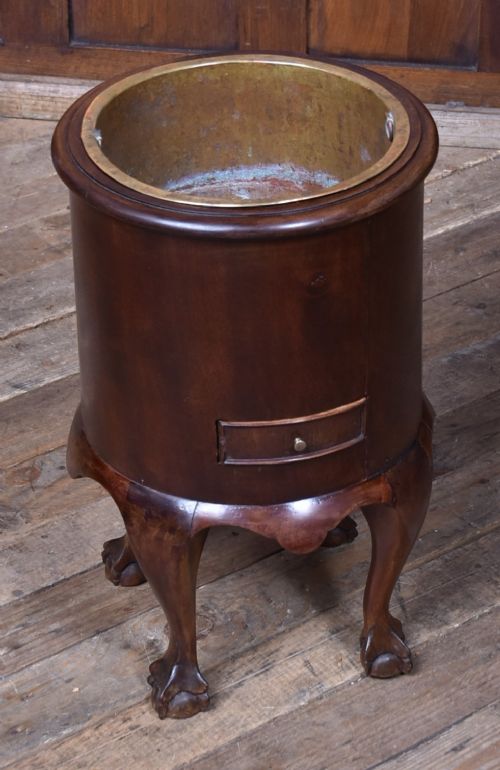
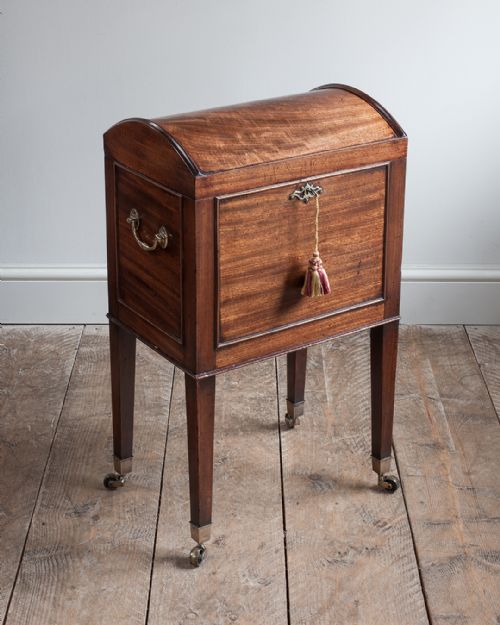
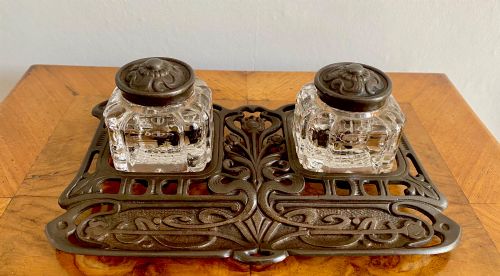
When you search for a vintage brass bottle stand, you are looking at items primarily made for holding wine, spirits, or ink. The examples on this page span several centuries, reaching back through the Georgian and Victorian periods into the twentieth century. These pieces serve as functional drink or desk containers, often combining metal mounts with wooden bodies.
The most common forms you will encounter here include wine coolers, cellarettes, and tantalus sets, alongside occasional desk accessories and jardiniere stands. Materials range from solid mahogany and oak to padouk, paired with extensive brass bands, rims, and mountings. Styles stretch from restrained eighteenth-century designs to ornate Victorian craftsmanship and later Art Nouveau or Art Deco pieces.
How they were made
Maker workshops built these stands using durable hardwoods such as mahogany, oak, and padouk, selected for their strength and rich grain. These wooden bodies were then reinforced and decorated with heavy brass mounts, rims, and bound edges to secure the bottles within. Cut glass and mirror glass components frequently appear inside or alongside the metal and wood structures.
Joinery methods varied according to the period, employing tight dovetails and secure framing to hold the weight of dense liquids and glass containers. Metalworkers shaped brass through casting and hammering, attaching handles and locks that could endure regular handling in dining rooms and studies.
Some nineteenth-century hosts locked their liquor in a tantalus specifically to stop thirsty footmen from sampling the household port.
What varies in quality
Quality in these pieces rests upon the weight and purity of the brass used for the bindings, handles, and mounts. Thicker gauge metalwork that sits flush against the timber demonstrates superior construction compared to thin, stamped brass alternatives.
The selection of the timber also dictates the standard of the piece, with finely figured mahogany or padouk showing greater care from the cabinetmaker. Original components, such as matching cut glass bottles or intact inkwells, elevate the integrity of the stand.
James Cartland & Sons
The Vintage Brass Bottle Stand Glossary
- Cellarette
- A lockable container designed to hold wine bottles securely near the dining table. They frequently feature internal divisions and robust brass carrying handles.
- Tantalus
- A wooden stand holding decanters visible behind a locking metal bar that prevents access without a key. They gained popularity during the Victorian era for locking away spirits.
- Jardiniere
- An ornamental stand or pot, often lined with metal, intended to hold plants or flowers. In this selection, some items serve a dual purpose as bottle holders or ice containers.
- Padouk
- A dense tropical hardwood with a distinctive reddish-brown colour used in fine cabinetmaking. It provides a durable and stable structure for antique bottle holders.
- Tole
- Painted or enamelled sheet metal used for decorative household objects. Grocery hoppers and bottle holders sometimes incorporate tole elements alongside brass rims.
Vintage Brass Bottle Stand: Frequently Asked Questions
What is a tantalus?
A tantalus is a lockable stand that holds decanters behind a metal bar, keeping spirits secure while keeping them visible. The design prevents guests or servants from helping themselves to the contents.
Most examples use a wooden frame fitted with brass locking mechanisms and matching glass bottles. They became common in the nineteenth century for use in studies and drawing rooms.
How were cellarettes used?
Cellarettes stood beneath the dining table or beside the sideboard to store wine bottles before meals. Servants would retrieve bottles from the container as needed throughout the dinner.
Inside, these pieces often feature lined compartments or brass-bound wooden dividers to keep heavy glass bottles from striking one another.
Are ink stands different from wine stands?
Ink stands and bottle coolers both combine brass and glass, but their internal fittings serve entirely different functions. Ink stands hold small glass inkwells for writing desks rather than large beverage bottles.
Desk accessories from the period often incorporate matching brass trays and pen rests into a compact wooden or metal base.
How do I date an oak tantalus?
Dating an oak tantalus involves examining the style of the brass mounts, the type of lock mechanism, and the cut of the wood. Victorian examples often display heavier, more ornate brasswork than later twentieth-century versions.
Construction details, such as machine-cut screws versus hand-turned fixings, help narrow down the decade of manufacture.