

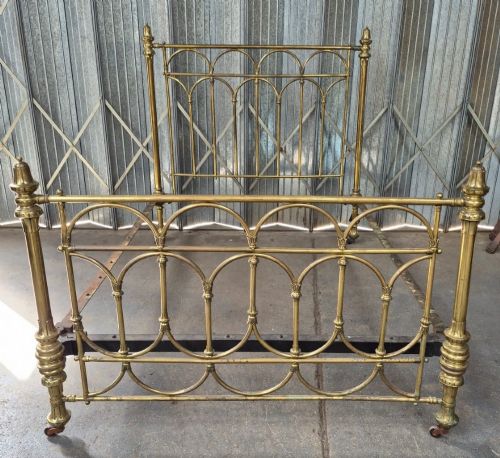


Brass Bed Headboard Footboard
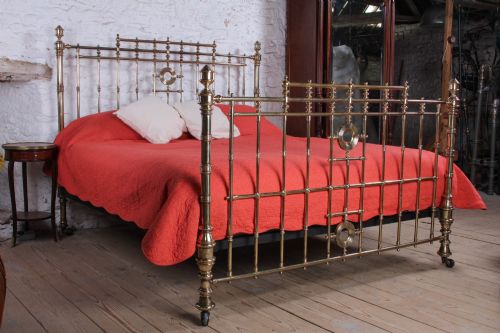
These brass bed headboard footboard assemblies bring substantial Victorian presence and warm metallic character to a bedroom.
Brass Bed Headboard Footboard
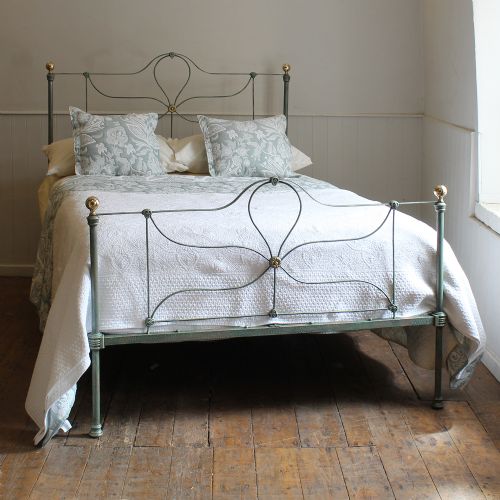
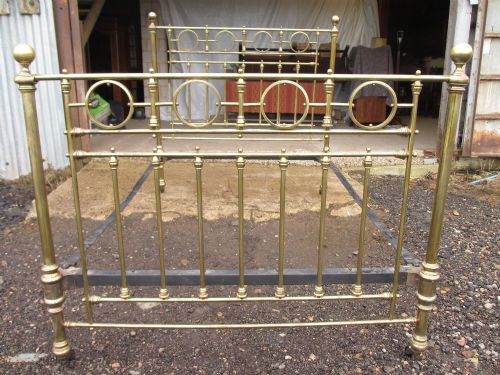
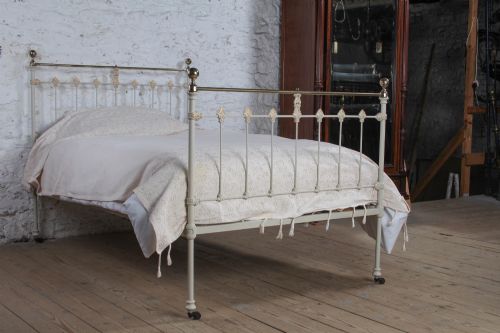
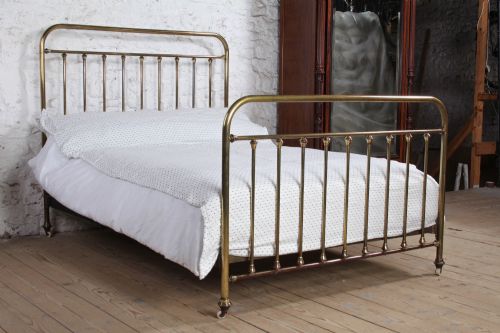
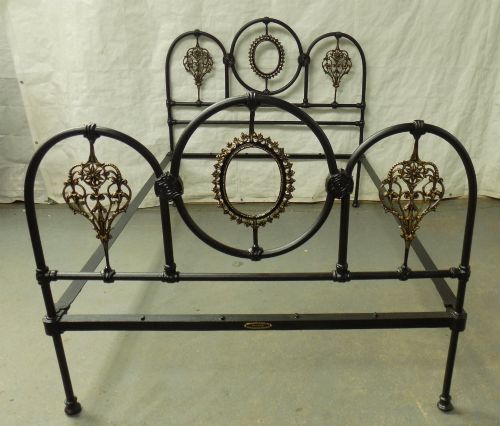
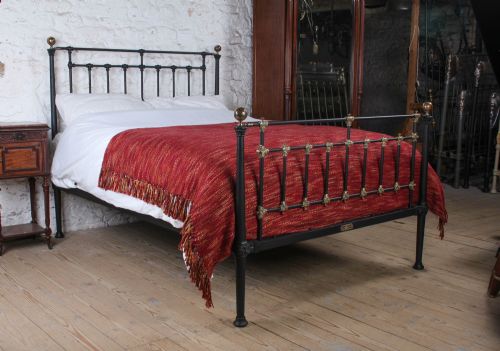
When searching for a brass bed headboard footboard, you are looking at substantial antique bed frames from the Victorian, Edwardian, and early twentieth-century periods. The examples found here span single, double, queen, king, and super king sizes, with many retaining their original iron side rails and castors.
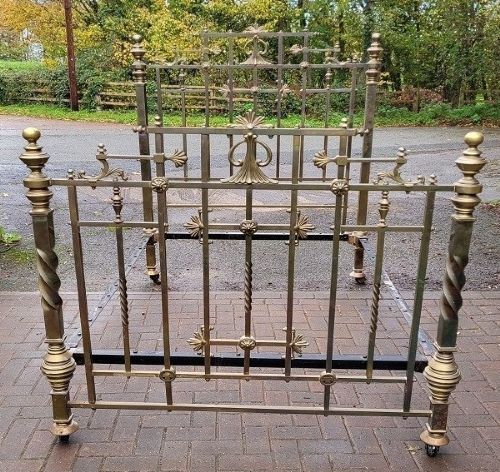
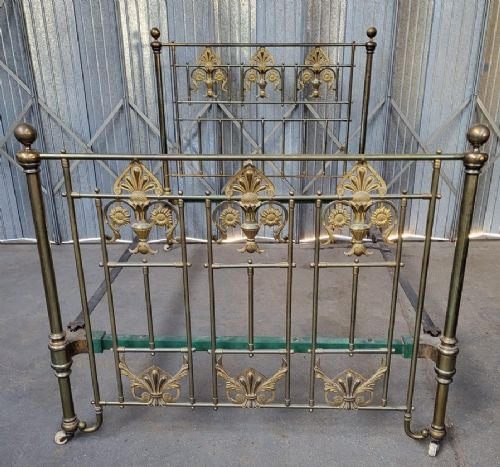
You will most frequently encounter Victorian brass and iron combinations alongside all-brass constructions from around eighteen-eighty to nineteen-ten. These range from simple straight rail designs to ornate Gothic Revival and Arts and Crafts styles.
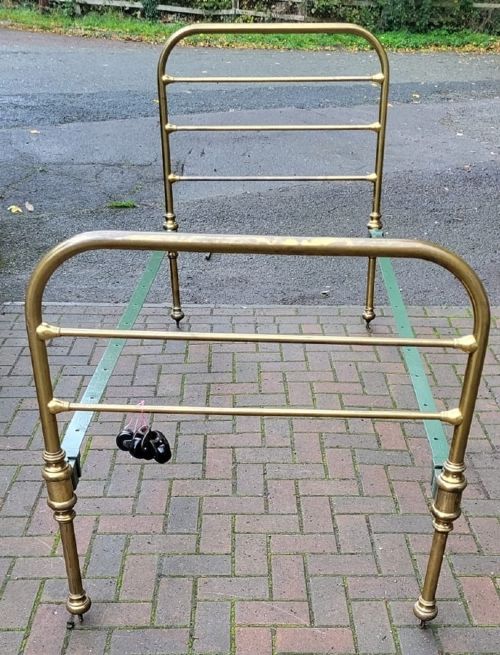
The selection includes French simple styles and hospital-style no-end beds alongside grand half tester and exhibition quality pieces. Each configuration offers a distinct architectural silhouette suited to traditional and contemporary interiors alike.
Construction materials and techniques
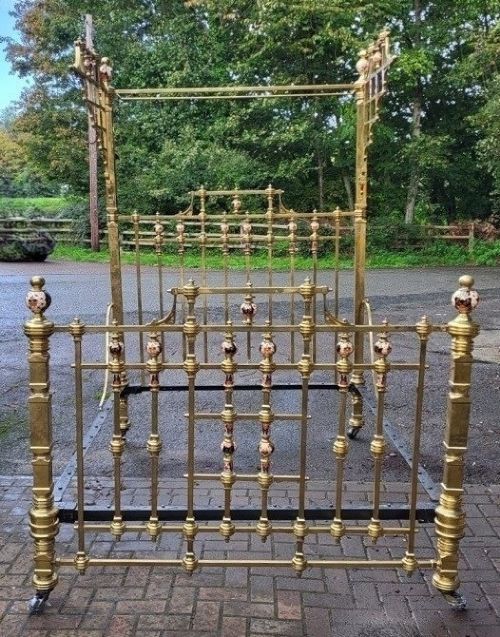
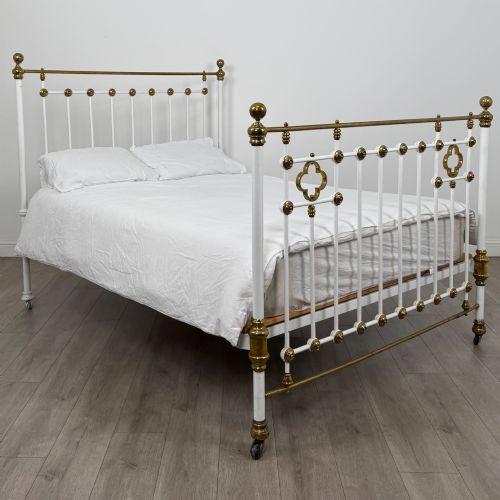
The primary structure typically combines heavy cast or wrought iron frames with polished brass tubing and decorative brass castings. Makers utilised metal casting and tubular rolling techniques to achieve both structural rigidity and elaborate ornamentation.
Many frames incorporate integral iron slot-in side rails supported by original castors for mobility. Detail work often includes applied ceramic components, maple wood accents, and tapered posts secured by traditional mechanical joints.
Listings feature brass and iron beds spanning from eighteen-sixty to nineteen-ten, encompassing Victorian, Edwardian, and French Provincial design traditions.
Distinctions in quality and execution
Quality reveals itself in the weight and thickness of the brass tubing and the crispness of the cast metal details. Superior examples exhibit intricate ornamentation, robust gauge metal, and fully intact original componentry rather than replacement parts.
Maker attribution and exhibition provenance elevate certain pieces above standard domestic furniture. The precision of the joinery and the harmonious integration of iron and brass elements further distinguish finer workshops from mass production.
Maple & Co·RW Winfield·James Shoolbread & Co
The Brass Bed Headboard Footboard Glossary
- Bedstead
- A framework of a bed upon which the mattress is supported. This term frequently appears in nineteenth-century listings for complete iron and brass bed frames.
- Half Tester
- A canopy that extends only part of the way over the head of a bed. These grand architectural fixtures add considerable height and presence to larger rooms.
- No End Bed
- A bed frame featuring a headboard but lacking a high footboard. This configuration creates an open appearance and suits modern mattress lengths.
- Castor
- A small wheel mounted on a swivel attached to the base of each bed post. They allowed heavy Victorian metal beds to be moved easily across floorboards for cleaning.
- Gothic Revival
- An architectural and decorative style drawing inspiration from medieval forms. Pieces from this movement often display pointed arches, heavy tracery, and formal solemnity.
Brass Bed Headboard Footboard: Frequently Asked Questions
How do I fit a modern mattress?
Many antique brass beds utilise standard UK or international sizing categories such as double, king, and super king. However, older frames can vary slightly by a few centimetres, so checking the internal dimensions between the side rails is essential.
Most listings include iron slot-in frames that accept modern slatted bases or custom mattress supports. Consulting the specific measurements in each listing ensures your chosen mattress drops securely into place.
Are these beds structurally sound?
Nineteenth-century metal beds were built using heavy iron and thick brass, making them exceptionally sturdy. The side rails lock securely into the headboard and footboard posts to form a rigid, load-bearing structure.
Overhauling the original castors and tightening the mechanical joints restores full daily utility. These frames easily support contemporary mattress weights when properly assembled.
How do I polish antique brass?
Antique brass develops a natural oxidation over decades that many collectors prefer to leave undisturbed. If you choose a brighter finish, use a mild, non-abrasive metal polish specifically formulated for lacquered or unlacquered brass.
Apply the cleaner sparingly with a soft cloth to avoid damaging surrounding iron or ceramic elements. Regular dusting with a dry microfiber cloth maintains the surface sheen safely.
Can these beds be dismantled easily?
The traditional wedge-lock or slot-in joints allow the headboard and footboard to detach completely from the side rails. This modular design was originally intended to simplify transport between rooms or houses.
Assembly requires no specialist tools beyond a rubber mallet to gently seat the iron wedge joints. This makes moving or repositioning a heavy Victorian bed straightforward.