

Brass Applique Wall Lights
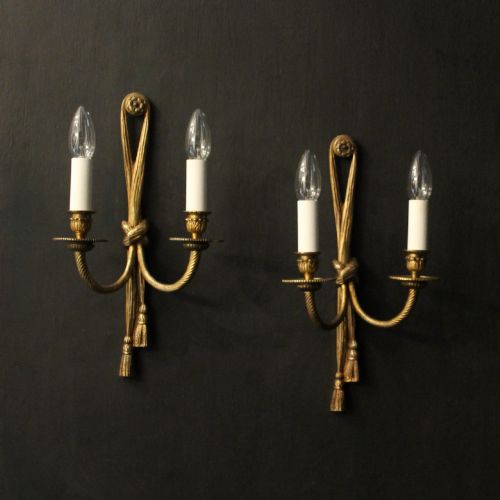
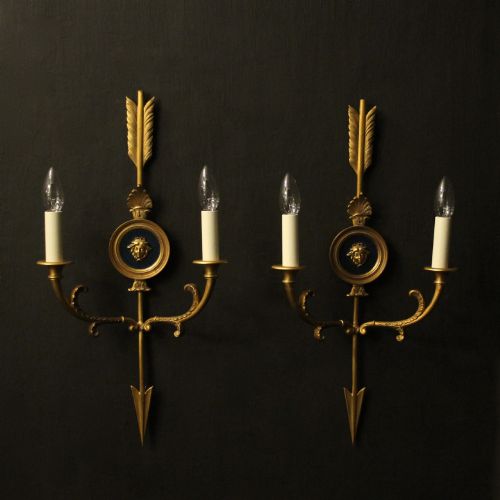
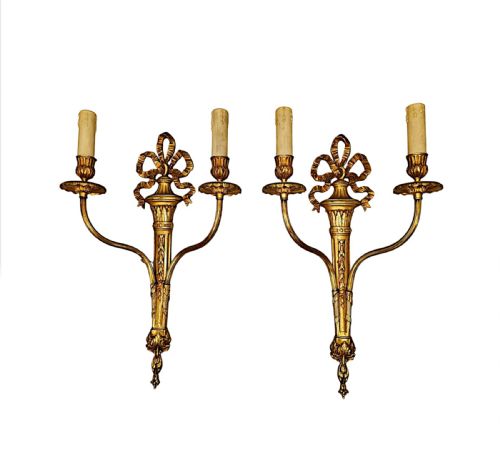
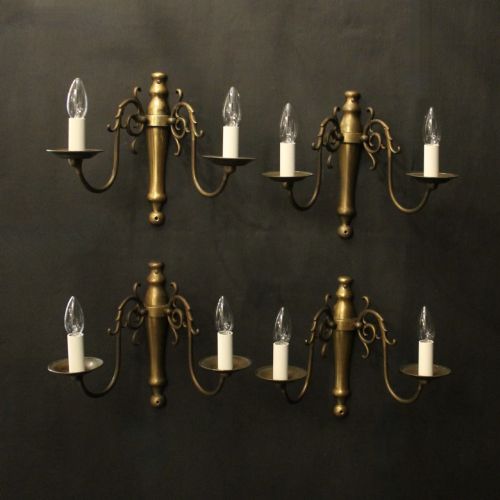
Brass applique wall lights bring period French and English illumination to a room, cast in bronze, brass, and crystal from the nineteenth and twentieth centuries.
Brass Applique Wall Lights
Brass applique wall lights encompass wall sconces, wall lights, and half lanterns designed to mount directly to a vertical surface. When searching for brass applique wall lights, buyers encounter fixtures originating predominantly from French workshops alongside English examples.
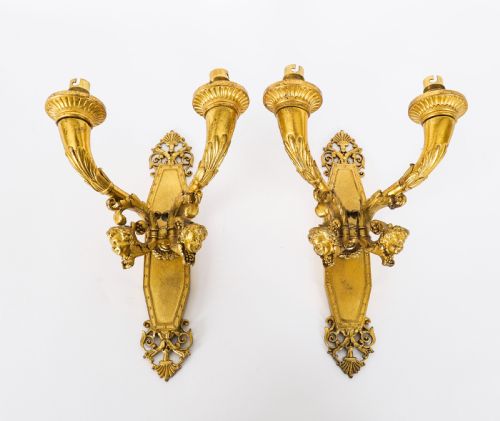
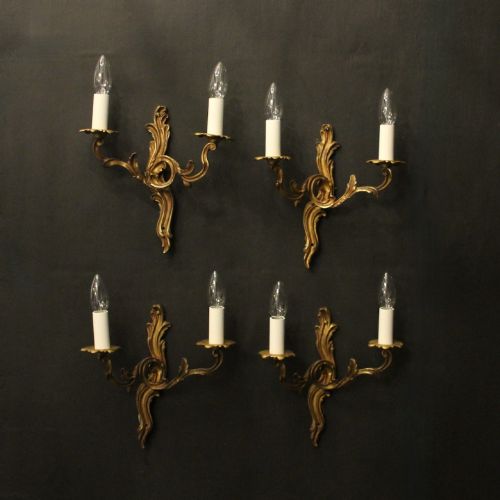
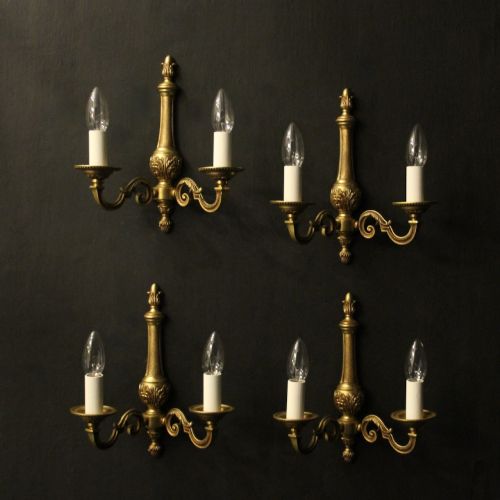
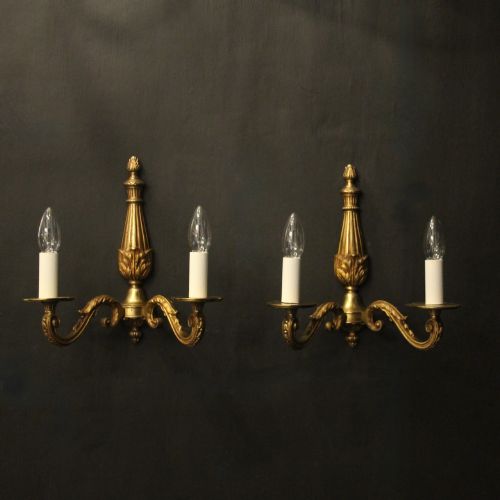
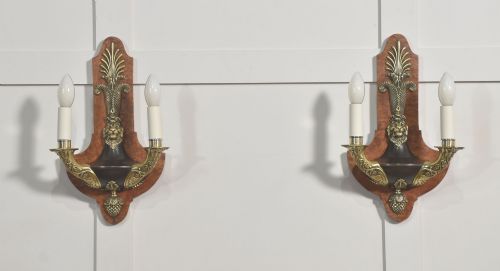
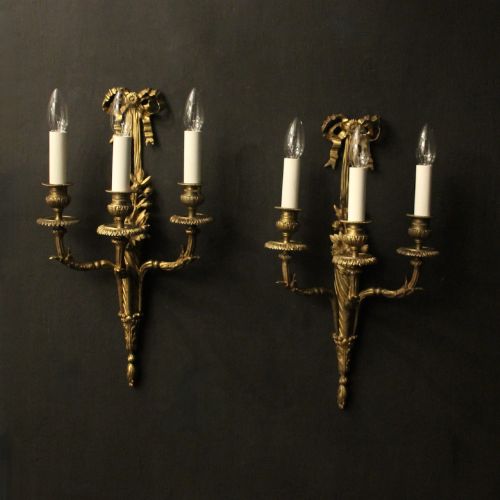
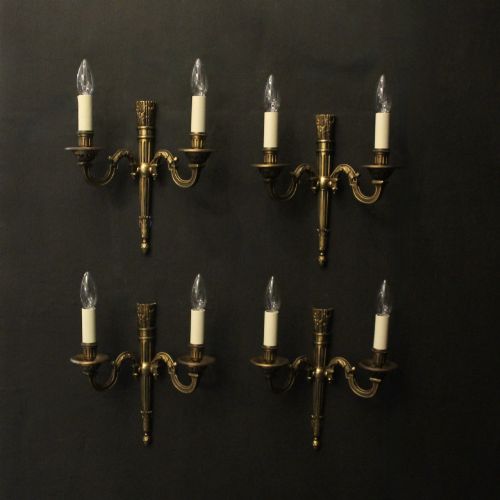
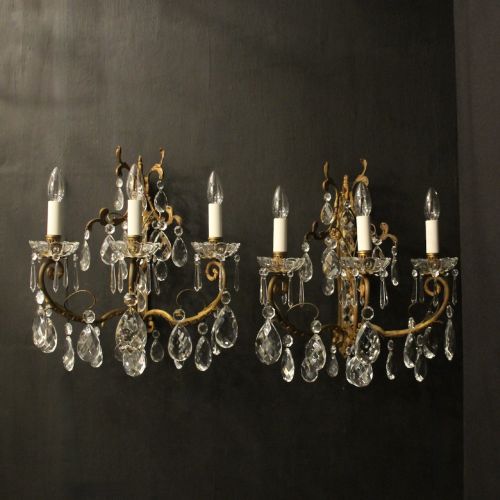
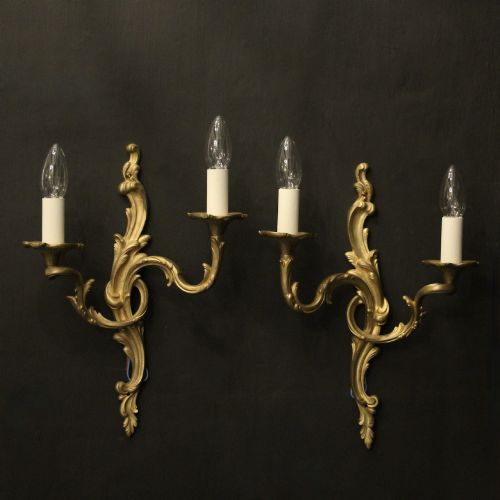
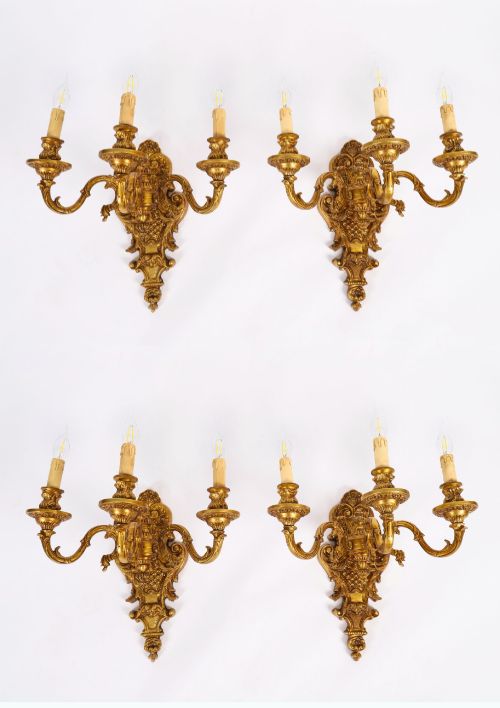
The selection ranges from single-arm pieces to large sets of four or six units, featuring twin or triple branch configurations. Styles draw heavily on French Rococo, Louis XVI, Empire, and Rococo Revival designs dating from the Georgian and Victorian eras through the 1930s.
How they were made
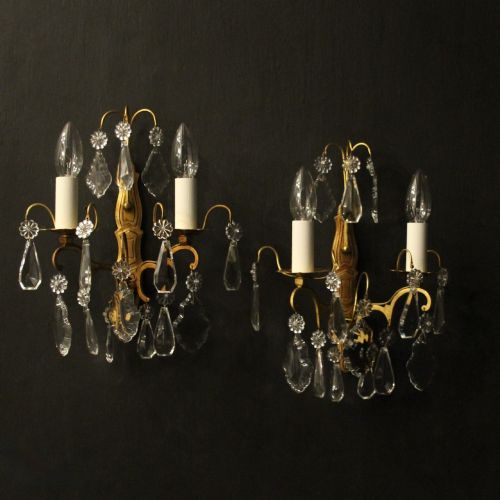
Manufacture relies on cast metal, primarily brass, bronze, and ormolu, finished with fire gilding or gold leaf. Many pieces incorporate cut crystal drops and panels to refract the light from candles or early electric bulbs.
Makers shaped the backplates and arms using traditional casting methods, often incorporating detailed ornamentation such as ribbons, cherubs, and scrolling foliage. Selected models combine the metal framework with burr walnut or porcelain flowers.
Listings feature brass, gilt bronze, and cut crystal materials across periods ranging from Georgian and Victorian eras to 1930.
What varies in quality
Quality in these fixtures rests on the crispness of the metal casting and the depth of the original gilding or ormolu finish. Finer examples display sharp relief in decorative motifs like acanthus leaves and ribbons without softening of the detail.
The weight and gauge of the brass or bronze dictate the sturdiness of the arms and backplates, distinguishing substantial architectural sconces from lighter commercial productions.
The Brass Applique Wall Lights Glossary
- Applique
- A wall-mounted light fitting designed to direct illumination outward into a room. The term frequently applies to French fixtures featuring decorative backplates.
- Ormolu
- Finely ground high-carat gold applied to a bronze base metal object. This mercury gilding technique creates a distinct warm lustre seen on nineteenth-century pieces.
- Rococo
- An ornate design style characterised by asymmetrical scrolls, C-curves, and naturalistic plant motifs. It heavily influences many French wall lights from the eighteenth century onward.
- Sconce
- A wall-mounted lighting bracket that holds candles or electric lamps. These fixtures function as both primary and decorative room illumination.
Brass Applique Wall Lights: Frequently Asked Questions
How do I mount brass applique wall lights safely?
Wall lights attach to vertical surfaces using standard mounting brackets fixed securely into wall studs or masonry anchors. Professional installation is recommended to support the weight of heavy bronze frames and handle electrical wiring correctly.
Ensure the backplate sits flush against the wall surface to distribute the weight evenly. This protects both the plaster and the antique metal structure from undue stress.
What periods do these wall lights represent?
The available pieces span the nineteenth and twentieth centuries, including Victorian, Georgian, and 1930s productions. Many adopt earlier aesthetic frameworks such as Louis XVI and French Empire designs.
Stylistic cues help identify the era, with heavy Rococo Revival castings appearing alongside streamlined interwar French brasswork. Each period utilises distinct casting depths and surface finishes.
Can these wall lights be wired for modern electricity?
Most antique wall lights adapt readily to contemporary electrical standards through internal rewiring. Qualified electricians can thread modern wiring through the existing brass arms without altering the external appearance.
Using low-wattage LED candle bulbs preserves the metal and crystal from excessive heat exposure. This approach maintains historical integrity while providing reliable daily illumination.
Where should I place wall sconces in a room?
Wall sconces suit flanking positions beside mirrors, fireplaces, or doorways to create balanced ambient lighting. Positioning them at eye level ensures the light distributes effectively across the wall surface.
Matching sets of four or six units allow for symmetrical placement along larger walls. Pairs work well in smaller hallways or bedrooms to frame architectural focal points.