
Vintage Ormolu Wall Lights
Vintage ormolu wall lights bring warm, reflective illumination and sculptural weight to a room, drawing the eye upwards with period detail.
Vintage Ormolu Wall Lights
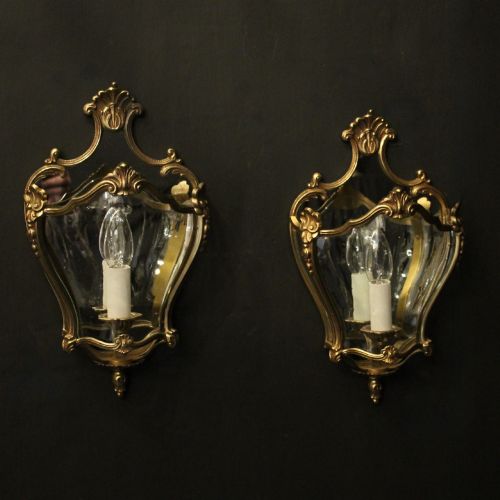
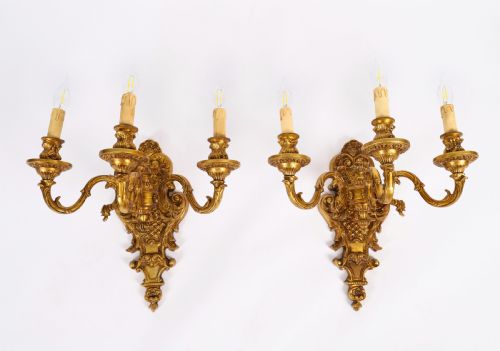
Vintage ormolu wall lights comprise wall-mounted sconces, appliques and half-lanterns designed to hold candles or electric lamps. These fixtures project decorative arms and backplates designed to reflect and amplify light within an interior.
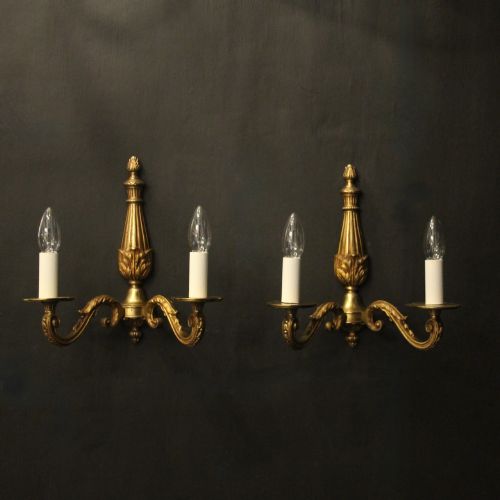
Buyers browsing this selection will most frequently encounter pairs and sets originating from France, alongside examples from Italy. The majority date from the nineteenth century through to the early decades of the twentieth century.
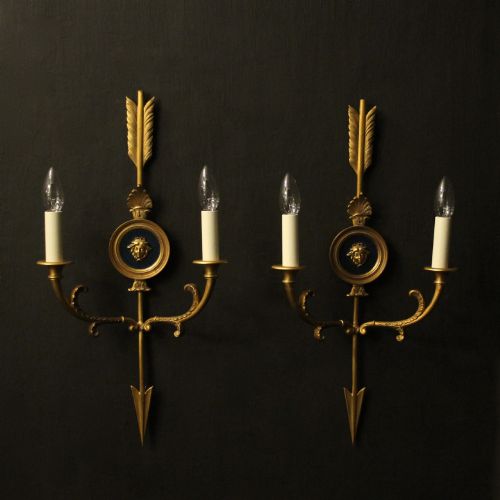
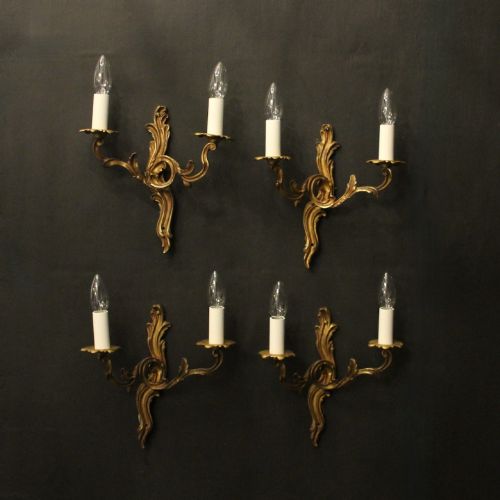
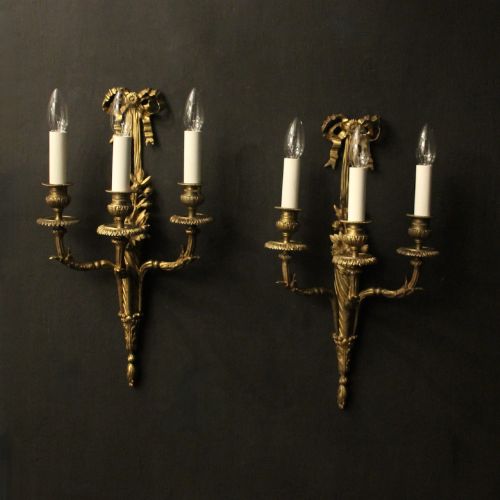
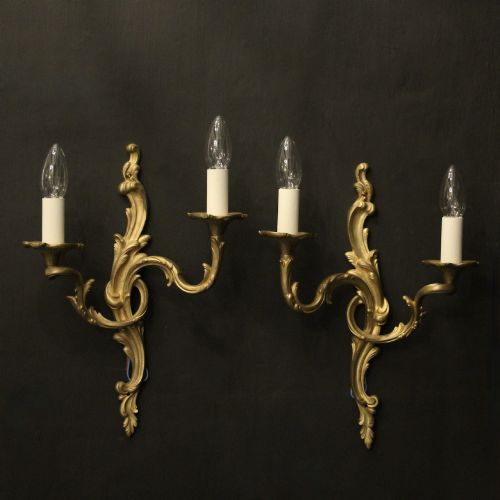
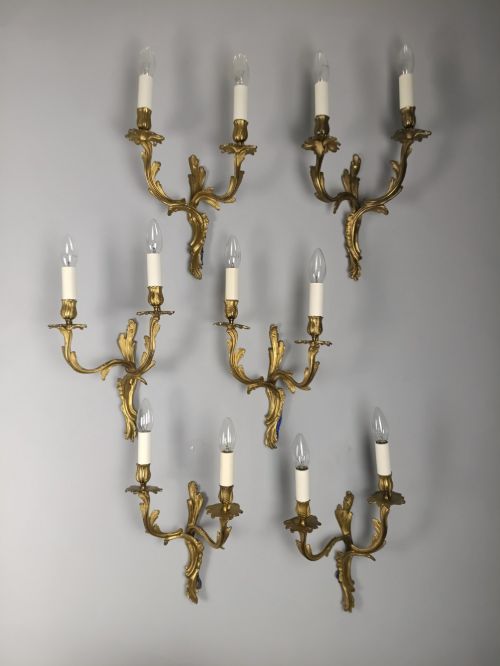
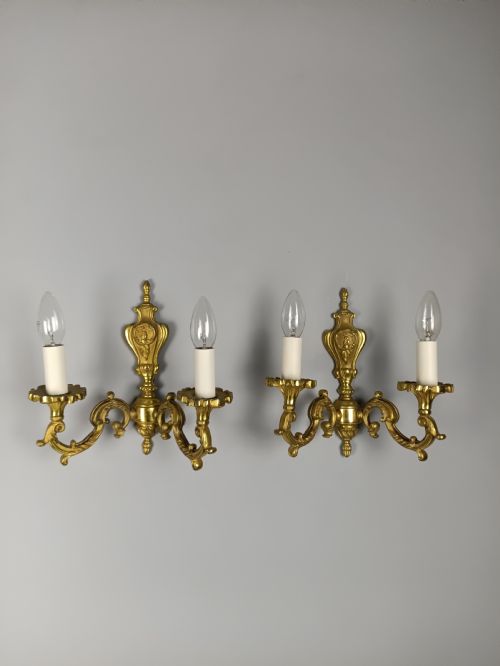
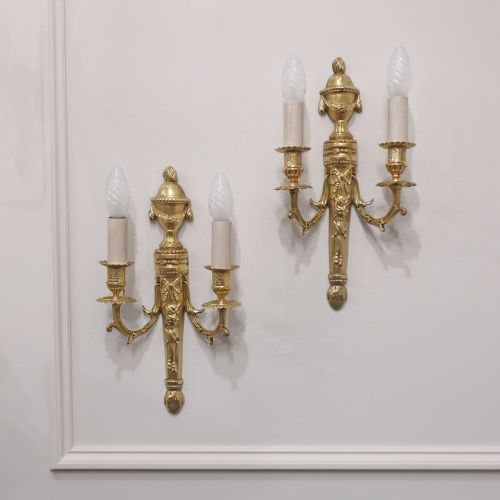
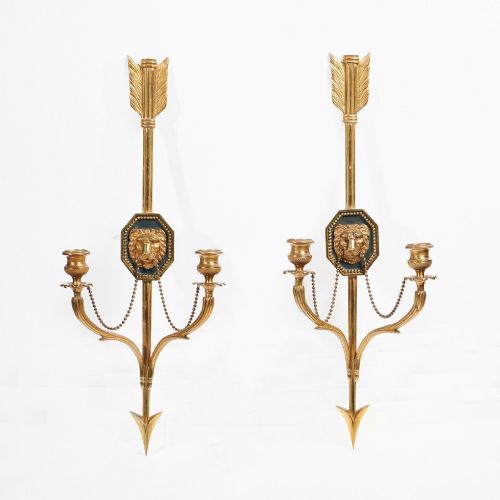
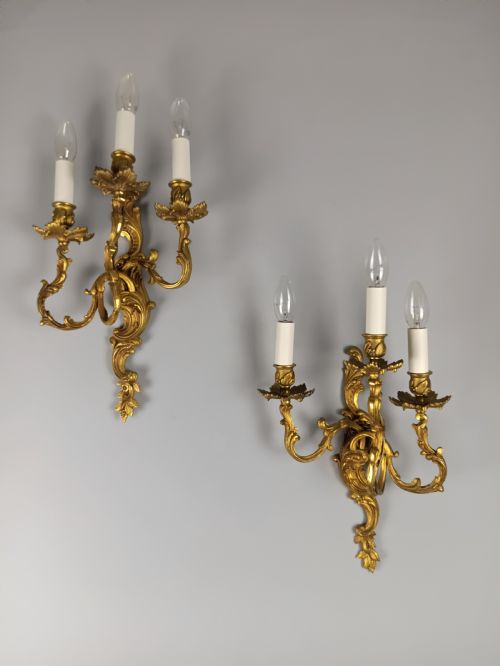
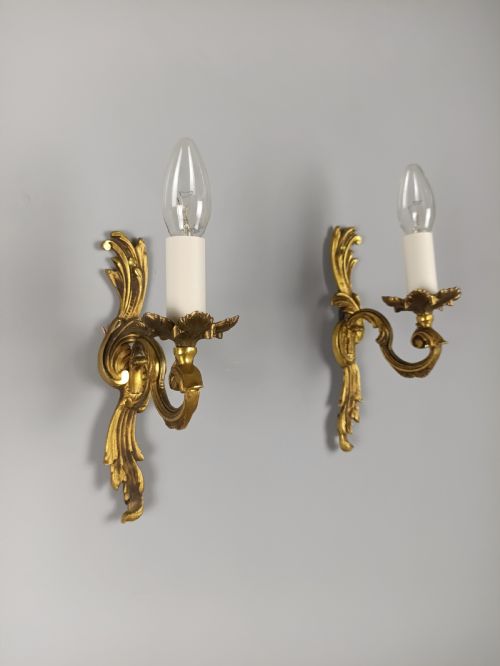
Design vocabulary leans heavily towards continental historicism. Pieces adopt the asymmetric flourishes of Rococo, the strict symmetry of Neo-Classical and Empire aesthetics, or later revivals associated with the Louis periods.
How they were made
Makers utilised cast bronze, brass and copper alloys as the foundational metalwork substrate for these fixtures. Molten metal was poured into moulds to create intricate backplates, scrolling arms and figural motifs such as cherubs or ram heads.
The characteristic golden surface finish was achieved through mercury gilding in earlier antique examples or later through electroplating and lacquer techniques applied over bronze and brass.
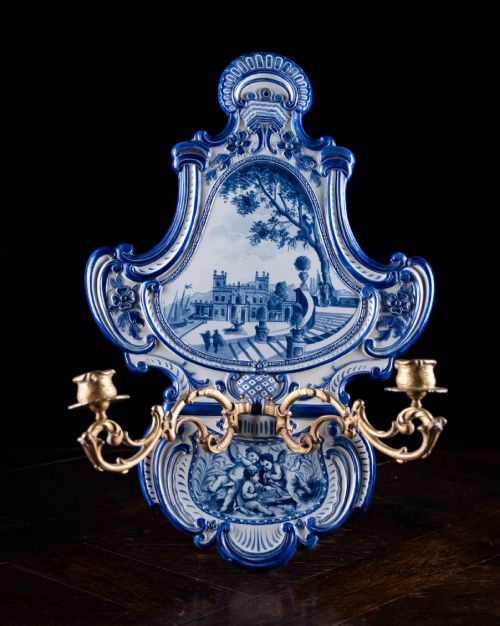
Assembly often involved mechanical joints and threaded fixings to secure multi-branch arms, drip pans and candle nozzles. Selected pieces incorporate added elements like cast glass torches, crystal drops or porcelain flowers.
Materials recorded across the inventory include gilt bronze, brass, ormolu, glass, porcelain and crystal.
What varies in quality
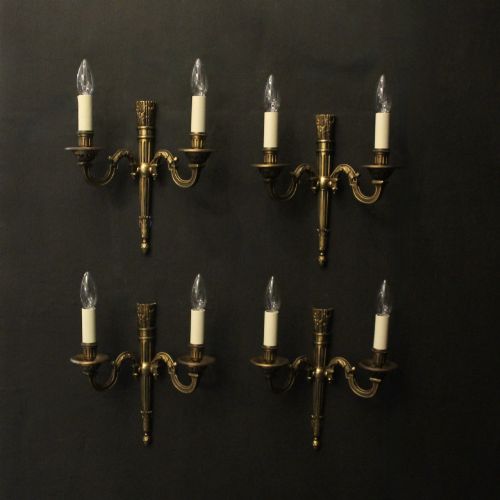
The composition of matched sets and larger multi-branch configurations indicates workshop ambition. Sets of four or six uniform sconces require meticulous initial design compared to standard pairs, while triple-arm and twin-arm variations demonstrate structural ambition.
Integrity of the original gilding and the preservation of secondary materials like moulded glass torches or hand-painted porcelain components define the upper tier of surviving examples.
Casier·Villeroy and Boch
The Vintage Ormolu Wall Lights Glossary
- Ormolu
- Gilded bronze, derived from the French term or moulu denoting ground gold. It describes objects where a gold-mercury amalgam or gold leaf was applied to a bronze base.
- Applique
- A wall-mounted lighting fixture designed to be fixed directly to a vertical surface. The term is frequently used interchangeably with wall sconce.
- Chasing
- The manual post-casting process of refining and texturing metal surfaces using small punches and hammers. This technique adds fine detail to leaves, drapery and motifs.
- Sconce
- A candleholder or electric light fixture secured to a wall, usually featuring a decorative backplate that protects the wall surface from soot and reflects light.
- Torch
- A decorative lighting motif modelled to resemble a flaming torch, commonly executed in ormolu and glass during the Neo-Classical period.
Vintage Ormolu Wall Lights: Frequently Asked Questions
What is ormolu?
Ormolu refers to gilded bronze, where a layer of gold is applied to a bronze or brass base to create a rich, golden metallic lustre. The technique was widely employed by continental metalworkers to give decorative objects a luxurious appearance.
Over time, the finish develops a characteristic patina that distinguishes genuine antique metalwork from modern plated reproductions. The best examples retain crisp surface detail beneath the gold layer.
How do I wire antique wall lights?
Antique wall lights are typically adapted for modern electrical circuits by threading discreet internal wiring through the hollow arms and backplates. Professional electricians can install these fixtures using standard wall brackets and junction boxes.
Many surviving pieces arrive already rewired for contemporary use, though professional testing ensures compatibility with local safety standards and wall construction.
How do I identify Louis XVI style?
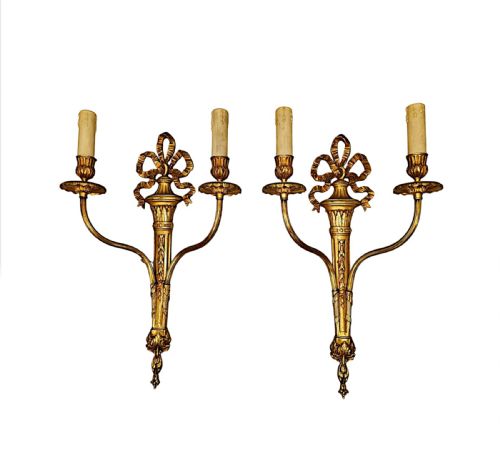
Louis XVI style is defined by a return to classical symmetry, straight lines and geometric precision, contrasting with the flowing curves of earlier Rococo design. Look for motifs such as urns, ribbons, acanthus leaves and flaming torches.
Ormolu fixtures from this design tradition often feature crisp architectural framing, symmetrical twin or triple arms, and classical drapery motifs cast into the bronze.