


Brass and Marble Lighting
Brass and marble lighting combines solid mineral bases with cast metal fittings to provide heavy, ornamental illumination for period interiors.
Brass and Marble Lighting
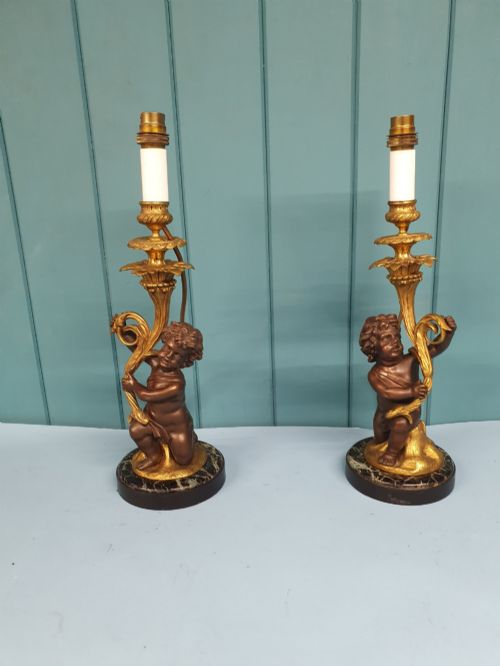
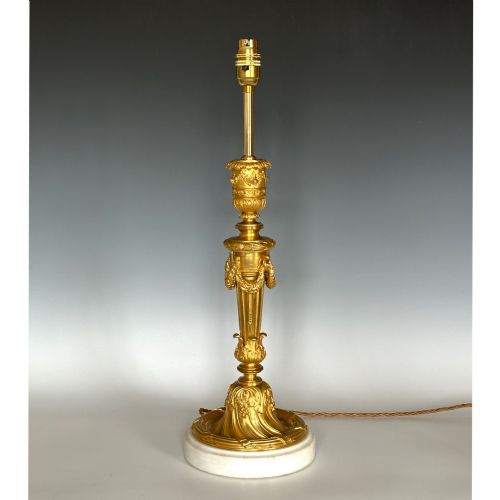
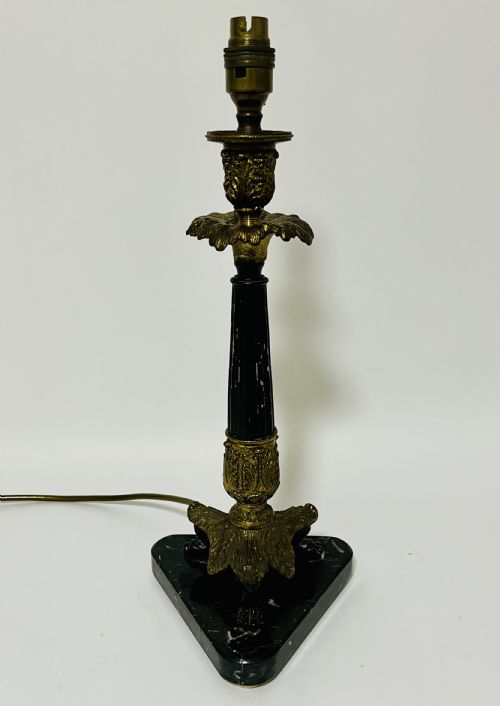
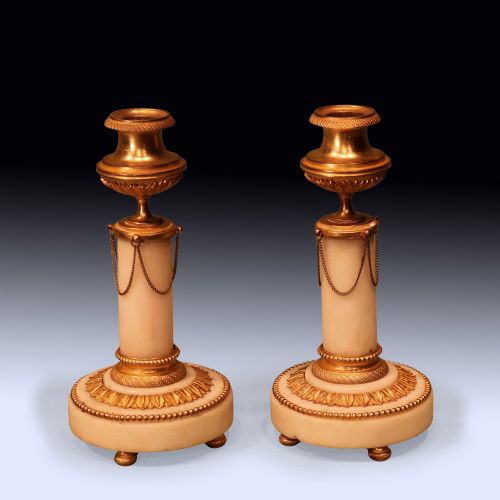
Brass and marble lighting encompasses table lamps, floor lamps, candelabras and candlesticks produced across the nineteenth and early twentieth centuries. These pieces frequently originate from French workshops following neoclassical, Louis XVI and Empire design traditions, alongside Victorian British production.
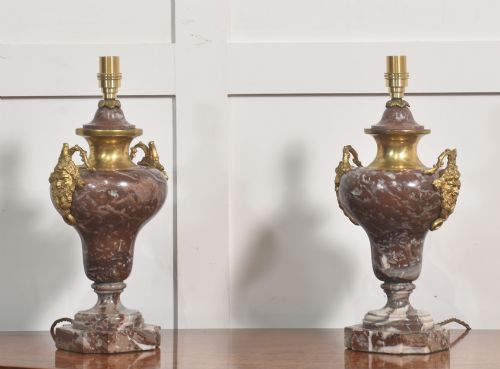
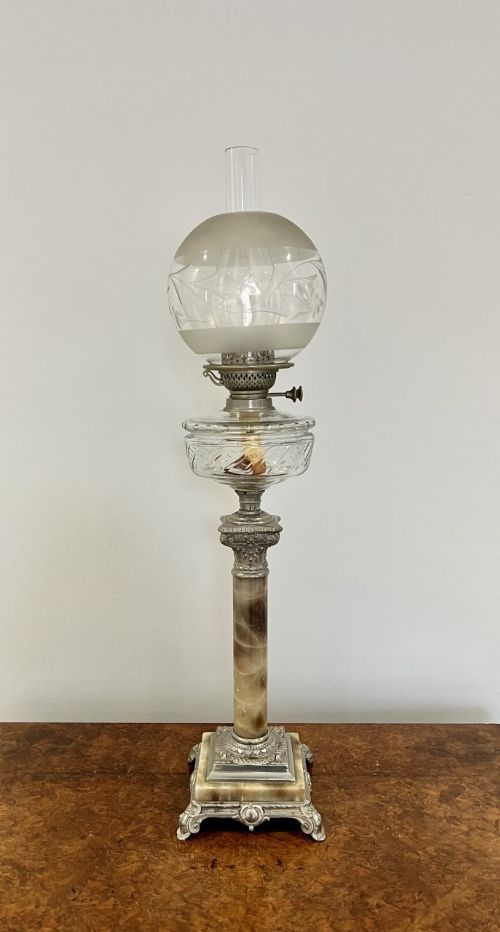
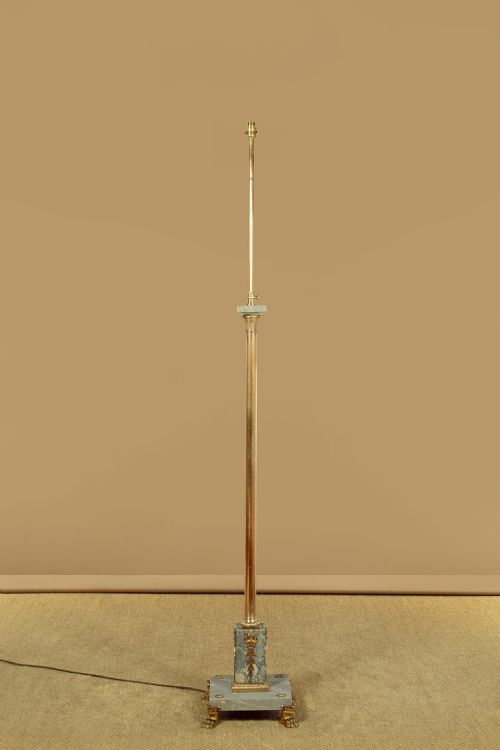
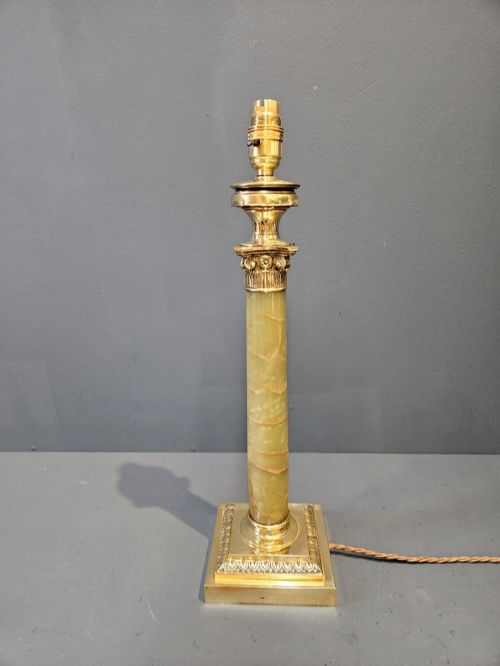
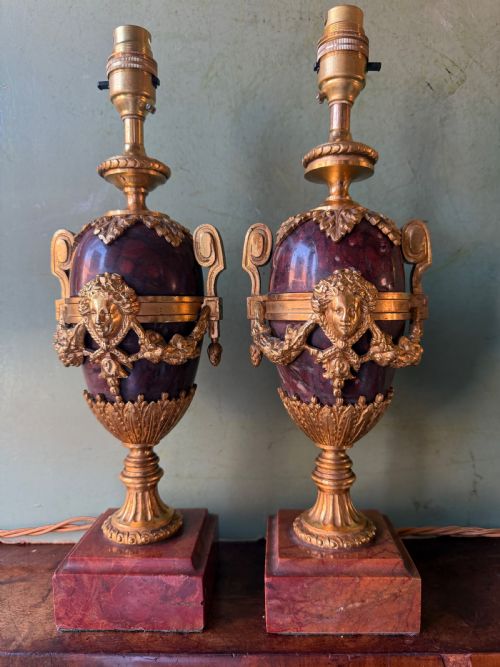
Table lamps dominate the selection, often taking the form of converted candelabras or urn-shaped bases mounted on square or stepped plinths. Floor standards and oil lamps also appear, utilising heavy mineral bases to counterbalance extended heights.
Materials and Construction
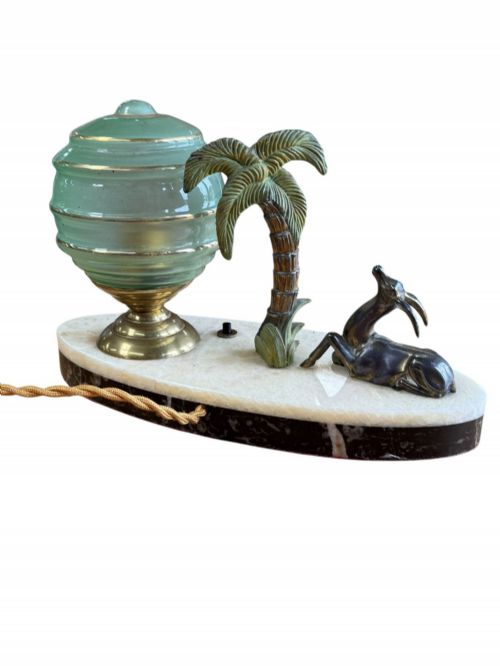
Makers combined turned or polished marble, onyx and alabaster with cast brass, ormolu, gilt bronze and standard bronze. The mineral components provide substantial weight and contrasting colour, ranging from white and green varieties to deep red polished stone.
Metal mounts, paw feet and figural elements were cast, chased and occasionally gilded, then mechanically fixed to the stone bases through central threaded rods or pin assemblies.
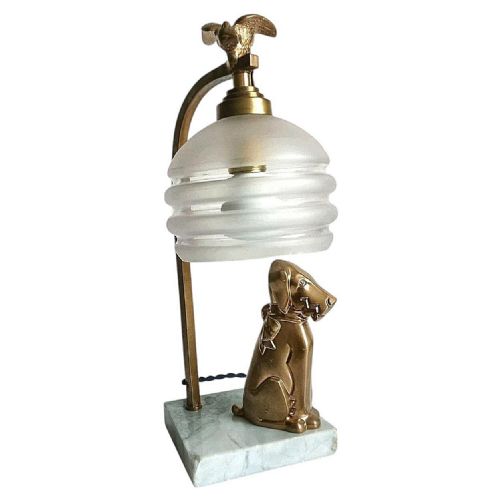
Several French lamps feature cast bronze dogs and parrots keeping permanent watch over the marble bases.
Craftsmanship and Proportion
Quality rests upon the crispness of the metal chasing and the selection of the stone. Finer examples display deeply carved or cast details on cherubs, foliate mounts and claw feet, paired with dense, finely grained marble rather than mottled cast substitutes.
Proportion and structural integration separate standard items from superior pieces. Better-made lighting aligns the heavy metal components precisely with the stone plinth, ensuring stable balance and harmonious scale across the entire object.
The Brass and Marble Lighting Glossary
- Ormolu
- Gilt bronze produced by applying a mercury and gold amalgam to cast bronze, creating a durable golden surface finish. This technique was widely employed in eighteenth and nineteenth-century French lighting.
- Casselotte
- A decorative vase or urn with a reversible lid, frequently mounted in metal and adapted into a table lamp. These pieces often feature white or rouge marble bodies.
- Neoclassical
- A style drawing inspiration from classical antiquity, characterised by symmetry, restrained ornamentation and architectural motifs. It heavily influences French Empire and Louis XVI lighting designs.
- Candelabra
- A branched candlestick designed to hold multiple light sources simultaneously. Many surviving examples from the nineteenth century were later converted to electrical table lamps.
Brass and Marble Lighting: Frequently Asked Questions
How do I date these lamps?
Dating relies on stylistic clues, casting techniques, and material combinations associated with specific decades. Nineteenth-century examples often lean towards heavy Neoclassical or Victorian ornamentation, while 1920s and 1930s pieces introduce cleaner Art Deco lines and onyx.
Examining the internal wiring channels, fastening screws, and mounting hardware provides further evidence of age. Older pieces generally use hand-cut threads and heavier cast components compared to later reproductions.
Are these pieces safe to use?
Most antique lamps require professional rewiring to meet modern electrical safety standards. Qualified electricians can easily replace old cords and lamp holders while preserving the original metal and stone body.
Check that the central rod securing the marble base to the metal fittings remains tight. A loose assembly compromises the stability of the lamp, particularly when paired with a heavy shade.
Can I clean the marble safely?
Clean polished marble surfaces with a soft, damp cloth and mild soap, avoiding acidic cleaners that etch the stone. Dry the surface thoroughly immediately afterwards to prevent water spotting.
Ormolu and gilt brass require gentle dusting with a dry microfibre cloth. Harsh chemical polishes strip the original fire gilding or patination from the metal components.
Why are some lamps converted?
Many nineteenth-century candelabras and candlesticks were electrified during the twentieth century to suit modern domestic lighting needs. This practice preserved decorative objects by giving them a practical function in contemporary homes.
Conversions often utilise existing central apertures or discreet wiring channels to avoid altering the main body of the bronze and marble structure.