




Brass and Marble Candelabras
These brass and marble candelabras bring together polished metal and heavy stone to illuminate period interiors with classical grandeur.
Brass and Marble Candelabras
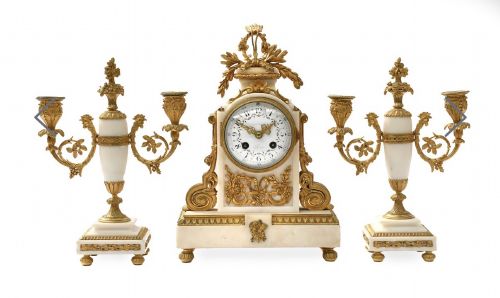
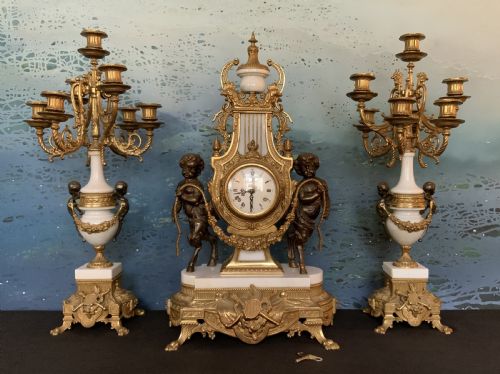
When you search for brass and marble candelabras, you encounter heavy decorative lighting and garniture sets originating primarily from the nineteenth century. These objects combine cast metal branches with turned or carved stone bases, often appearing alongside matching mantel clocks.
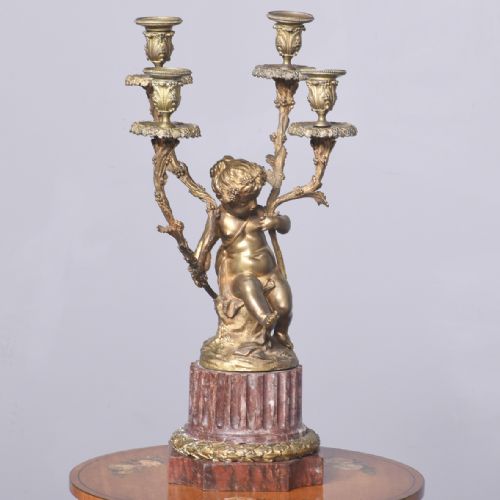
The most common examples on this page are French pieces in the Louis XVI style and Victorian interpretations featuring cherubs, scrolling arms, and neoclassical motifs. They take the form of pairs designed to anchor the ends of a mantelpiece or sideboard.
Originating as functional domestic lighting, these items served largely as ornamental centrepieces within formal reception rooms. Makers constructed them to reflect candlelight across gilded surfaces and polished stone.
How they were made
Foundries shaped the metal components using traditional casting techniques, utilising brass, bronze, ormolu, and gilt bronze. Artisans then chased the cooled surfaces by hand to sharpen the leaf motifs, drapery, and figural details.
The stone elements, spanning white marble, green marble, and green onyx, were turned on lathes or hand-carved to form architectural columns and sturdy pedestals. Craftsmen joined the metal mounts to the stone using threaded internal rods and pins.
The inventory spans the nineteenth century, encompassing Victorian and French Louis XVI Revival styles.
What varies in quality
Quality rests principally in the crispness of the metal chasing and the density of the stone base. Finer examples display deeply carved figures and sharp acanthus leaves, whereas simpler pieces rely on smoother, cast-only contours.
The weight and selection of the marble or onyx dictate the overall solidity of the piece. Superior candelabras utilise unblemished, heavily veined stone paired with thick fire-gilt bronze rather than thin brass plating.
Vincenti
The Brass and Marble Candelabras Glossary
- Ormolu
- A gilded brass or bronze finish applied through a mercury amalgamation process or modern electroplating. This technique imparts a rich, golden lustre to the metal mounts.
- Garniture set
- A matching decorative ensemble typically consisting of a mantel clock flanked by a pair of candelabras or vases. These sets created a balanced centrepiece for nineteenth-century mantelpieces.
- Louis XVI style
- A neoclassical aesthetic characterised by straight lines, symmetry, classical urns, and floral swags. It influenced French decorative arts throughout the nineteenth century.
- Chasing
- The manual refinement of a cast metal surface using small punches and hammers. This cold-working process added texture and definition to hair, drapery, and foliage.
Brass and Marble Candelabras: Frequently Asked Questions
How do I clean brass and marble?
Dust the surfaces regularly with a soft, dry cloth to prevent grime accumulation in the crevices. Avoid commercial metal polishes on ormolu and gilt finishes, as abrasive compounds strip the historical surface.
Wash marble only with a damp cloth and mild soap, drying it immediately. Moisture left on porous stone can cause staining or weaken internal metal fixings.
Are these candelabras wired for electricity?
Most surviving nineteenth-century examples retain their original configuration for wax candles. Conversions to electricity do occur, but they alter the domestic function.
Inspect the nozzles and drip pans to determine if wiring has been threaded through the central stem. Many collectors prefer keeping them strictly for candles to preserve their original construction.
How do I date a candelabra?
Examine the casting quality, the style of the mounts, and the type of stone used in the base. Nineteenth-century pieces often display hand-chased details and heavy patination consistent with period manufacturing.
Compare the aesthetic to documented French and Victorian design movements such as Louis XVI revival or Second Empire. Maker signatures, where present, provide the most direct link to a specific decade.
What is a clock garniture?
A clock garniture is a decorative suite comprising a central mantel clock accompanied by matching side ornaments like candelabras or urns. They were designed to create visual symmetry across large architectural fireplaces.
These sets unified the decor of a Victorian or French salon by repeating the exact same materials, such as green marble and gilt bronze, across all three pieces.