

Brass and Glass Clock
A brass and glass clock brings together bright metal and clear panes to show the intricate movement within.
Brass and Glass Clock
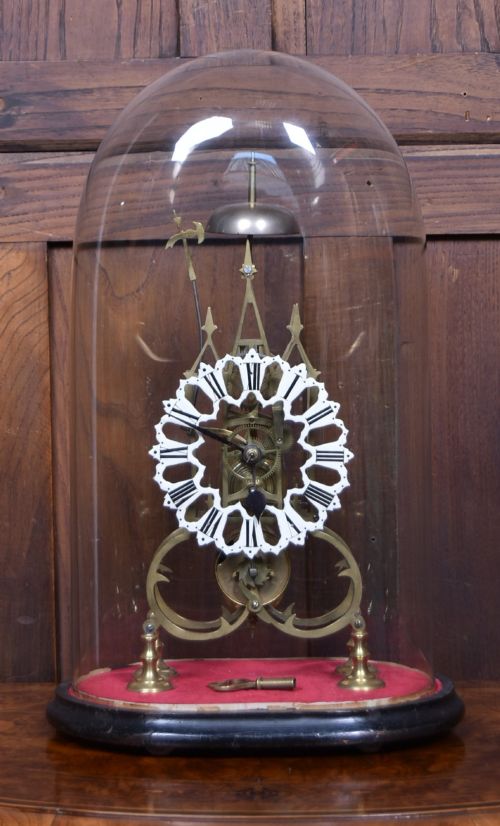
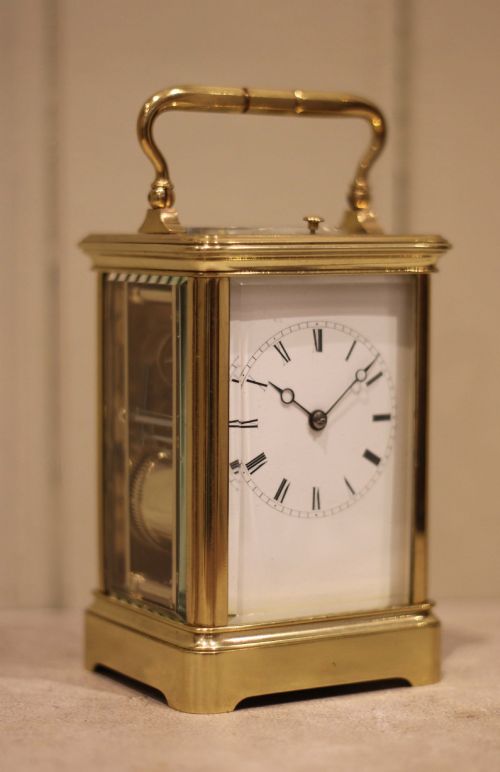
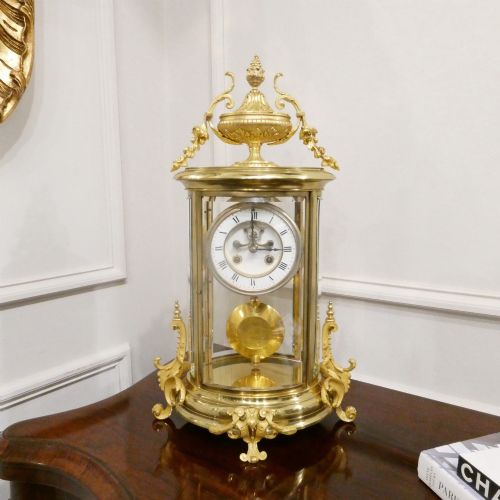
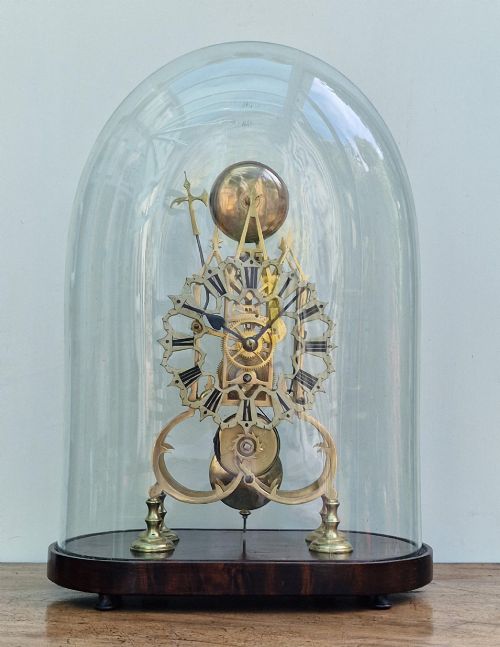
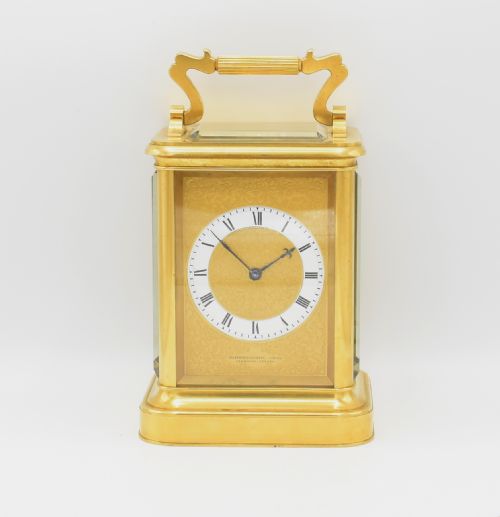
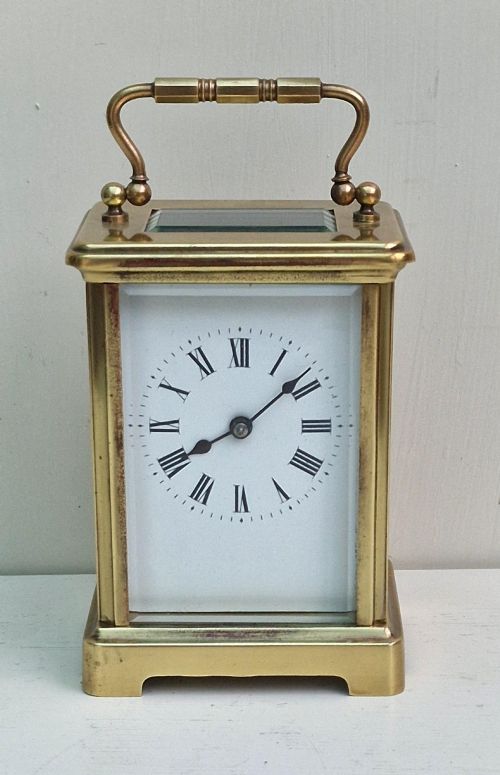
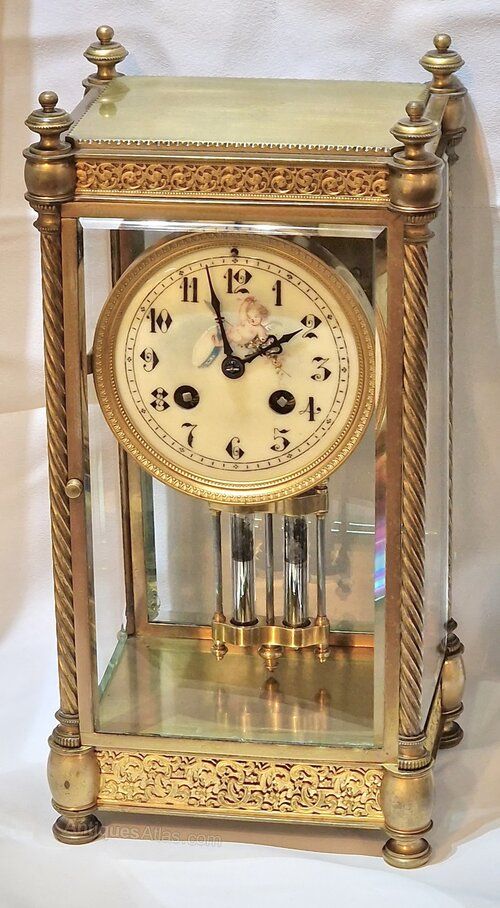
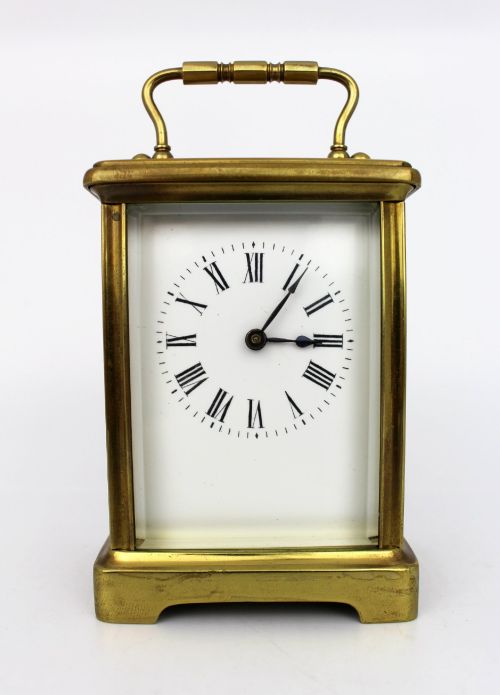
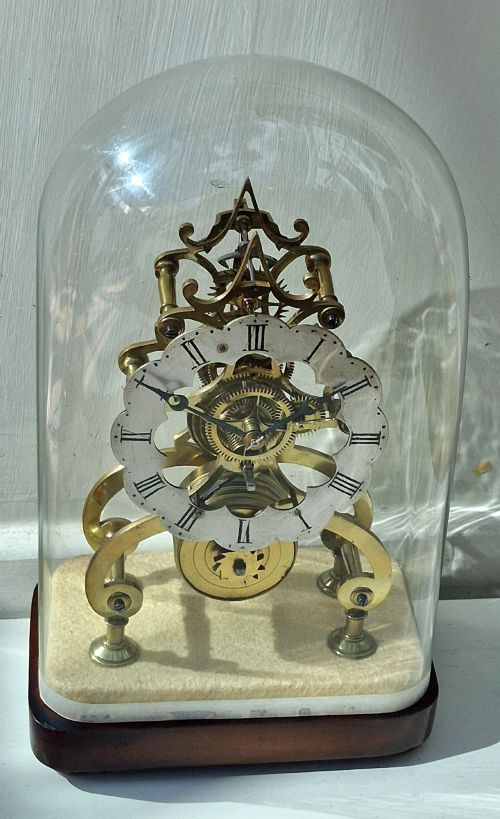
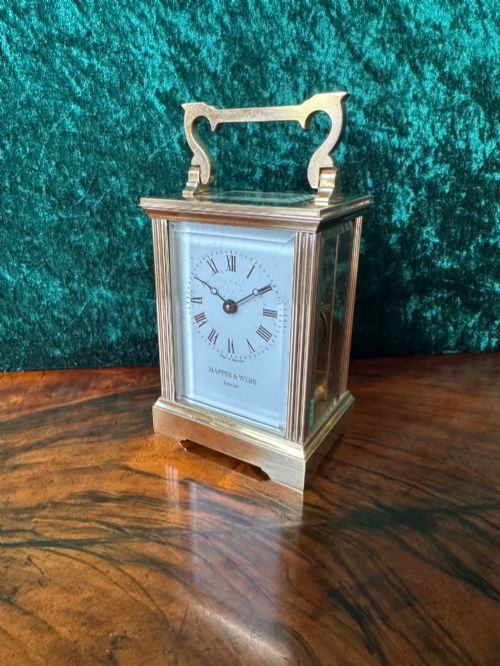
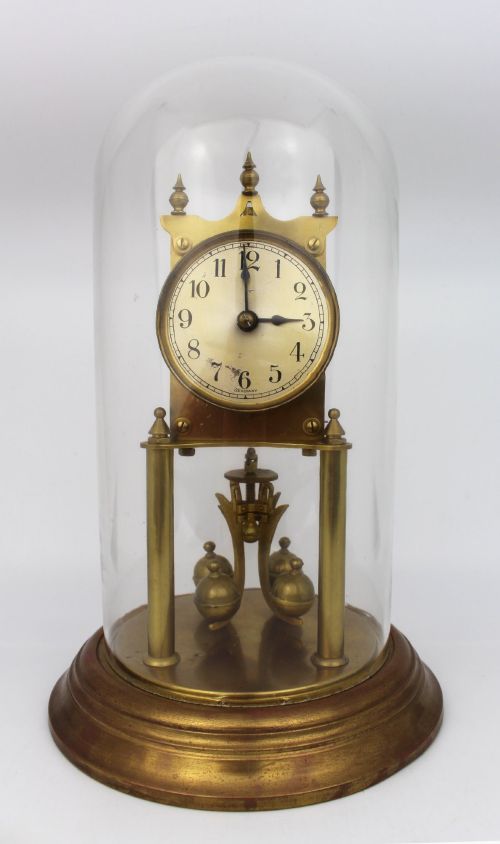
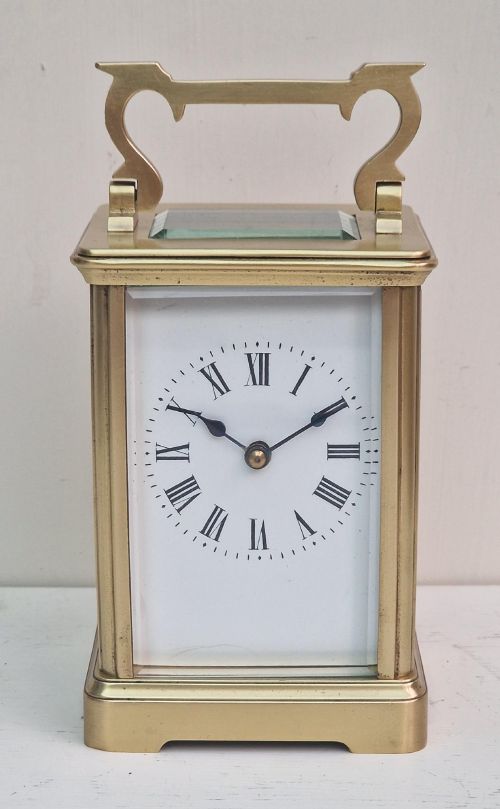
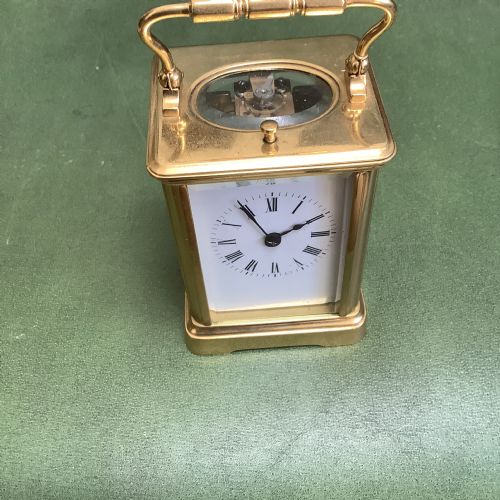
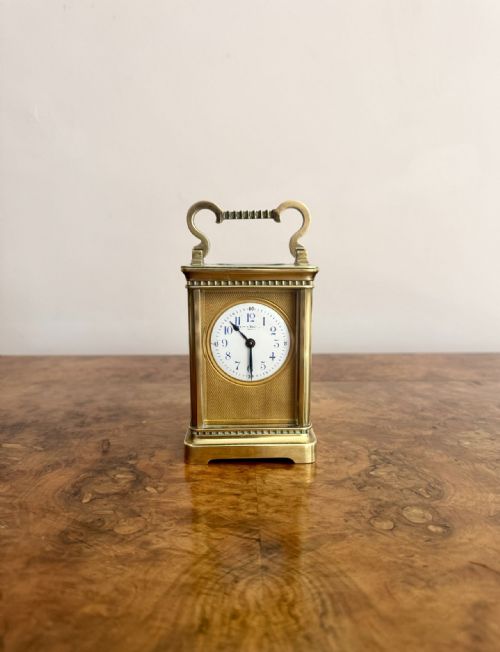
When searching for a brass and glass clock, buyers encounter several distinct forms shaped by nineteenth and twentieth-century horology. The most common versions met on this page are carriage clocks and four glass mantel clocks.
Carriage clocks offer portable timekeeping enclosed in brass frames with glass panels designed for travel. Four glass mantel clocks display the entire mechanism through clear panels on all sides, often framed in gilt brass or ormolu.
How They Were Made
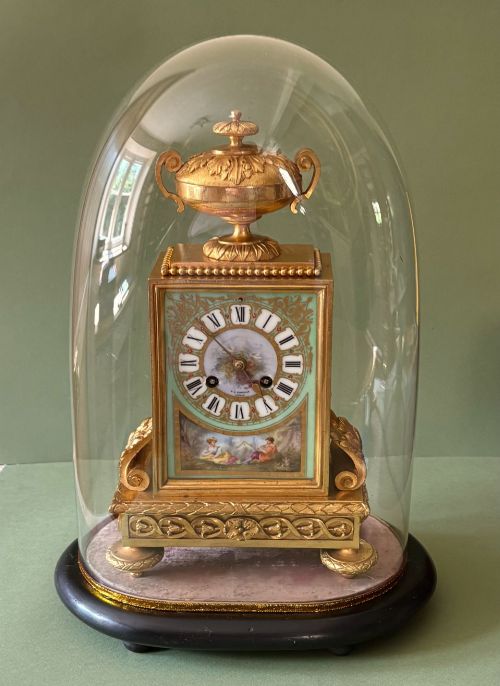
Makers constructed these pieces using heavy brass frames glazed with bevelled or flat glass panels to protect the internal gear trains. Many models incorporate gilt bronze, ormolu, or champlevé enamel detailing alongside porcelain dials.
Movements range from platform escapements in portable pieces to fusee and striking mechanisms in larger mantel and skeleton clocks. Enamel is frequently utilised for numerical chapters on the dials.
What Varies in Quality
The standard of execution depends on the crispness of the cast brass work and the precision of the engraving on the case. Better examples feature substantial movement plates, signed dials, and complex striking or repeating functions.
The clarity and thickness of the glass panes, together with the quality of the mercury or spring regulation, separate standard production pieces from finer workshop creations.
Samuel Marti·Goldsmiths Alliance Ltd·Mappin and Web·Ansonia New York·Richard Winter of Chieveley·Maurice & Marcel Moulin Favre-Bulle·John Morley·Duverdrey & Bloquel·Thwaites of London·Leroy Paris·Tiffany·Vincenti
The Brass and Glass Clock Glossary
- Carriage clock
- A small, portable spring-driven timepiece originally designed for travellers. These usually feature a swinging handle on top and glass inspection panels.
- Four glass clock
- A mantel clock housed in a rectangular brass case with glass panels on the front, back, and sides. This design lets light pass straight through the movement.
- Ormolu
- Gilded bronze produced by applying a mercury-gilding process to a bronze base. This technique creates a rich, lasting metallic sheen.
- Fusee
- A conical pulley used in mechanical clocks to equalise the driving force of the mainspring as it unwinds. It ensures even timekeeping throughout the power reserve.
Brass and Glass Clock: Frequently Asked Questions
How do I wind a carriage clock?
Insert the appropriate winding key into the arbour at the back of the movement and turn it gently clockwise until you feel resistance. Avoid overwinding, as this can damage the mainspring.
Check whether the clock strikes on the hour or repeats the last hour when a button is pressed, ensuring you wind the correct train.
What is a four glass clock?
A four glass clock is a mantel timepiece featuring glass panels on the front, back, and both sides. This style showcases the movement and pendulum clearly from multiple angles.
These clocks frequently date from the late nineteenth century and often rest on stepped brass or onyx bases.
How do I set the time safely?
Move the minute hand slowly in a clockwise direction until the correct time is reached. Moving hands anticlockwise can damage delicate striking mechanisms.
Allow the clock to complete its strike sequence if it is a striking or repeating model before advancing the hands further.
Why does my clock run fast or slow?
Mechanical clocks are influenced by temperature changes and wear within the gear train over decades. Regulation is usually adjusted using a small lever on the platform escapement.
Moving the regulator towards the fast or slow indicator allows fine-tuning of the beat until the timepiece keeps accurate hours.