



Bracket Foot Bureau Desk
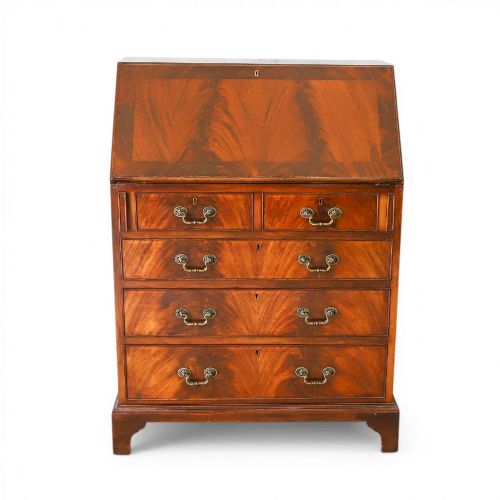
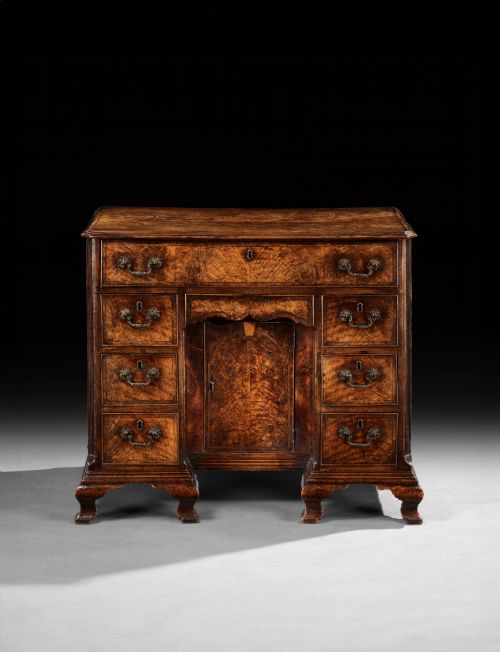
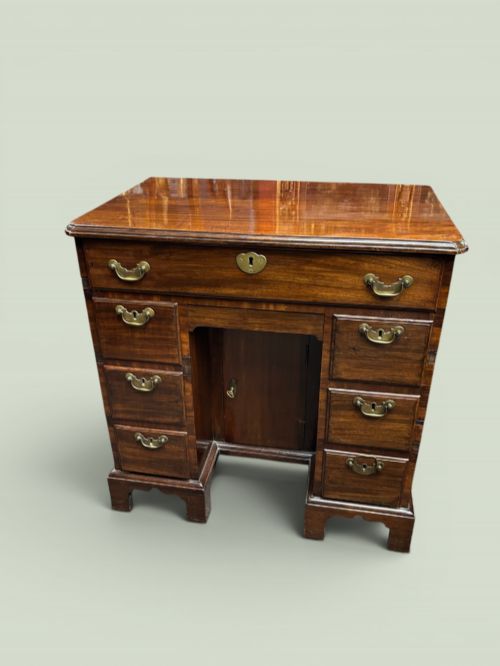
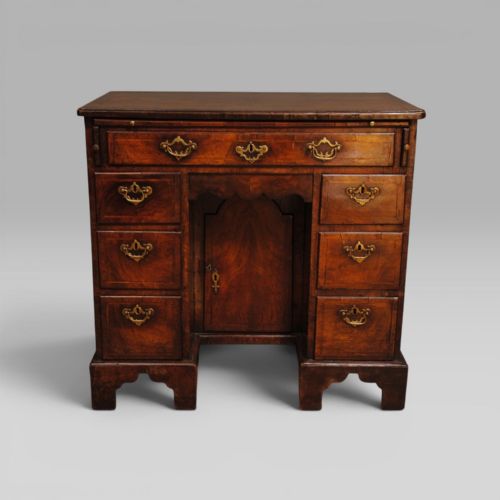
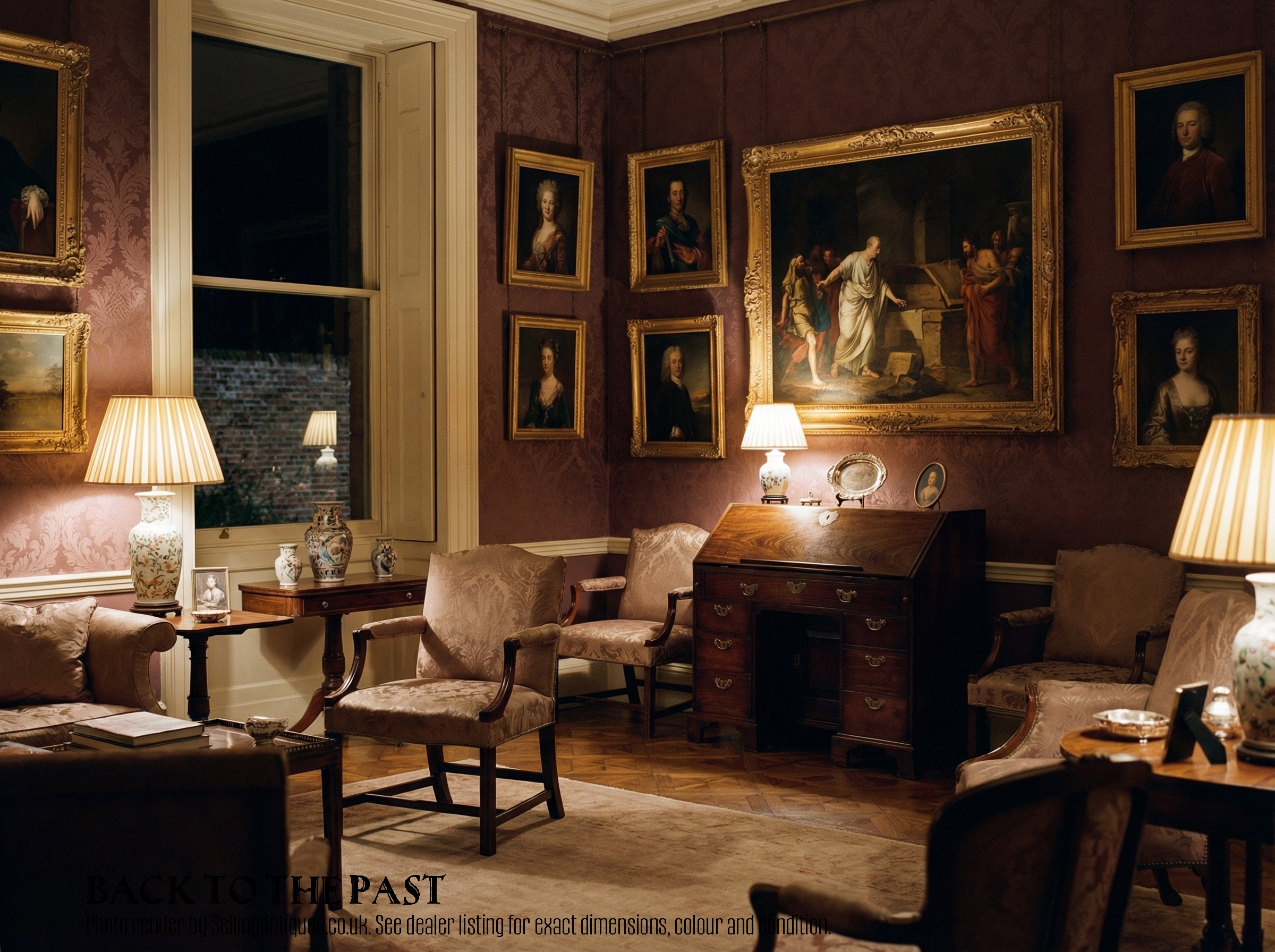
These bracket foot bureau desks are slope-front writing cabinets and kneehole desks raised on neat bracket feet, offering hidden storage and a compact writing surface.
Bracket Foot Bureau Desk
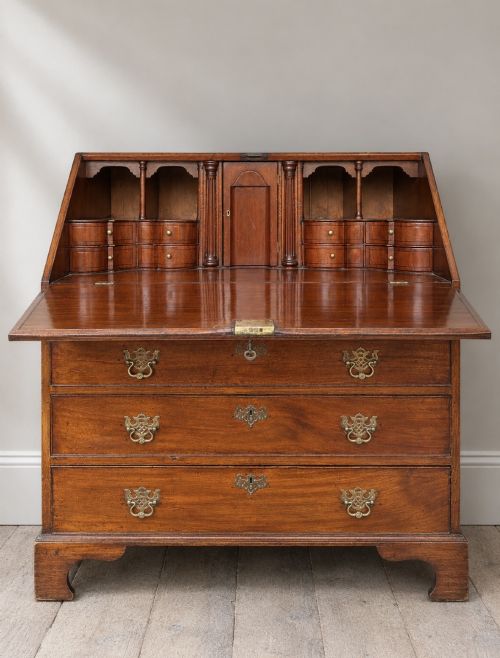
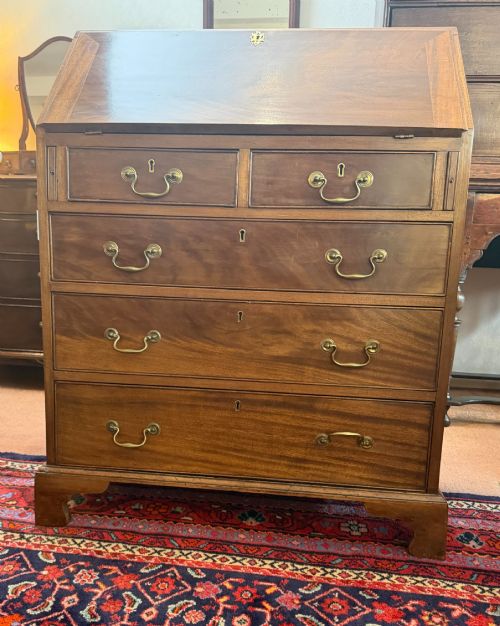
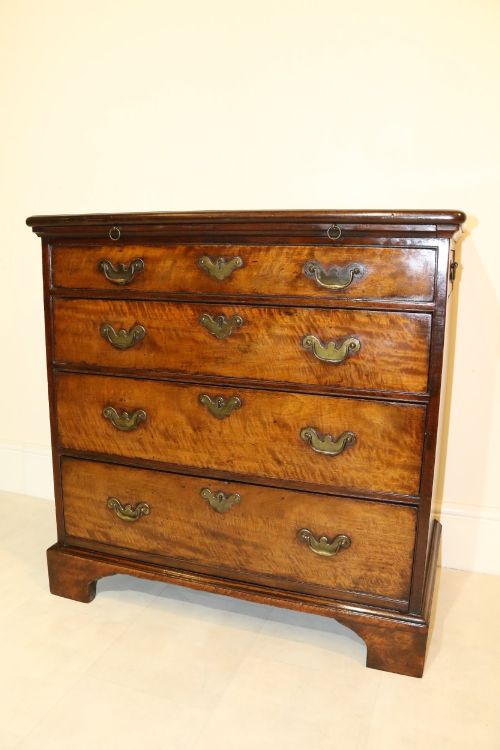
A bracket foot bureau desk unites a sloping fall-front writing flap or a kneehole writing compartment with internal drawers and pigeonholes, supported on corner bracket feet. Most examples date from the eighteenth century, spanning the George II and George III periods, alongside smaller numbers from the nineteenth and early twentieth centuries.
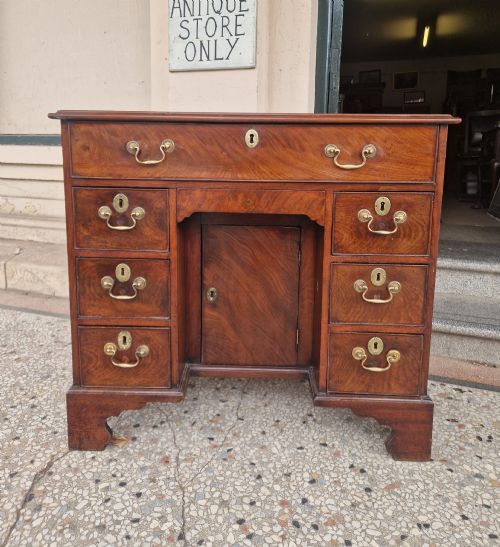
The form appears in several distinct configurations on this page, including traditional sloping fall-front bureaux and flat-topped kneehole desks with central recessed cupboards. Timber choices span solid mahogany and walnut, alongside figured veneers like burr walnut, burr oak, and flame mahogany, often complemented by secondary woods such as elm and yew.
Makers from the Georgian era through to the 1930s revival period built these pieces primarily for domestic studies, parlours, and bedchambers. Buyers frequently encounter smaller proportions and diminutive formats designed to fit tighter residential spaces without sacrificing functional writing surfaces or drawer capacity.
How they were made
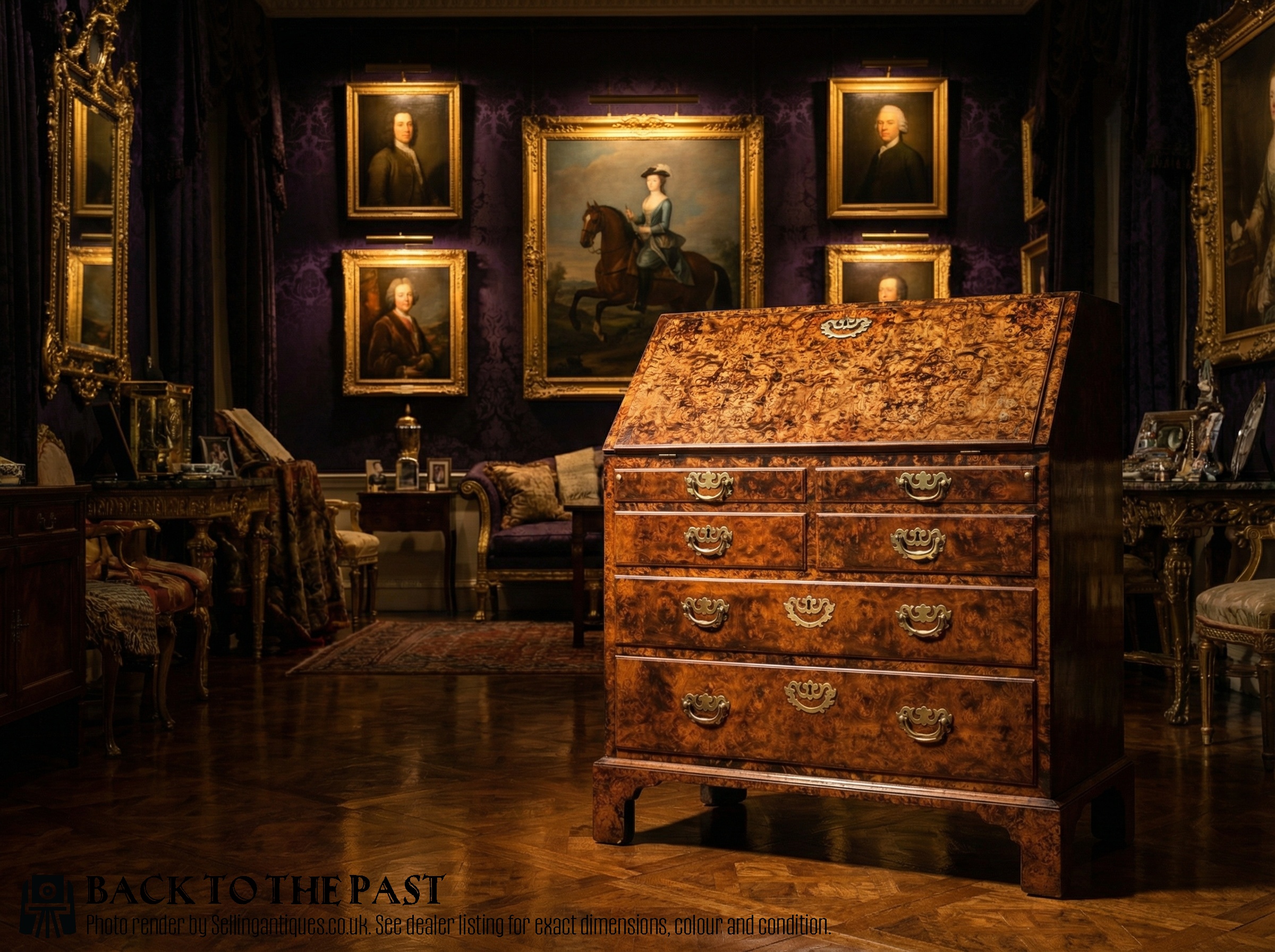
Cabinet-makers constructed carcases using native and imported timbers, applying figured mahogany, walnut, and burr veneers to primary surfaces with featherbanding or cross-banding details. Drawer linings and secondary elements often employ oak or pine, joined with hand-cut dovetails that reveal period construction methods.
Brass hardware such as batwing or plate handles, escutcheons, and hinges secure the fall-fronts and drawers, while internal baize linings provide a writing surface on specific models. Bracket feet are joined firmly to the lower carcase corners, sometimes shaped with ogee profiles or simple mitred brackets.
What varies in quality
Quality depends heavily on the choice of timber figure, such as richly marked fiddleback walnut, flame mahogany, or burr oak, matched across the drawer fronts and fall-front flap. The crispness of internal drawer arrangement, pigeonhole joinery, and secret compartments also separates standard utility pieces from finer commissions.
Proportion and scale dictate much of the desirability, with diminutive or small-proportion bureau desks commanding attention for their neat footprint. Original bracket feet, matching brass hardware, and the survival of working locks with keys further elevate the standing of an individual desk.
The Bracket Foot Bureau Desk Glossary
- Bracket foot
- A corner foot shaped like a bracket, supporting the base of a cabinet or desk with mitred joints.
- Fall-front
- A hinged writing flap that drops down to form a horizontal desk surface, concealing internal drawers and pigeonholes.
- Kneehole desk
- A compact writing table featuring a central recessed cupboard or knee space flanked by banks of small drawers.
- Featherbanding
- A decorative inlay technique using veneer strips arranged in a herringbone or chevron pattern around drawer borders.
- Burr walnut
- A highly figured timber harvested from walnut tree growths, prized for its swirling grain patterns on cabinet fronts.
Bracket Foot Bureau Desk: Frequently Asked Questions
What is a bracket foot bureau desk?
A bracket foot bureau desk is a compact writing cabinet featuring a sloping fall-front or a kneehole configuration, elevated on corner bracket feet.
These pieces typically house small internal drawers and pigeonholes behind the main writing flap, combining storage with a dedicated writing surface.
How do I date an 18th-century bureau?
Dating relies on examining timber selection, construction methods, and hardware styles. Eighteenth-century examples often feature hand-cut dovetails and solid secondary woods like oak.
Changes in veneer preferences, such as the shift from walnut to mahogany during the Georgian era, also help narrow down the period of manufacture.
Where were these desks used?
Original owners placed these desks in private studies, bedchambers, and parlours for correspondence and household administration.
Their compact footprints made them practical for writing letters and storing documents in domestic rooms without taking up excessive floor space.
How do I care for a walnut bureau?
Maintain walnut and mahogany surfaces by keeping them away from direct heat sources and strong sunlight, which can dry out timber and fade veneers.
Apply traditional wax polish sparingly to nourish the wood and preserve the natural sheen of the vintage polish.
What is a kneehole desk?
A kneehole desk is a flat-topped writing table with a recessed central space underneath, flanked by two vertical banks of small drawers.
This form provides comfortable legroom while offering substantial drawer storage for papers and writing instruments.