



Bracket Clock with Fusee
A bracket clock with fusee is a reliable timekeeper housed in a refined timber case, prized by collectors for precision mechanics and period elegance.
Bracket Clock with Fusee
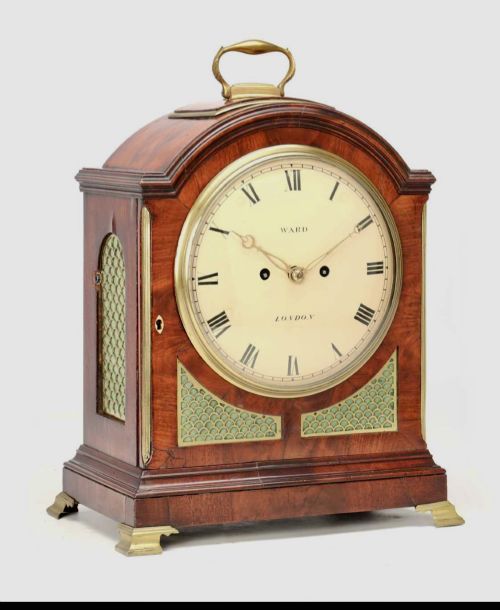
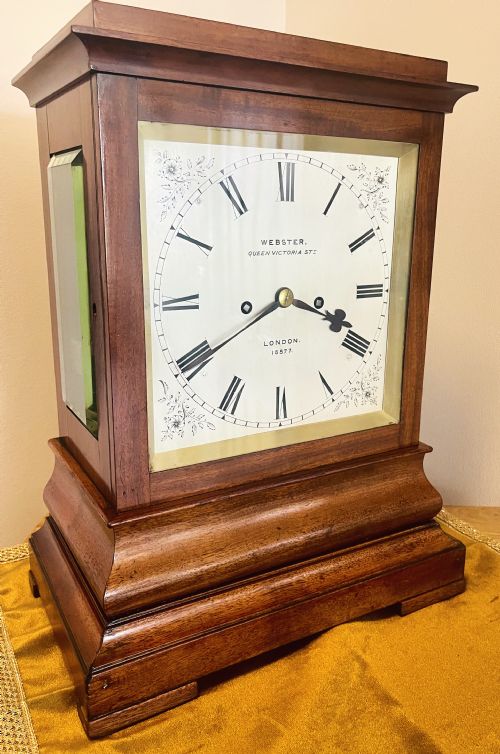
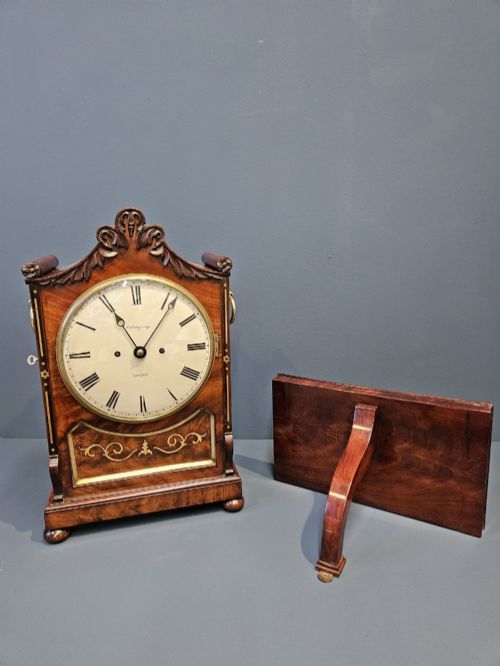
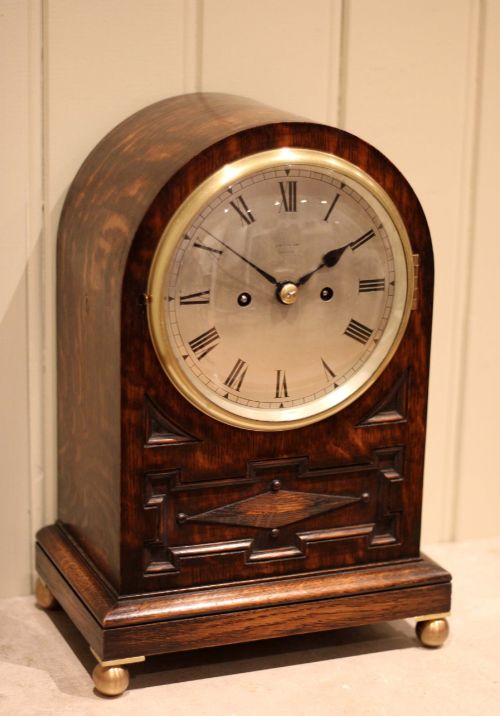
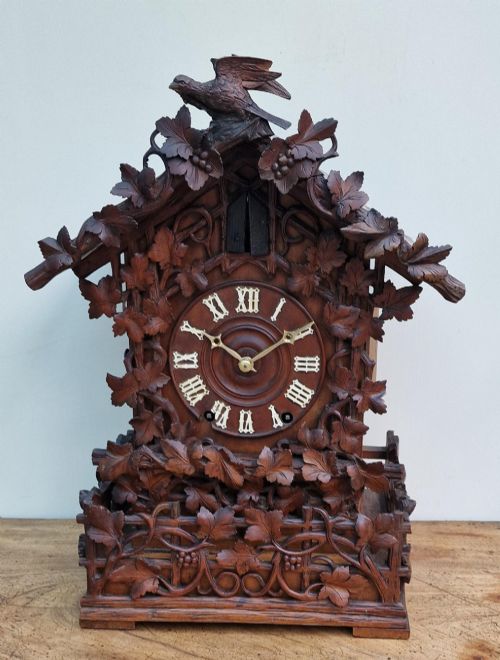
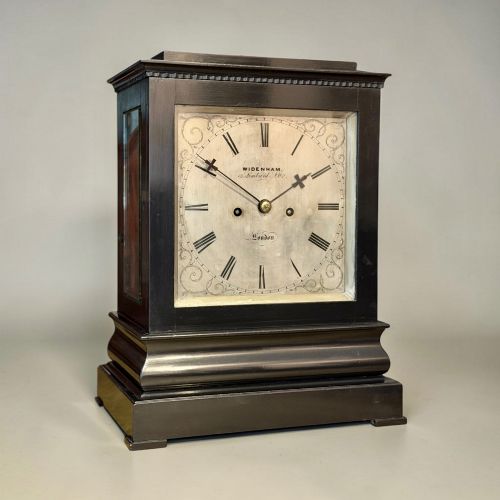
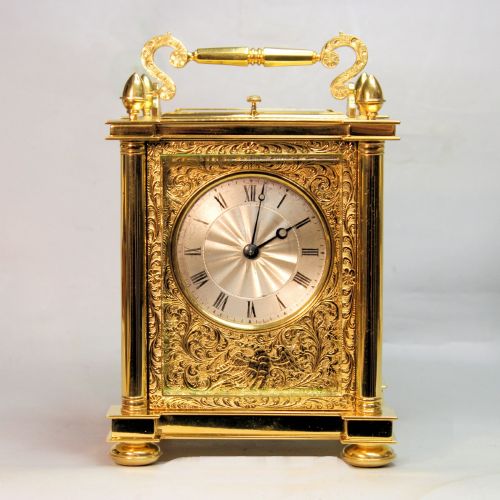
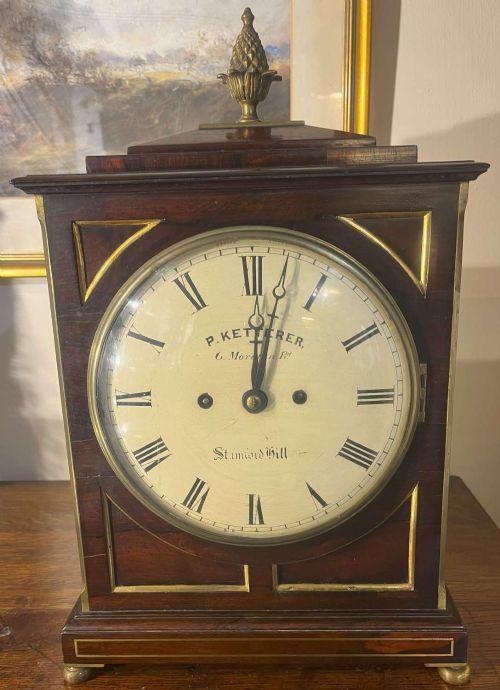
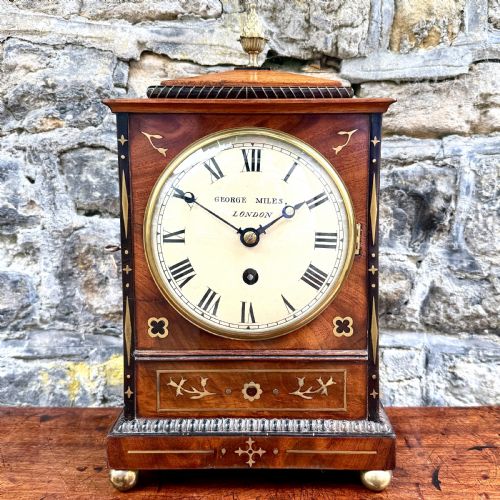
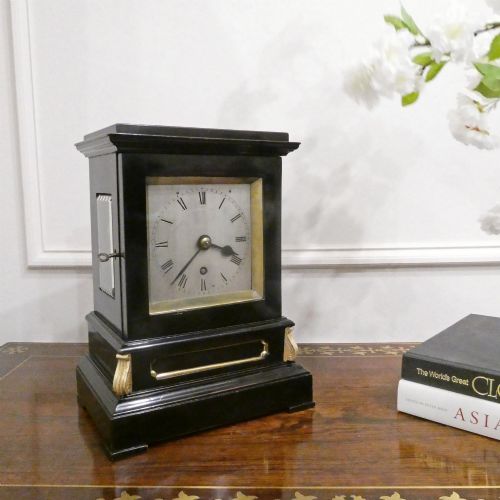
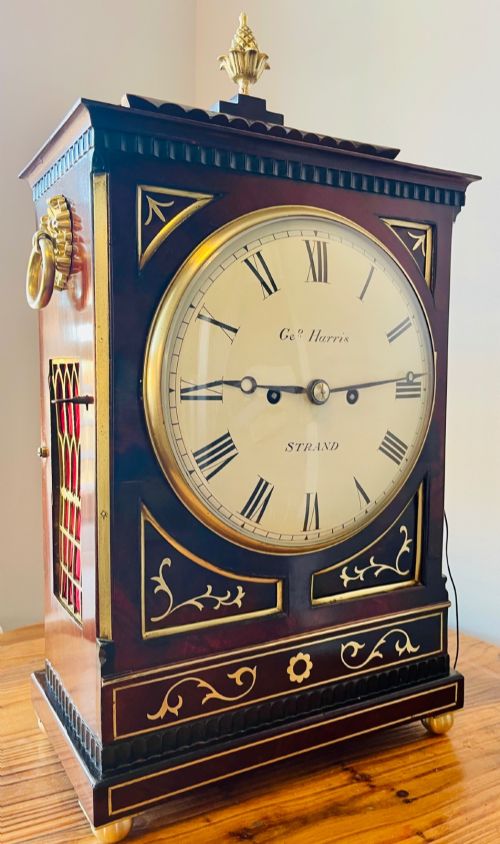
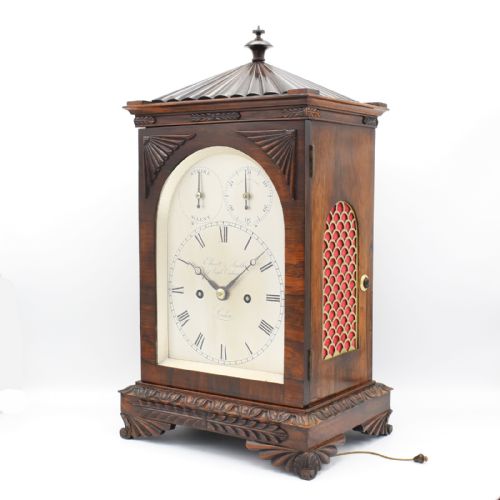
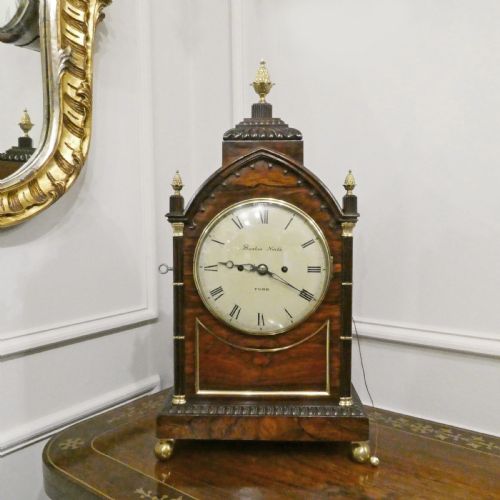
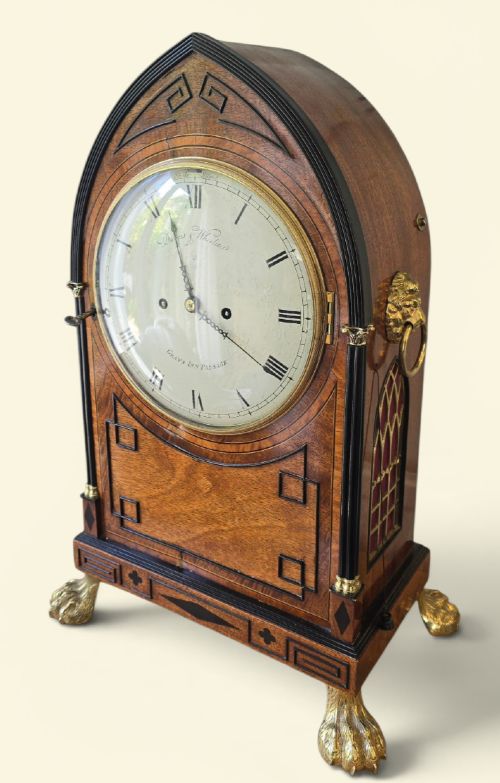
A bracket clock with fusee combines a weight-driven style of constant force movement with a portable architectural enclosure. These timepieces range from traditional mahogany and rosewood table formats to drum head and five glass library designs.
The versions most frequently met on this page date from the Georgian, Regency, and Victorian eras. They appear in diverse woods including satinwood, oak, and coromandel, often featuring silvered dials and brass mounts.
While initially designed to sit upon a wall bracket or table, many examples function equally well as mantel or library clocks today. Their movements include single and twin chain fusee configurations, sometimes offering striking mechanisms or alarm functions.
How they were made
Clockmakers utilised dense hardwoods such as mahogany, rosewood, and satinwood to construct sturdy cases that protected the delicate internal mechanics. These wooden housings were frequently enhanced with intricate inlay, brass mounts, and gilt or patinated bronze details.
Bracket Clock with Fusee Retail Price Guide 2026
Typical asking prices for bracket clock with fusee among the pieces listed under this phrase on Sellingantiques today, from the lower quarter to the upper quarter. They describe what is for sale here now, not the wider market.
Listings feature eighteenth century Georgian pieces alongside nineteenth century Victorian and Regency items, housed in mahogany, rosewood, oak, and satinwood.
What varies in quality
The refinement of the timber case and the sophistication of the dial work set superior examples apart from simpler pieces. Hand-engraved silvered metal dials, engine turned gilded details, and precise cabinet inlay indicate elevated craftsmanship.
Movement complexity also defines the grade of the clock. Single or twin chain fusee setups, year going capabilities, striking mechanisms, and alarm functions demand greater skill from the maker than standard time-only movements.
J. A. Wheatley Carlisle·Chater & Son London·John Ellicott·Fatton Eleve de Breguet London
The Bracket Clock with Fusee Glossary
- Fusee
- A conical pulley connected to the mainspring by a chain or cord, designed to maintain even tension and constant force as the spring unwinds. This mechanism ensures more accurate timekeeping throughout the power reserve.
- Bracket clock
- A portable clock traditionally placed on a wall bracket or shelf to improve sound projection and visibility. Many later examples sat directly on tables, mantelpieces, or desks.
- Silvered dial
- A brass or copper clock face treated with a silver compound to produce a matte, reflective surface for the numerals. It provides high legibility against dark timber cases.
- Twin fusee
- A movement incorporating two separate fusee cones and trains, typically driving timekeeping on one side and a striking or chiming mechanism on the other.
- Drum head
- A clock case featuring a circular housing mounted atop a tiered wooden plinth or base. This distinct silhouette became popular during the Regency period.
Bracket Clock with Fusee: Frequently Asked Questions
What is a fusee movement?
A fusee is a conical drum inside the clock that regulates the pull of the mainspring. It ensures the power delivered to the gears remains constant as the spring runs down.
This ingenious mechanical device distinguishes better British clocks of the eighteenth and nineteenth centuries from cheaper spring-driven alternatives.
Where should I place a bracket clock?
These clocks look best on sturdy surfaces where their detailed woodwork can be admired at eye level. Historically they sat on dedicated wall brackets or heavy tables.
Ensure the placement is away from direct heat sources and vibrations to keep the pendulum beating evenly.
How do I wind a fusee clock?
Winding requires a matching key inserted into the dial hole to tension the spring via the chain fusee. Care must be taken not to overwind the movement.
Consulting a professional horologist for an initial service and demonstration is recommended before winding an antique clock for regular use.
How can I tell the period?
Case timber, dial design, and brass ornamentation offer the clearest clues to age. Georgian and Regency pieces often feature clean architectural lines and subtle brass inlay.
Victorian examples frequently showcase bolder rosewood or mahogany cases, sometimes incorporating five glass panels to reveal the movement.