




Boxed Sterling Napkin Rings
Boxed sterling napkin rings combine practical dining utility with the charm of fitted presentation cases from the Victorian, Edwardian, and Art Deco periods.

Boxed Sterling Napkin Rings
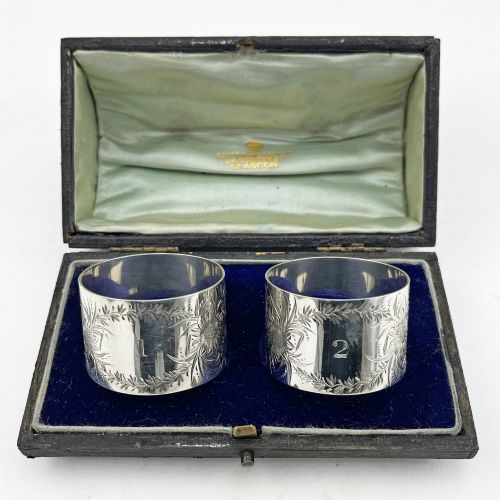
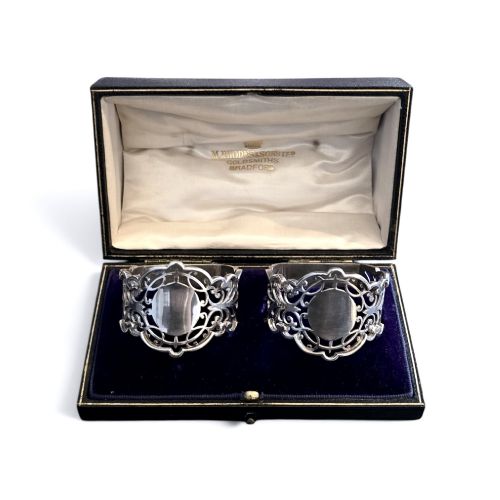
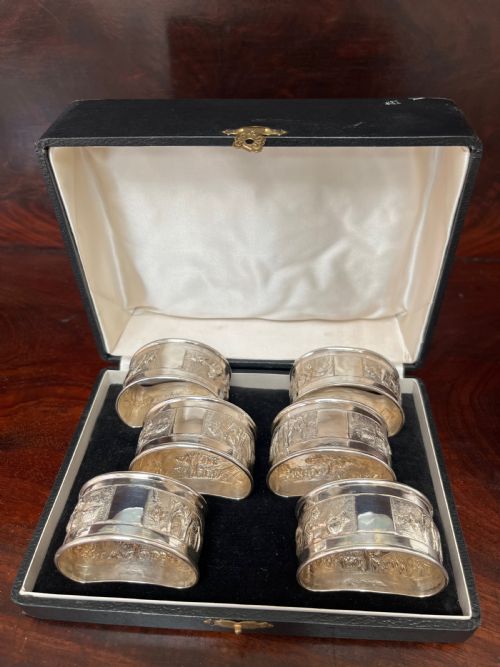
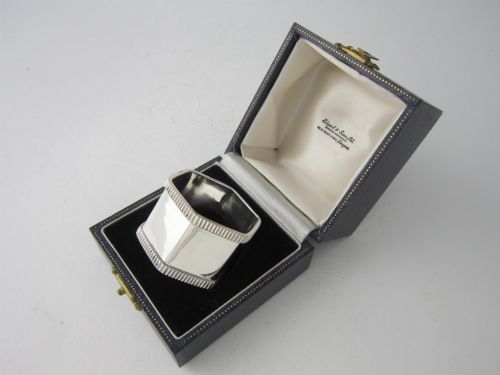
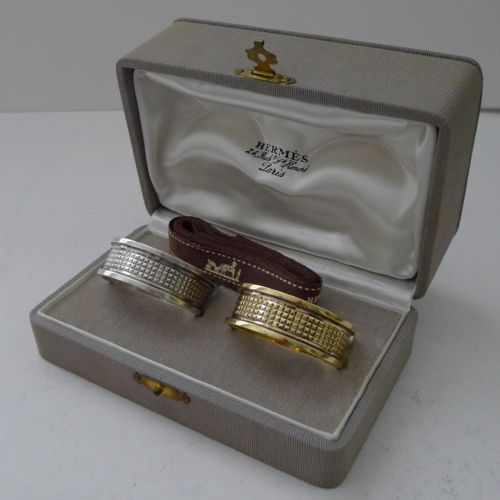
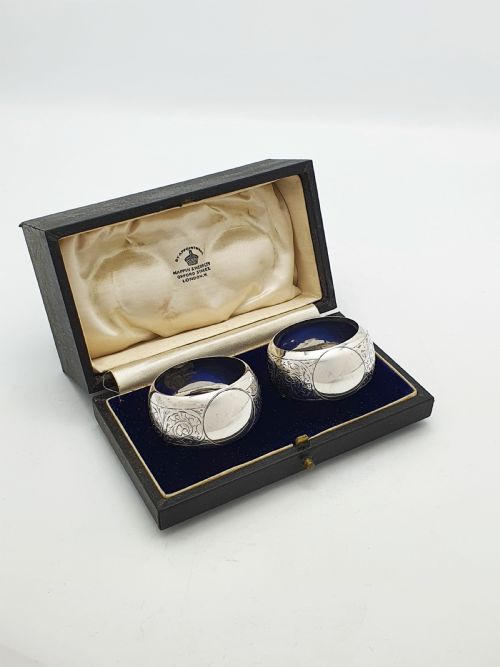
When buyers search for boxed sterling napkin rings, they encounter complete table settings housed in purpose-built receptacles. These items span periods from the nineteenth century through the mid-twentieth century, including Victorian, Edwardian, George V, and Art Deco eras.
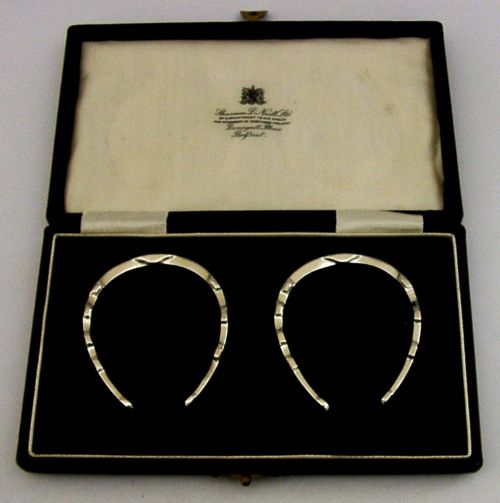
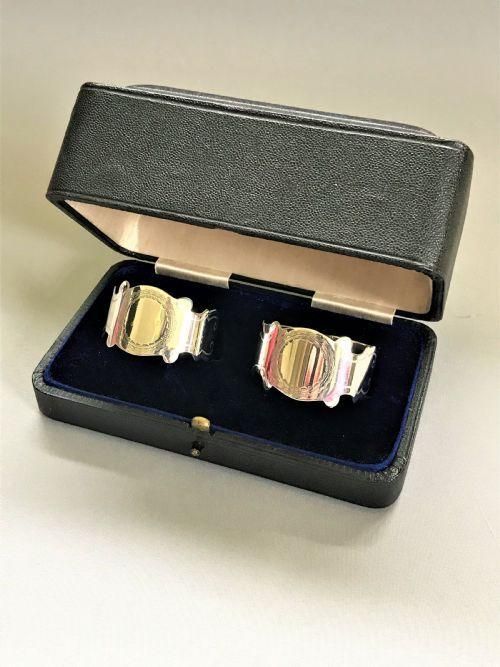
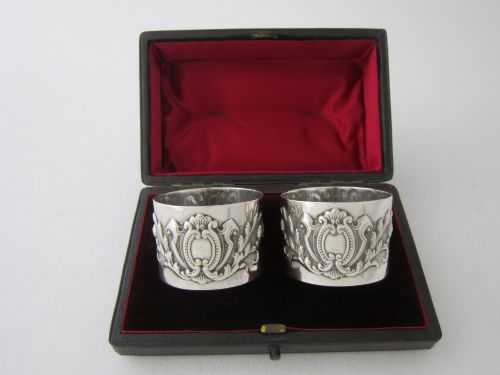
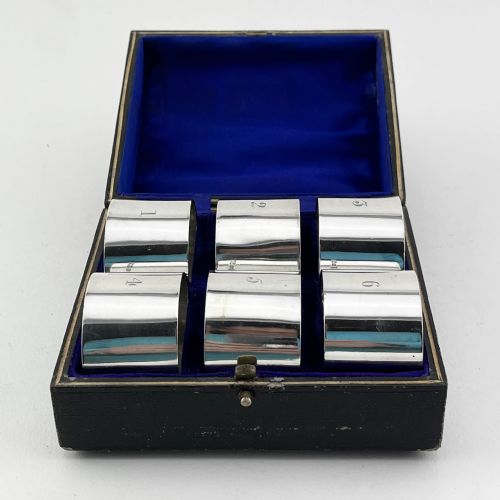
The most common formats met on this page are pairs and sets of six, often accompanied by christening sets that include matching spoons or forks. Forms range from plain polished bands to engraved shamrocks, ferns, horseshoes, and engine-turned designs with blank cartouches.
How They Were Made
Silversmiths formed the rings from sterling silver, sometimes applying silver gilt or intricate hand engraving such as ferns and lucky horse shoes. Hallmarks stamped into the metal record the assay office, city, and year of manufacture.
Presentation cases utilise sturdy wooden or card frames covered in leatherette or leather, lined internally with fitted beds of silk, satin, or velvet to cradle each individual ring securely.
Boxed Sterling Napkin Rings Retail Price Guide 2026
Typical asking prices for boxed sterling napkin rings among the pieces listed under this phrase on Sellingantiques today, from the lower quarter to the upper quarter. They describe what is for sale here now, not the wider market.
Some Edwardian sets arrived tucked into velvet beds with lucky horseshoes, ensuring guests dined under a secure ironclad guarantee of good fortune.
What Varies in Quality
The weight and gauge of the sterling silver define the structural substance of each ring, distinguishing heavier sets from lighter alternatives. Maker attribution, ranging from distinguished firms to regional silversmiths, influences the desirability of a set.
The preservation of the original fitted box adds considerable distinction, particularly when the internal silk or velvet lining and exterior leatherette remain intact alongside matching numbered rings.
C.T. Burrows & Sons·Tiffany & Co·Mappin & Webb·Cartier·Walker & Hall
The Boxed Sterling Napkin Rings Glossary
- Sterling silver
- An alloy containing 925 parts of silver per 1,000, establishing the standard for British silver tablewares. This material provides durability for daily dining use.
- Hallmark
- A series of official marks stamped on precious metals indicating the maker, assay office, and year of testing. These symbols authenticate the origin and silver standard.
- Cartouche
- An enclosed panel left blank on the surface of a napkin ring for personal engraving. Owners often added initials or family crests into this space.
- Engine turned
- A geometric decorative pattern mechanically engraved into the metal surface using a lathe. This technique creates precise, repeating linear motifs across the ring.
- Silver gilt
- Sterling silver coated with a thin layer of gold on the surface. This treatment provides a contrasting two-tone finish inside or outside the piece.
Boxed Sterling Napkin Rings: Frequently Asked Questions
How do I store boxed sterling napkin rings?
Keep the pieces inside their original fitted cases away from direct sunlight and damp environments to protect the internal silk and velvet linings. Storing them enclosed helps minimise tarnish accumulation on the silver surface.
Regular gentle polishing with a soft cloth maintains the finish without wearing away the engraved details or hallmarks stamped into the metal.
Can I use these napkin rings for daily dining?
Sterling silver stands up well to regular use during meals, provided the items receive proper cleaning after handling. Storing them back in their lined boxes prevents accidental surface scratching between meals.
Avoid abrasive cleaners that might damage hand-engraved patterns like ferns, shamrocks, or engine-turned geometric designs.
How do I identify the date of my napkin rings?
Locate the small stamped hallmarks on the edge or interior of the silver ring and compare the duty mark letter against standard assay office date tables. The stylistic clues of the case, such as Edwardian leatherette or Art Deco geometry, often support the assay date.
Sets marked with specific reigning periods like George V or Victorian eras reflect the fashion and hallmarking conventions of those decades.
What is the purpose of blank cartouches on napkin rings?
Blank cartouches provided an allocated space for families to engrave initials, monograms, or dates to identify individual family members at the dining table. This customisation ensured each person retained their designated ring across multiple meals.
Many antique sets retain these cartouches completely unengraved, offering a smooth surface for modern personalisation.