

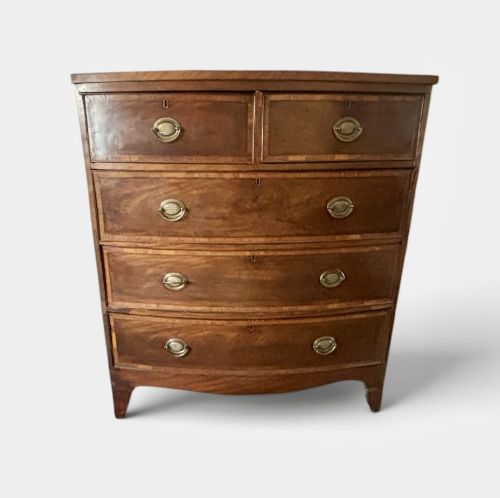
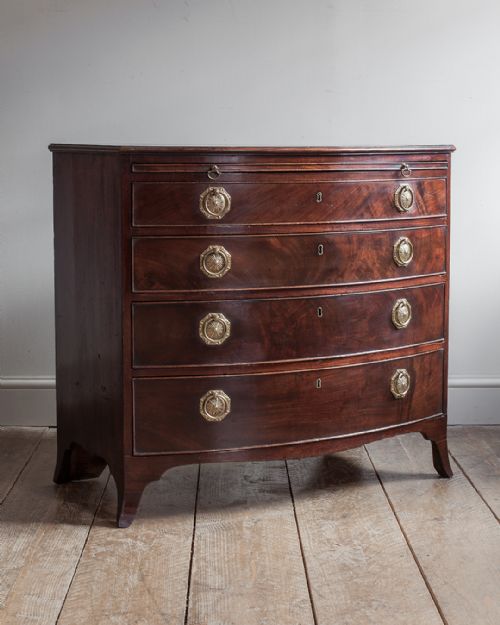
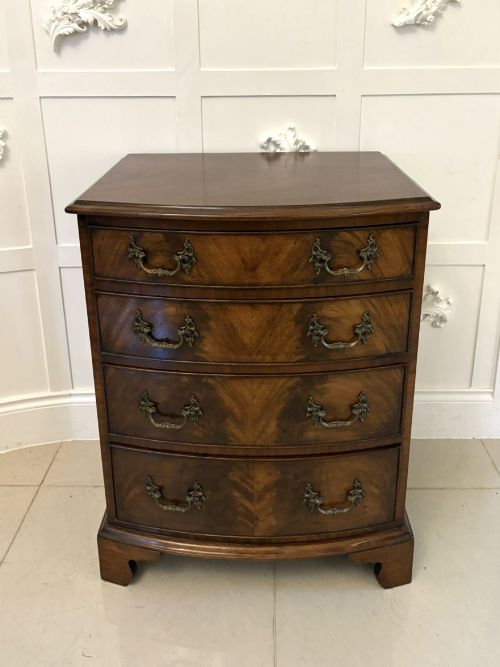
Bowfront Storage Drawers
Bowfront storage drawers offer curved fronts that soften a room while holding garments.
Bowfront Storage Drawers
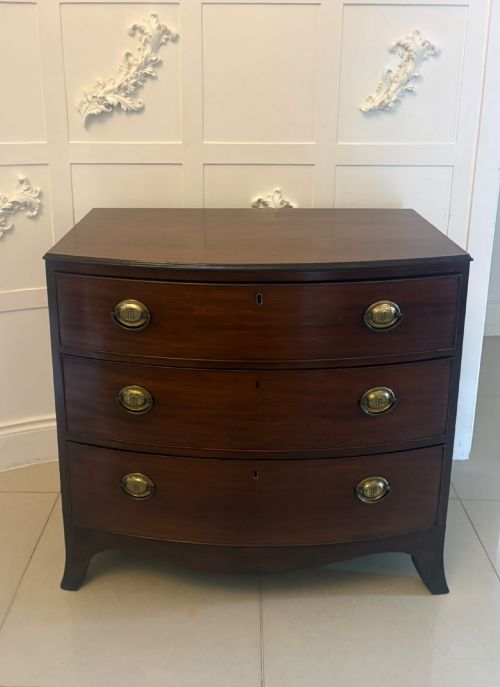
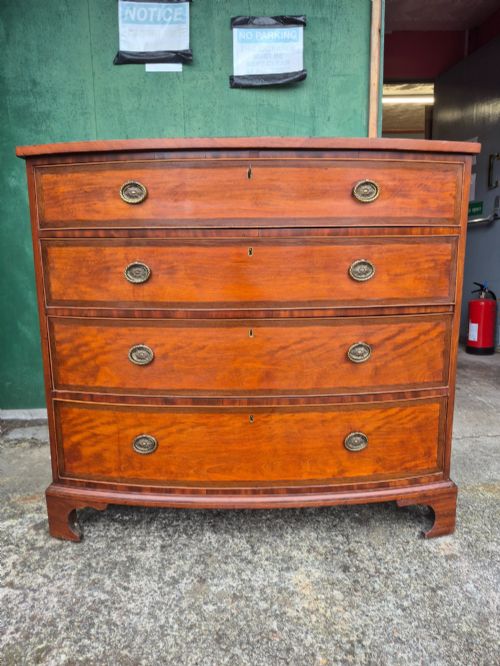
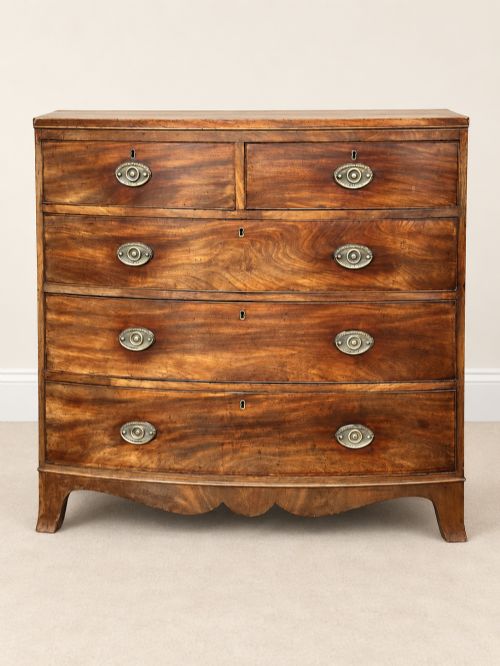
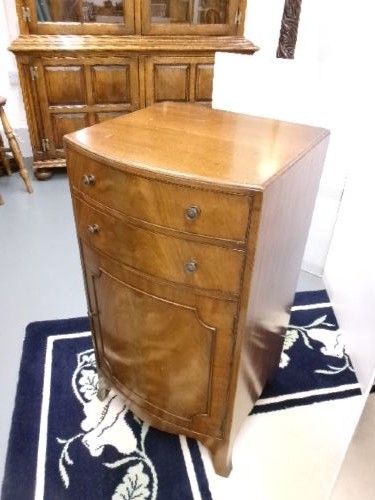
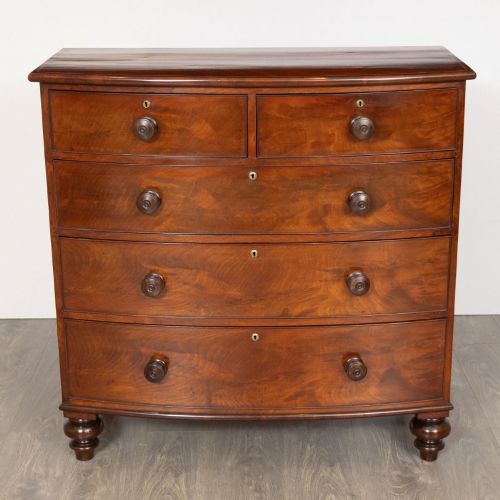
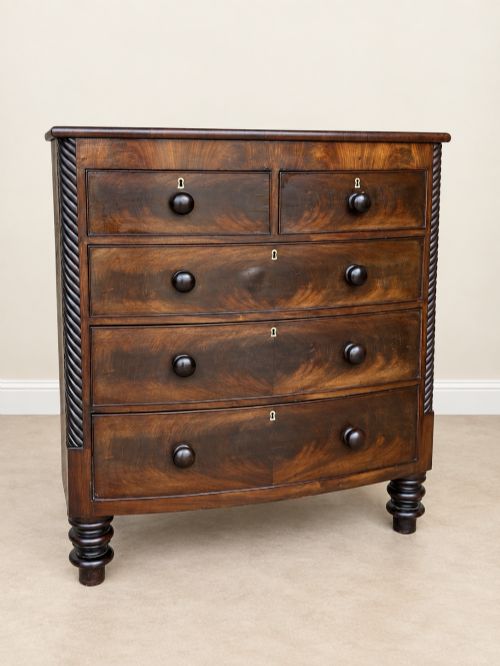
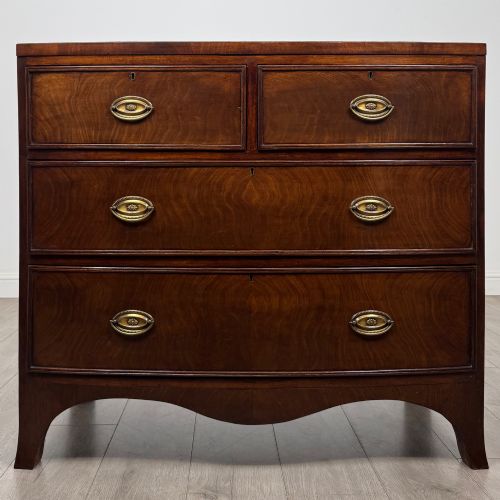
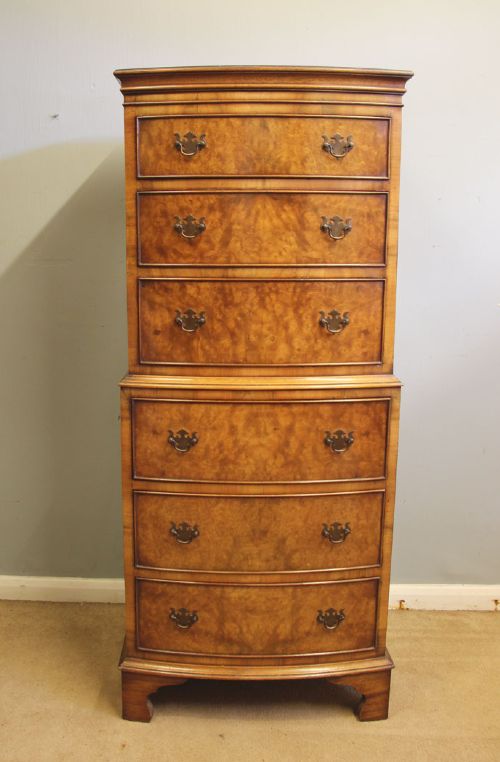
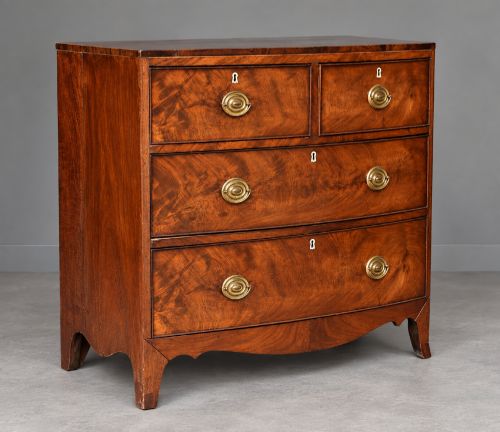
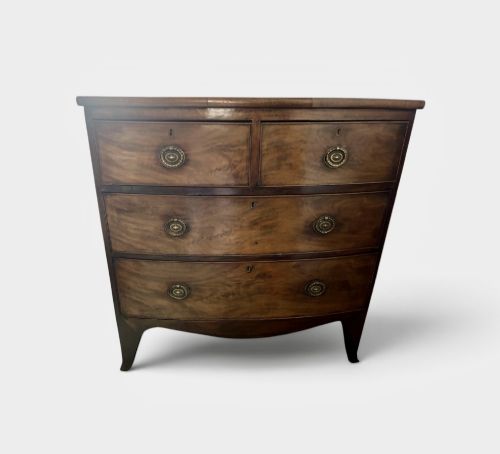
Bowfront storage drawers are primarily chests of drawers and sideboards shaped with a convex front curve. These pieces originate across the eighteenth, nineteenth and twentieth centuries, spanning Georgian, Regency, Victorian and later periods. A buyer seeking bowfront storage drawers on this page will encounter mostly mahogany chests, along with occasional examples in burr walnut, oak and satinwood.
The selection ranges from small compact chests to taller chest on chest formats and sideboards. Pieces frequently exhibit stylistic traits associated with George III, George IV, Sheraton and Edwardian designs. The curved silhouette defines every item, distinguishing them from flat-fronted case furniture.
How they were made
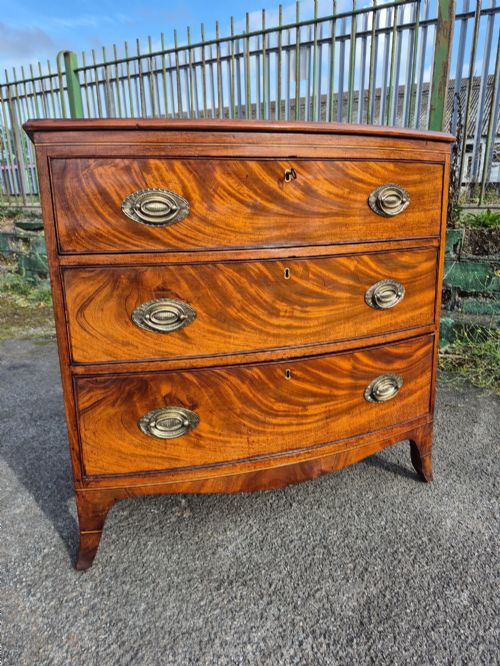
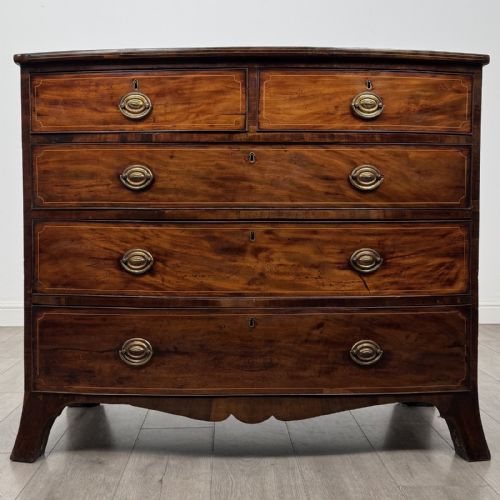
Cabinetmakers constructed these pieces using solid timber frames combined with wood veneers applied to drawer fronts and carcases. Mahogany and flame mahogany veneer provide the primary visual surfaces, often enhanced by satinwood banding or crossbanding. Burr walnut and oak also appear as structural and decorative elements across different periods.
Brass hardware such as handles and escutcheons punctuate the timber surfaces. The curved bowfront profile required precise carpentry to shape the drawer fronts and matching framing to ensure smooth operation.
Some Welsh chests hide a secret compartment alongside standard drawers for stashing valuables.
What varies in quality
Quality in these items rests upon the selection of timber figure and the precision of the cabinetwork. Pieces utilising highly figured flame mahogany or burr walnut demonstrate superior material choice by the maker. The crispness of satinwood banding and the neatness of crossbanding indicate the level of care taken during construction.
Proportions also distinguish finer examples, particularly in smaller or narrower formats designed for specific domestic spaces. The integration of secondary woods and the handling of curved drawer construction show the underlying standard of craftsmanship.
The Bowfront Storage Drawers Glossary
- Bowfront
- A convex curved front profile typical of certain chests of drawers and sideboards. This shape softens the corners of case furniture.
- Crossbanding
- A strip of veneer laid perpendicular to the surrounding grain along the border of a drawer front. It provides a decorative framing effect.
- Flame mahogany
- A veneer cut from mahogany showing a distinctive flickering flame pattern. It appears frequently on finer Georgian and Regency pieces.
- Satinwood
- A light-yellow timber used for contrasting stringing and banding on mahogany furniture. It brings brightness to darker cabinet pieces.
- Chest on chest
- A tall storage unit formed by stacking one smaller chest of drawers directly upon a larger base chest. This tallboy format maximises vertical capacity.
Bowfront Storage Drawers: Frequently Asked Questions
What rooms suit bowfront storage drawers?
These chests fit well in bedrooms or hallways where floor space benefits from rounded corners. The curved profile reduces sharp edges in tighter living areas.
Their substantial storage capacity makes them practical for clothing or linens while maintaining a decorative presence.
How do I identify a Georgian piece?
Georgian examples often display hand-cut dovetails and native timber linings inside the drawers. Proportions tend to follow classical architectural rules set during the eighteenth and early nineteenth centuries.
Secondary woods like oak or pine often appear internally on pieces from this era.
Are all bowfront chests made of mahogany?
Mahogany dominates the listings, but walnut and oak appear across different periods. Flame mahogany veneer and standard mahogany solids represent the majority of surviving examples.
Some pieces incorporate satinwood banding or feature burr walnut instead of mahogany.