


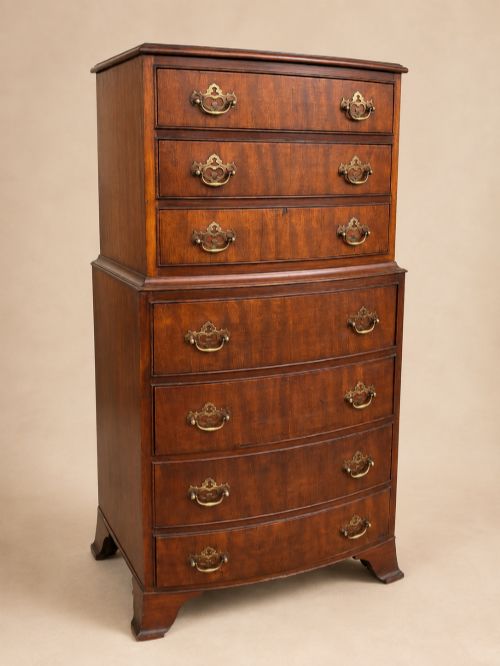
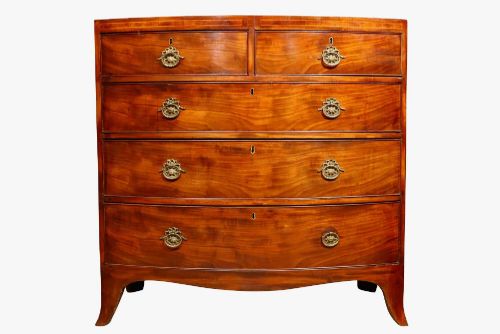
Bowfront Bedroom Storage
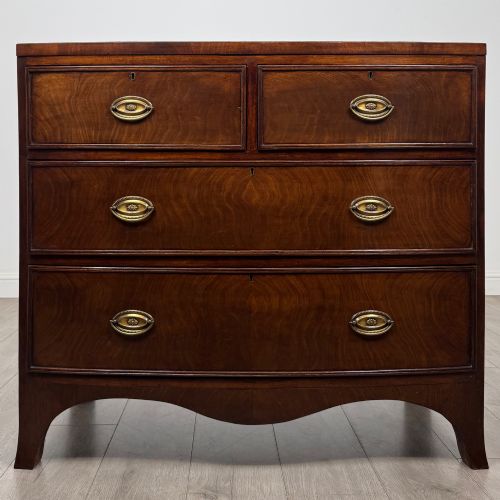
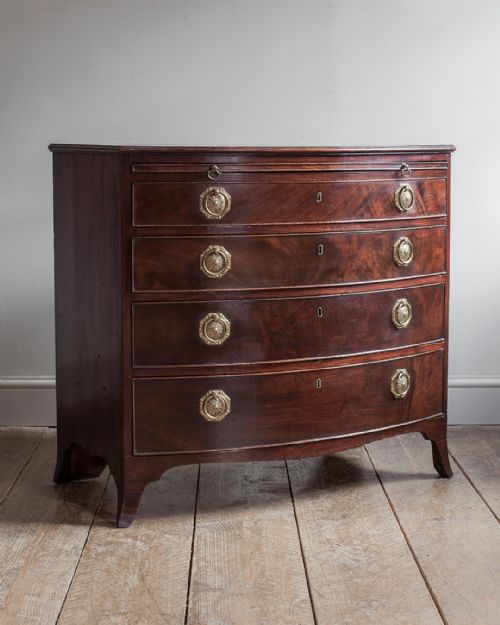
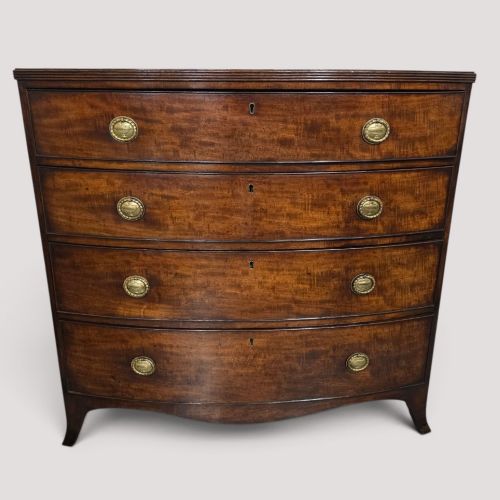
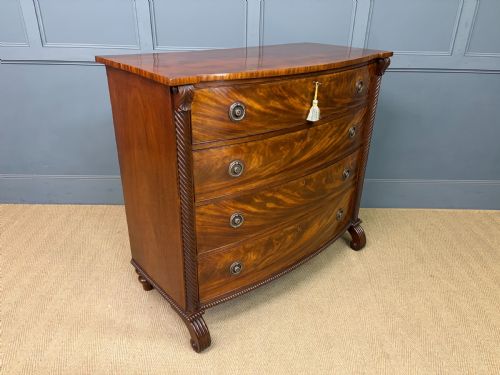
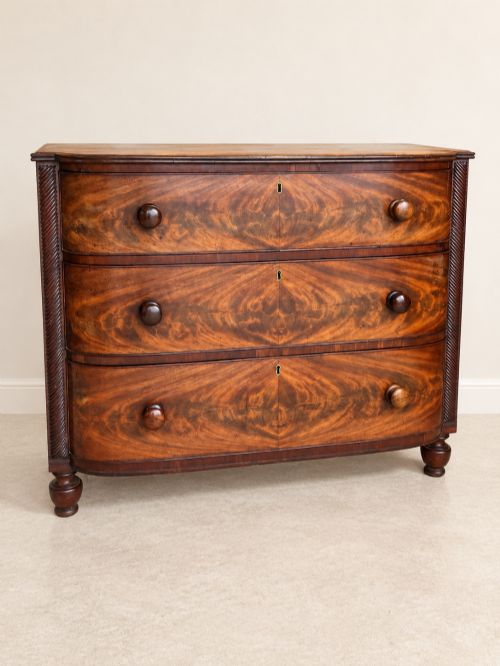
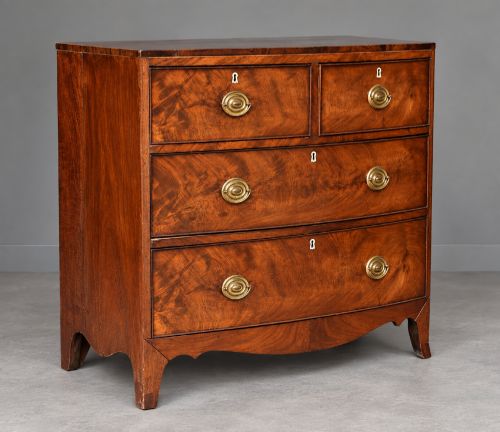
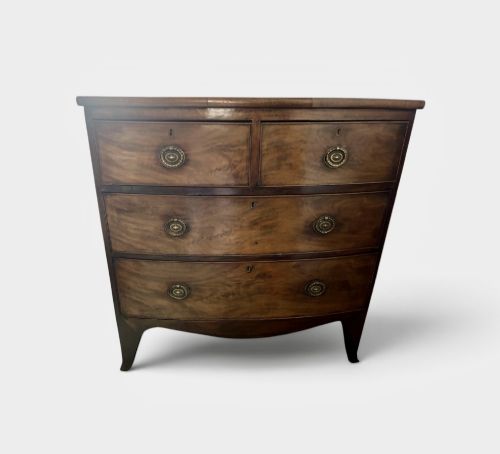
These bowfront bedroom storage pieces bring curved drawer fronts and deep proportions into domestic spaces from Georgian, Regency, and Victorian periods.
Bowfront Bedroom Storage
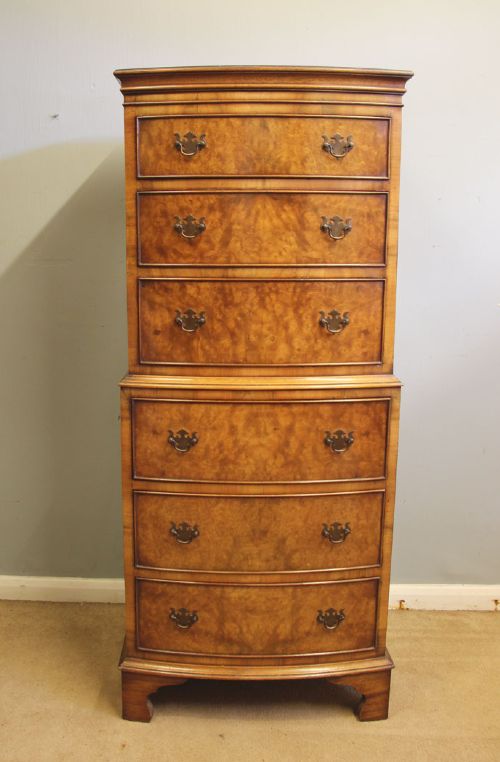
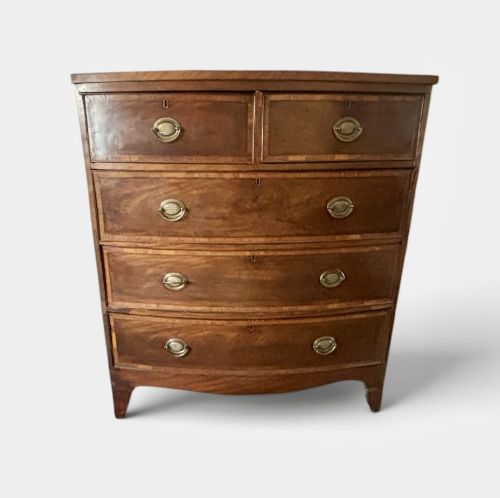
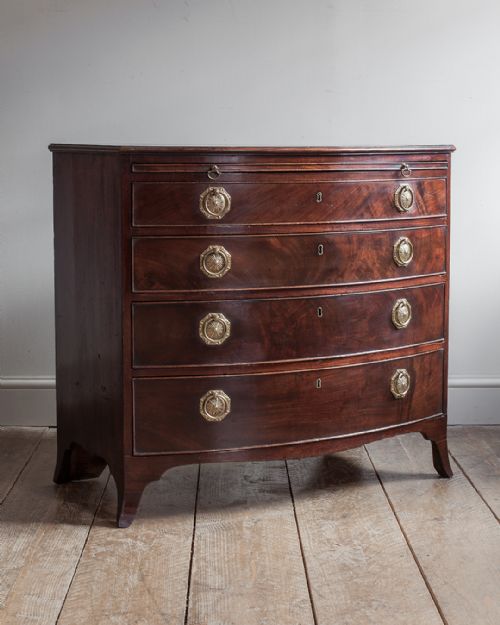
When you search for bowfront bedroom storage, you look for case furniture built with a convex curved front that softens the corners of a room. The listings here consist primarily of chests of drawers, alongside wardrobes and linen presses spanning the Georgian, Regency, and Victorian eras.
Mahogany forms the dominant wood you will encounter on this page, often paired with flame mahogany veneer or satinwood banding. Pieces range from small bedside proportions to large chest on chest formats designed for substantial clothes storage.
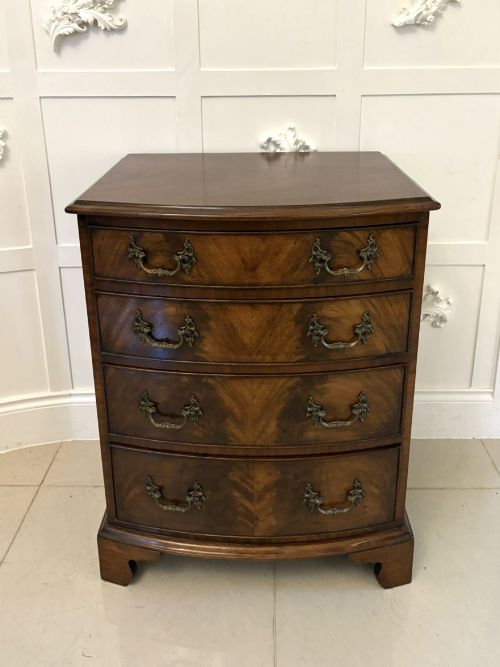
Regional variations appear across the selection, including Scottish and Welsh pieces that exhibit local cabinet-making traits such as secret drawers or neat proportions. Later twentieth-century interpretations introduce burr walnut finishes from the nineteen-twenties and nineteen-thirties.
Materials and Construction
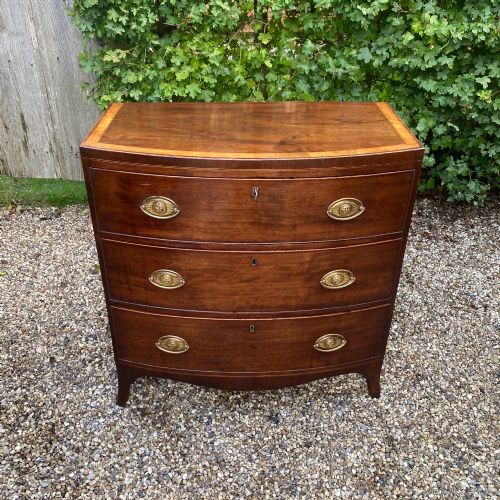
Cabinet makers utilised solid woods and applied veneers, placing flame mahogany or satinwood across curved drawer fronts to create decorative grain patterns. Crossbanding and stringing in contrasting timbers frame the drawer perimeters on finer examples.
Constructing a curved carcase required specialist joinery to shape the solid wood drawers and frame components to match the radius of the bow front. Brass hardware, including drop handles and escutcheons, secures the functional operation of the drawers and doors.
Periods represented across the available inventory span the eighteenth century, Georgian, Regency, Victorian, nineteen-twenties, and nineteen-thirties.
Assessing Quality
Quality rests upon the selection of timber veneers and the precision with which the curved drawer fronts align with the surrounding frame. Figured mahogany and balanced satinwood banding distinguish the superior pieces from plain utilitarian items.
The integrity of the internal drawer construction and the retention of original brass handles influence the standing of each piece. Proportions also matter, with neat or small-scale dimensions commanding greater attention from collectors.
The Bowfront Bedroom Storage Glossary
- Bow front
- A convex curved cabinet front that projects outward from the centre. This shape gained popularity during the Georgian and Regency periods.
- Flame mahogany
- A veneer cut from the branch junction of a mahogany tree, producing a distinctive flame-like pattern. It decorates the drawer fronts of finer pieces.
- Crossbanding
- A strip of veneer laid across the grain of the primary wood surface, usually framing the edges of drawer fronts. It provides a decorative border using contrasting timber.
- Caddy top
- A tabletop style with a moulded edge that rises slightly above the surface plane. It appears on select early nineteenth-century chests.
- Secret drawer
- A concealed compartment built into the interior framework of a chest, accessed by removing a standard drawer. It offers a secure space for valuables.
Bowfront Bedroom Storage: Frequently Asked Questions
What is a bow front chest?
A bow front chest is a storage unit featuring a convex curved front facade that projects outward. This design softens room angles and provides generous internal drawer capacity.
Most examples found here date from the Georgian, Regency, and Victorian periods, constructed primarily in mahogany with various veneer finishes.
How do I date a bowfront chest?
Dating relies on examining the construction methods of the drawers, timber choices, and overall hardware style. Georgian and Regency pieces typically show hand-dovetailed drawer joints and native mahogany timbers.
Later Victorian and nineteen-thirties examples often introduce machine-cut elements, different internal woods, and distinct veneer selections like burr walnut.
What woods were used for these pieces?
Mahogany serves as the primary wood across the majority of these listings, often enhanced by flame mahogany veneer or satinwood banding. Oak and walnut also appear in specific regional or later pieces.
Decorative veneers provide visual depth to the curved drawer fronts, contrasting with the solid structural timbers of the carcase.
Are these pieces suitable for modern bedrooms?
These chests and wardrobes provide substantial storage capacity while maintaining a compact footprint due to their curved design. Their warm wood tones integrate easily into contemporary bedroom interiors.
Maintenance involves regular polishing with appropriate wax to preserve the finish of the historic wood and veneer surfaces.