
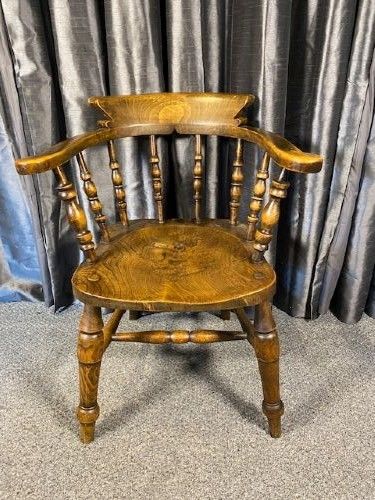
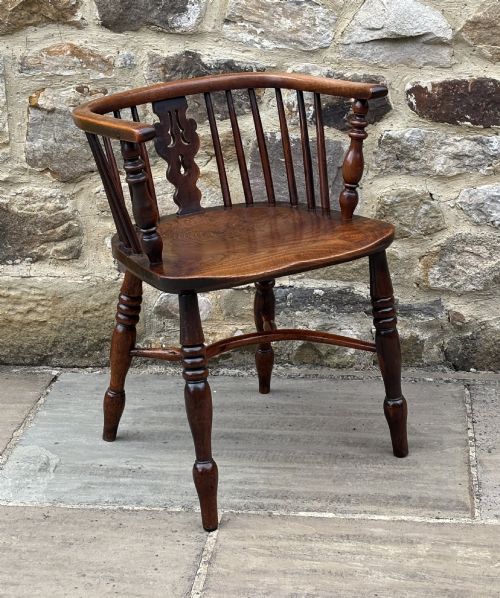
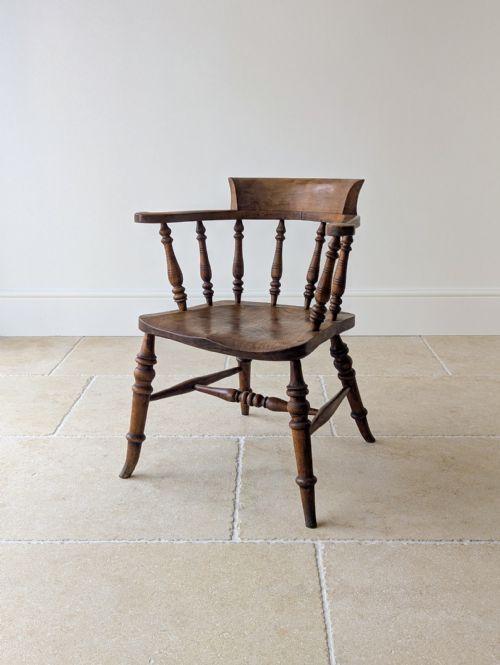
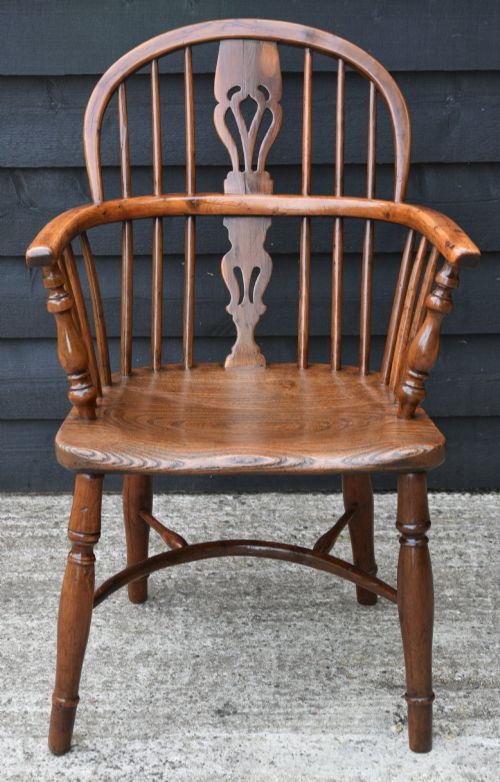
Bow Back Wooden Armchair
A bow back wooden armchair offers robust vernacular comfort, combining traditional Windsor forms with sturdy timber construction for everyday utility.
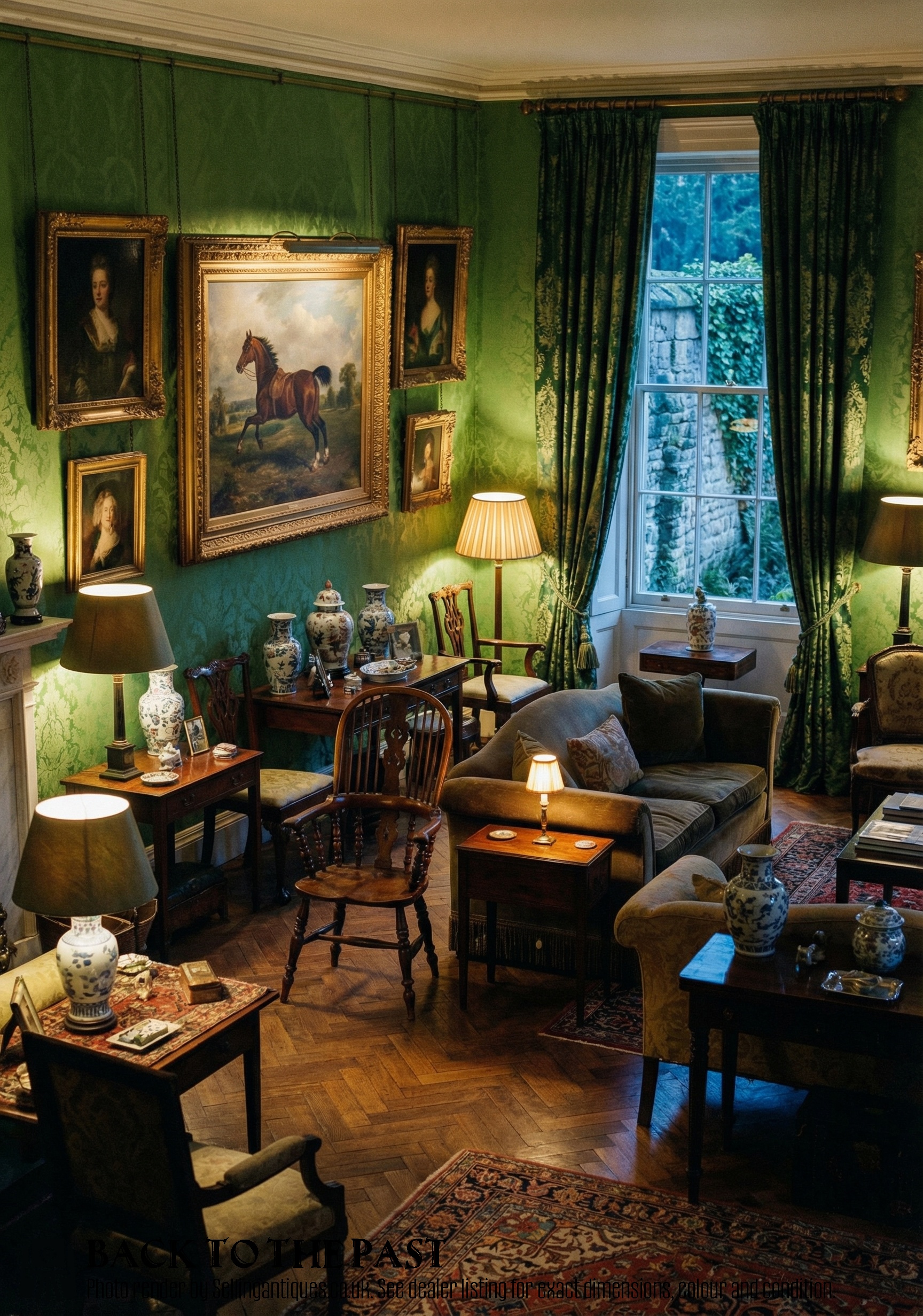
Bow Back Wooden Armchair
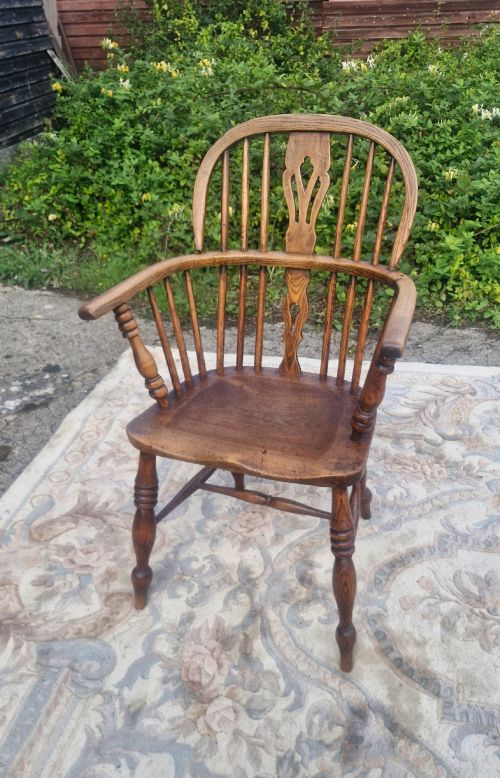
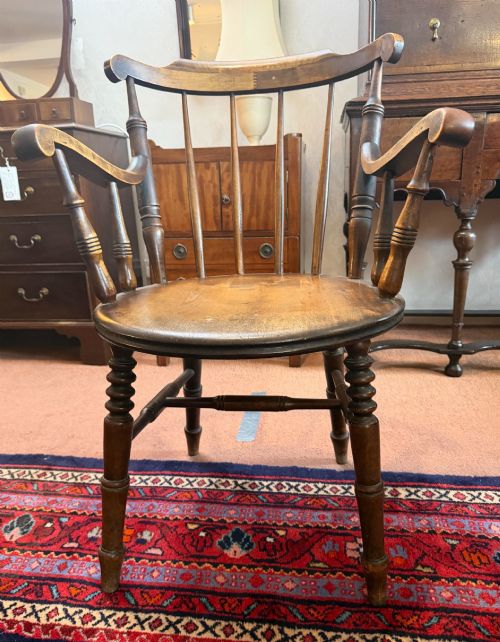
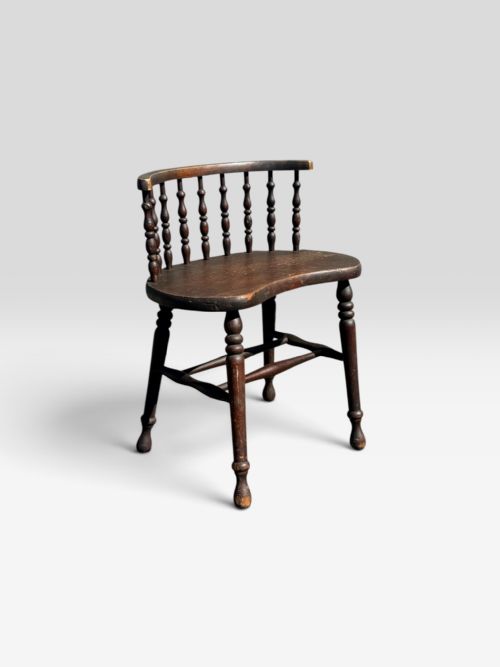
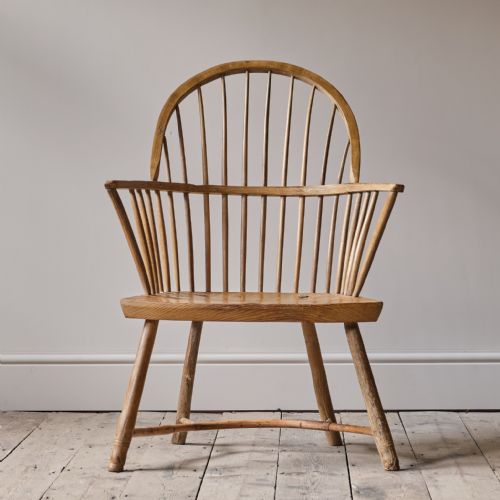
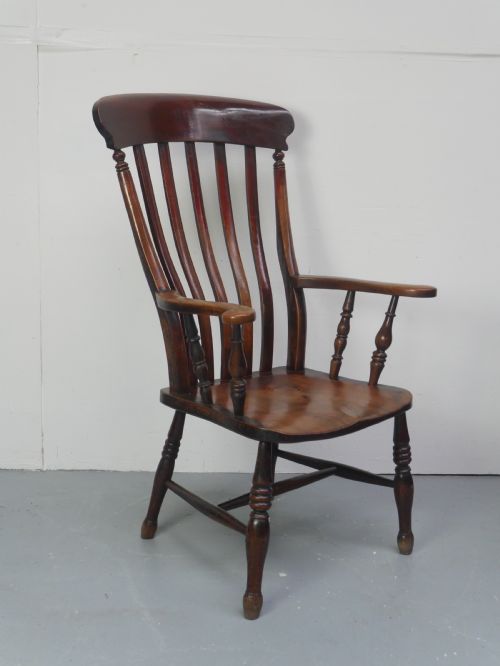
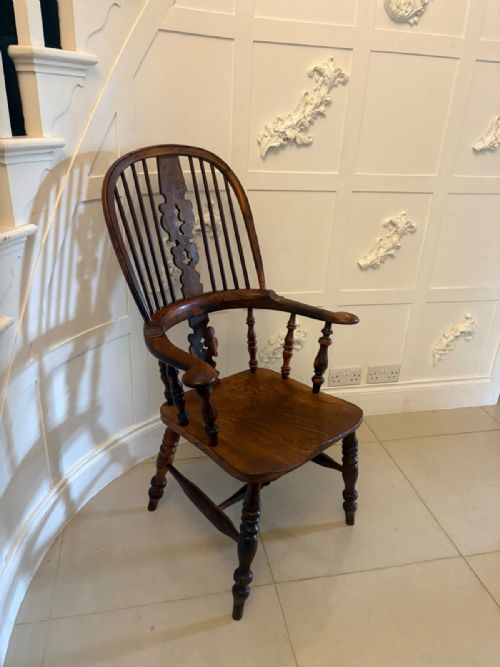
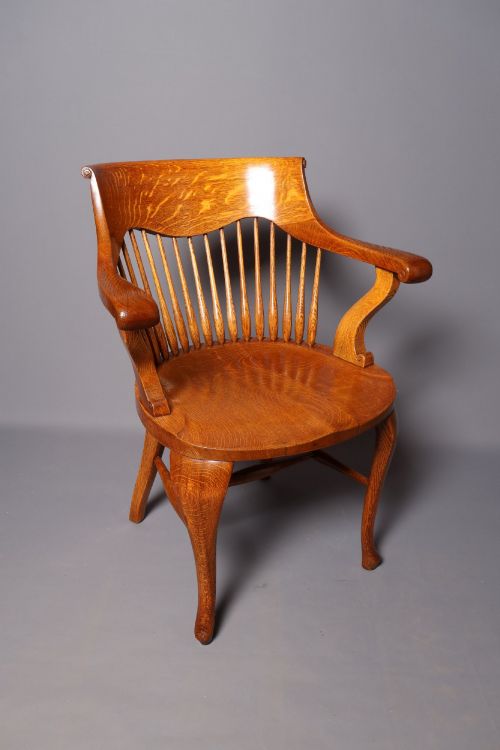
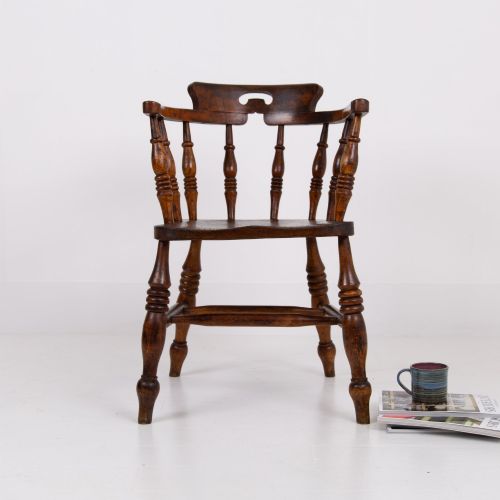
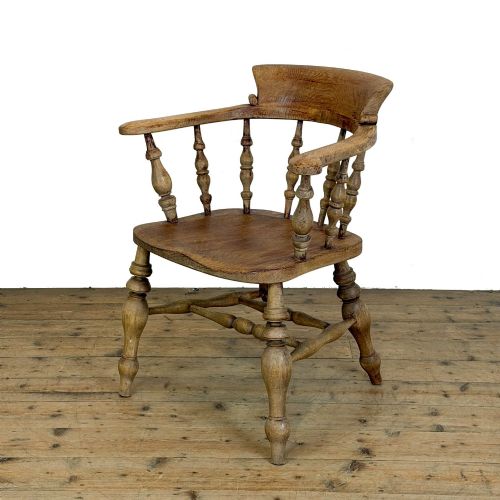
A bow back wooden armchair is a vernacular seating form designed for domestic, kitchen or office use. These chairs emerge primarily from the nineteenth century, with examples spanning from the eighteenth century into the Edwardian period. Buyers encounter various regional expressions under this search phrase, including Windsor chairs, smokers' bows and captains' chairs.
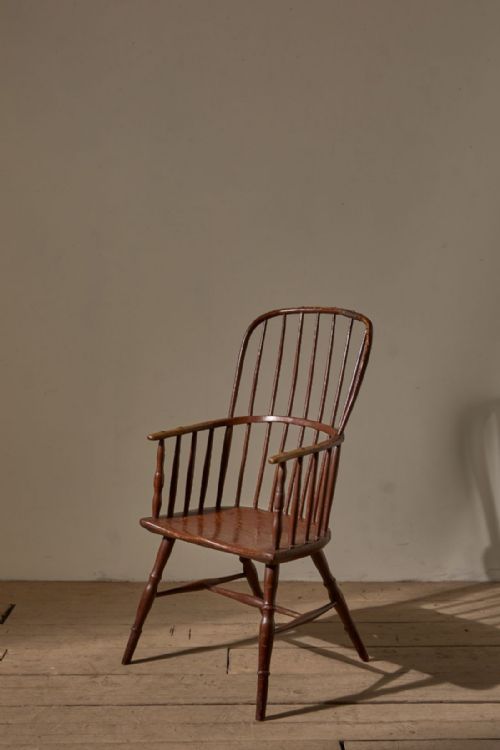
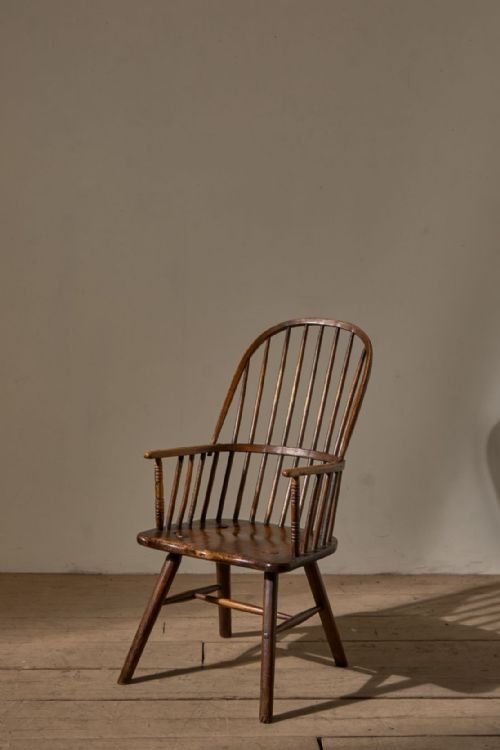
The most common variations on this page include elm, ash and beech timber combinations shaped into hoop backs, low backs and stick backs. Makers utilised sturdy native woods to build armchairs suited for farmhouses, studies and dining rooms. These pieces function equally as desk chairs or fireside seating.
Makers shaped these chairs with solid plank seats and steam-bent wooden bows supporting spindles or comb backs. English provincial workshops produced sturdy armchairs designed to withstand heavy daily use. The resulting forms represent traditional carpentry methods across Victorian and earlier rural contexts.
How they were made
Craftsmen built these armchairs using a combination of solid timber seats and turned spindles. Elm frequently forms the shaped seat, while ash, beech or yew provide the tensile strength needed for bent bows and uprights. Carpenters bored holes directly into the solid wood seats to secure the legs and back spindles.
Makers utilised steam-bending techniques to create the characteristic curved wooden bow that forms the upper back and armrests. Individual spindles and supports were then turned on lathes and wedged firmly into place. Finished surfaces often display original brown paint, polished grain or aged patination.
Several chairs bear the quiet scars of nineteenth-century pipe smoke and decades of fireside study.
What varies in quality
The quality of a bow back wooden armchair depends heavily on the choice of timber and the complexity of its turning. Chairs incorporating figured yew wood or rich combinations of ash and elm generally represent higher levels of regional craftsmanship. Simpler utility chairs in beech or oak offer sturdy construction but less decorative grain.
Proportion and joinery integrity define the finer examples on the market. Well-executed armchairs feature balanced spindle arrangements, tightly fitted joints and comfortable saddle seats shaped directly from thick timber planks. Wear patterns and patination on the wooden surface indicate the age and authenticity of each piece.
John Brand of Sleaford
The Bow Back Wooden Armchair Glossary
- Bow back
- A continuous wooden rail bent in an arch to form the backrest and arm supports of an armchair. This technique provides structural strength while allowing comfortable seating.
- Windsor chair
- A chair built with a solid wooden seat into which the legs and back spindles are directly inserted. These chairs utilise various timber combinations and regional vernacular styles.
- Smokers bow
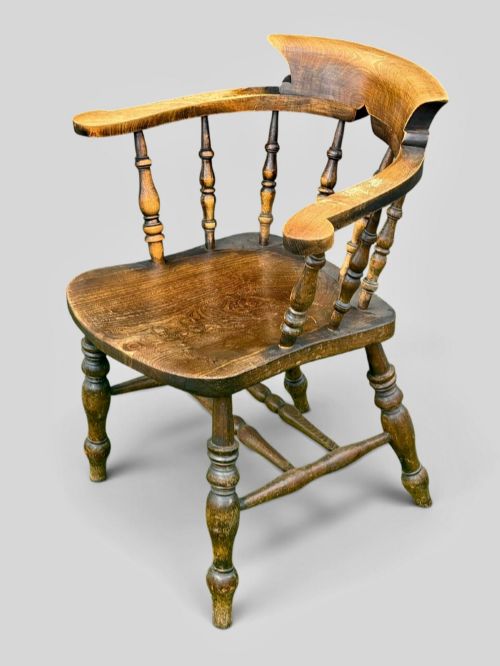
- A low-backed wooden armchair with a rounded backrail, frequently utilised in offices, smoking rooms and farmhouses. They typically feature turned spindles and sturdy elm seats.
- Comb back
- A Windsor chair variation where the central vertical spindles extend upward through a low crossbar to resemble the teeth of a comb. This style appears in eighteenth and nineteenth-century vernacular seating.
- Stickback
- A chair design featuring plain, unadorned spindles supporting the backrail without elaborate turnings. These utilitarian pieces rely on straightforward joinery for everyday durability.
Bow Back Wooden Armchair: Frequently Asked Questions
What is a smokers bow chair?
A smokers bow is a sturdy wooden armchair featuring a low, curved backrail supported by turned spindles. These chairs were widely utilised in nineteenth-century offices, kitchens and smoking rooms.
They share construction methods with Windsor chairs, combining solid timber plank seats with bentwood upper frames for daily durability.
How do I date a wooden armchair?
Dating relies on timber species, turning styles and construction marks visible beneath the seat. Eighteenth and early nineteenth-century examples often display deep patination and distinct regional proportions.
Victorian and Edwardian versions incorporate factory turnings and harder timber combinations such as beech and oak.
Are these chairs comfortable for a desk?
Many of these armchairs were originally produced as captains or office desk chairs. Their solid saddle seats and curved armrests provide stable support for working.
Buyers should check the seat height and arm clearance against modern desk dimensions before regular use.
What woods were used for these chairs?
English makers combined native timbers to maximise strength and flexibility. Elm was the preferred choice for thick, carved seats because it resists splitting.
Ash, beech, yew and oak were utilised for the bent bows, legs and turned spindles, creating durable two-tone or multi-timber structures.