

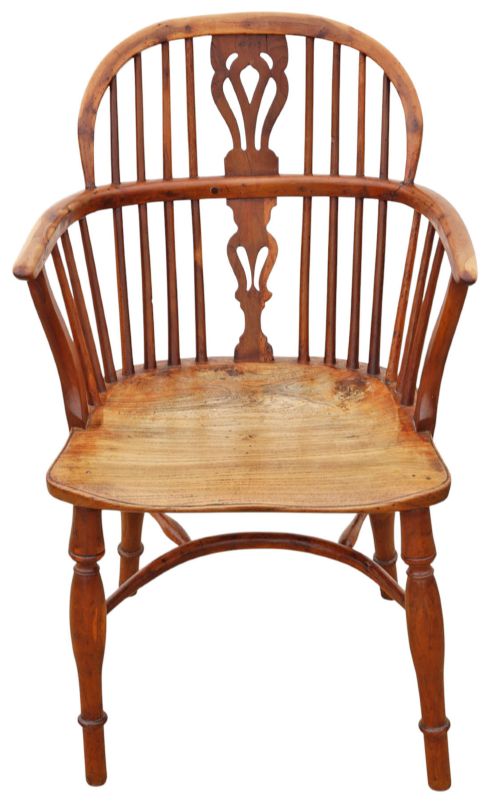
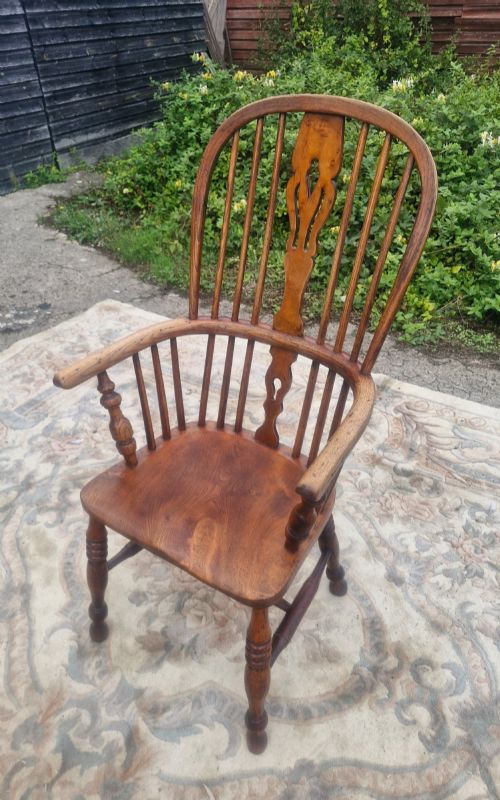

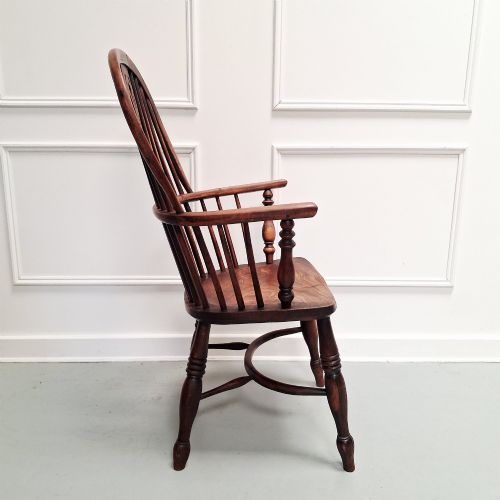
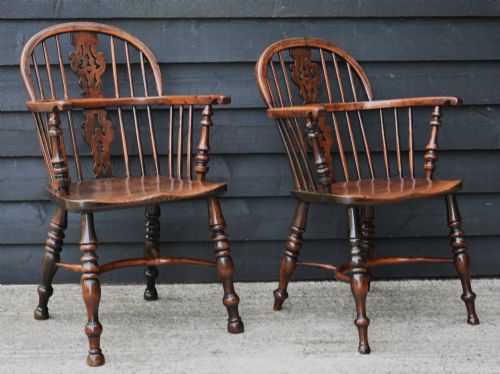
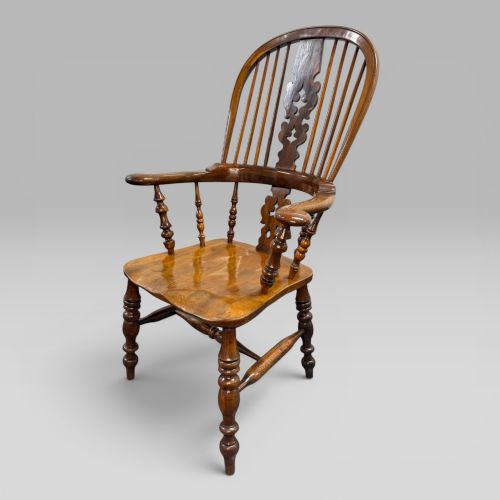
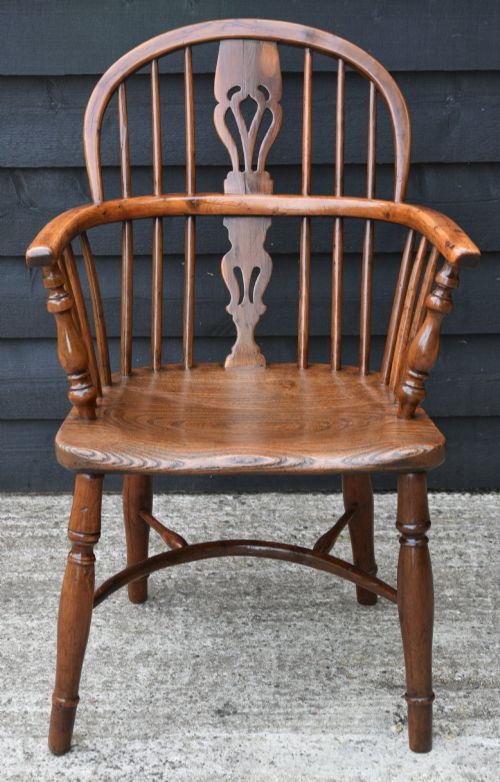
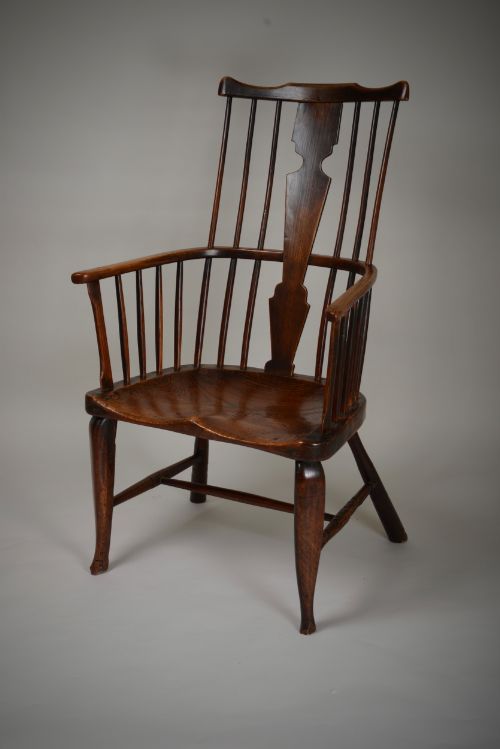
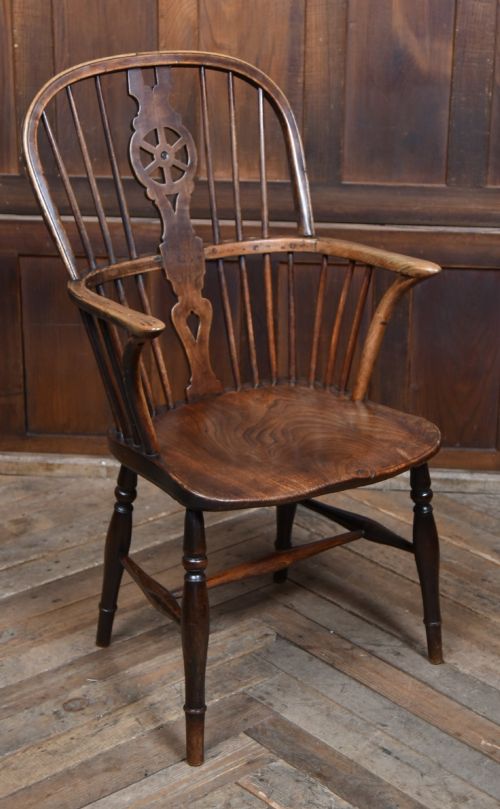
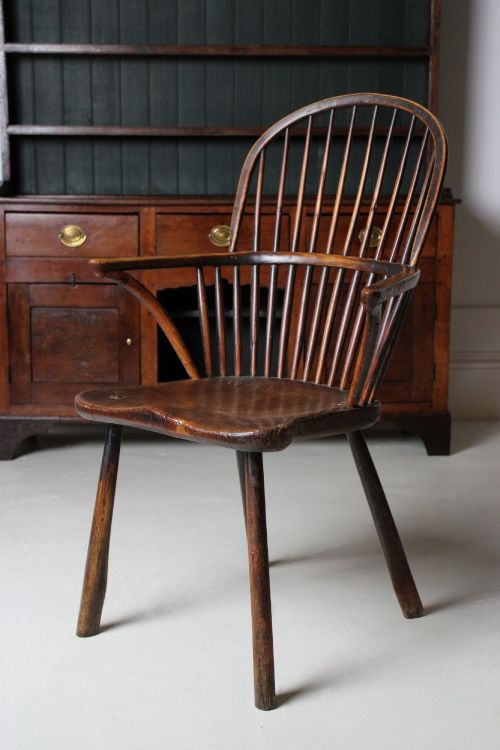
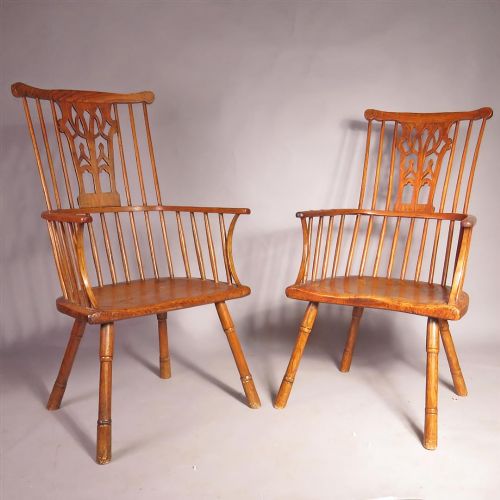
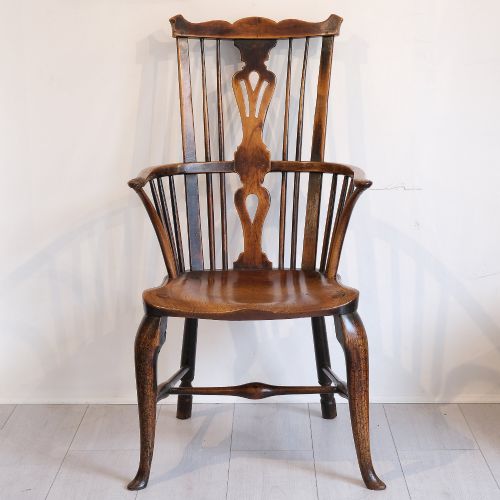
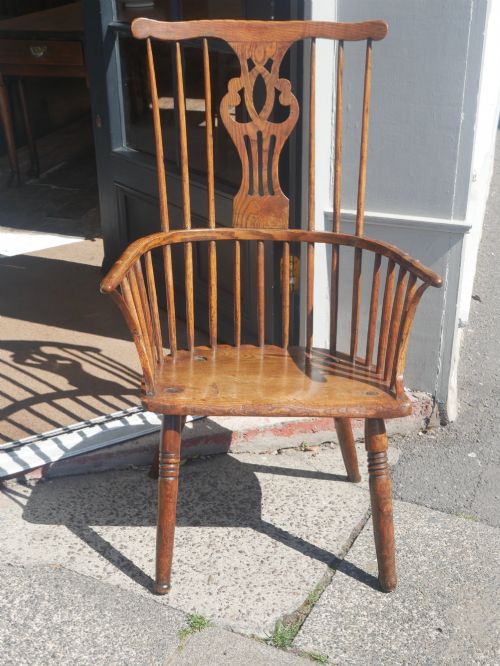
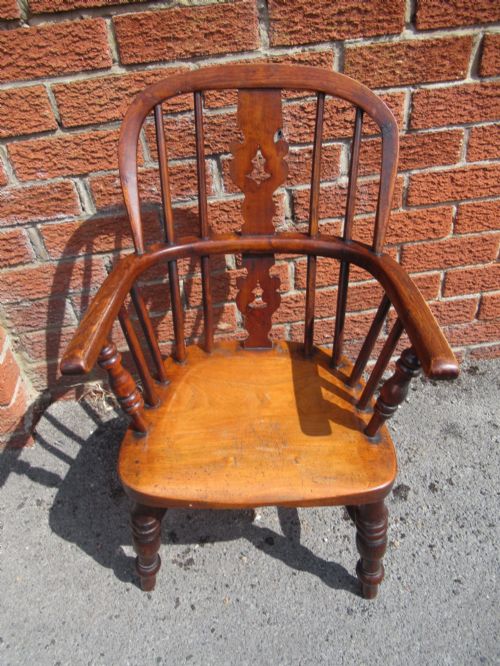
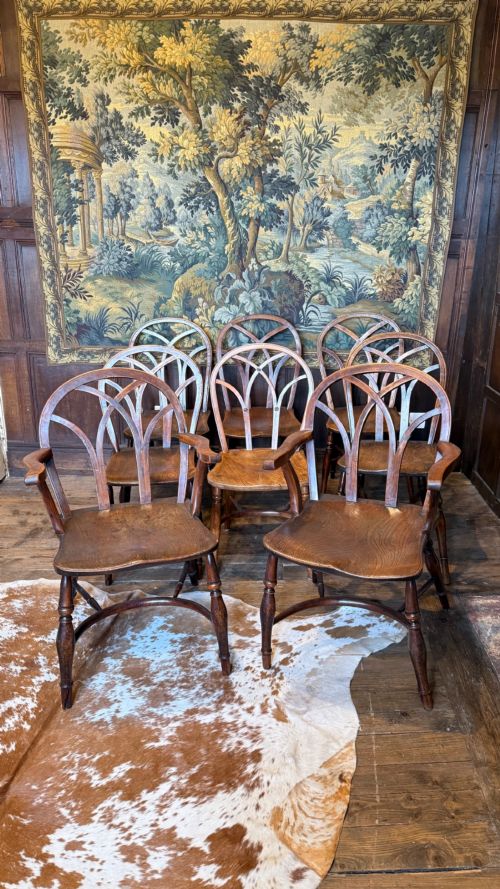
Country Elm and Yew Chair
A country elm and yew chair offers robust vernacular comfort, combining timber character with functional seating.
Country Elm and Yew Chair
A country elm and yew chair comprises regional vernacular seating built primarily with solid timber seats and spindle backs. These items emerge frequently from the eighteenth and nineteenth centuries, spanning Georgian and Victorian periods.
The selections here showcase distinct regional forms, including comb backs, hoop backs, wheel backs, and low backs. Buyers encounter single armchairs, matched pairs, and larger sets designed for dining or parlour use.
Makers constructed these seats to serve practical domestic roles in farmhouses and cottages. The combination of sturdy elm seats with expressive yew and ash framing defines the core of this seating tradition.
How they were made
Craftsmen shaped solid elm for the saddle-shaped seats, utilising its dense, interlocked grain to prevent splitting under heavy use. Yew wood provided strong, flexible material for the bent bow backs and delicate spindles.
Secondary timbers such as ash, beech, and fruitwood appear in the undercarriages, legs, and stretchers. Joinery relied on traditional turned components fitted into bored holes within the thick wooden seat slab.
Listings span the eighteenth and nineteenth centuries, encompassing Georgian and Victorian eras alongside regional English styles.
What varies in quality
The distinction between standard utility seating and exceptional examples lies in the selection and figure of the timber. Yew wood with rich grain patterns and deep colour elevates a piece above plain utilitarian stock.
Structural complexity also dictates standing, with crinoline stretchers, carved splats, and shaped arms demanding greater carpentry skill. Well-balanced proportions and retained original surface texture complete the higher tier of these chairs.
J SPENCER
The Country Elm and Yew Chair Glossary
- Comb back
- A Windsor chair variation where the tall vertical spindles extend upward to pierce a horizontal top rail, resembling the teeth of a comb.
- Crinoline stretcher
- An arched, hooped wooden brace connecting the legs of a chair near the base, adding structural rigidity while echoing the fashion of seventeenth-century undercarriages.
- Wheel back
- A chair back featuring a pierced splat carved or shaped in the outline of a spoked cartwheel.
- Vernacular
- Objects built by regional makers following local traditions and practical utility rather than formal academic design patterns.
- Carver chair
- An armchair traditionally slightly larger or more elaborate than standard dining seats, often placed at the head of a table.
Country Elm and Yew Chair: Frequently Asked Questions
What is a country elm and yew chair?
These items are traditional wooden Windsor chairs featuring solid elm seats combined with yew wood framing and spindles. They originate mainly from eighteenth and nineteenth-century English workshops.
Craftsmen built them for everyday domestic use in rural homes, resulting in sturdy construction and distinct regional variations in the back design.
How do I date a Windsor chair?
Dating relies on observing structural characteristics, timber choice, and tool marks visible on the underside of the seat. Earlier examples from the eighteenth century often display more fluid curves and deep saddle shaping.
Victorian pieces tend to incorporate standard factory-turned components and heavier proportions. Comparing the leg turnings and stretcher configuration helps narrow down the period of manufacture.
Are these chairs comfortable for daily use?
The saddle-shaped wooden seats are carved to fit the contours of the body, offering surprising ergonomic support. Many people use them daily around dining tables or as desk chairs.
Adding a loose cushion can provide extra padding if desired. The robust construction ensures they withstand regular sitting.