
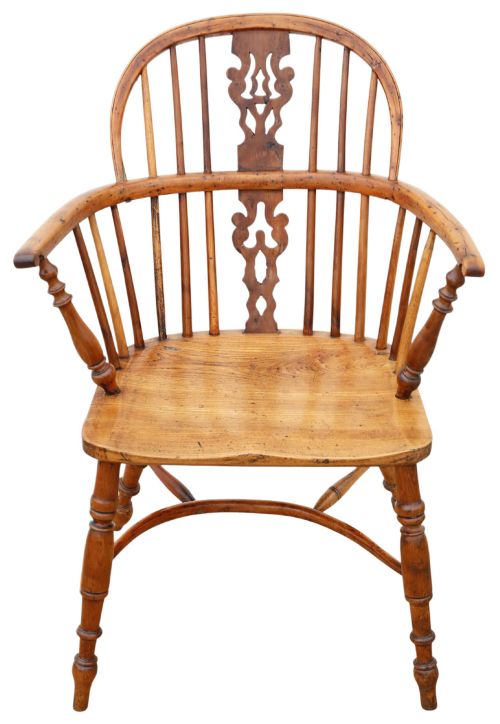
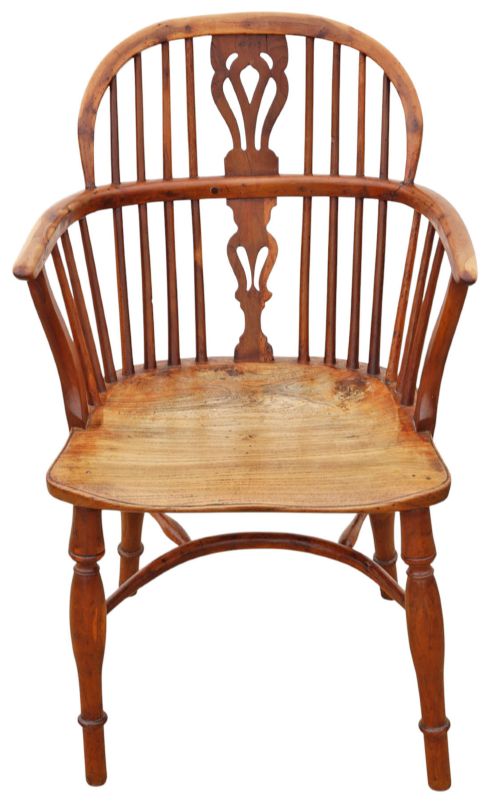
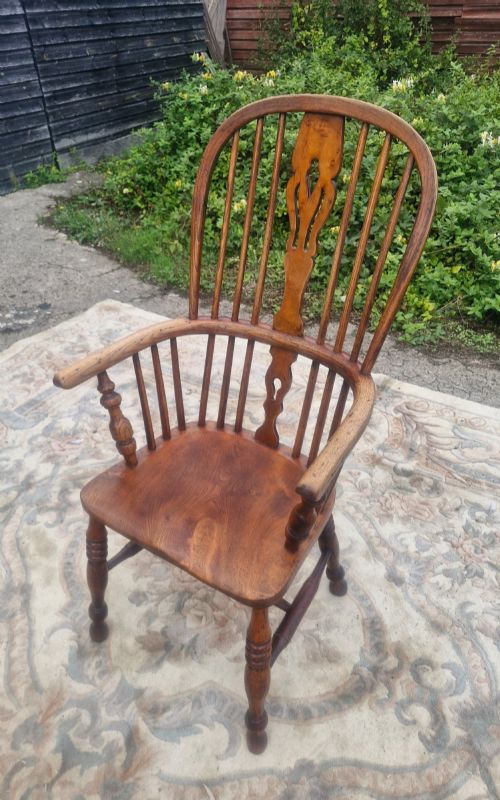


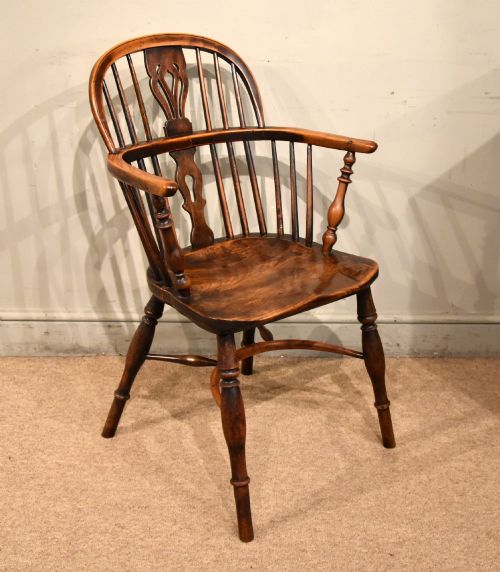
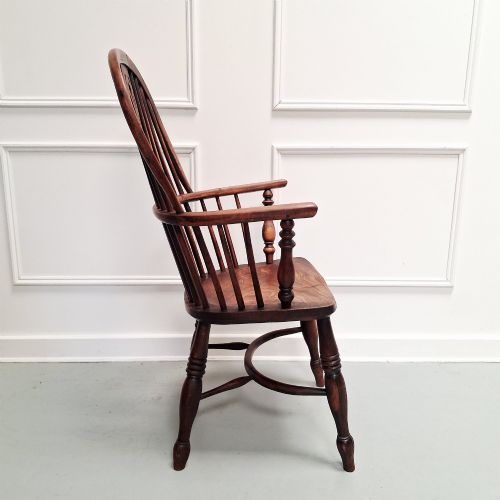
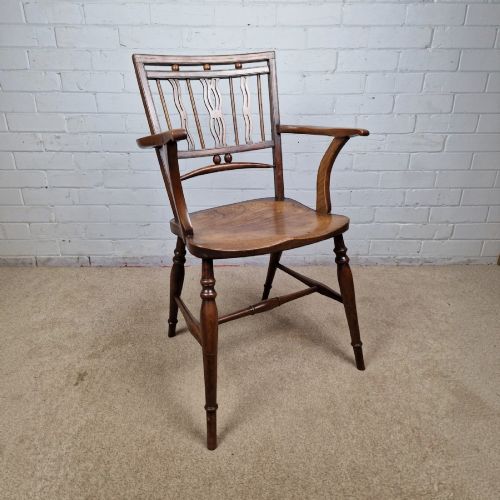
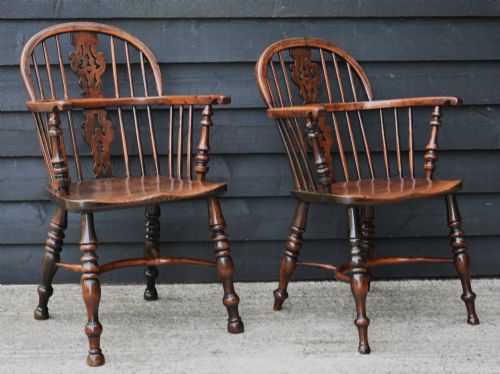
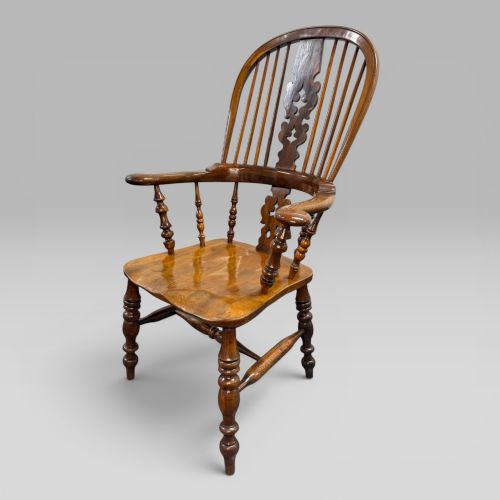
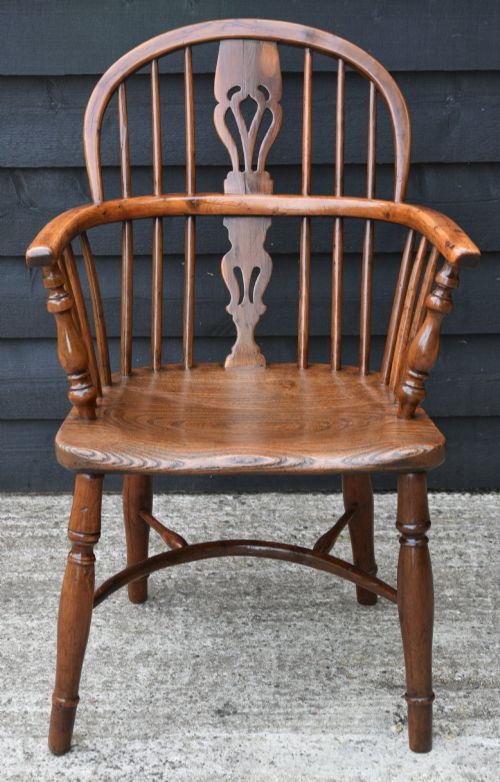
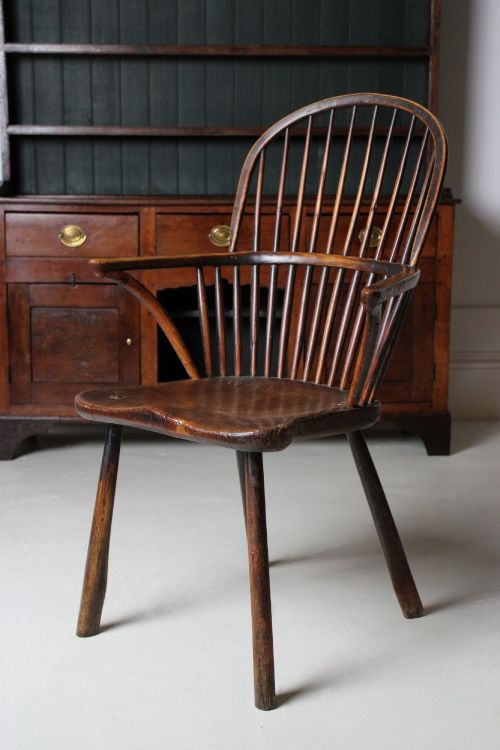
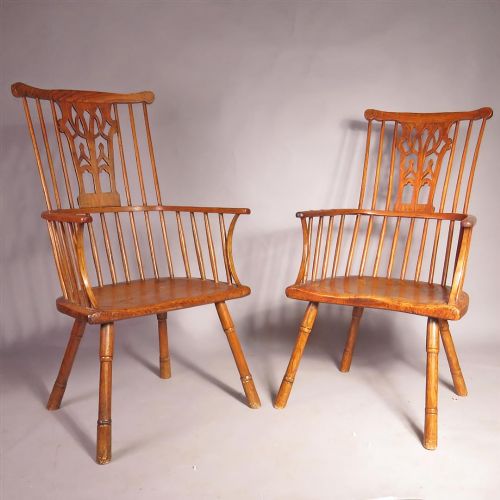
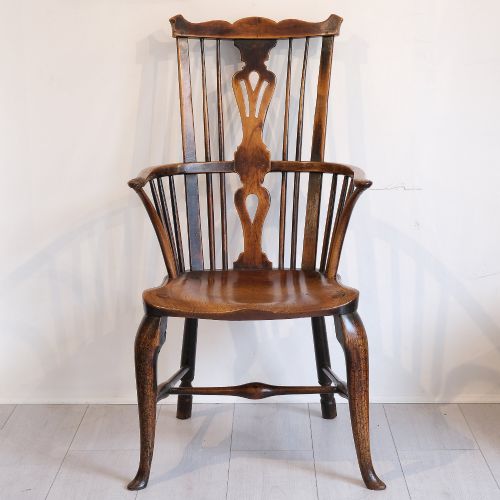
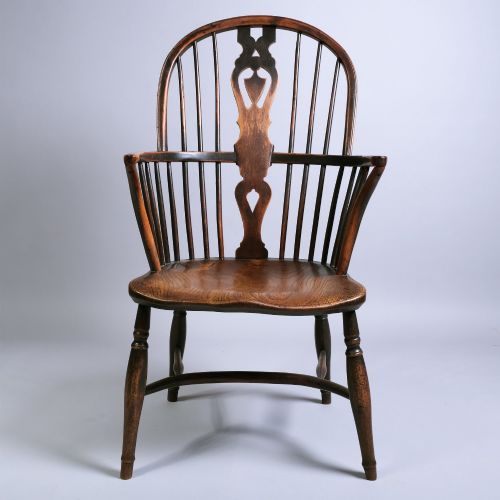
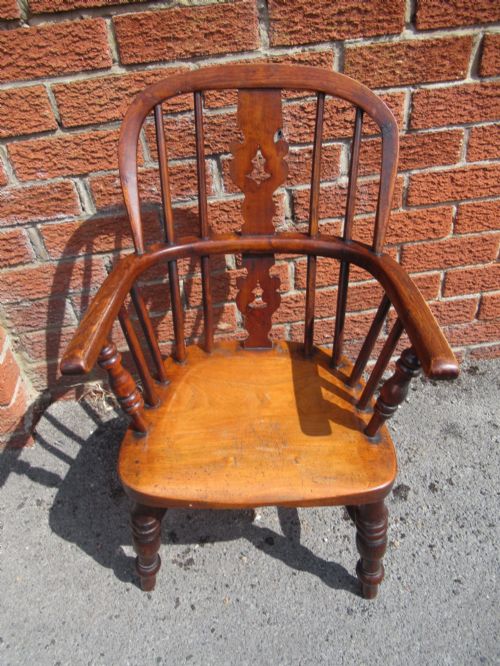
Brown Yew Windsor Armchair
A brown yew windsor armchair brings regional English craftsmanship and rich timber grain directly into a modern room.
Brown Yew Windsor Armchair
A brown yew windsor armchair is a traditional wooden seating form constructed with a solid shaped seat into which the legs and back spindles are wedged directly. These chairs emerge from 18th century, Georgian, and 19th century Victorian periods, carrying distinct regional English vernacular styles.
The version most frequently met on this page combines a rich yew wood back with a sturdy elm seat, often supported by ash or beech underframes. They appear in forms such as hoop backs, low backs, comb backs, and high backs.
Makers designed these chairs for everyday domestic utility in farmhouses and country houses, leading to enduring structural strength. Today, collectors value them for their warm timber patination and honest construction.
How they were made
Constructors utilised a mix of native hardwoods, pairing yew wood for its decorative figured grain in the bent hoops and spindles with dense elm for carved, saddle-shaped seats. Ash and beech frequently provided the turned legs and stretchers.
The framework relies on traditional green woodworking and steam-bending techniques, where parts were shaped under heat and moisture before being joined tightly into bored holes using wedges.
Listings feature 18th Century, Georgian, 19th Century, and Victorian periods alongside materials such as yew, elm, ash, beech, and fruitwood.
What varies in quality
The distinction between ordinary and exceptional examples rests in the depth of figure in the yew timber and the grace of the turned spindles and crinoline stretchers. Master regional chairmakers achieved balanced proportions and comfortable, deep-sculpted seats.
Preservation of original surface patination without excessive modern intervention dictates the desirability of a piece. Chairs retaining their early structural integrity and matching timber tones command greater attention.
J SPENCER·Rockley Maker
The Brown Yew Windsor Armchair Glossary
- Crinoline stretcher
- A bent metal or wooden reinforcement rod linking the legs of a chair to provide rigidity. It often curves outward beneath the seat.
- Comb back
- A Windsor chair style where the top rail resembles the teeth of a comb, rising above a row of vertical spindles.
- Hoop back
- A continuous curved wooden bow steam-bent to form the backrest and arm rails in a single fluid arc.
- Splat
- A central vertical slat of wood set within the back frame, frequently carved or shaped for visual interest.
- Vernacular
- An architectural or furniture-making style rooted in local traditions and practical utility rather than formal academic design.
Brown Yew Windsor Armchair: Frequently Asked Questions
What is a brown yew windsor armchair?
A brown yew windsor armchair is a traditional wooden seating piece featuring a solid carved timber seat with individual spindles inserted directly into it.
These chairs draw on centuries of regional English carpentry, utilising rich yew wood for the upper framework and elm for the seat.
How do I identify an 18th century windsor?
Early pieces from the 18th century often display primitive construction details, comb back designs, or Thames Valley regional characteristics.
Examining the tool marks on the underside of the seat and the wear patterns on the yew wood helps determine the age.
How were these chairs used historically?
These armchairs served as sturdy, practical seating around farmhouse tables and country house hearths.
Their robust construction made them suitable for daily domestic tasks and comfortable seating in communal living spaces.
How do I care for yew wood furniture?
Maintain yew wood by keeping it away from direct heat sources and sudden humidity changes to prevent timber splitting.
Applying a traditional beeswax polish occasionally helps preserve the natural lustre of the brown wood grain.