
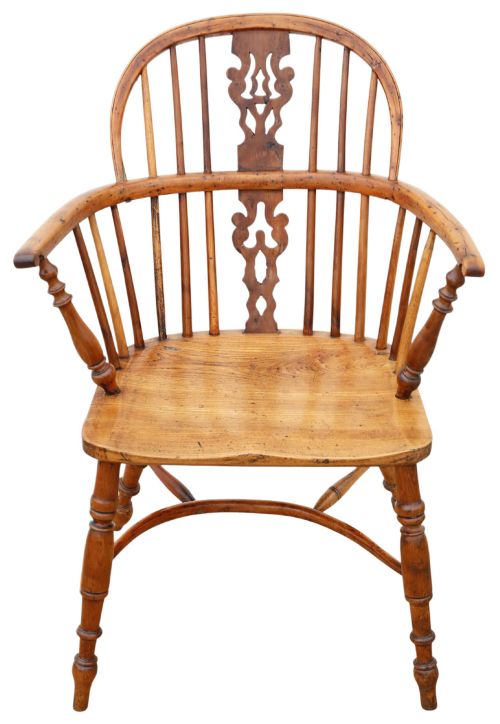
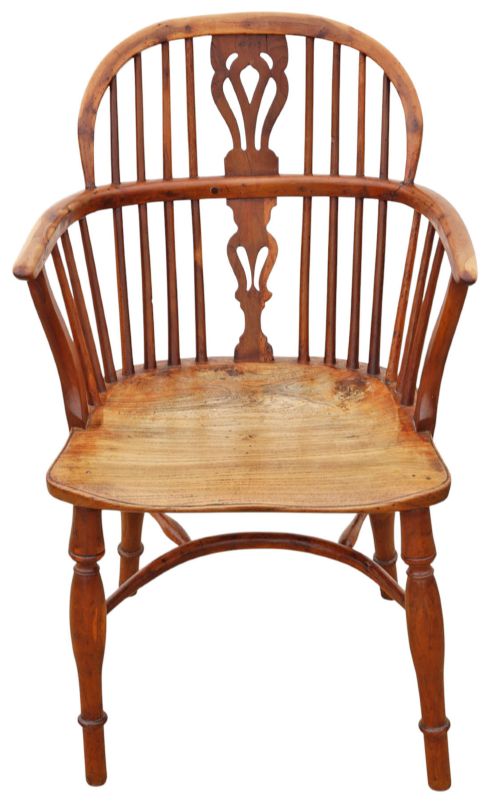
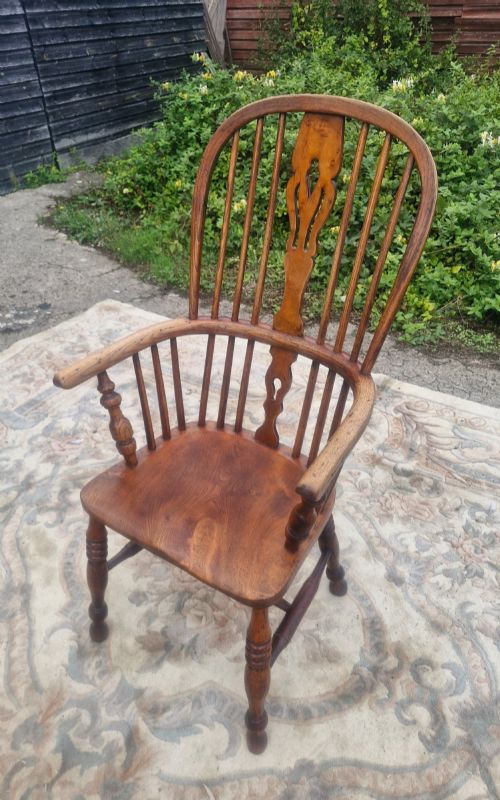

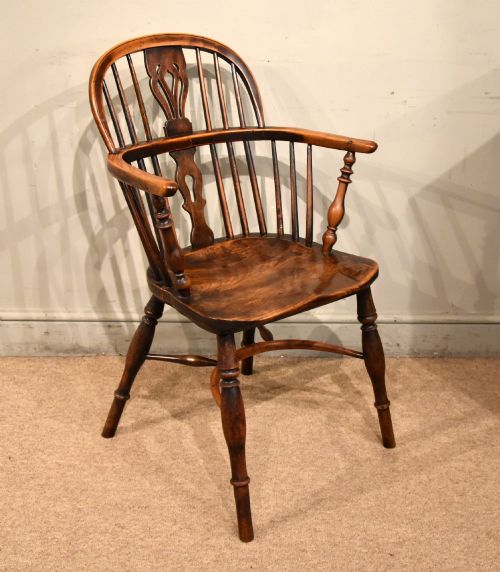
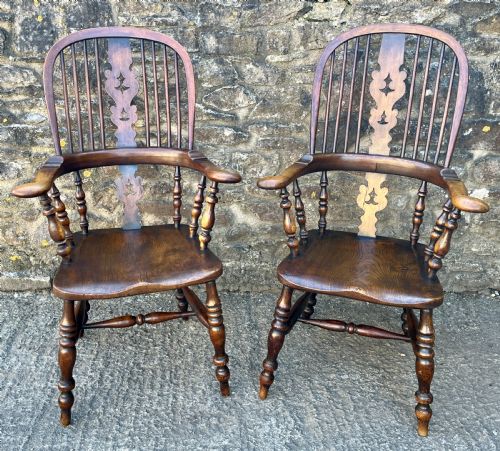


Yew Windsor Carver Chair
A yew windsor carver chair combines sturdy timber construction with comfortable seating, offering robust practicality alongside distinct regional character.
Yew Windsor Carver Chair
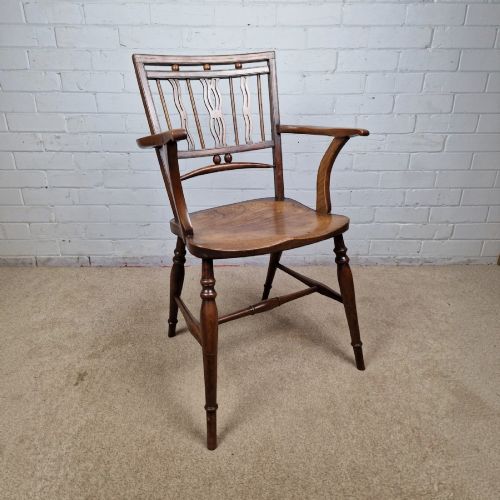
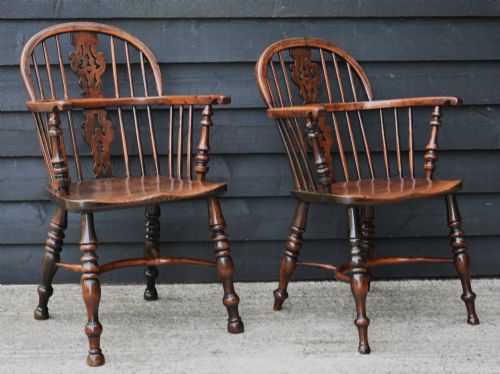
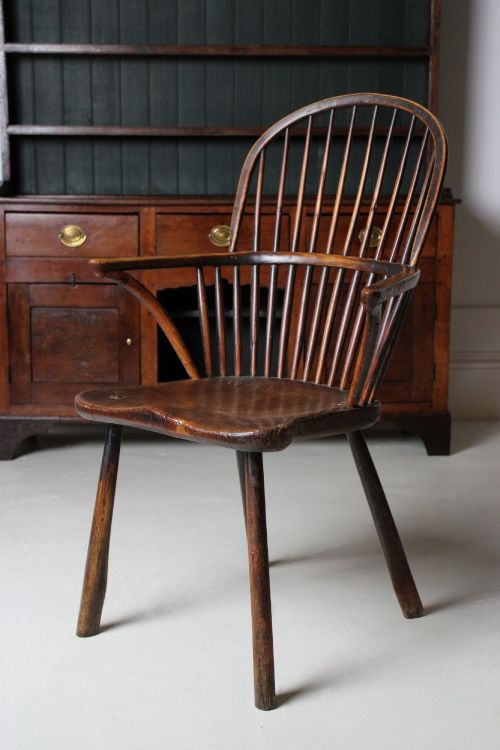
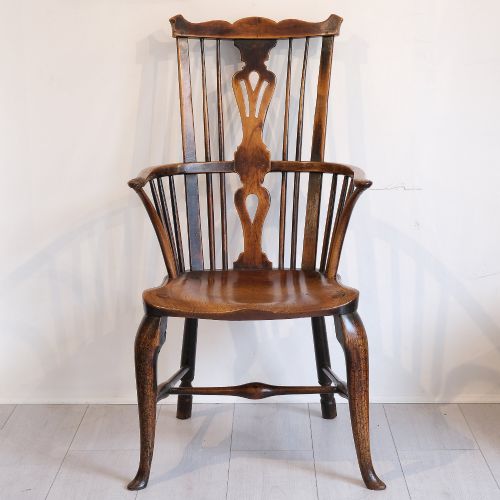
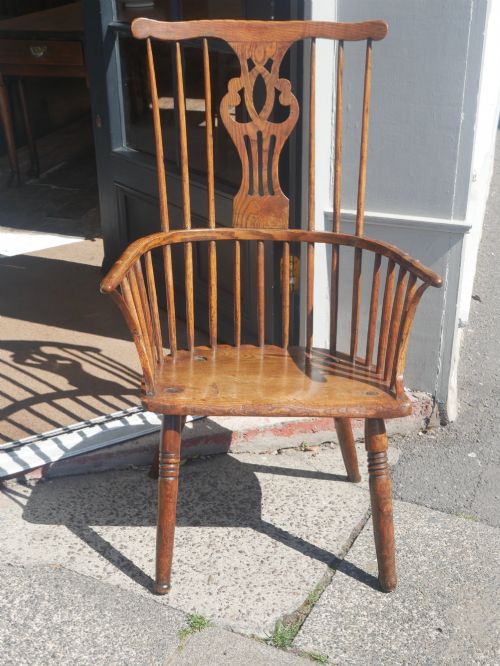
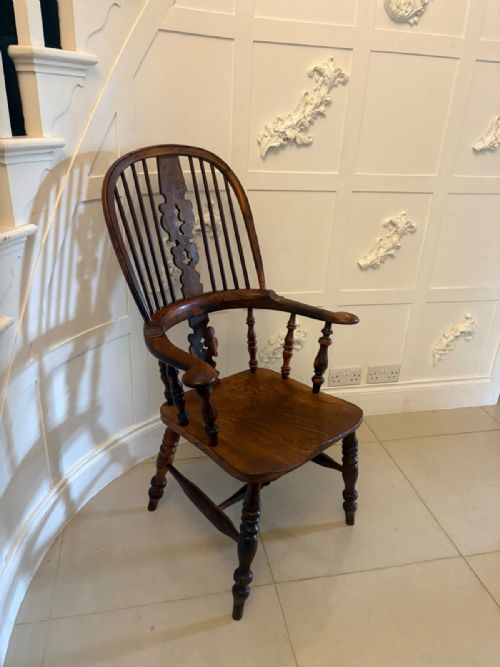
A yew windsor carver chair is an armchair featuring a solid wooden seat into which the legs and back spindles are wedged and pegged directly. These pieces emerge predominantly in 18th century, Georgian, and 19th century or Victorian periods.
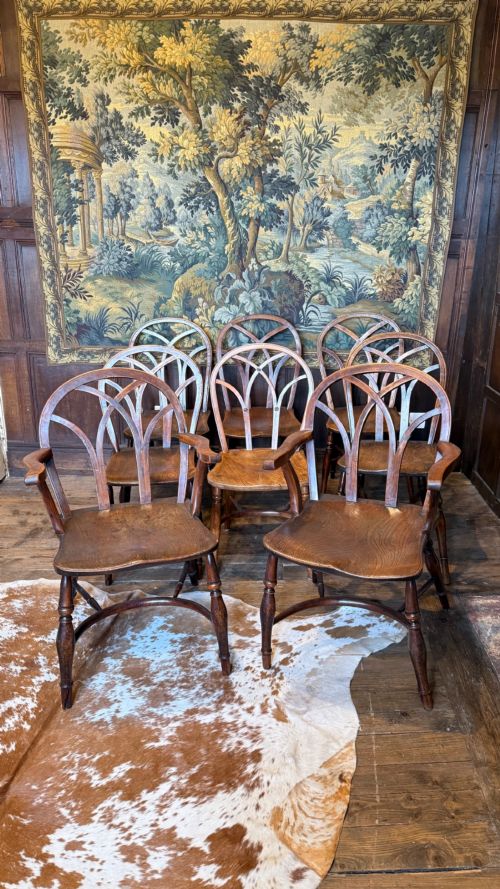
The versions most commonly met on this page combine yew wood frames and elm seats, often appearing as high back or hoop back armchairs with distinctive arm supports.
Makers across English country vernacular traditions, particularly in regions such as the Thames Valley, Nottinghamshire, and Yorkshire, shaped these armchairs for domestic and farmhouse use.
How They Were Made
Craftsmen built these chairs using a combination of timbers, pairing yew wood or ash for bent bow backs and spindles with dense elm for the carved saddle seats. Additional structural stability came from beech, oak, or fruitwood components.
Makers shaped the back bows through steam bending and turned supporting spindles on a lathe before assembling the parts into a solid elm seat base.
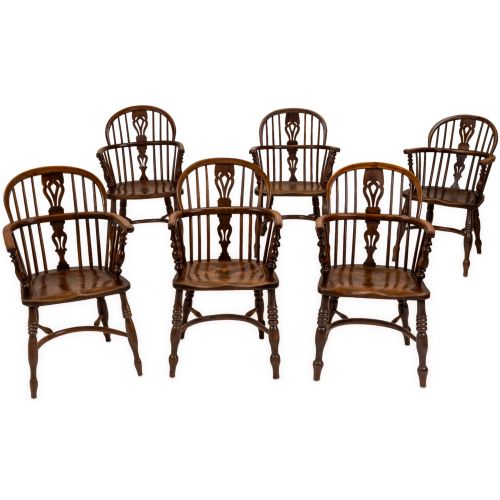
Regional variations recorded in listings include comb back, low hoop back, and wheel back forms from Nottinghamshire and Yorkshire.
What Varies in Quality
Quality rests in the figuring of the yew wood, the depth and comfort of the sculpted elm seat, and the elegance of the turned arm supports and crinoline stretchers. Examples featuring burr yew or matched sets display higher levels of workshop skill.
Proportion and structural harmony separate standard vernacular chairs from finer regional pieces, such as those originating from Worksop or the Thames Valley.
John Moss Worksop
The Yew Windsor Carver Chair Glossary
- Carver chair
- An armchair designed for dining or hall use, featuring supporting arms that accommodate wider garments. These pieces often match smaller side chairs in a set.
- Comb back
- A Windsor chair variation where the central vertical spindles extend upward to support a horizontal top rail resembling a traditional hair comb.
- Crinoline stretcher
- An arched or bowed wooden brace connecting the legs beneath a chair seat to increase lateral stability. This component often takes a curved hoop shape.
- Pad arm
- An upholstered or broadened wooden terminal pad on the end of a chair arm. These provide additional hand support.
- Wheel back
- A Windsor chair back design incorporating a pierced splat shaped like a carriage wheel. This motif gained popularity during the Georgian and Victorian periods.
Yew Windsor Carver Chair: Frequently Asked Questions
What is a yew windsor carver chair?
A yew windsor carver chair is a sturdy wooden armchair featuring a solid sculpted seat with pegged legs and spindles. These seating pieces emerged from regional English vernacular traditions.
They combine flexible yew wood frames with durable elm seats, creating robust furniture designed for everyday domestic life in farmhouses and country houses.
How were windsor chairs constructed?
Makers constructed windsor chairs by boring holes directly into a solid wooden seat slab to receive the legs and back components. This stick-built method relied on wedged tenons for permanent strength.
Craftsmen used steam to bend green timber into hoop backs and turned supporting spindles on a lathe before assembling the final frame.
Where were these chairs made?
These chairs originated in various English rural workshops and regional centres, with notable production in the Thames Valley, Nottinghamshire, and Yorkshire. Local woodworkers utilised accessible timber supplies.
Different regions developed distinct design characteristics, such as wheel back splats, crinoline stretchers, or high back profiles unique to local makers.
How do I live with one?
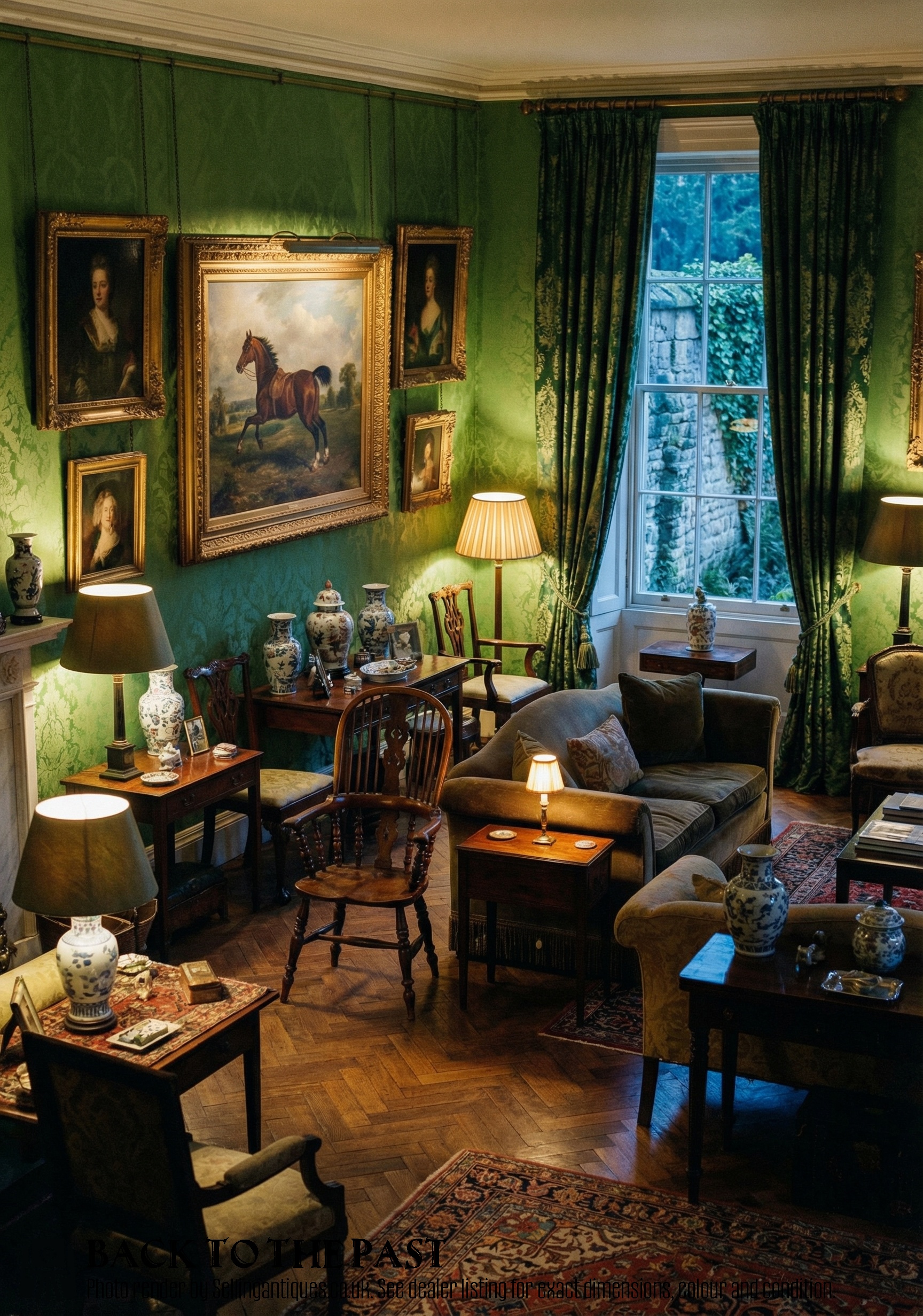
Living with a yew windsor carver chair involves placing it away from direct heat sources and sudden temperature shifts to protect the timber. Regular polishing maintains the natural patina of the wood.
These armchairs function well as desk seats, hallway chairs, or occasional seating in living spaces, adding rustic character to contemporary or traditional interiors.