

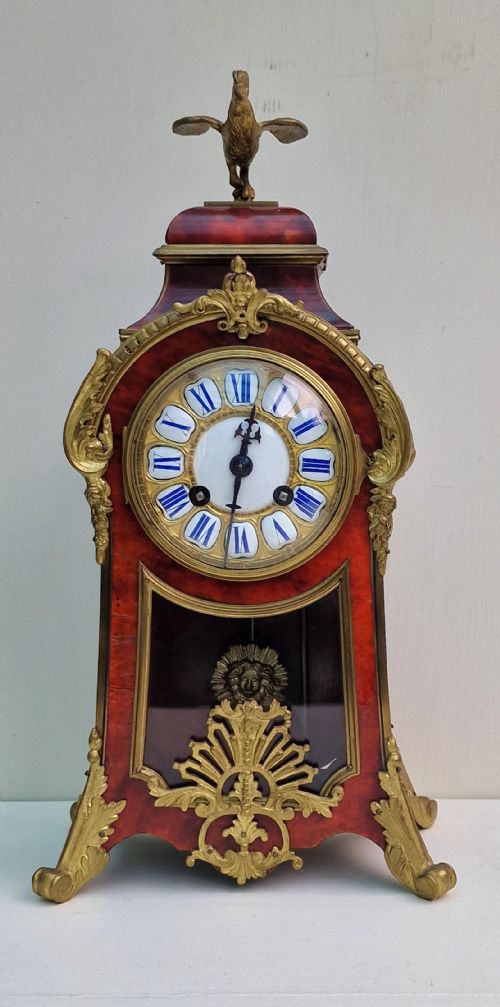


Boulle Style Table
A boulle style table brings the dramatic interplay of tortoiseshell and brass marquetry into a room, offering both decorative presence and practical surface space.
Boulle Style Table
When searching for a boulle style table, a buyer encounters a selection of nineteenth-century French furniture dominated by centre tables, games tables, side tables, and writing desks. These pieces reflect revival aesthetics, appearing primarily in Louis XIV, Louis XV, and Napoleon III styles.
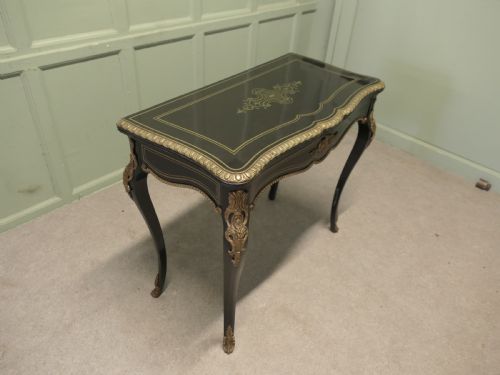
The version most commonly met on this page is the occasional or centre table, constructed with elaborate brass inlay and tortoiseshell veneer. Alongside these tables, the selection includes related forms such as card tables and writing desks from the Victorian era.
The origins of these pieces trace back to French workshops and English makers interpreting continental designs during the nineteenth century. They function as focal points in reception rooms, combining polished ebonised surfaces with reflective metal work.
What varies in quality
Quality in these pieces is dictated by the precision of the marquetry cutter and the crispness of the cast ormolu mounts. Finer examples display tightly fitted brass and shell with minimal filler, where the engraved lines on the metal retain sharp, deliberate detail.
The depth of the tortoiseshell colour and the richness of the underlying red or green staining under translucent panels also separate standard workshop output from exceptional furniture. Superior pieces exhibit substantial bronze mounts with hand-finished chasing rather than flat, mass-produced castings.
Tortoiseshell veneer was sometimes backed with red or green foil to make the amber shell glow under candlelight during grand evening assemblies.
Maison Millet·Edwards and Roberts·Payne London·Samuel Marti·Thuret
The Boulle Style Table Glossary
- Boulle marquetry
- A decorative technique using tortoiseshell and brass inlaid in symmetrical scrollwork patterns, named after the famed cabinetmaker to Louis XIV. It defines the primary surface decoration of these tables.
- Ormolu
- Gilded bronze mounts and ornaments applied to furniture, providing structural trim and decorative highlights. The term derives from the French for milled gold.
- Ebonised wood
- Timber stained or treated to imitate dense, black ebony, frequently used as a dark contrasting background for metallic marquetry. This finish creates a stark frame for inlaid tortoiseshell.
- Bureau plat
- A flat-topped freestanding writing desk, often featuring elaborate marquetry and drawer space beneath the surface. These desks represent a refined form within the table category.
Boulle Style Table: Frequently Asked Questions
How do I care for a boulle style table?
Keep the piece away from direct sunlight and extreme humidity fluctuations to prevent the tortoiseshell veneer from lifting or cracking. Dust gently with a dry, soft cloth and avoid chemical polishes that can degrade the historic finish.
Apply a microcrystalline wax sparingly only if the wood or metal requires protection, rubbing it out completely to maintain a soft sheen. Handle the ormolu mounts with care during cleaning to preserve their original gilt surface.
What periods do these tables date from?
The majority of these tables date from the nineteenth century, particularly the Victorian and Napoleon III eras when French revival styles gained immense popularity. Makers frequently drew inspiration from earlier Louis XIV and Louis XV designs.
Some examples reflect later nineteenth-century interpretations up to the early twentieth century. Each piece carries construction traits specific to its manufacturing decade.
Were these tables used for writing or display?
Many examples served specific social functions, functioning as games tables, card tables, or dedicated writing desks with fitted drawers. Others were intended purely as centre tables or occasional tables to display decorative objects.
The inclusion of folding tops or leather writing inserts usually indicates the primary intended use by the original owner. Versatility was a key design element in nineteenth-century French domestic interiors.
How do I distinguish genuine tortoiseshell?
Genuine tortoiseshell displays natural clouding, mottled amber tones, and subtle depth under the surface rather than a uniform printed pattern. Under close inspection, it shows organic variations inherent to marine turtle shell used in historical marquetry.
Alternative materials like horn or early plastics were sometimes employed as substitutes in later or budget pieces. Examining the material under magnification reveals the characteristic fibrous structure of true shell.