
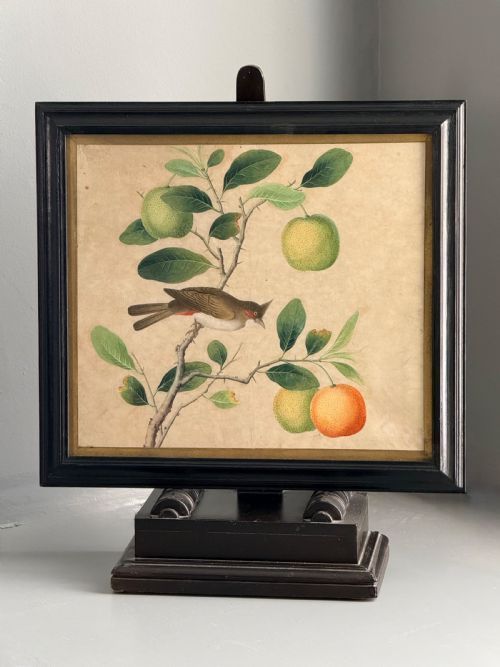
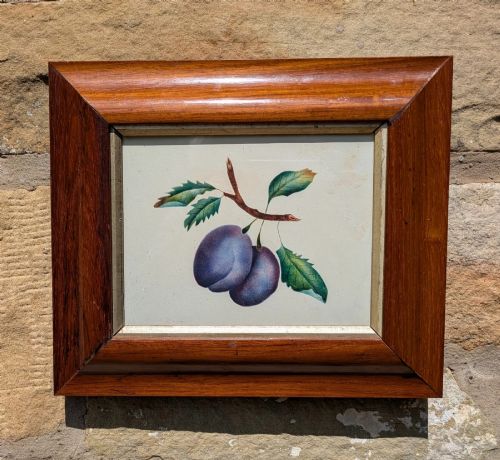
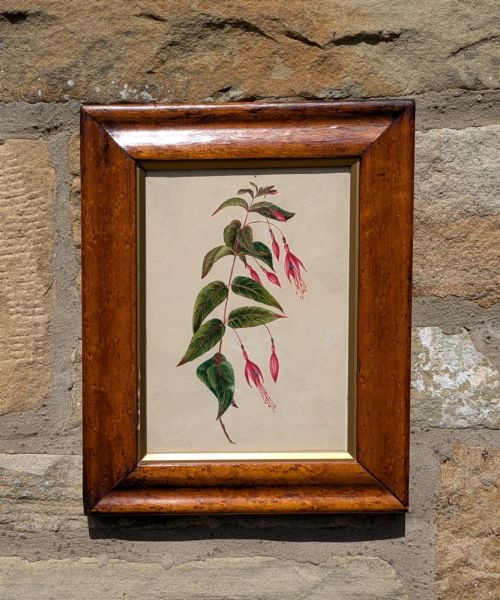
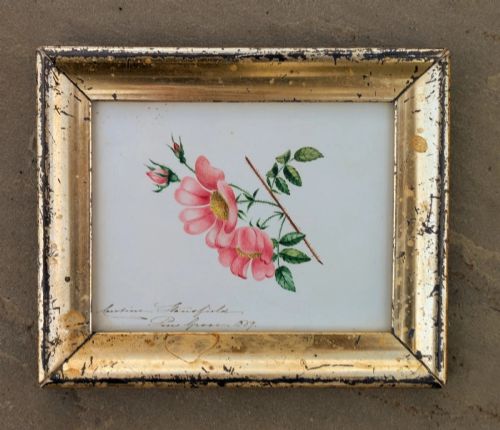
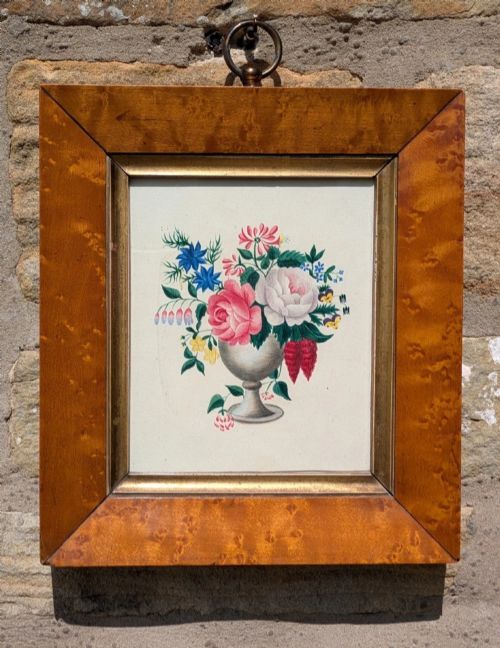


Botanical Watercolour Study
A botanical watercolour study captures the precise structure and delicate colour of flowers or fruit on paper.
Botanical Watercolour Study
A botanical watercolour study records plant forms with scientific observation and artistic precision. These works range from early depictions on pith paper to framed Regency and Victorian sheets.
The pieces on this page span the eighteenth century to the mid-twentieth century, including works by named hands and regional English schools. Common subjects include roses, azaleas, apples, and wild flowers rendered in watercolour, gouache, and pencil.
Buyers encounter single sheets and paired works, often housed in rosewood or gilt wood frames under glass. The focus remains on accurate observation of natural history illustration and floral still life.
Materials and Technique
Artists painted these studies primarily using watercolour and gouache on paper or pith paper, occasionally incorporating pencil for underlying botanical structure. Pith paper provides a delicate, absorbent surface utilised in early works.
Makers housed these works behind glass to protect the water-soluble pigments from moisture and fading. Frames constructed from rosewood, gilt wood, or standard wood complete the presentation.
Listings feature works executed on paper and pith paper, utilising watercolour, gouache, and pencil across the nineteenth and twentieth centuries.
Factors of Quality
The standard of a botanical watercolour study rests on the precision of the brushwork and the accuracy of the botanical rendering. Finely painted details in petals, leaves, and stems distinguish accomplished works from simpler school exercises.
The handling of colour and the preservation of the paper surface determine the overall visual strength of the piece. Works that retain their original pigment vibrancy and framing demonstrate superior longevity.
M Simpson·William Andrews Nesfield·Edith Barrow·Grace Hastie·Phyllis I Hibbert·Marian Chase·Charlotte Isa James·Arthur Wardle·Alice Macallan Swan·Marion Broom·Annie Mary Youngman·John Sherrin·M K Rhodes·Minnie Smythe·Julie Harber·Otto Soltau
The Botanical Watercolour Study Glossary
- Watercolour
- A painting method where fine pigment is suspended in a water-based, translucent solution. It is applied to paper to create luminous layers of colour.
- Gouache
- An opaque water-based paint that includes a white pigment binder. It provides solid, matte areas of colour alongside transparent watercolour washes.
- Pith paper
- A delicate material formed from the pith of the Tetrapanax papyrifer plant. It accepts vibrant gouache and watercolour applications.
- Gilt wood
- Wood carved and coated with a thin layer of gold leaf or metallic gilt. It frequently frames nineteenth-century paintings.
- Natural history illustration
- Scientific art depicting animals, fungi, and plants with strict anatomical and botanical accuracy. These studies balance aesthetic merit with empirical observation.
Botanical Watercolour Study: Frequently Asked Questions
What is a botanical watercolour study?
A botanical watercolour study is an artistic rendering of plants, flowers, or fruit created with water-based pigments on paper. These pieces document natural forms with careful attention to detail.
Such works were produced across the eighteenth, nineteenth, and twentieth centuries for both scientific recording and domestic decoration.
How should I frame and display these watercolours?
Watercolour paintings require protection from direct sunlight to prevent the pigments from fading over time. Displaying them behind glass in their original frames, such as rosewood or gilt wood, preserves the paper.
Keep them in rooms with stable humidity levels to avoid warping the paper or damaging the backing.
How do I identify the period of a study?
Dating relies on the paper type, framing materials, and stylistic conventions associated with periods like the Regency or Victorian eras. Early works often appear on pith paper or carry handwritten inscriptions.
Signatures linked to recorded artists also help establish a precise timeline for the piece.
Are these works original paintings?
The listings consist of original hand-painted watercolours, gouache, and pencil studies rather than modern reproductions. Each piece represents a unique execution by an artist or regional school.
Brushstrokes and pigment texture visible under close inspection confirm their hand-painted nature.