
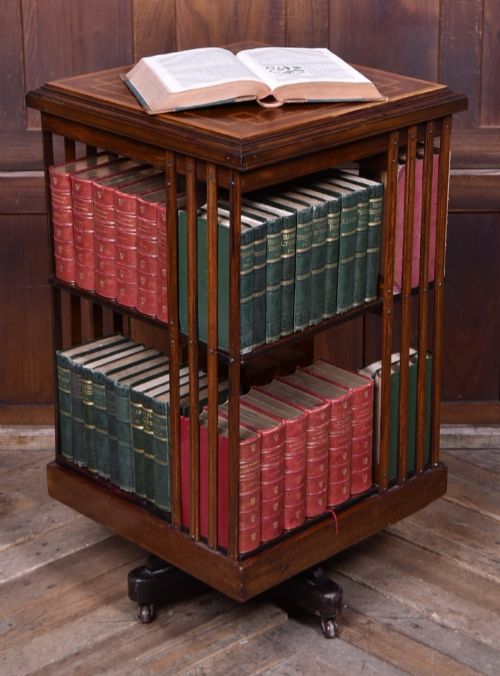
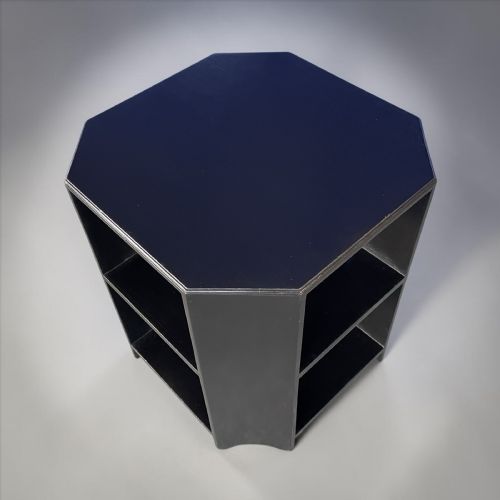


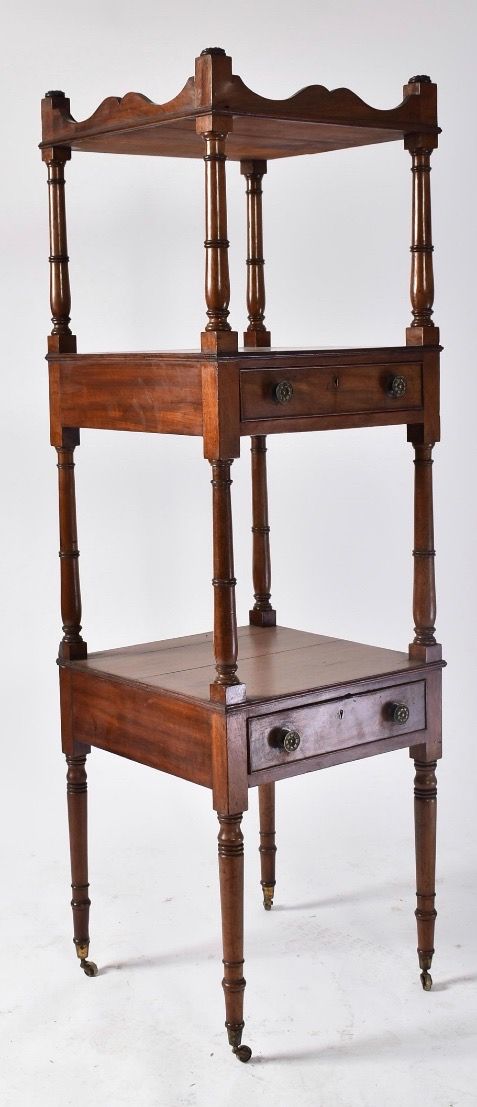

Bookshelf Side Table
These bookshelf side table pieces combine surface utility and integrated book storage, offering compact function for daily use.
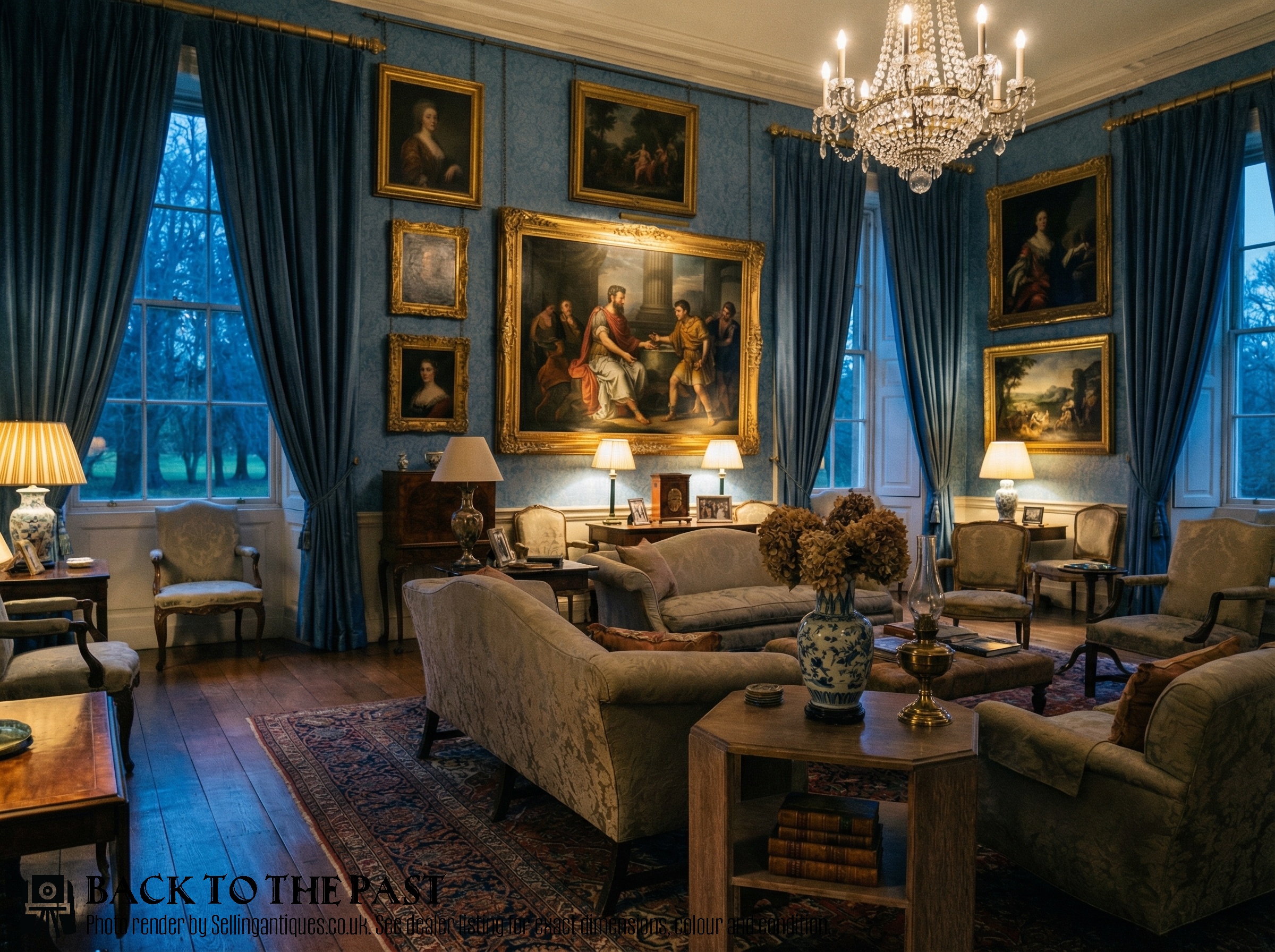
Bookshelf Side Table
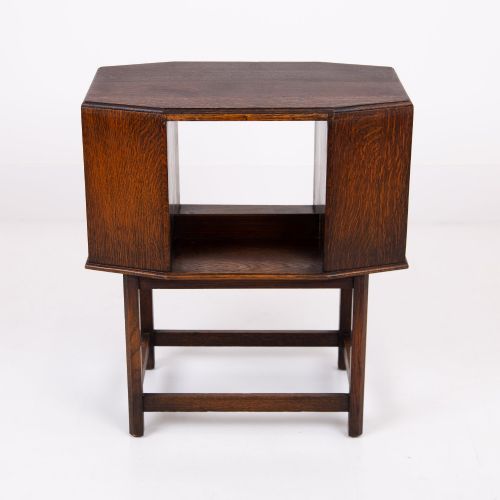
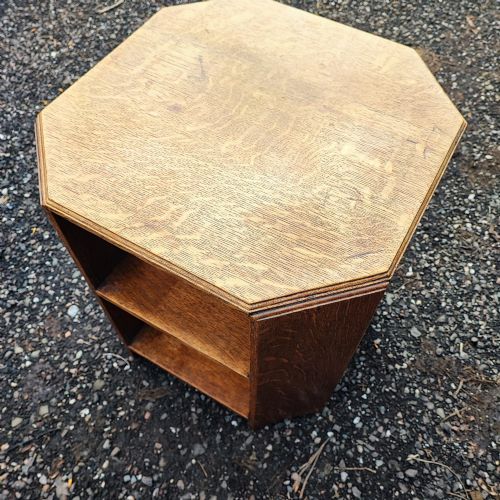
A bookshelf side table serves as a dual-purpose item providing a surface for lamps or drinks alongside compartments for volumes. Buyers seeking a bookshelf side table encounter forms spanning side tables, whatnots, occasional tables, and revolving bookcases.
The pieces on this page draw from periods ranging from the mid-nineteenth century through the Edwardian era to the Art Deco movement of 1930. Common iterations include revolving models in mahogany or oak alongside stationary tables featuring open shelves.
Origins and styling reflect diverse historical revivals and workshop traditions, including Arts and Crafts, Regency, and Queen Anne influences. Selection here centres on compact multi-tier structures designed for domestic interiors.
Materials and construction methods
Cabinetmakers utilised hardwoods such as oak, mahogany, walnut, and partridge wood to construct these items. Grain selection played a central role, with figured walnut, burr walnut, and satinwood applied to visible surfaces.
Joinery methods varied by period, encompassing traditional mortise and tenon frames for earlier items and modern modernist lines in 1930s oak. Inlays, brass fittings, and carved detailing appeared on Edwardian and mid-nineteenth-century examples.
Materials across these listings include brass, oak, mahogany, satinwood, iron, ebonised wood, figured walnut, and timber.
Distinctions in craftsmanship
Quality rests in timber selection, timber thickness, and the integrity of the joints supporting multiple tiers or revolving mechanisms. Superior examples exhibit tightly fitted internal partitions and well-figured veneer choices.
Subtle differences appear in the precision of edge moulding, the quality of brass castors, and the crispness of any applied carving or inlay work.
The Bookshelf Side Table Glossary
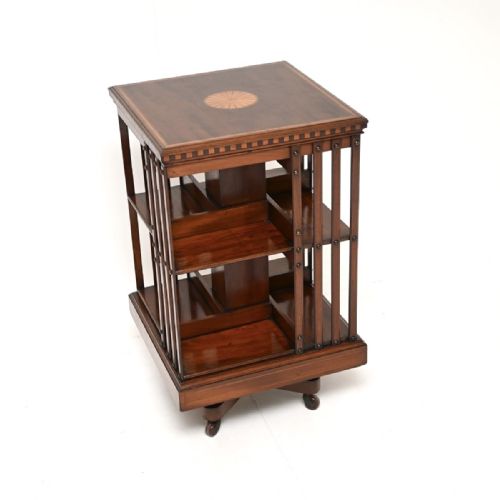
- Revolving bookcase
- A freestanding bookcase mounted on a hidden rotating pivot allowing access from all sides. These typically sit upon a cruciform base with castors.
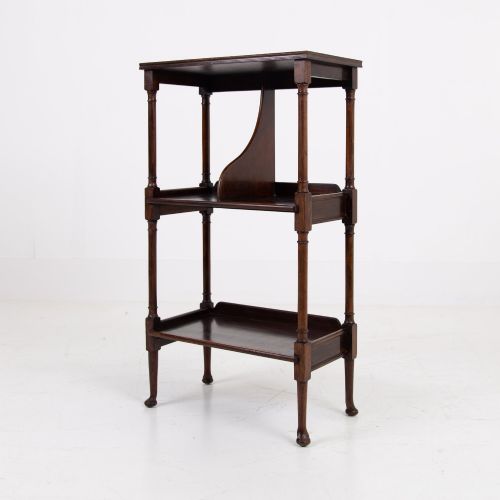
- Whatnot
- An open set of multi-tiered shelves designed for displaying or storing books and small objects. Pieces of this type often feature turned supports and graduated shelf depths.
- Canterbury
- A low occasional stand featuring slatted partitions specifically designed for holding folios, music books, or periodicals. The form frequently incorporates a small drawer beneath the divisions.
- Occasional table
- A small, movable table intended for flexible placement within a room for daily convenience. These often integrate lower undershelves to serve as book repositories.
Bookshelf Side Table: Frequently Asked Questions
What is a bookshelf side table?
A bookshelf side table is a dual-function furniture piece that merges a flat tabletop surface with integrated open shelving or compartments for storing books. These pieces were designed to sit beside seating or beds for ready access to reading material.
Such items span various historic forms, including revolving bookcases, low occasional tables with lower shelves, and multi-tiered whatnots.
Where should I place one?
These compact items suit small sitting room corners, beside armchairs, or as bedside stands where surface space and book storage are both required. Their finished backs and sides often allow them to stand freestanding within a room.
Due to their modest footprints, they fit well in hallways or studies without overwhelming the floor area.
How do I care for the wood?
Maintenance involves dusting regularly with a soft, dry cloth and applying traditional beeswax periodically to nourish timber surfaces like mahogany, oak, and walnut. Keeping pieces away from direct heat sources prevents the wood from drying out.
Avoid placing damp glasses directly on polished wooden tops to protect the finish from water marks.
How do I identify the period?
Dating relies on observing construction techniques, timber choices, and stylistic markers such as Arts and Crafts simplicity, Edwardian inlay, or Art Deco modernist lines. Nineteenth-century examples often display heavier turned supports and dense mahogany or burr walnut.
Later pieces from the 1920s and 1930s tend toward limed oak, geometric forms, or workshop attributions.