

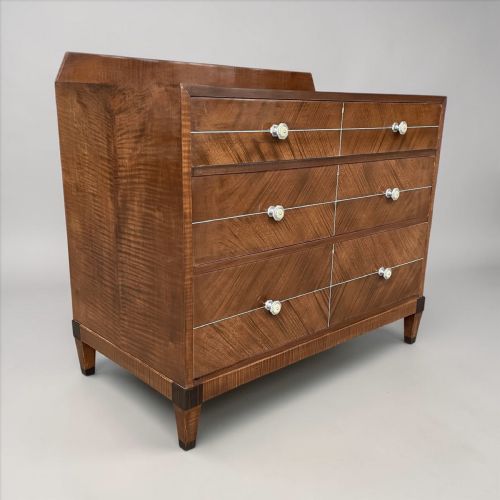
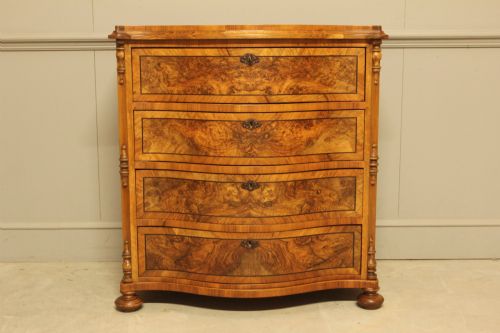
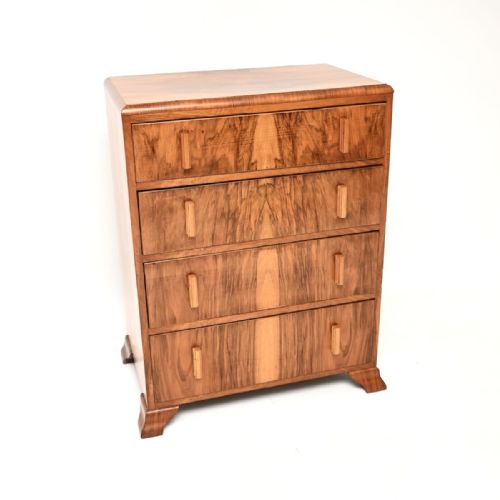
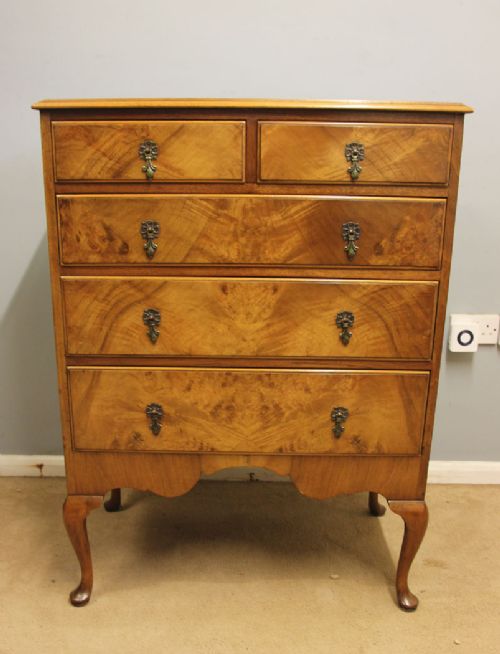






Bookmatched Walnut Drawers
Bookmatched walnut drawers bring striking symmetry and rich grain to a room through precise timber placement.
Bookmatched Walnut Drawers
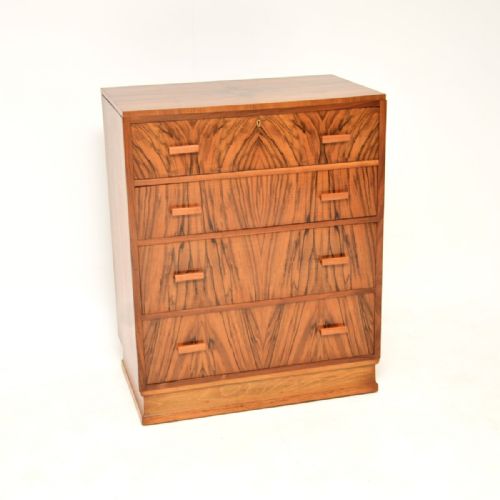
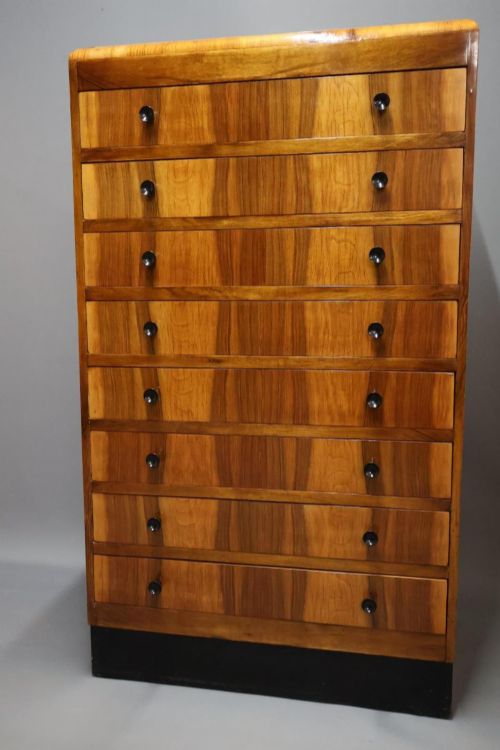
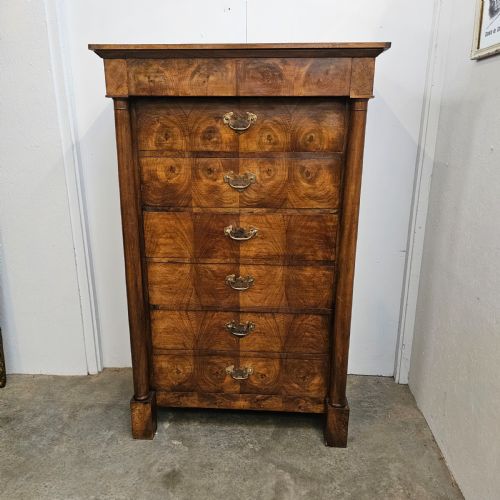
Bookmatched walnut drawers present striking grain patterns across their facades, created by mirroring adjacent veneer slices. When searching for bookmatched walnut drawers, buyers encounter pieces primarily from the nineteenth century, nineteen-twenties, nineteen-thirty and nineteen-forty. These items span styles including Art Deco, Victorian, French Empire, Queen Anne and nineteenth-century Scandinavian.
Chest of drawers and tallboy forms dominate this selection, offering substantial storage alongside prominent decorative timber surfaces. The nineteen-thirties Art Deco examples appear most frequently, pairing clean architectural lines with highly figured walnut veneers. Earlier nineteenth-century interpretations include secretaire chests and tall chests, which integrate writing compartments into the casework.
How they were made
Cabinetmakers constructed these pieces using solid wood foundations, such as oak, overlaid with thin veneers of walnut, burr walnut or figured walnut. The distinctive patterning relies on slicing consecutive leaves from the timber log and opening them like a book to create symmetrical mirror images on drawer fronts.
Metal hardware, particularly brass fittings and occasionally Bakelite accents, completed the construction of these chests and tallboys. The timber surfaces received finishes that protected the fragile walnut veneer while highlighting the natural swirls and knots inherent in burr and figured growths.
Bookmatched Walnut Drawers Retail Price Guide 2026
Typical asking prices for bookmatched walnut drawers among the pieces listed under this phrase on Sellingantiques today, from the lower quarter to the upper quarter. They describe what is for sale here now, not the wider market.
Listings feature four distinct periods: nineteenth century, nineteen-twenty, nineteen-thirty and nineteen-forty.
What varies in quality
Quality in these pieces rests upon the symmetry and boldness of the timber matching across the drawer fronts. Finer examples display carefully aligned grain that flows coherently from one drawer to the next, whereas simpler items show random or mismatched patterning.
The choice of timber grade significantly separates standard chests from superior ones, with burr walnut and highly figured veneers commanding greater visual impact. Construction depth also matters, visible in the weight of the carcase, the neatness of the interior oak framing, and the integration of functional elements like secretaire drawers.
The Bookmatched Walnut Drawers Glossary
- Bookmatched
- A technique where two adjoining veneer slices are laid next to each other to mirror their grain patterns. This method creates symmetrical designs that resemble the pages of an open book.
- Burr walnut
- A prized timber harvested from tree growths that produce complex, swirling knot patterns. Cabinetmakers prize this material for its rich texture and decorative appeal.
- Tallboy
- A tall chest of drawers, often constructed in two sections with a smaller chest sitting atop a larger base. These pieces maximise storage capacity while maintaining a compact footprint.
- Secretaire
- A desk or chest featuring a pull-down writing flap that conceals small drawers and pigeonholes. This hybrid form combines the utility of a writing bureau with standard drawer storage.
Bookmatched Walnut Drawers: Frequently Asked Questions
What is bookmatched walnut?
Bookmatched walnut involves slicing timber and placing adjacent pieces face-to-face so their grain patterns mirror one another. This creates a symmetrical, decorative surface across furniture fronts.
Cabinetmakers utilise this method to highlight the natural beauty of figured and burr walnut timbers.
How do I date a walnut chest?
Dating relies on examining the overall style, construction methods, and materials used in the carcase. Pieces from the nineteenth century often feature heavier proportions and secretaire compartments.
Nineteen-thirties examples typically display streamlined Art Deco geometries and vibrant burr veneers.
Are tallboys practical for storage?
Tallboys offer generous drawer space while occupying minimal floor area in a bedroom or hallway. Their vertical format makes them suitable for rooms with limited wall space.
They combine deep lower drawers with smaller upper compartments for versatile organisation.
How should I care for walnut veneer?
Walnut veneer requires protection from direct sunlight and excessive moisture to prevent fading and lifting. Regular dusting with a soft, dry cloth preserves the polished finish.
Avoiding placement near heat sources helps maintain the stability of the underlying wood.