
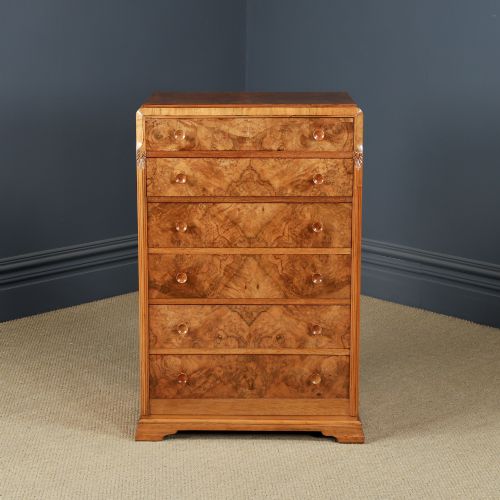
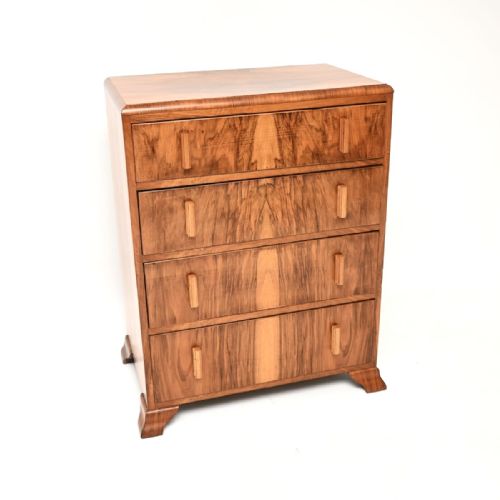
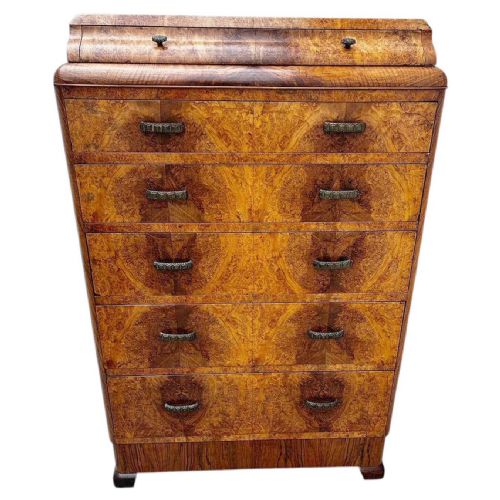

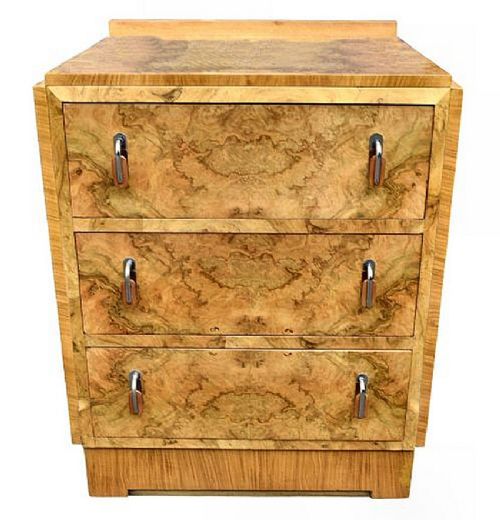
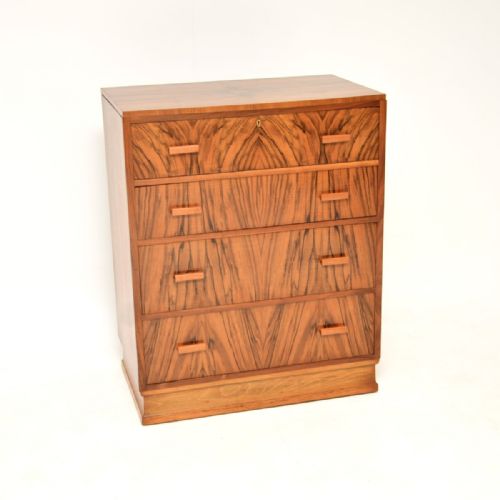


Walnut Art Deco Dresser
These walnut art deco dresser pieces bring bold grain patterns and clean geometric lines straight into a modern bedroom.
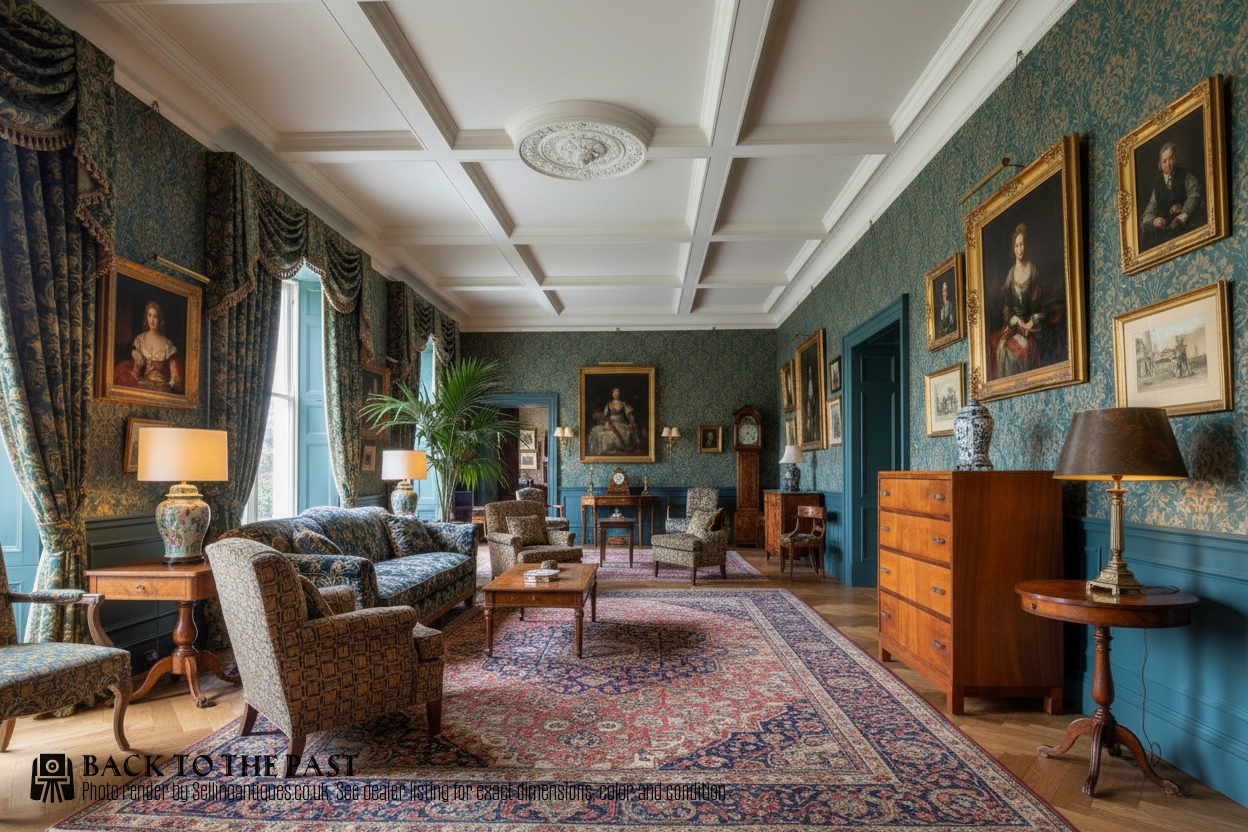
Walnut Art Deco Dresser
A walnut art deco dresser usually takes the form of a chest of drawers or a tall chest, dominated by the distinct geometry of the nineteen-thirties. You will frequently encounter English examples alongside pieces originating from France, spanning the nineteen-tens through to the nineteen-thirties.
The objects serve primarily as bedroom storage, presenting deep drawer configurations ranging from three up to six compartments. Sideboards and commodes also appear under this broad heading, expanding the storage function into dining and living spaces.
Makers such as Heal's and the Bowman Brothers shaped the aesthetic of these items, anchoring them firmly within the art deco movement. The core forms rely on substantial timber carcases that showcase the natural figured grain without excessive carving.
How they were made
Cabinet makers utilised walnut timber and burr walnut veneer over solid carcases to achieve striking decorative patterns across the drawer fronts. Selected pieces incorporate bleached blonde walnut or satinwood contrasts to accentuate the geometric layout.
Metal elements in chrome and brass frequently appear as handles, trim, and key escutcheons, providing a sharp contrast to the warm timber tones. Bakelite details also surface on specific hardware components, characteristic of the manufacturing period.
Bakelite handles on a walnut chest offer a tactile reminder that your vintage drawer pull is actually an early plastic pioneer.
What varies in quality
The selection of the veneer separates standard production from exceptional furniture. Master craftsmen matched burr walnut and figured grain symmetrically across multiple drawers to create a continuous visual impact.
Attribution to known workshops like Heal's or the Bowman Brothers elevates a piece significantly above uncredited workshop production. The integration of contrasting secondary woods, such as satinwood, and specialised hardware like chrome or Bakelite further distinguishes the tier of manufacture.
Heal's·The Bowman Brothers
The Walnut Art Deco Dresser Glossary
- Burr walnut
- A thin slice of timber taken from a growth deformation on the walnut tree, prized for its swirling, highly figured grain patterns. Cabinet makers laid this veneer across prominent surfaces like drawer fronts.
- Art deco
- A design style spanning the nineteen-tens to the nineteen-forties that prioritised streamlined geometric forms, symmetry, and modern industrial materials. It succeeded the floral curves of art nouveau.
- Commode
- A low chest of drawers or cabinet originating in France, often utilised for bedroom or living room storage. Early examples date back to the nineteen-tens.
- Veneer
- A thin layer of superior timber applied over a more stable secondary wood carcase to give the appearance of solid luxury material. This technique allowed makers to utilise complex grain figures efficiently.
Walnut Art Deco Dresser: Frequently Asked Questions
What is a walnut art deco dresser?
A walnut art deco dresser is a storage chest featuring the geometric lines, stepped profiles, and figured wood veneers characteristic of the nineteen-thirties.
Most items function as bedroom chests of drawers, though the category also includes sideboards, commodes, and tallboys.
Where were these chests made?
The listings show a strong concentration of English production alongside early French examples dating back to nineteen-ten.
Notable retail and manufacturing firms like Heal's and the Bowman Brothers produced many of the notable English variants.
How do I style a walnut dresser?
The rich brown tones and swirling grain patterns pair well with minimalist modern interiors or eclectic vintage spaces.
Keep surface objects simple to let the natural burr walnut grain remain the primary visual focus of the room.