


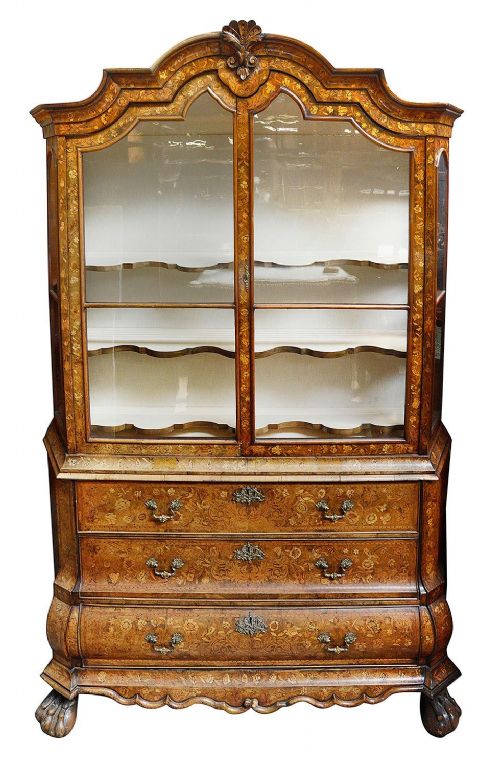


Bombe Display Cabinet
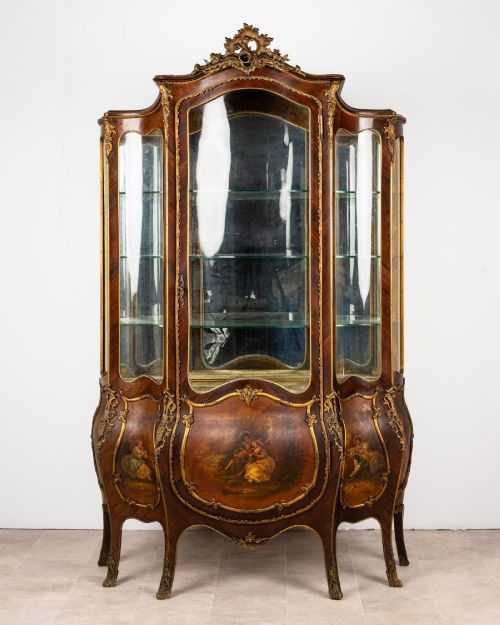
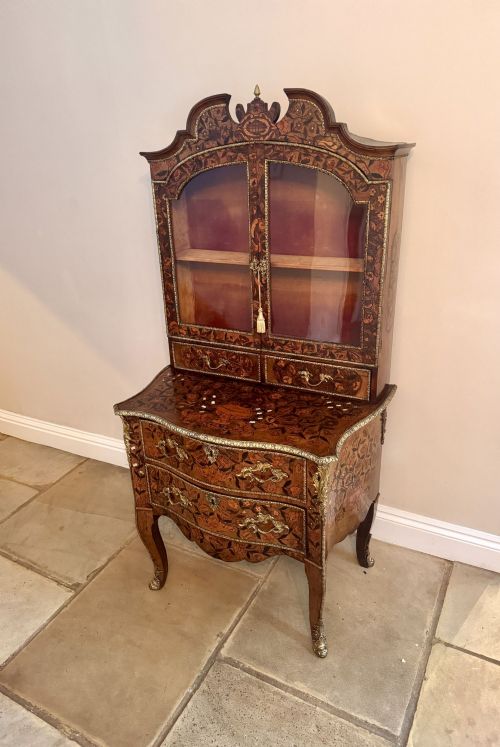
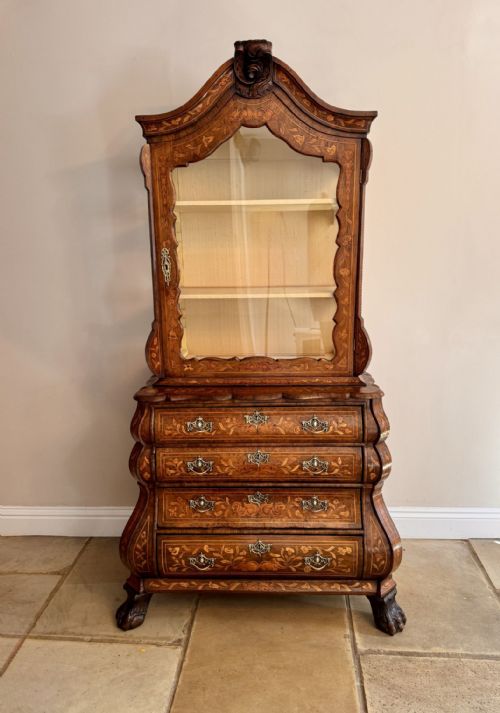
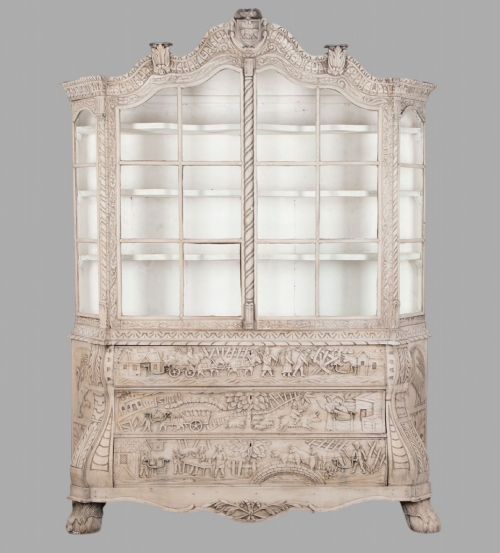
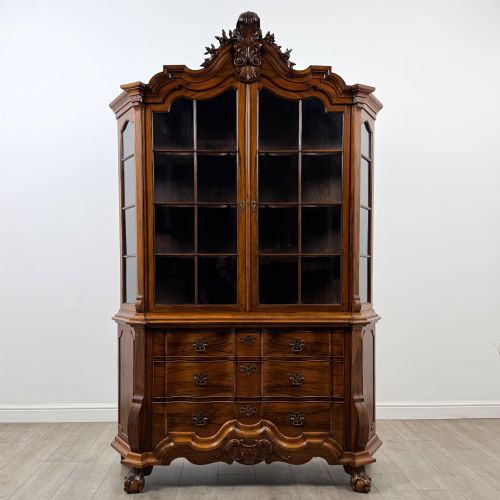
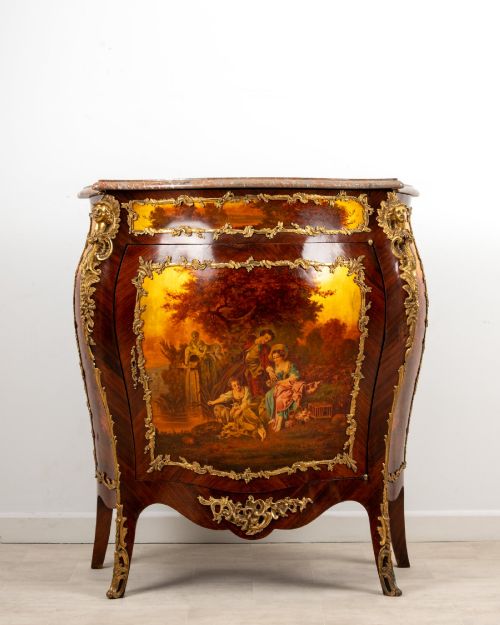
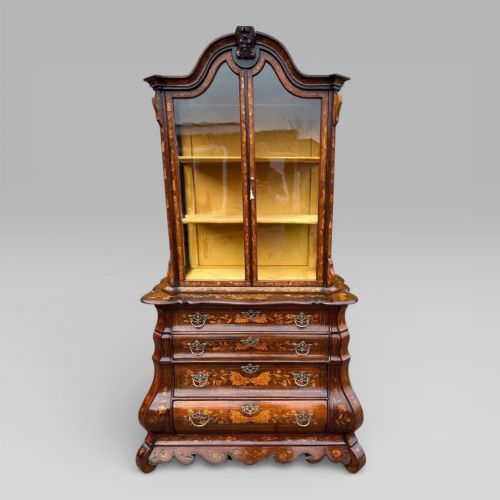
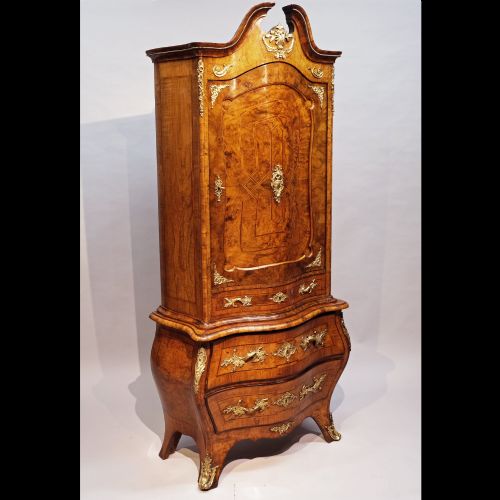
These bombe display cabinet examples combine swelling serpentine timber curves with glazed upper stages, offering a dramatic stage for collection display.
Bombe Display Cabinet
A bombe display cabinet presents a swelling, convex lower section paired with glass-fronted upper shelving, merging storage with prominent vitrine display. These pieces appear primarily in Dutch marquetry walnut and French kingwood finishes across eighteenth-century designs and later nineteenth-century revivals.
The dominant forms on this page pair an expansive bureau bookcase or multi-tier cabinet base with intricate floral inlay, vernacular Dutch Rococo styling, or French Louis XV revival shaping. Buyers encounter everything from compact corner vitrines to large two-part architectural cabinets.
Origin points divide largely between Continental workshops producing robust burr walnut or fruitwood marquetry, and French makers applying ormolu mounts alongside Vernis Martin painted panels. Each regional school brings a distinct proportion and decorative vocabulary to the rounded silhouette.
Distinctions in construction and decorative depth
Quality rests upon the precision of the curving timber contours and the alignment of the veneer across the bulging drawer fronts and side panels. Superior examples maintain crisp, unbroken marquetry inlay without lifting edges or mismatched grain patterns along the complex serpentine surfaces.
The sophistication of the internal joinery, the weight and hand-chasing of the ormolu mounts, and the clarity of the original glass all separate standard workshop production from master cabinet work. Finer pieces demonstrate careful hand-finishing inside the cabinet interiors and meticulous proportion between the swelling base and the glazed upper section.
Bombe Display Cabinet Retail Price Guide 2026
Typical asking prices for bombe display cabinet among the pieces listed under this phrase on Sellingantiques today, from the lower quarter to the upper quarter. They describe what is for sale here now, not the wider market.
Listings feature walnut, kingwood, burr walnut, and fruitwood alongside glass, brass, and ormolu mounts across multiple centuries.
Edwards and Roberts·Gouffel
The Bombe Display Cabinet Glossary
- Bombe
- A swelling, outward-curving furniture profile seen on cabinet bases and commodes. This French-derived term describes the characteristic rounded contours that require advanced veneer shaping.
- Marquetry
- Decorative patterns formed by fitting small pieces of veneer into a backing surface. Cabinet makers used various fruitwoods and contrasting timbers to create floral designs.
- Ormolu
- Gilt-bronze decorative mounts applied to furniture edges and feet. These cast metal ornaments provide bright metallic contrast against dark walnut and kingwood surfaces.
- Vitrine
- A glass-fronted display cabinet designed for porcelain and curiosities. These upper stages allow light to enter from multiple angles.
- Vernis Martin
- A simulated Japanese lacquer technique developed in France. Artisans applied successive coats of varnish to create translucent painted panels on cabinet doors.
Bombe Display Cabinet: Frequently Asked Questions
Where were bombe display cabinets made?
These pieces originate primarily from Dutch and French workshops spanning the eighteenth century through nineteenth-century revival periods.
Dutch makers focused on floral marquetry walnut and oak constructions, whereas French cabinet makers favoured kingwood veneers, marble tops, and ormolu mounts.
How do I clean a marquetry cabinet?
Dust surfaces gently with a dry, soft lint-free cloth to protect the delicate wood veneers and inlaid botanical motifs from moisture damage.
Avoid commercial chemical sprays and maintain stable room humidity to prevent the timber and intricate marquetry elements from warping or cracking.
What fits inside these cabinets?
The glass-fronted upper sections suit the display of porcelain, glassware, and small curated collections away from dust and handling.
The swelling lower cabinet base provides enclosed wooden shelving or drawer space for bulkier items and documents.
How do I spot a revival piece?
Nineteenth and early twentieth-century revival cabinets often reveal machine-sawn timber uniformity and standardised interior fittings compared to eighteenth-century originals.
Examine the backboards, drawer construction, and wear patterns around the handles and feet to assess the manufacturing period accurately.