



Bohemian Iridescent Vessel
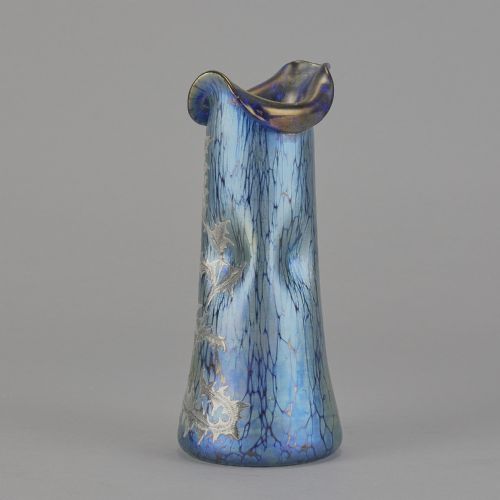
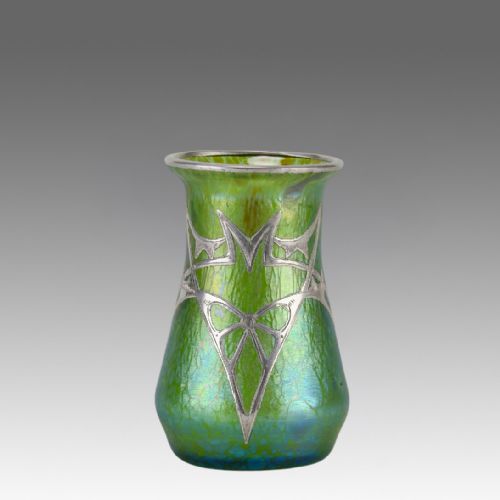
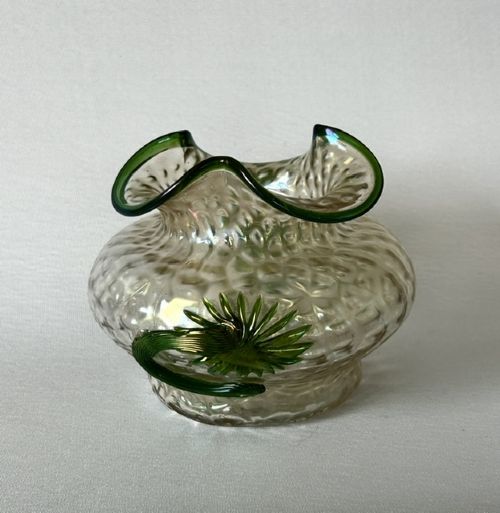
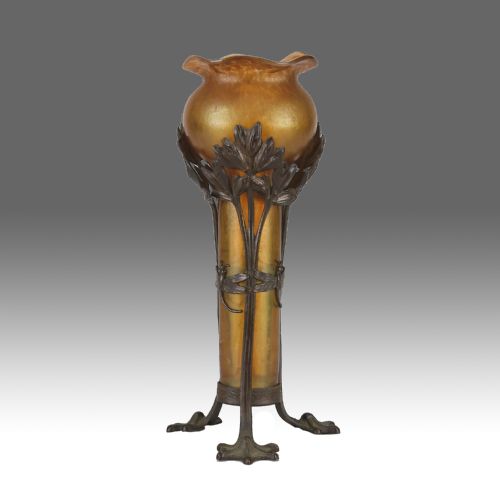
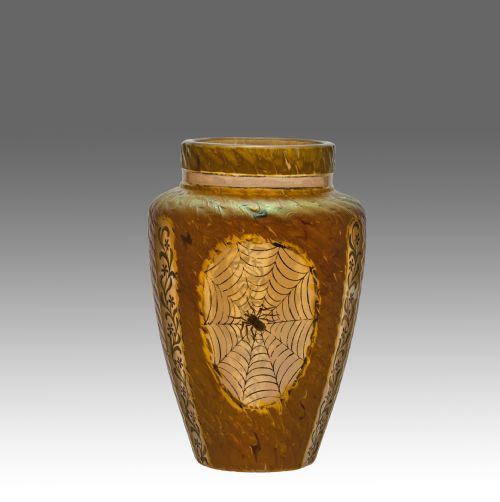
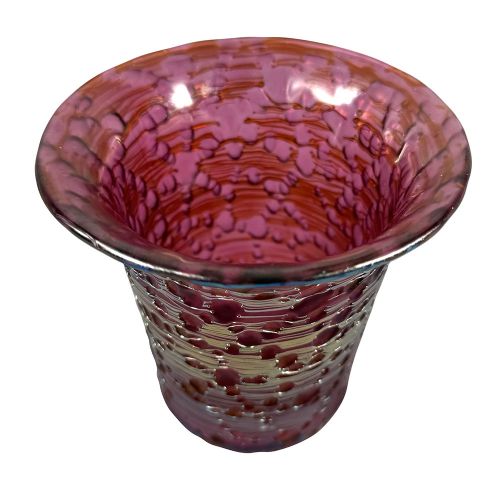
These bohemian iridescent vessel examples combine organic forms with shimmering surfaces that catch the light from every angle.
Bohemian Iridescent Vessel
A bohemian iridescent vessel brings together the fluid lines of Art Nouveau and the shimmering optical effects of early twentieth-century glassmaking. When you search for a bohemian iridescent vessel, you encounter hand-blown forms that often feature metallic patination or applied mounts.
The pieces on this page span the decades around nineteen hundred, taking the shape of vases and decorative bowls. They frequently display distinct décors such as Papillon or Orbulin.
Makers from this region utilised chemical treatments on hot glass to create shimmering surfaces that mimic natural phenomena like peacock feathers or oil slicks. Collectors prize these objects for their marriage of sculptural form and volatile surface chemistry.
How they were made
Craftsmen shaped these vessels by hand-blowing molten glass into organic moulds or manipulating the hot material freely with tools. They applied metallic oxides to the surface while the glass remained hot to achieve the characteristic rainbow sheen.
Many examples received secondary embellishments such as sterling silver overlay, enamel work, or bronze mounts. These metal additions frame the iridescent bodies and anchor the fluid glass forms.
Listings for this phrase are dominated by items from the year nineteen hundred, featuring iridescent glass and silver mounts.
What varies in quality
Quality in a bohemian iridescent vessel rests upon the depth and stability of the optical effect across the surface. Stronger examples display complex shifts of colour that penetrate the glass body rather than sitting as a thin film.
The integration of metal mounts and silver overlay also dictates the tier of a piece. Finer works feature heavy, well-cast bronze or thick silver securely fitted to the glass body without obscuring the iridescence.
Loetz Witwe·Kralik Glass·Johann Loetz·Loetz Factory
The Bohemian Iridescent Vessel Glossary
- Papillon
- A specific Loetz glass décor resembling butterfly wings. It creates a speckled, multi-coloured metallic sheen across the surface.
- Secessionist
- An early twentieth-century Central European design movement favouring geometric lines alongside organic forms. It distanced makers from historicist revivals.
- Silver overlay
- Metal applied directly to the glass surface in decorative patterns. This technique requires precise chemical bonding between the silver and the cooled vessel.
- Martele
- A hammered surface texture applied to glass or metal. It catches the light and adds a tactile dimension to the object.
- Art Nouveau
- An international style prominent around nineteen hundred characterised by flowing, plant-derived lines. It heavily influenced the silhouette of these glass vessels.
Bohemian Iridescent Vessel: Frequently Asked Questions
How do I clean a bohemian iridescent vessel?
Dust these glass surfaces gently with a soft, dry cloth to protect the delicate metallic sheen. Avoid harsh chemical cleaners or submersion in water, particularly on pieces with silver overlay or bronze mounts.
Moisture can seep beneath metal mounts and cause corrosion over time. Keep the vessels in stable indoor environments away from direct sunlight to preserve the chemical iridescence.
Were these vessels used for flowers?
Many of these pieces served as decorative vases intended to hold single stems or small floral arrangements. Their weighted bases and organic shapes provided stability despite their delicate appearance.
Some forms functioned purely as decorative bowls or centrepieces rather than utilitarian vases. Their primary purpose was to display the shimmering optical qualities of the glass within a well-lit room.
How do I tell Loetz glass apart from Kralik?
Loetz pieces frequently exhibit distinct named décors like Papillon or specific silvered iridescence with high optical refraction. Their forms often lean heavily into fluid Art Nouveau asymmetry.
Kralik pieces often display organic shapes with applied elements like glass snakes or marbled patterns. Comparing the specific surface texture and signature colour transitions helps separate the two workshops.
What is silver overlay on glass?
Silver overlay is a technique where silver is electrochemically deposited onto the glass vessel in decorative botanical or geometric patterns. The metal grips the surface securely.
This method combined the skills of glassmakers and metalworkers during the early twentieth century. It added structural weight and contrasting metallic tones to the iridescent glass bodies.