


Bohemian Glass Scent Bottle
A bohemian glass scent bottle brings vibrant colour and intricate craftsmanship to a dressing table.
What they are
When searching for a bohemian glass scent bottle, collectors encounter ornate vessels designed for holding perfumes and cosmetics during the nineteenth and twentieth centuries. These pieces encompass various forms, including pocket-sized chatelaine flasks, larger vanity bottles and twentieth-century atomisers.
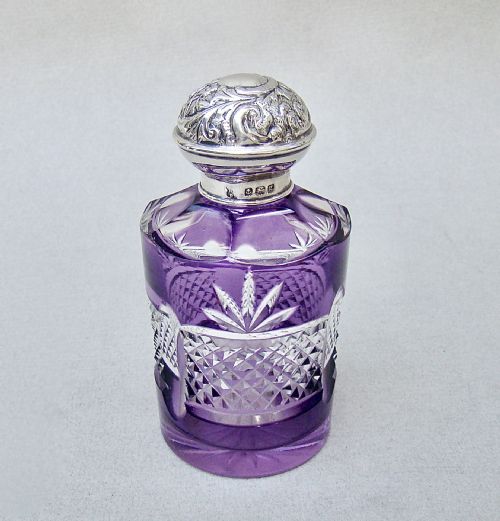
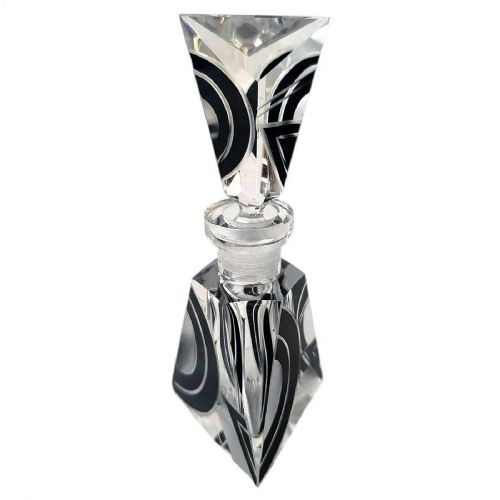
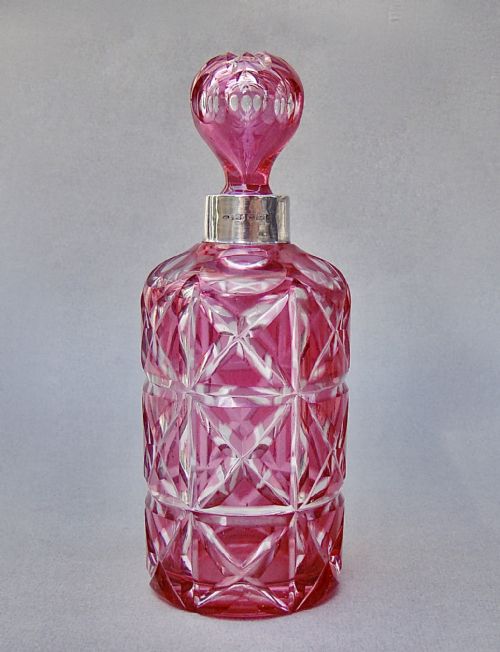
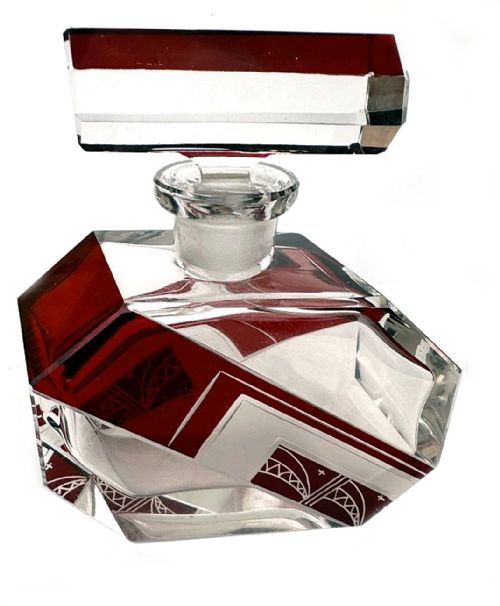
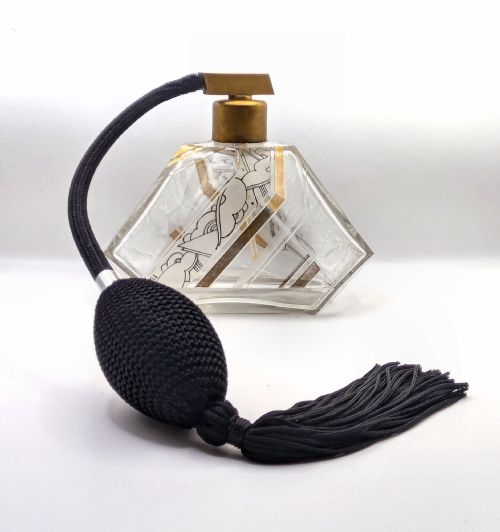
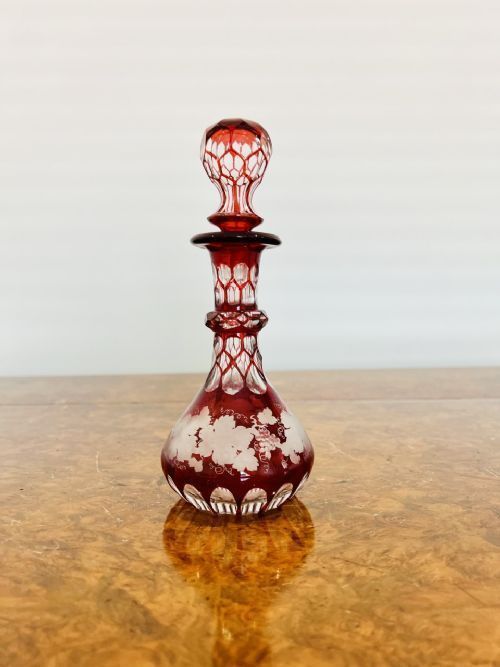
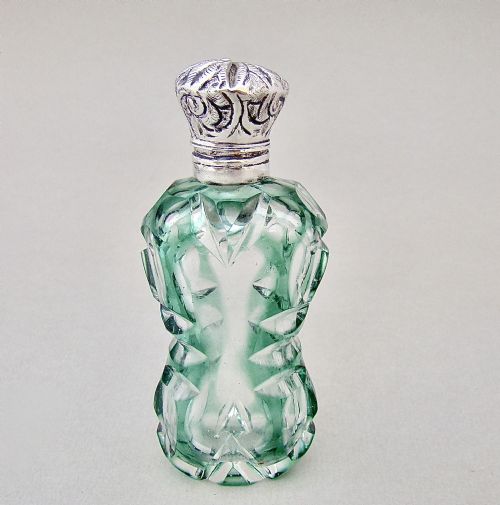
The selection ranges from robust Victorian overlay glass pieces fitted with heavy silver mounts to geometric Art Deco creations from the nineteen-thirties. Bristol blue, cranberry, ruby and amethyst colours dominate the Victorian production, whilst later modernist examples favour transparent green or enamel-decorated glass.
How they were made
Glassmakers utilised complex layering techniques, fusing multiple strata of coloured and clear glass together before cutting away portions to reveal contrasting hues underneath. This process, known as overlay, created high-relief patterns through deep wheel-cutting and etching.
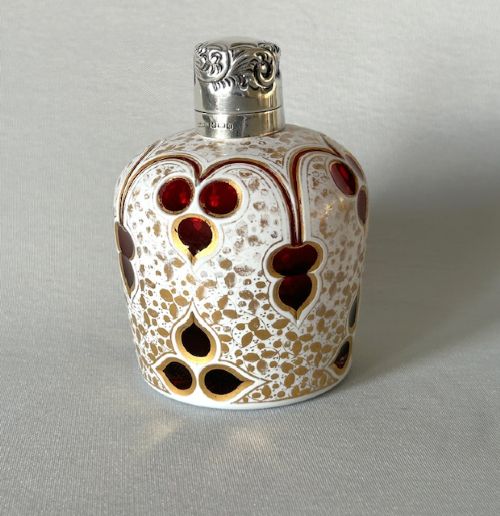
Metalworkers added functional and decorative elements by incorporating sterling silver mounts, screw caps, hinged lids and glass stoppers. Surface enrichment frequently involved hand-applied gold leaf, gilding and colourful enamel decorations.
Retail Price Guide 2026
Typical UK retail prices for bohemian glass scent bottle, calculated from the Sellingantiques database of over a million retail prices indexed since 2003. This retail price guide relies exclusively on Sellingantiques data; no external sources or auction records are used, so the figures do not describe the wider market.
Victorian ladies carried tiny glass flasks on chatelaine hooks, ensuring their favourite scent remained instantly accessible throughout long social calls.
What varies in quality
Superior examples display crisp, deep cutting in the glass overlay that creates sharp contrasts between the outer colour layer and the clear or white body beneath. The precision of the wheel-cut facets dictates the overall visual depth and brilliance of the vessel.
Mount quality separates standard production from exceptional pieces, with maker-marked sterling silver fittings and intricate chasing demonstrating higher artisanal skill. Intact original glass stoppers and well-preserved gilding or enamel work elevate the integrity of the piece.
Karl Palda·The Mousley Brothers·Charles May·Sampson Mordan·George Brace
The Bohemian Glass Scent Bottle Glossary
- Overlay glass
- A technique involving two or more distinct layers of glass fused together, where the outer layer is partially cut away to expose the underlying colour. This method creates striking contrast and tactile surface patterns.
- Chatelaine
- A decorative belt hook worn by Victorian women, suspending useful accessories such as small scent bottles and keys. These portable flasks required secure screw caps to prevent leakage during wear.
- Cranberry glass
- A rich pinkish-red glass produced by adding gold chloride to the molten batch during manufacturing. It remains a defining colour choice for nineteenth-century vanity items.
- Triple cased glass
- Glass formed from three distinct layers, providing multiple colour strata for deep carving and optical effects. This heavy construction typifies finer Victorian pieces.
- Sterling silver mount
- The protective and decorative metal collar fitted to the neck of the bottle, frequently bearing hallmarks for assay offices and silversmiths. These mounts secure the stopper mechanism.
Frequently Asked Questions
How do I clean a vintage scent bottle?
Wash the glass gently with warm soapy water, avoiding harsh abrasives that might damage surface gilding or enamel decoration.
Keep silver mounts dry to protect any antique hallmarks and patination from excessive moisture.
Are these bottles safe for modern perfume?
Most historic flasks function adequately for display rather than daily fragrance storage due to fragile stoppers and worn interior cork seals.
Using them dry preserves the interior surfaces and prevents residue accumulation in hard-to-reach corners.
What defines Victorian overlay glass?
Makers fused a coloured glass layer over a clear or contrasting core before cutting geometric or floral designs through the top stratum.
This labor-intensive subtraction method created heavy, jewel-like vessels popular on nineteenth-century dressing tables.
How can I date an unmarked piece?
Examine the colour palette, glass thickness and mounting style to narrow the production era between the Victorian period and nineteen-thirty.
Silver hallmarks on the bottle collar provide the most precise manufacturing year and location.