



Bohemian Crystal Decanter
These bohemian crystal decanter pieces combine heavy cut glass with vibrant colour and enamelling, bringing weight and presence to a drinks tray.
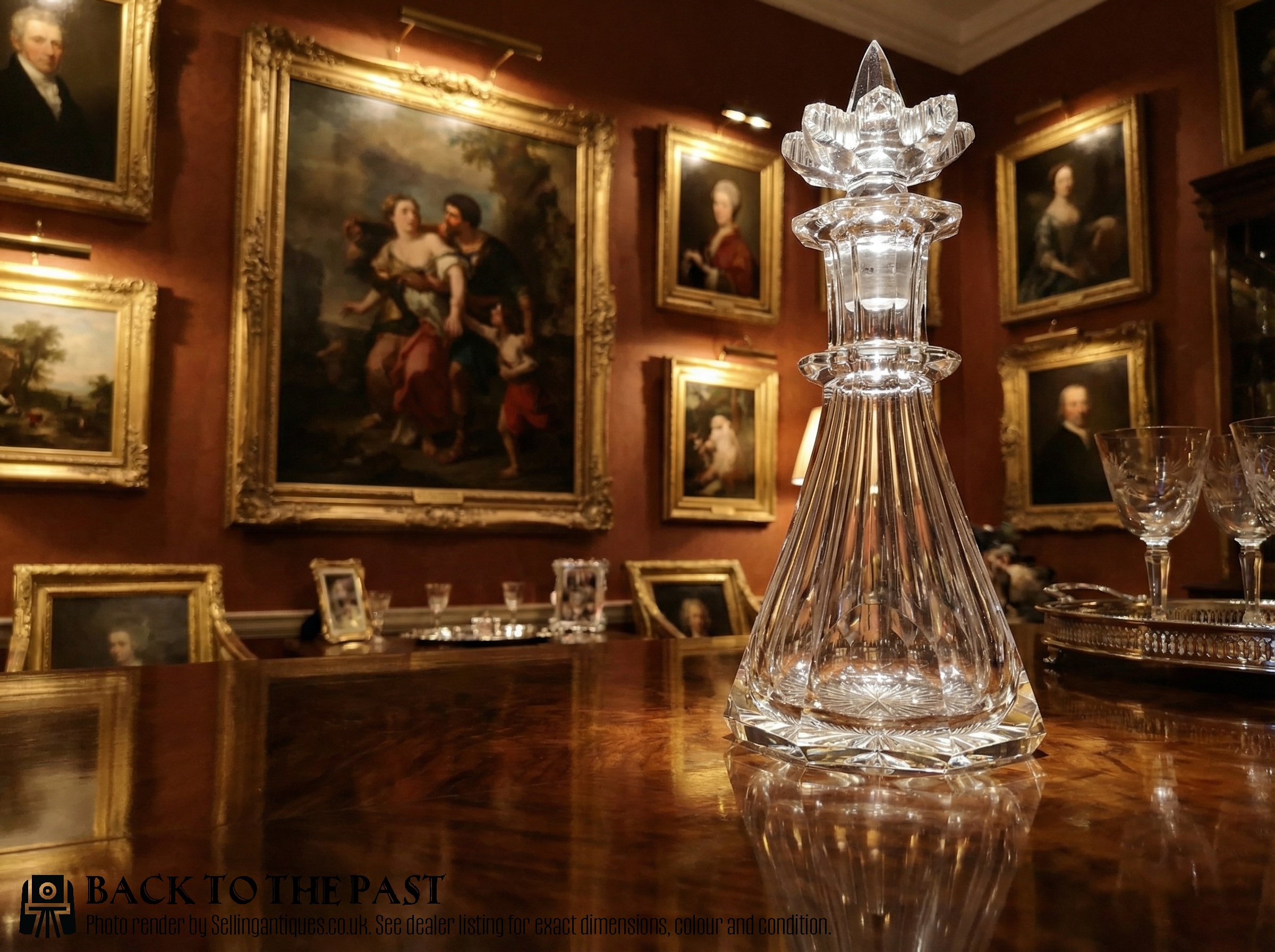
Bohemian Crystal Decanter
A bohemian crystal decanter encompasses wine jugs, bar sets with matching glasses, carafes, and perfume bottles spanning the Victorian era through the Art Deco period. Buyers encounter everything from tall colour over crystal hock decanters to geometric Czech barware sets.
The objects originate primarily from the late nineteenth century and the interwar decades, reflecting distinct shifts from Victorian ornamentation to modernist lines. Decanter sets and individual jugs form the majority of the available material on this page.
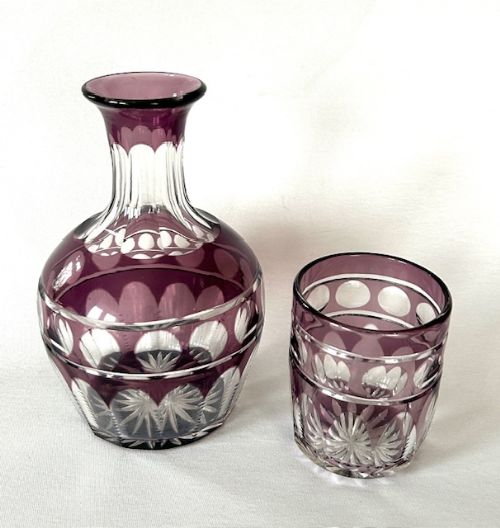
Forms range from simple cobalt or amethyst carafes to complex sets complete with matching tumblers and glasses. These pieces serve both decorative and functional roles in contemporary interiors.
Materials and construction
Maker workshops utilised crystal, lead crystal, and clear glass as the foundation for deep cutting and overlay techniques. Layers of coloured glass applied over clear crystal create high-contrast panels when cut back.
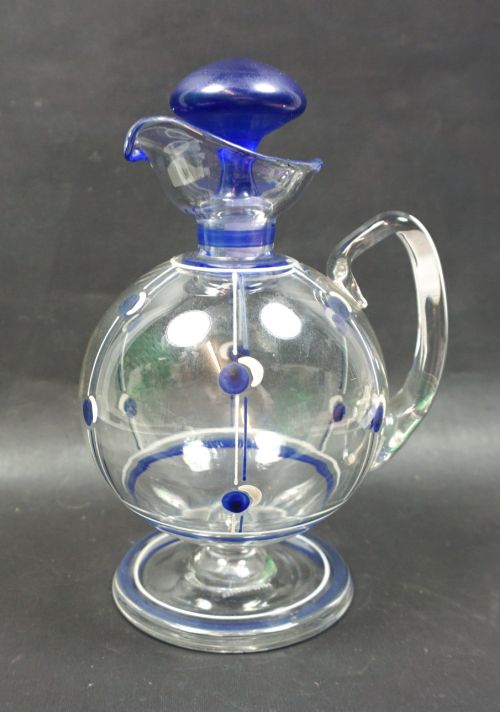
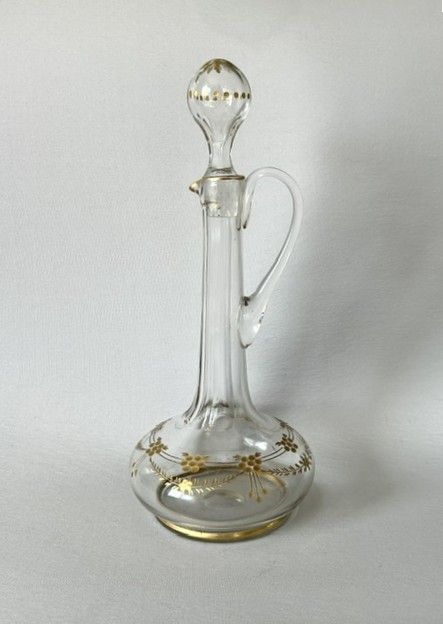
Decoration relied heavily on blue and green enamel work alongside gold gilt highlights applied to the exterior surfaces. Geometric cutting defines the Art Deco examples from Czechoslovakia, while Victorian pieces lean towards layered cranberry and amethyst glass.
Jazz age tables gained serious sparkle when six matching glasses met their matching geometric decanter.
Assessing quality
The crispness of the glass cutting and the precision of the geometric facets separate standard production from superior work. Sharp, clean edges on cut panels demonstrate greater technical skill in the workshop.
The complexity of the surface ornamentation, particularly hand-applied enamel and gold gilding, dictates the grade of the piece. Matching sets that retain their original complementary glasses command greater interest than solitary vessels.
Karl Palda
The Bohemian Crystal Decanter Glossary
- Colour over crystal
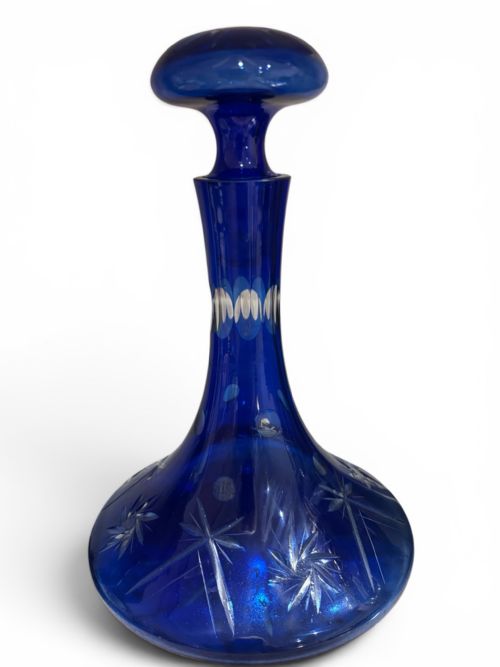
- A technique where a layer of coloured glass is fused over a clear crystal base before being cut through to reveal the clear glass beneath. This creates striking visual contrast.
- Lead crystal
- Glass containing metal oxide that increases weight, brilliance, and workability for deep cutting. It forms the heavy base of many twentieth-century sets.
- Gilding
- The application of gold leaf or gold paint to the surface for decorative accent. It frequently highlights rims, handles, and geometric motifs.
- Enamel
- Opaque or translucent vitreous material fused to the glass surface for colour decoration. Enamelled designs add painterly detail to plain or cut bodies.
- Hock decanter
- A tall, slender vessel traditionally used for white wine. These pieces often feature coloured glass overlays.
Bohemian Crystal Decanter: Frequently Asked Questions
How do I date a bohemian crystal decanter?
Dating relies on stylistic markers and manufacturing techniques visible in the glass. Victorian pieces show heavier ornate cutting and rich amethyst or cranberry tones, whereas pieces from the nineteen-thirties display geometric Art Deco lines.
Examination of the stopper, enamel work, and overall silhouette further clarifies the period of manufacture.
Were these decanters meant for daily use?
Many sets were produced for social entertaining and dining rooms, designed to hold wine, spirits, or liqueurs. The inclusion of matching glasses in sets indicates they were built for service.
Today, collectors use them for display or gentle domestic service with proper hand washing.
What is colour over crystal?
Colour over crystal involves fusing a vibrant layer of glass, such as cobalt blue or cranberry, over a clear crystal core. Artisans then cut facets through the outer layer to expose the clear glass underneath.
This method creates sharp patterns and highlights the weight of the material.
How should I clean my decanter?
Hand washing in warm water with mild detergent is essential for preserving enamel and gold gilding. Abrasive materials or dishwashers damage the surface finish and delicate metallic highlights.
Air drying upside down prevents water spots inside the vessel.