




Bobbin Turned Occasional Table
A bobbin turned occasional table brings distinct turned spool legs and compact proportions to a room, offering both practical surface space and tactile character.
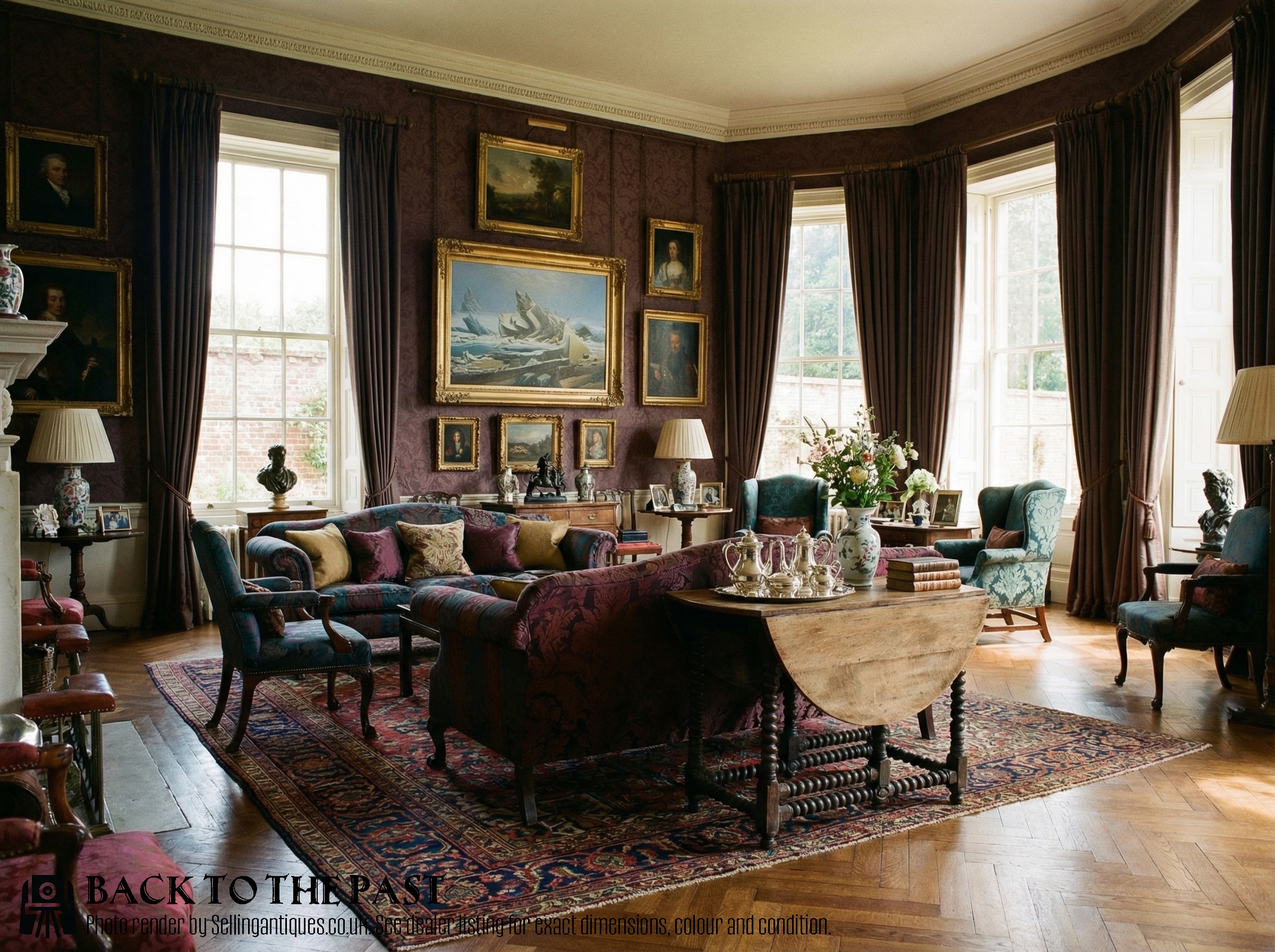
Bobbin Turned Occasional Table
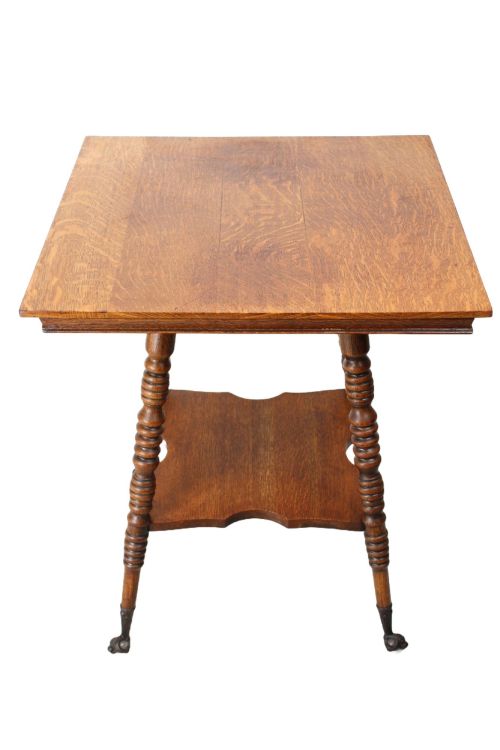
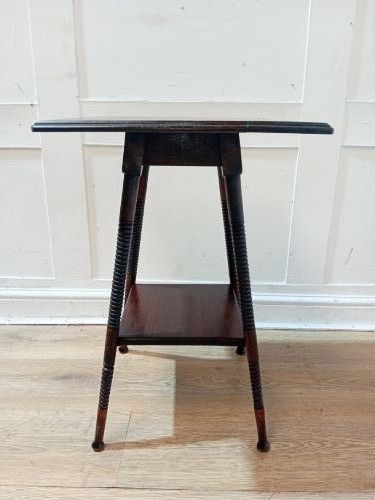
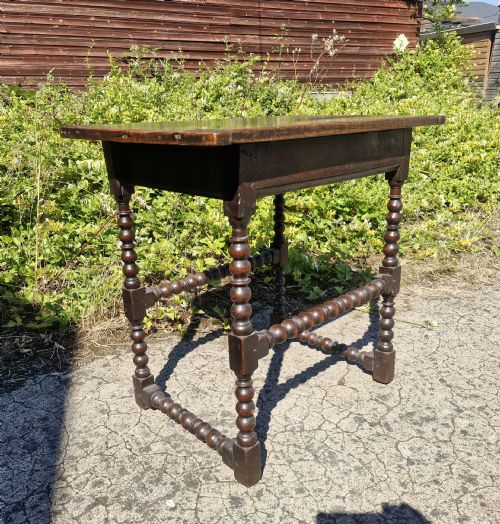
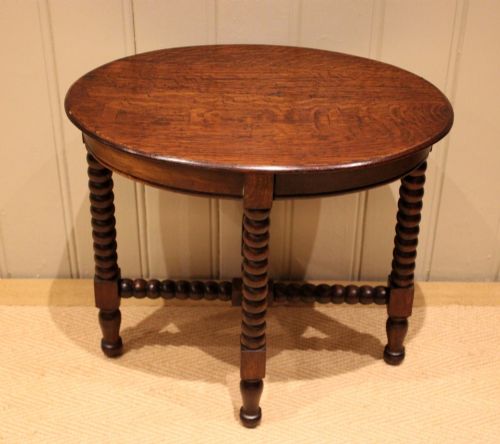
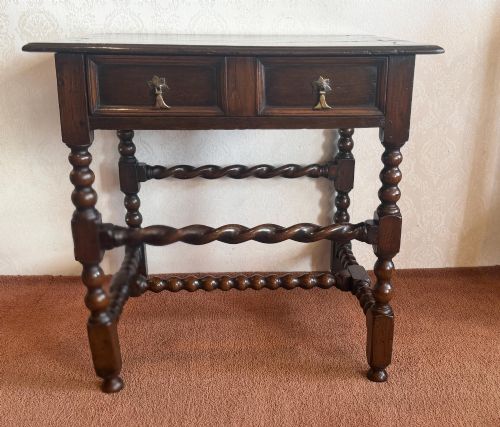
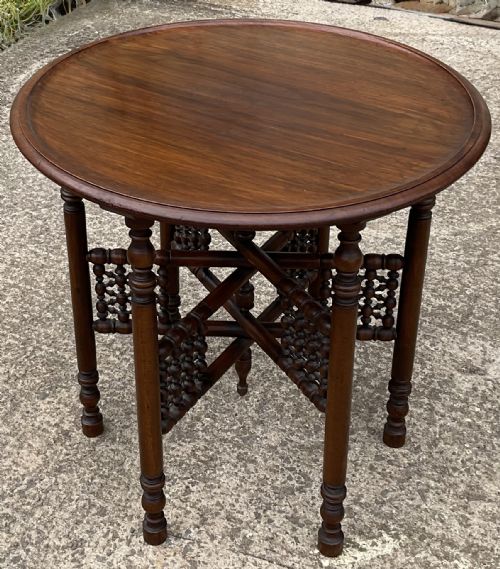
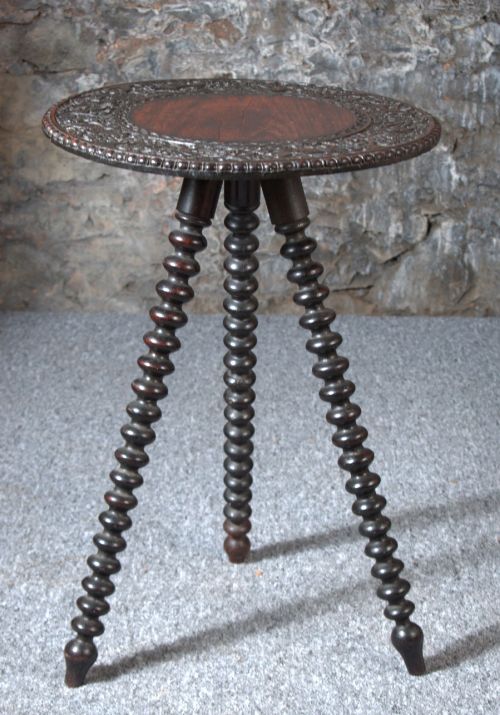
A bobbin turned occasional table is a compact surface defined by legs shaped with repeated rounded collars, echoing the appearance of bobbins used in textile production. These pieces emerge across several centuries, with examples stretching from the seventeenth century through the Victorian era and into the early twentieth century.
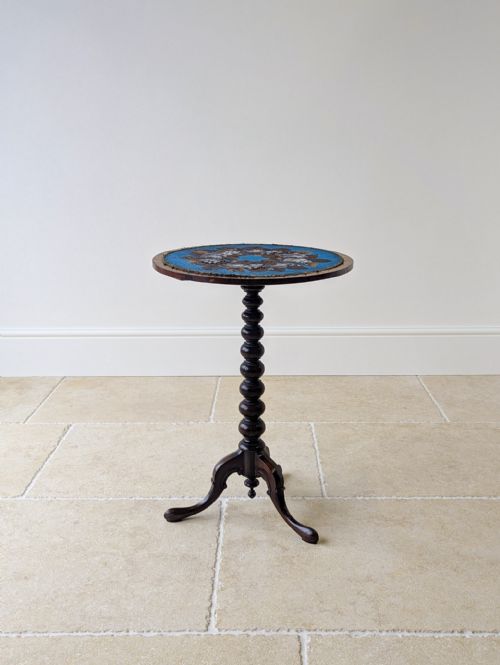
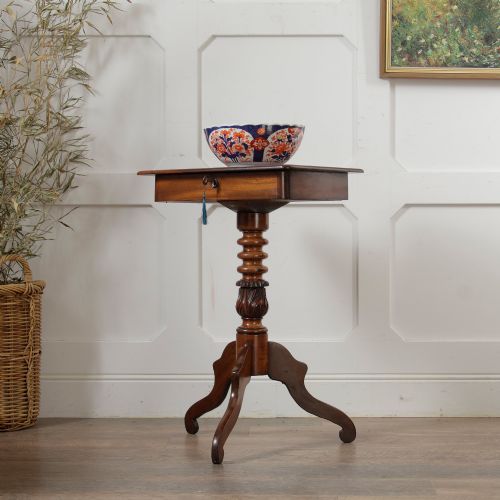
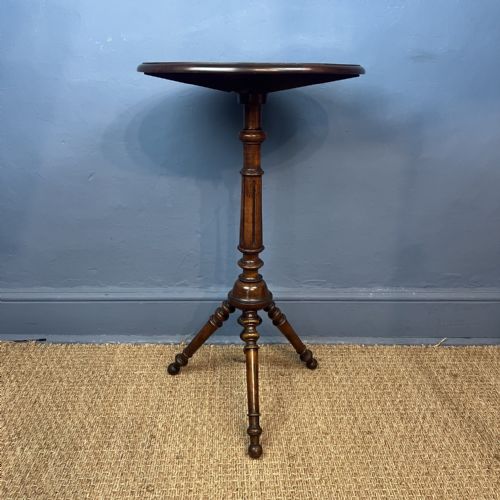
The form crosses multiple styles and regional traditions, appearing in oak, walnut, mahogany, and yew wood. Alongside straightforward side tables, buyers encounter gateleg designs, sewing tables, and pedestal forms equipped with drawers or circular tops.
Jacobean and Arts and Crafts revivals heavily influence the selection, often pairing the signature turned legs with rich timber surfaces or fabric additions. Oak and walnut versions dominate the older periods, while later pieces introduce ebonised finishes and varied occasional table formats.
How they were made
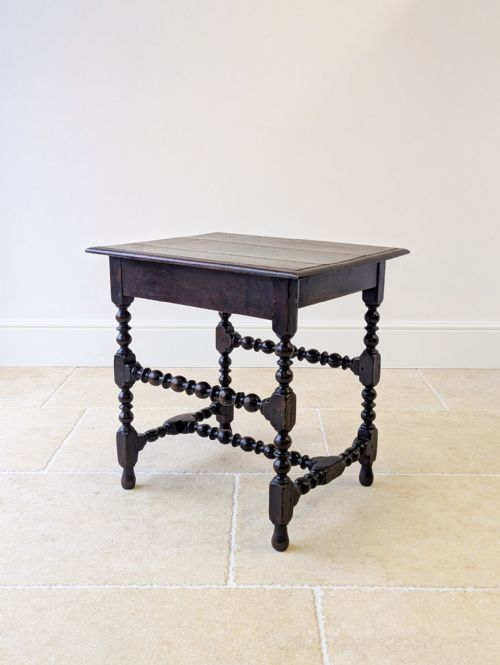
Cabinetmakers turned timber on a lathe to create the rhythmic spool and bobbin profiles that form the legs and stretchers. Hardwoods such as oak, walnut, mahogany, and yew provided the structural strength required to support slender turned supports.
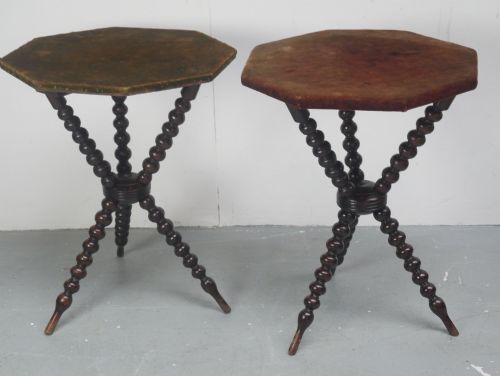
Joinery techniques relied on traditional pegged or mortise and tenon joints to secure the legs to the tabletop frame or under-tier. Surface decoration often involved polishing the timber to highlight the grain, though some Victorian examples utilised ebonised finishes or added velvet and leather tops.
The listings on this page span from the seventeenth century through to the early twentieth century, incorporating oak, walnut, mahogany, and yew.
What varies in quality
Quality rests in the crispness of the turning on the legs and the selection of timber used for the top and frame. Tighter, more uniform spool work indicates superior craftsmanship on the lathe, whereas softer or poorly defined turnings lack the same visual rhythm.
The choice of materials also dictates the standing of a piece, with dense native oaks, figured walnuts, and rich yew woods elevating the construction above standard utility items. Structural integrity in the joints and stretchers ensures the table remains stable despite the slender profile of the legs.
William Birch
The Bobbin Turned Occasional Table Glossary
- Bobbin turning
- A form of woodturning that creates a series of rounded, spool-like shapes along the length of a leg or stretcher. This decorative technique is also known as spool turning.
- Gateleg table
- A table with hinged leaves supported by legs that swing outward like a gate. This construction allows the surface area to expand or fold down compactly.
- Occasional table
- A small, portable table designed for specific, intermittent use in a room. These versatile pieces function easily as side tables, lamp tables, or coffee tables.
- Ebonised
- Timber treated with a finish that darkens the surface to resemble ebony. This technique was particularly popular during the Victorian period for decorative occasional furniture.
Bobbin Turned Occasional Table: Frequently Asked Questions
What is a bobbin turned occasional table?
A bobbin turned occasional table is a compact furniture piece defined by legs shaped into repeated rounded spool forms. These versatile tables appear in various timbers and styles across several centuries of British and European woodworking.
Craftsmen utilised the distinctive turned supports on side tables, gateleg tables, and sewing tables to add decorative texture without heavy carving. Their modest proportions make them suitable for placing beside seating or in smaller spaces.
How do I date an antique bobbin turned table?
Dating these tables involves examining the timber species, construction joints, and stylistic context of the piece. Earlier examples from the seventeenth century typically feature heavy oak with pegged joints and hand-turned framing.
Later Victorian and Arts and Crafts revivals often employ walnut, mahogany, or ebonised finishes alongside machine-tooled turnings. Comparing the hardware, such as drawer construction, helps narrow down the production era.
Where were bobbin turned tables used?
These tables served as functional surfaces in parlours, sitting rooms, and hallways throughout the home. Their compact size allowed them to hold lamps, sewing equipment, or decorative items without cluttering the room.
Bedrooms and drawing rooms also accommodated smaller occasional and tripod formats for holding books or writing materials. Their portability meant they could easily move to wherever a temporary surface was required.
How do I care for antique wood tables?
Caring for antique wood surfaces involves keeping them away from direct heat sources and strong sunlight to prevent timber splitting. Regular dusting with a soft, dry cloth preserves the finish without building up excessive wax layers.
Occasional application of a suitable beeswax polish maintains the lustre of timbers like oak, walnut, and mahogany. Avoiding moisture on the surface protects both the wood and any historic leather or fabric inserts.