


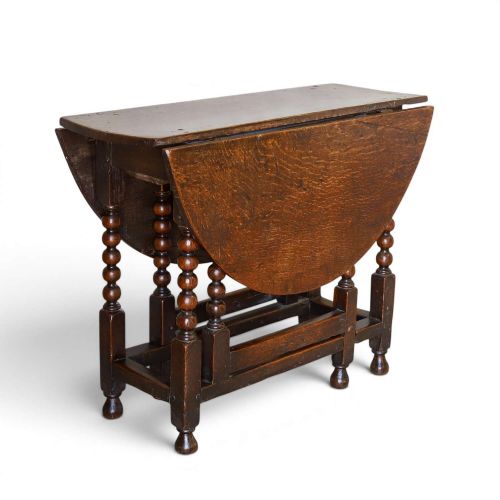
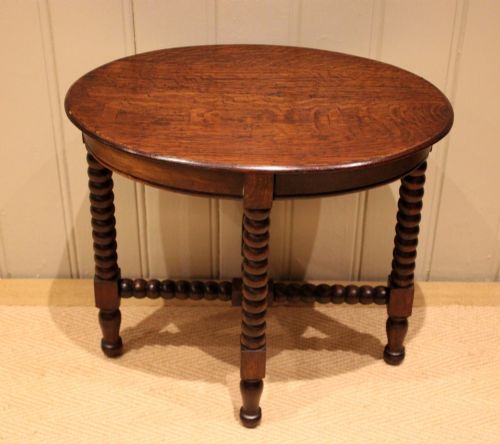


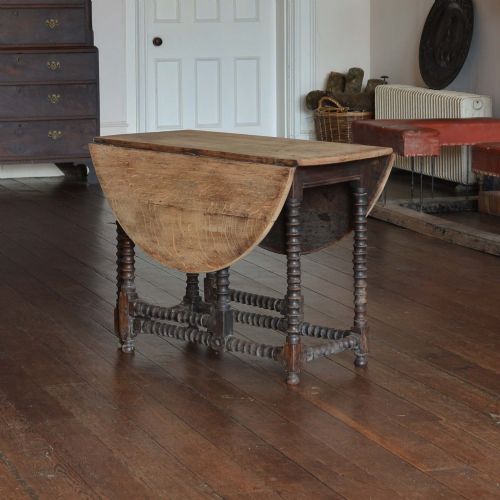


Spool Turned Leg Table
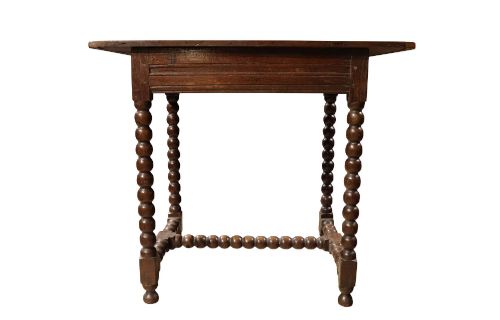
A spool turned leg table brings seventeenth-century character into a room through hand-turned timber rings that catch the light.
Spool Turned Leg Table
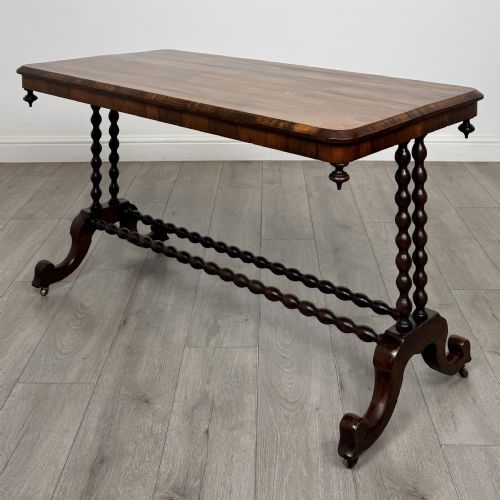
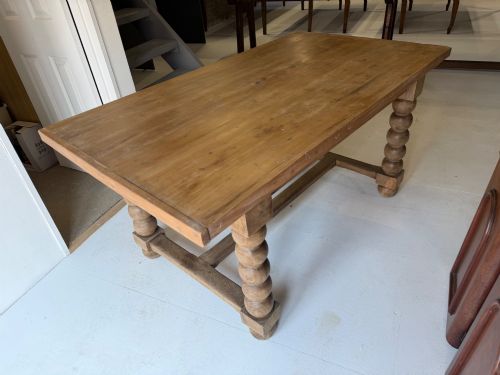
A spool turned leg table is a practical surface defined by cylindrical wood sections resembling cotton reels, appearing in formats ranging from side tables and hall tables to gateleg dining pieces. The selection spans robust seventeenth-century English oak origins up through nineteenth-century Victorian interpretations and Jacobean revival pieces.
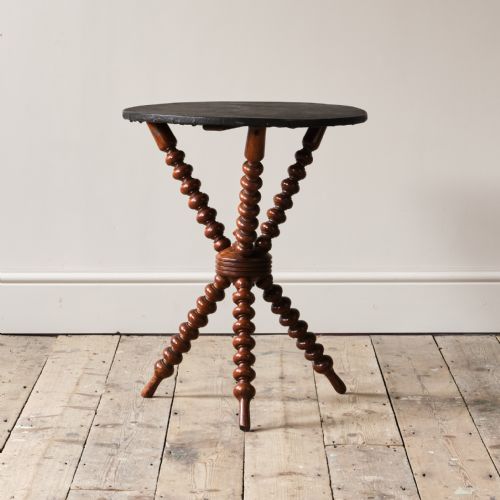
Buyers encounter numerous side tables and occasional tables alongside gateleg drop-leaf varieties and compact cricket tables. Woods include solid oak, yew wood, pine, beech, and giltwood paired with velvet or leather top surfaces.
The aesthetic bridges rustic farmhouse utility and formal seventeenth-century joinery. Pieces range from small oval formats to two-drawer hallway designs constructed across the nineteenth century and earlier.
Materials and turning methods
Makers utilised native hardwoods such as oak, beech, yew wood, and pine to build these sturdy frames. Turning the distinct spool or bobbin profiles required a lathe to shape the timber into regular rounded beads.
Joinery methods reflect the period of origin, utilising pegged tenons on seventeenth-century examples and simpler fixings on later Victorian and nineteen-hundreds pieces. Surfaces remain natural or receive gilding, paired occasionally with velvet trims and leather inserts.
Spool Turned Leg Table Retail Price Guide 2026
Typical asking prices for spool turned leg table among the pieces listed under this phrase on Sellingantiques today, from the lower quarter to the upper quarter. They describe what is for sale here now, not the wider market.
Makers clearly loved turning wood on lathes so much they even put cotton-reel legs on velvet-covered tables.
Judging construction and timber quality
Quality rests upon the crispness of the lathe work and the selection of the primary timber, with dense native oak and figured yew wood commanding greater regard than softer pine. The regularity and depth of the spool turnings determine the visual rhythm of the base.
Structural integrity depends on tight joints where the turned legs meet the rails and tabletops. Better examples preserve their original patination and timber stock without excessive replacement of the bobbin elements.
The Spool Turned Leg Table Glossary
- Bobbin turning
- A form of lathe turning that produces a series of rounded, spool-like shapes along the length of a furniture leg. This decorative profiling defines the entire style.
- Gateleg table
- A drop-leaf table featuring hinged flaps supported by legs that swing outward like a gate. Several examples in this group utilise this space-saving configuration.
- Cricket table
- A small, lightweight three-legged table traditionally used in domestic settings. Pine versions with bobbin turned legs appear in nineteenth-century contexts.
- Jacobean Revival
- A nineteenth-century design movement that copied or reinterpreted seventeenth-century English furniture styles. Much of the oak bobbin furniture on the market belongs to this revival period.
Spool Turned Leg Table: Frequently Asked Questions
How do I date a spool turned table?
Dating relies on timber species, construction joinery, and tool marks left on the wood. Seventeenth-century examples display hand-riven oak and pegged joints, whereas nineteenth-century revival pieces utilise machine-sawn framing.
Examining the wear patterns and the method of lathe work helps distinguish older original pieces from later Victorian copies.
Were these tables used for dining?
Larger gateleg versions served primary dining functions in seventeenth-century homes, folding down when not in use to save space. Smaller side and occasional variants functioned as writing desks or display surfaces.
Today, the compact formats suit use as hall tables or bedside stands.
How do I care for antique oak and yew?
Maintain the timber by applying traditional beeswax periodically to nourish the dry wood and preserve the surface sheen. Avoid placing wooden tables near direct heat sources or strong sunlight to prevent splitting.
Clean surfaces with a dry or barely damp cloth, steering clear of modern silicone sprays.
What is the difference between bobbin and spool turning?
The terms describe the exact same lathe-turned furniture detail. Makers used bobbin and spool interchangeably to reference the cylindrical wooden reels.
Regional preferences generally dictated which word was standard in historical workshops.