


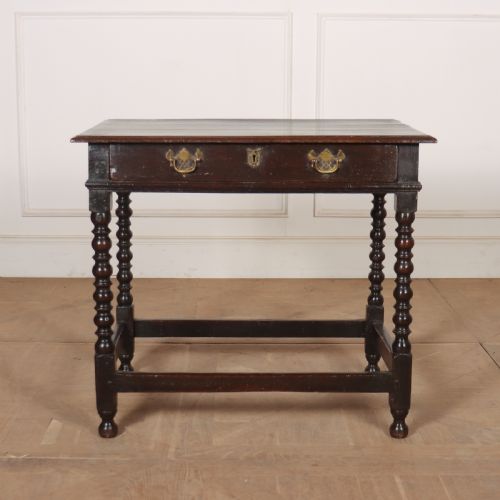

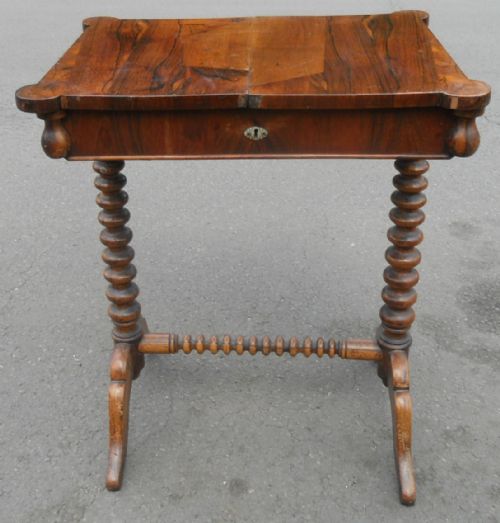


Bobbin Turned Leg Desk
These bobbin turned leg desk examples combine turned spool supports with writing surfaces across centuries of English, French, and Portuguese craftsmanship.
Bobbin Turned Leg Desk
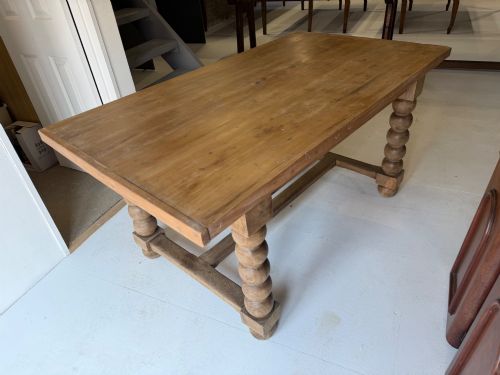
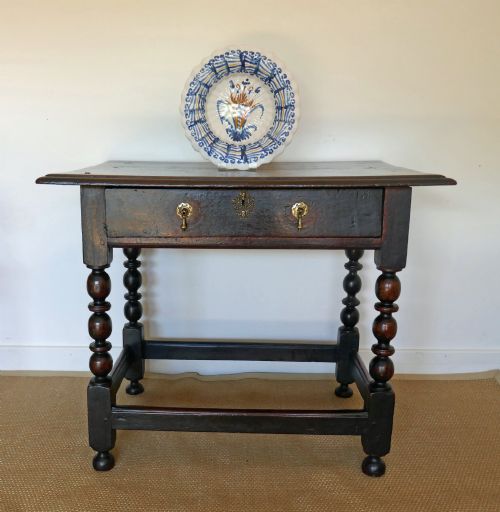
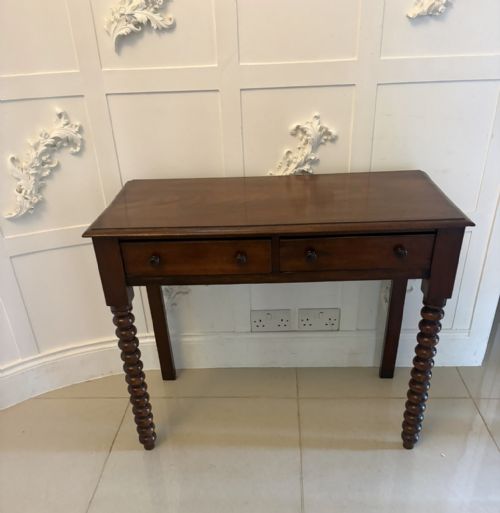
When you search for bobbin turned leg desk forms, you encounter writing tables, side tables, and centre tables featuring distinctive spool turnings along their supports. The pieces crossing this market span from the seventeenth century through the Victorian era, showing how makers adapted turned wood to domestic writing and work furniture.
The material palette is predominantly oak, mahogany, rosewood, and yew wood, alongside beech frames and occasional brass details. You find country furniture alongside formal Victorian and Georgian iterations, reflecting diverse regional workshops in England, France, and Portugal.
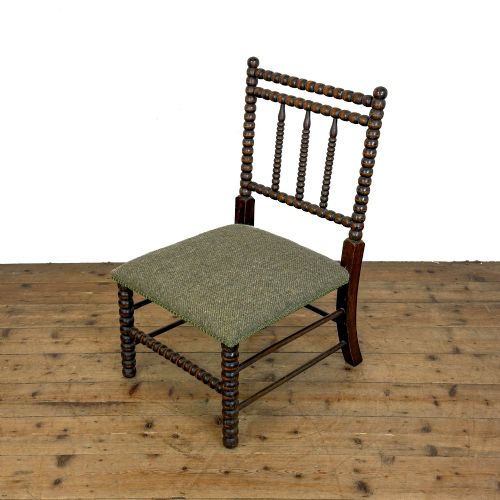
While dedicated writing desks appear with drawers, many surviving examples are side tables and centre tables that served functional writing duties in period interiors. The bobbin leg itself unites these diverse forms, appearing on side chairs and dining tables as well as desks.
How they were made
Makers shaped bobbin legs on a lathe, cutting repeating spherical and cylindrical spool motifs from solid timbers like oak, beech, and mahogany. These turned components were then joined to sturdy framing timbers using traditional joinery appropriate to the period of manufacture.
Surfaces feature native hardwoods finished to highlight natural grain patterns, sometimes paired with secondary timbers like elm in country pieces. Working drawers utilise plain timber construction, occasionally fitted with brass pulls or handles that reflect the manufacturing date.
What varies in quality
The crispness and uniformity of the spool turnings separate standard vernacular pieces from finer examples. Sharply defined bobbin profiles require skilled lathe work, whereas worn or blunt turnings indicate simpler regional production.
Timber selection and grain matching across the top and base determine visual coherence. Dense, well-figured woods such as rosewood and yew stand apart from utility oaks and beeches used in rustic workshops.
The Bobbin Turned Leg Desk Glossary
- Bobbin turnings
- A form of wood turning consisting of repeated spherical or cylindrical shapes resembling spools of thread. This decorative technique appears on the legs and stretchers of seventeenth century and Victorian furniture.
- Centre table
- A freestanding table designed to be viewed from all sides rather than placed against a wall. These pieces often occupy the middle of a room and feature finished backs and detailed underframes.
- Side table
- A functional small table intended to stand against a wall or beside other furniture. They often incorporate single or double drawers for storage.
- Vernacular furniture
- Everyday objects made by local craftspeople using regional materials rather than following strict high-style metropolitan fashions. These pieces often display practical construction methods suited to rural use.
- Stretchers
- Horizontal wooden members connecting the legs of a table or chair for added structural support. On bobbin turned furniture, stretchers frequently feature matching spool turnings.
Bobbin Turned Leg Desk: Frequently Asked Questions
What is a bobbin turned leg desk?
A bobbin turned leg desk is a writing table or bureau supported by legs shaped on a lathe to resemble a string of wooden beads or spools. These pieces range from seventeenth-century English styles to later Victorian revivals.
Makers utilised sturdy timbers like oak, mahogany, and rosewood to construct the frames and drawers, ensuring durability alongside decorative turning.
How do I date a bobbin turned table?
Dating relies on examining the timber species, joinery techniques, and the proportions of the turned elements. Seventeenth-century examples often employ heavy oak with hand-cut joints, while Victorian pieces utilise rosewood or mahogany with machine-finished precision.
Comparing the hardware and secondary woods provides further clues to the manufacturing era.
Were these always used as desks?
Many tables featuring bobbin turned legs served multiple domestic functions, including writing, sewing, and general side table duties. Writing tables typically incorporate one or more drawers beneath the top surface for paper and ink.
Owners adapted sturdy tables for administrative tasks in studies, hallways, and drawing rooms across different centuries.
How should I care for antique timber?
Maintaining antique wood requires keeping pieces away from direct heat sources and dramatic humidity shifts that can cause splitting. Regular dusting with a dry, soft cloth preserves the original surface finish without buildup.
Applying occasional appropriate wax feeds the timber and protects the grain of oak, mahogany, and rosewood surfaces.