



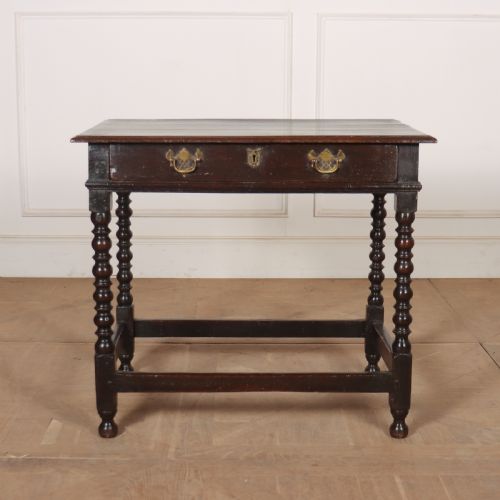
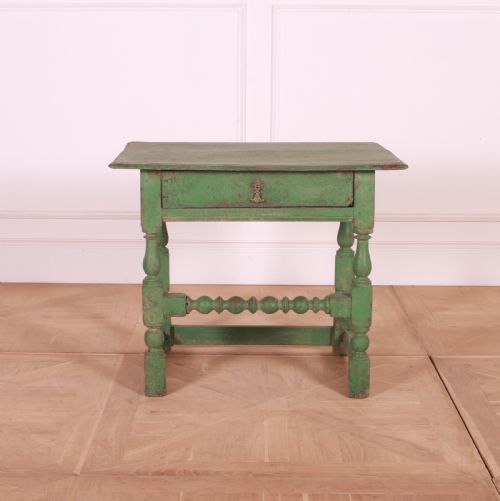

Bobbin Stretcher Side Table
A bobbin stretcher side table brings sturdy seventeenth-century turning and rich timber into a room, offering both practical surface space and distinct historical character.
Bobbin Stretcher Side Table
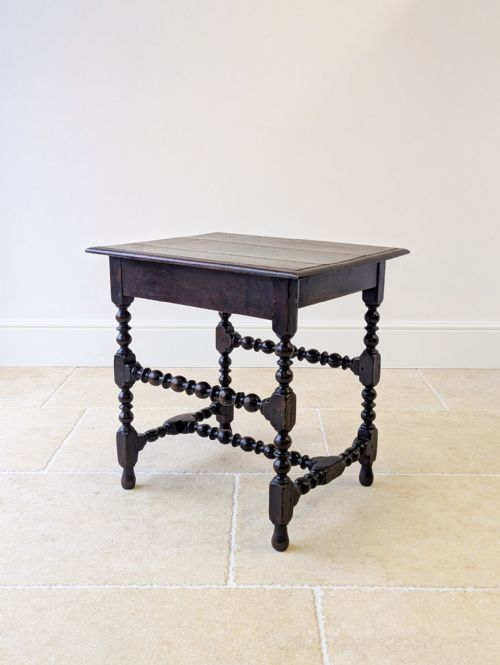
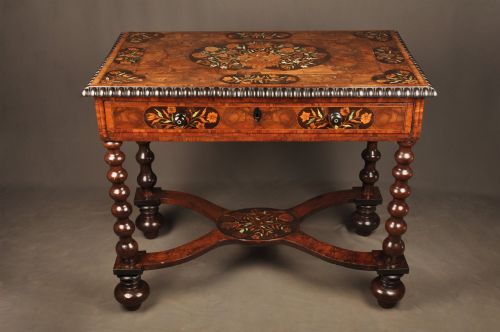
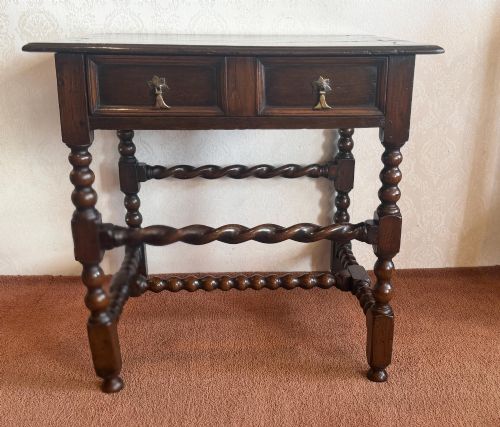
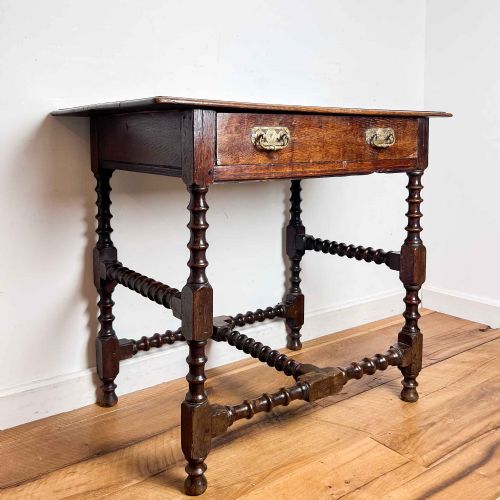
A bobbin stretcher side table is a compact surface defined by turned woodwork beneath the top, connecting the legs for stability. These tables serve as occasional, centre, or lamp pieces in domestic settings, providing a narrow footprint alongside functional storage or display space.
The versions encountered on this page span from the seventeenth century through to later revivals, reflecting enduring interest in early English and continental furniture forms. Oak dominates the selection, frequently paired with elm, yew, walnut, and cherry to create durable domestic tables with distinct regional character.
Materials and construction methods
Cabinet makers utilised native hardwoods, predominantly oak and elm, constructing sturdy frames joined with traditional pegs and mortise joints. Timber selection dictated the weight and grain of each piece, with fruitwood and yew providing finer details.
Turners shaped the characteristic bobbin legs and stretchers on a lathe, cutting repeating rounded profiles from solid blocks of wood. Brass hardware occasionally appears on later or modified examples, particularly for drawer pulls on single or double drawer variants.
The selection includes specific regional styles such as French provincial, Dutch baroque, and English country furniture.
What separates the finest examples
Quality rests in the crispness of the turning and the integrity of the timber. Sharp, well-defined bobbin profiles indicate skilled hand-turning, whereas worn or mushy turnings suggest lesser craftsmanship or excessive cleaning over centuries.
The proportion of the base to the top and the preservation of original timber surfaces determine desirability. Tables retaining their early patination and sound structural joinery stand apart from those with heavy replacements or unsympathetic restoration.
The Bobbin Stretcher Side Table Glossary
- Bobbin turning
- A form of lathe work producing a series of rounded wooden segments resembling spools of thread. This decorative technique appears primarily on the legs and stretchers of seventeenth-century and revival furniture.
- Stretcher
- A horizontal wooden brace connecting the legs of a table to improve structural rigidity. On these pieces, stretchers often follow the bobbin profile.
- Oak
- A durable native hardwood valued for its strength and prominent grain pattern. It forms the primary structural material for the majority of these tables.
- Patina
- The surface sheen and colour acquired by wood through age, handling, and light exposure. A rich patina indicates undisturbed historical surfaces.
Bobbin Stretcher Side Table: Frequently Asked Questions
Where should I place a bobbin stretcher side table?
These tables fit easily into hallways, living rooms, or bedrooms as compact surfaces for lamps or small decorative objects. Their narrow proportions allow them to sit flat against walls without blocking walkways.
Because they combine decorative turnings with robust wooden construction, they work well alongside both antique and contemporary furnishings as accent pieces.
How do I care for antique timber surfaces?
Keep wooden tables away from direct heat sources and strong sunlight to prevent the timber from drying out or splitting. Dust regularly with a dry cloth and apply a quality beeswax occasionally to nourish the grain.
Avoid using modern liquid silicone polishes, which can build up and dull the natural patina over time.
How do I date a bobbin turned table?
Examine the construction joints, tool marks, and timber species to gauge the age of a piece. Seventeenth-century examples typically feature hand-riven oak with pegged mortise and tenon joints, whilst later revivals show more uniform machining.
Turnings on earlier tables are often slightly irregular due to hand lathe production, whereas nineteenth-century revival pieces display greater mechanical precision.
What is the difference between a side table and a centre table?
Side tables are generally designed to stand against a wall, sometimes featuring a finished front and a plain back. Centre tables are finished on all four sides so they can stand independently in the middle of a room.
Both forms utilise the characteristic bobbin stretcher base for rigidity, though centre tables often present a more uniform decorative scheme.