
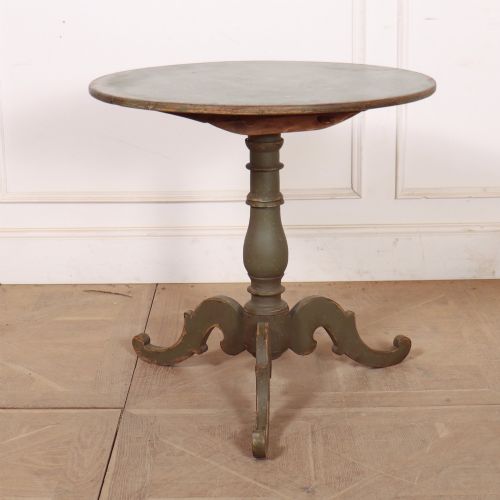


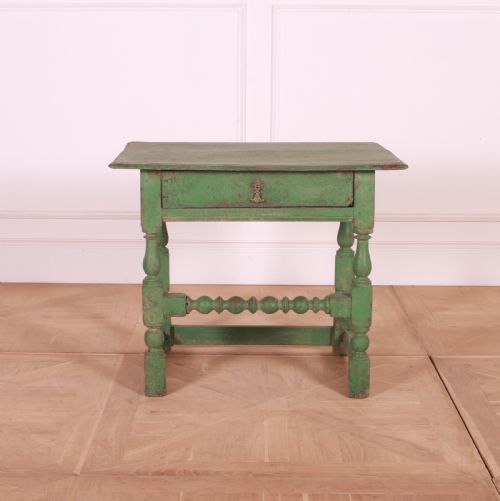


Green Wooden Lamp Table
A green wooden lamp table brings warmth and colour to a corner, offering a practical surface with honest country character.
Green Wooden Lamp Table
A green wooden lamp table is a compact surface intended for lighting and small spaces, drawing on vernacular traditions from English, Swedish, French, and Welsh country styles. These tables serve practical functions beside seating while adding distinct colour and painted finishes to a room.
The pieces appearing on this page span the eighteenth and nineteenth centuries, alongside twentieth-century examples up to the nineteen-forties. Forms range from side tables and centre tables to cricket tables, often featuring painted wooden surfaces.
Buyers will encounter painted oak and pine structures, alongside related lighting items such as Kashmiri table lamps and ceramic jar lamps. The prevailing aesthetic leans towards rustic, provincial, and regional country designs rather than formal court furniture.
How they were made
Construction relies primarily on timber such as pine and oak, worked by hand into sturdy domestic furniture. Carpenters shaped these woods using traditional joinery before applying layered paint finishes.
Surfaces often feature painted treatments in various shades of green, sometimes accompanied by brass or metal accents. These finishes were applied to protect the wood and provide decorative colour in provincial interiors.
One table evidently decided that three legs were enough for a cricket match and simply refused to wobble.
What varies in quality
Quality rests in the integrity of the timber construction and the character of the painted surface. Earlier eighteenth-century examples show traditional hand joinery, whereas later nineteenth- and twentieth-century pieces often reflect simpler vernacular methods.
The depth and preservation of the original or historic green paint dictate visual appeal. Tables retaining an honest, untouched painted patina hold greater interest than those with heavy modern intervention.
The Green Wooden Lamp Table Glossary
- Cricket table
- A small three-legged wooden table originating in Britain, traditionally used beside firesides for holding drinks or small items. Its three legs provide stability on uneven cottage floors.
- Side table
- A small functional table designed to stand against a wall or beside seating. These pieces offer a surface for lamps and decorative objects without dominating a room.
- Pine
- A softwood commonly used in country furniture for its workability and availability. It takes painted finishes readily, making it a staple of regional vernacular design.
- Oak
- A durable hardwood valued for structural strength and longevity in traditional furniture making. Eighteenth-century examples frequently utilise this timber for stability.
Green Wooden Lamp Table: Frequently Asked Questions
What is a green wooden lamp table?
A green wooden lamp table is a compact surface designed to hold lighting and small domestic items, finished in shades of green paint. These pieces draw on country and provincial traditions from various European and international origins.
They function practically beside seating while introducing historic character and colour into contemporary or traditional interiors.
Where were these tables used?
These tables were built for domestic use in country houses, farmhouses, and provincial homes where small, movable surfaces were essential. They stood beside chairs or in corners to support oil lamps and candles.
Today, they serve a similar purpose in modern homes as bedside surfaces or accent tables for reading lamps.
How do I date a wooden table?
Dating a wooden table involves examining the construction methods, tool marks, and timber species visible in the frame. Eighteenth-century pieces typically display hand-cut joinery and signs of age in the wood grain.
Nineteenth- and twentieth-century examples may incorporate machine-sawn elements or different structural fasteners alongside historic painted surfaces.
How do I care for painted wood?
Painted wood surfaces require gentle cleaning with a soft, dry cloth to remove dust without damaging the historic finish. Avoid harsh chemical cleaners and excessive moisture that might lift or discolour the paint.
Keeping the table away from direct heat sources and strong sunlight preserves both the timber and the green pigment.