




Bobbin Leg Chair
A bobbin leg chair brings centuries of turned woodwork into a room, offering the tactile rhythm of spool-moulded framing.
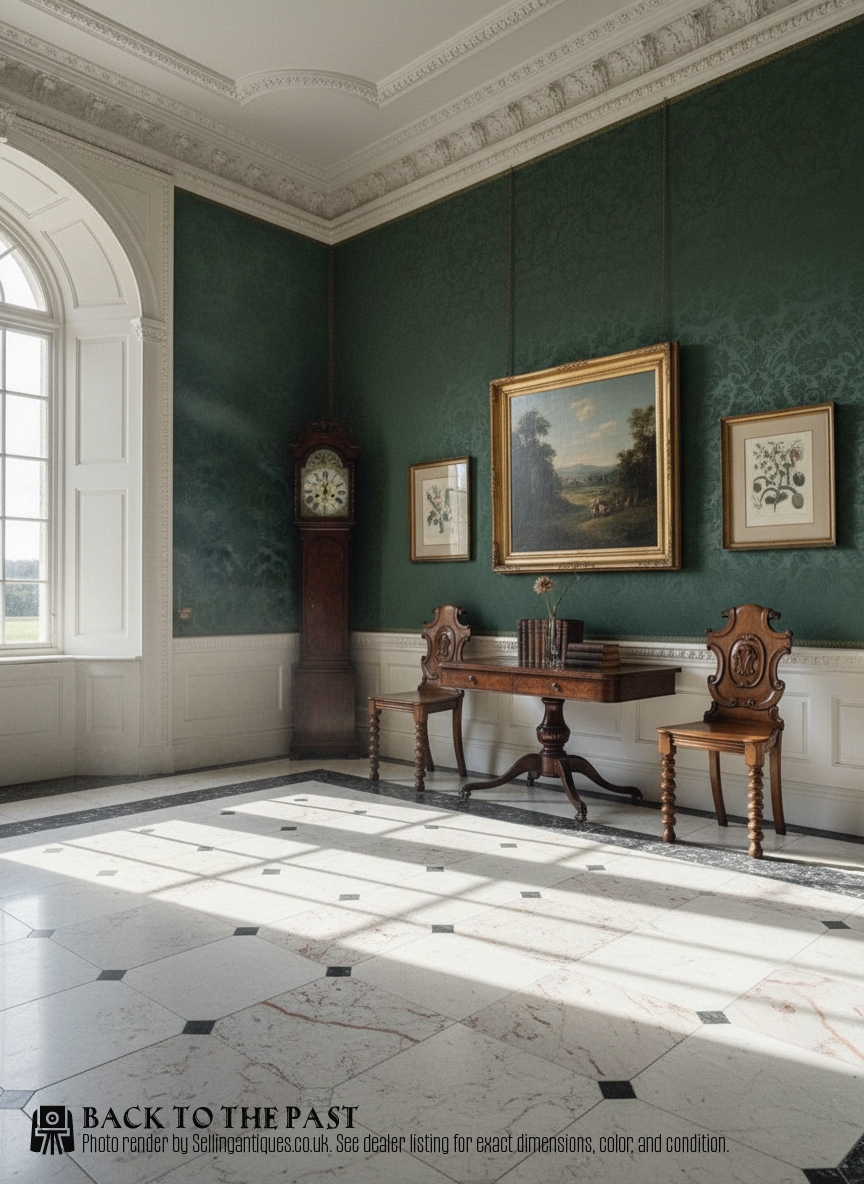
Bobbin Leg Chair
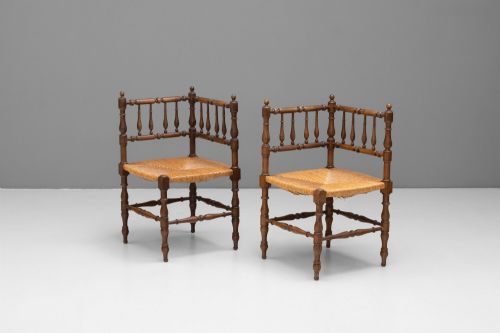
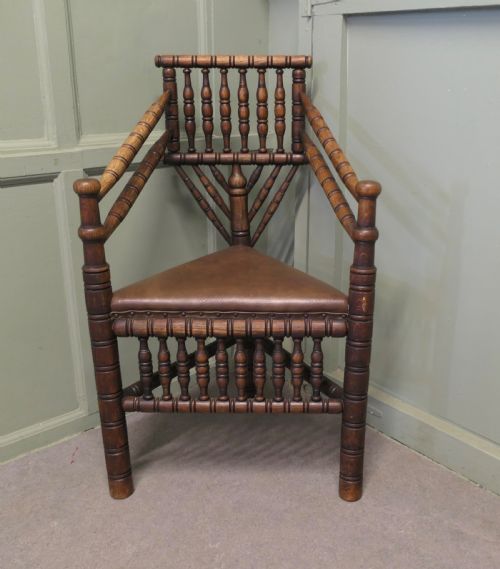
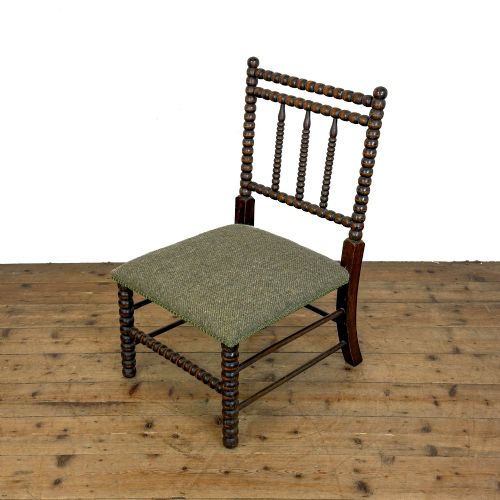
When you search for a bobbin leg chair, you encounter seating united by turned spindles resembling reels or bobbins along the legs, stretchers, or uprights. The selection on this page spans side chairs, armchairs, corner chairs, and slipper chairs drawn from periods including the eighteenth century, the Victorian era, and early twentieth-century revivals. Oak dominates the material record, accompanied by walnut, beech, and rosewood, establishing a lineage of sturdy domestic seating.
The forms range from utilitarian vernacular seating to revivalist interpretations of earlier turner's chairs and Jacobean styles. You will frequently find armchairs with wide elbow seats, alongside pairs of side chairs and dining chairs designed for formal or rustic interiors. Each piece relies on the repetition of turned wood to create visual texture without heavy ornamentation.
How they were made
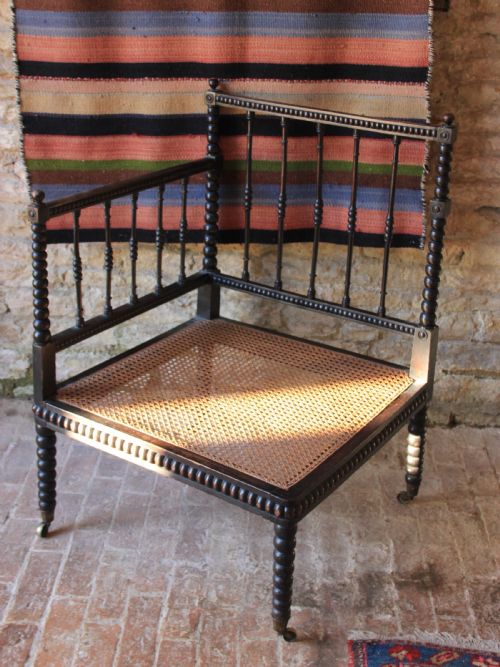
The defining characteristic of these chairs is the lathe-turned bobbin profile, shaped by cutting symmetrical circular discs along wooden shafts of oak, walnut, beech, or rosewood. Craftsmen joined these turned components using traditional mortise and tenon joinery to build rigid frames capable of daily use. Frames were frequently left as plain timber, though ebonised wood variations also appear in the record.
Seating surfaces vary from solid timber planks to woven rush and cane, alongside upholstered pads in leather, textile, tweed linen, and tapestry. Brass accents sometimes appear as subtle hardware details supporting the structural joinery or castors. The construction balances structural weight with the delicate rhythm of the turned spindles.
Seat variations across the recorded pieces include solid timber, rush, cane, leather, tweed linen, and tapestry upholstery.
What varies in quality
Quality in these chairs rests upon the crispness of the turning and the integrity of the timber framing. Better examples display sharp, evenly spaced spool profiles cut cleanly into dense hardwoods like oak or walnut rather than soft, blurred mouldings. The proportion between the slender turned legs and the heavier structural stretchers dictates the visual balance of the piece.
The material chosen for the seat or upholstery further distinguishes the rank of a piece, from simple rush weaving to finely worked tapestry and leather. Original joined frames that retain their structural rigidity without excessive replacement timber represent the higher standard of surviving examples.
The Bobbin Leg Chair Glossary
- Bobbin turning
- A type of lathe work featuring a series of rounded, spool-like shapes carved sequentially along a wooden shaft. This technique creates a repetitive decorative profile used extensively on chair legs and stretchers.
- Turner's chair
- An early form of armchair constructed primarily from turned wooden members, often featuring a triangular seat and spindle back. These pieces draw on sixteenth and seventeenth-century vernacular traditions.
- Corner chair
- A seating form designed to fit into the corner of a room, featuring a diagonal seat plan and a continuous curved armrest supported by turned posts. They often employ bobbin legs beneath the main seat frame.
- Ebonised wood
- Timber treated with a chemical stain or pigment to imitate the deep, dark appearance of ebony. This finish was particularly favoured during the Victorian period for accentuating turned details.
- Rush seating
- A traditional method of weaving dried marsh grasses tightly around a wooden seat frame to create a durable, textured surface. It appears frequently on vernacular and country chairs.
Bobbin Leg Chair: Frequently Asked Questions
Are these chairs comfortable for daily use?
Many of these chairs provide supportive seating, particularly the armchairs and wider elbow seats designed with generous proportions. The comfort level often depends on the type of seat, whether solid wood, woven rush, cane, or upholstered in textile and leather.
Adding a loose cushion can adjust the height and softness of wooden or cane seats for contemporary living.
How do I date a bobbin turned chair?
Dating relies on identifying the timber species, joinery techniques, and the specific revival style or period markers present in the frame. Eighteenth-century examples typically show dense oak with hand-cut joinery, while Victorian pieces often utilise walnut or ebonised wood with machine-assisted turning.
Comparing the chair's form to documented examples from eras like the Jacobean Revival or Victorian Gothic Revival helps narrow the timeframe.
How do I care for antique turned wood?
Maintaining turned wood involves keeping the timber away from direct heat sources and sudden humidity changes that cause the wood to split. Regular dusting with a soft, dry cloth preserves the finish without building up heavy wax residues.
For rush or cane seats, gentle cleaning with a damp cloth prevents the natural fibres from becoming brittle over time.