


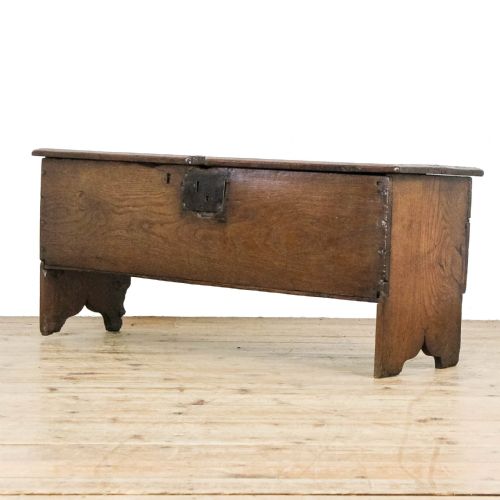
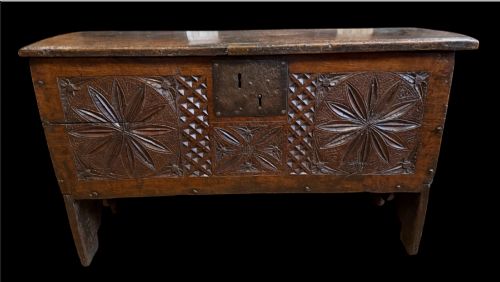


Boarded Oak Blanket Box
A boarded oak blanket box is a sturdy storage piece formed from heavy timber planks, prized for its honest early construction and enduring utility.
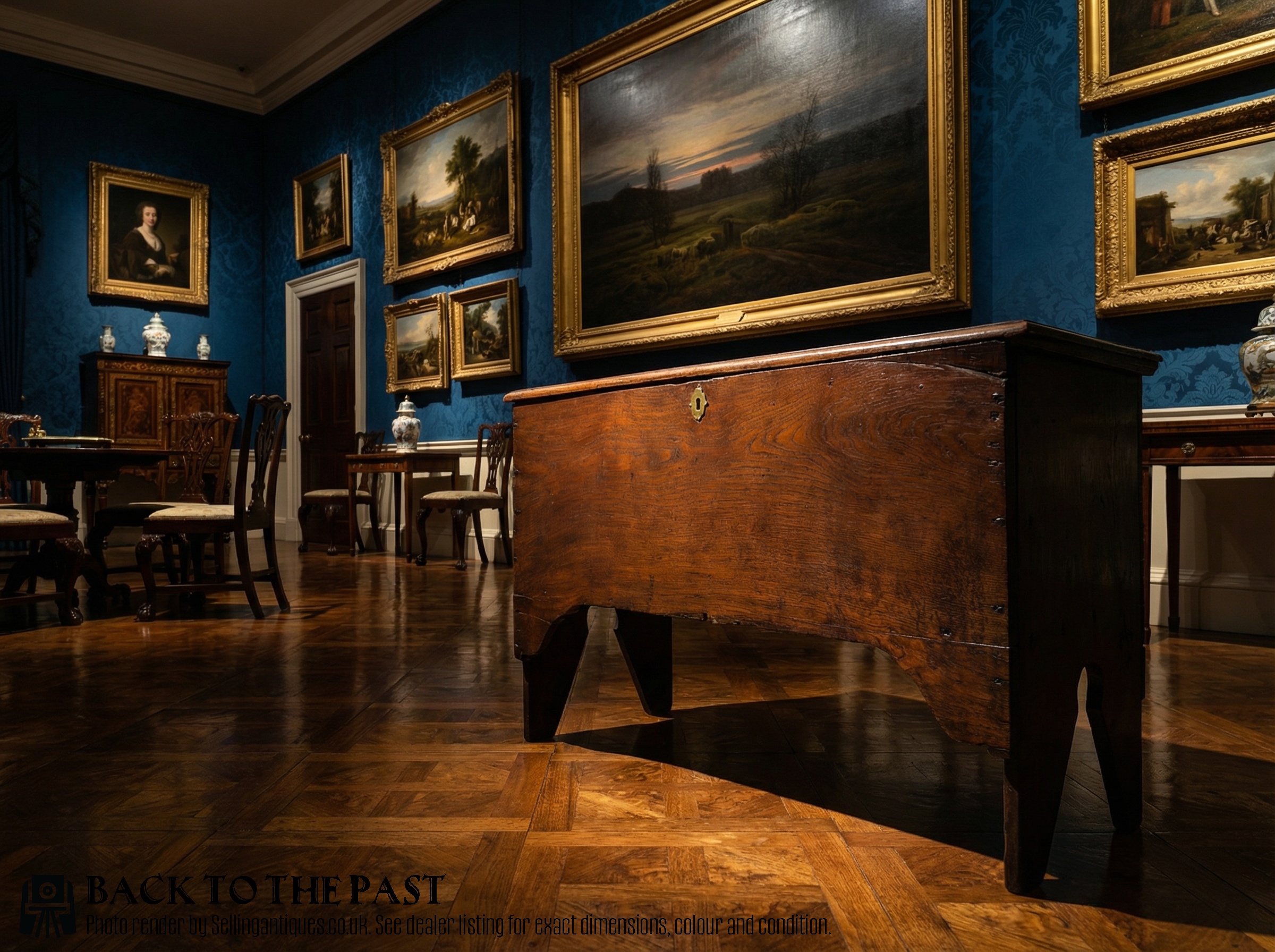
Boarded Oak Blanket Box
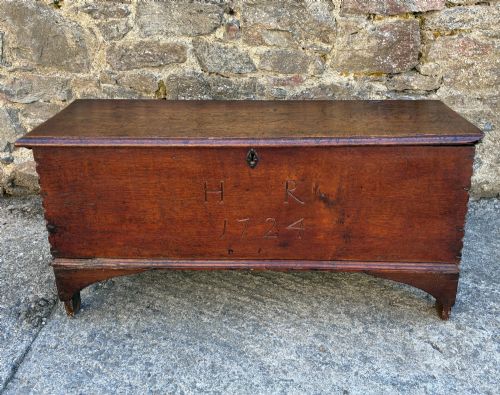
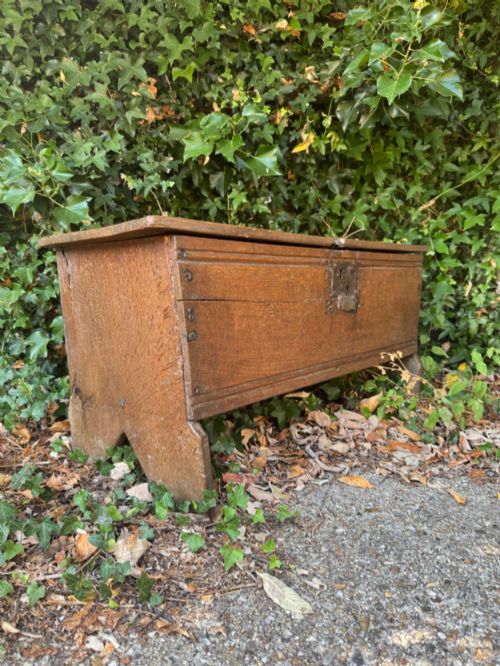
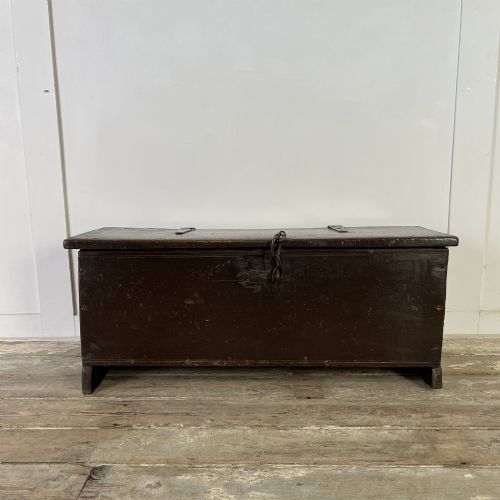
When you search for a boarded oak blanket box, you encounter primitive storage chests constructed directly from heavy timber boards rather than framed panels. These pieces span from the sixteenth century through the eighteenth century, encompassing Tudor, Elizabethan, Jacobean, and Georgian periods alongside Welsh vernacular examples.
You are most likely to meet six-plank or five-plank variants on this page, often simply described as coffers or sword chests. The forms remain straightforward, relying on vertical side boards that support the base and lid directly without elaborate internal framing.
How they were made
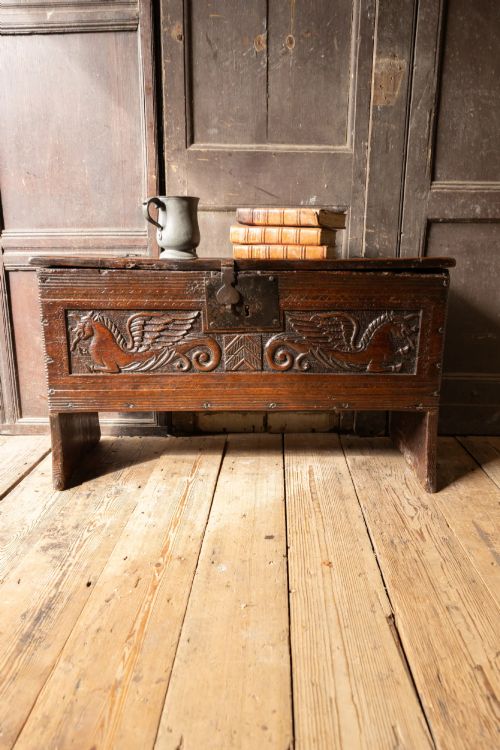
These chests rely entirely on solid oak planks joined directly at the edges, utilising heavy iron or wrought iron hinges and strapwork for reinforcement. Carpenters shaped the thick timber using traditional hand tools, securing the vertical and horizontal boards with pegged joints or primitive fasteners.
Makers occasionally added basic surface carving, though many surviving examples maintain plain timber surfaces that display the natural grain and tool marks of the period.
Boarded Oak Blanket Box Retail Price Guide 2026
Typical asking prices for boarded oak blanket box among the pieces listed under this phrase on Sellingantiques today, from the lower quarter to the upper quarter. They describe what is for sale here now, not the wider market.
Regional Welsh vernacular pieces appear alongside English Elizabethan, Jacobean, and Georgian examples in the current selection.
What varies in quality
The distinction between standard utility pieces and finer examples rests upon the thickness of the original oak boards and the survival of untouched surfaces. Chests retaining their early wrought iron hardware and original lids command greater appreciation among collectors.
Proportion and scale also dictate quality, as smaller or longer sword chests demonstrate distinct vernacular proportions compared to standard domestic blanket boxes.
The Boarded Oak Blanket Box Glossary
- Boarded construction
- A method of building chests by joining flat planks directly at the edges rather than using a frame and panel system. This technique represents the earliest form of vernacular box making.
- Six-plank coffer
- A simple chest constructed from six individual pieces of timber forming the front, back, ends, bottom, and lid. It stands as the most common form encountered in early vernacular furniture.
- Sword chest
- A long, narrow variation of the coffer specifically proportioned to store blades and military gear. These pieces often date from the late sixteenth and seventeenth centuries.
- Vernacular furniture
- Domestic items built by local craftsmen using regional traditions and readily available materials rather than following metropolitan court styles. Oak serves as the primary medium for these British pieces.
Boarded Oak Blanket Box: Frequently Asked Questions
What is a boarded blanket box?
A boarded blanket box is an early storage chest made from solid timber planks joined directly at the edges rather than set within a frame.
These pieces date primarily from the sixteenth and seventeenth centuries, serving essential domestic storage needs before fitted wardrobes existed.
How old is my oak coffer?
You can estimate the age of an oak coffer by examining its construction methods, timber thickness, and hardware style.
Early sixteenth and seventeenth-century examples typically feature boarded construction with wrought iron hinges and hand-planed oak surfaces.
Were these chests used for blankets?
These chests stored valuable textiles, blankets, garments, and household goods to protect them from dampness and pests.
Their robust construction made them secure repositories for important family possessions in early homes.
What is a six plank chest?
A six plank chest is constructed from individual boards comprising the base, lid, front, back, and two ends.
This straightforward design represents the earliest and most direct method of building wooden storage boxes.
How do I care for antique oak?
Antique oak benefits from stable indoor humidity and occasional application of traditional beeswax to nourish the dry timber.
Avoiding direct sunlight and intense heat sources preserves the natural colour and historic surface finish of the wood.