






Historic Oak Storage Trunk
A historic oak storage trunk is a substantial piece of vernacular furniture built to last centuries, combining robust utility with period craftsmanship.
Historic Oak Storage Trunk
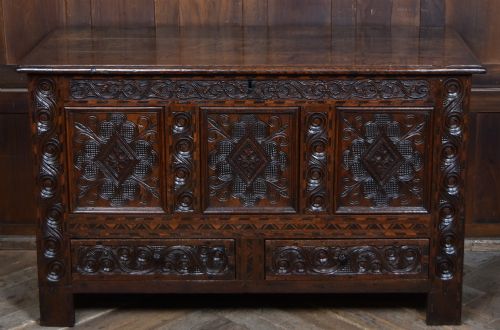
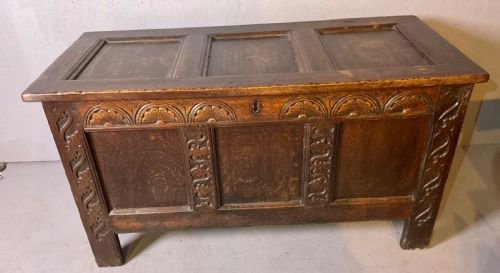
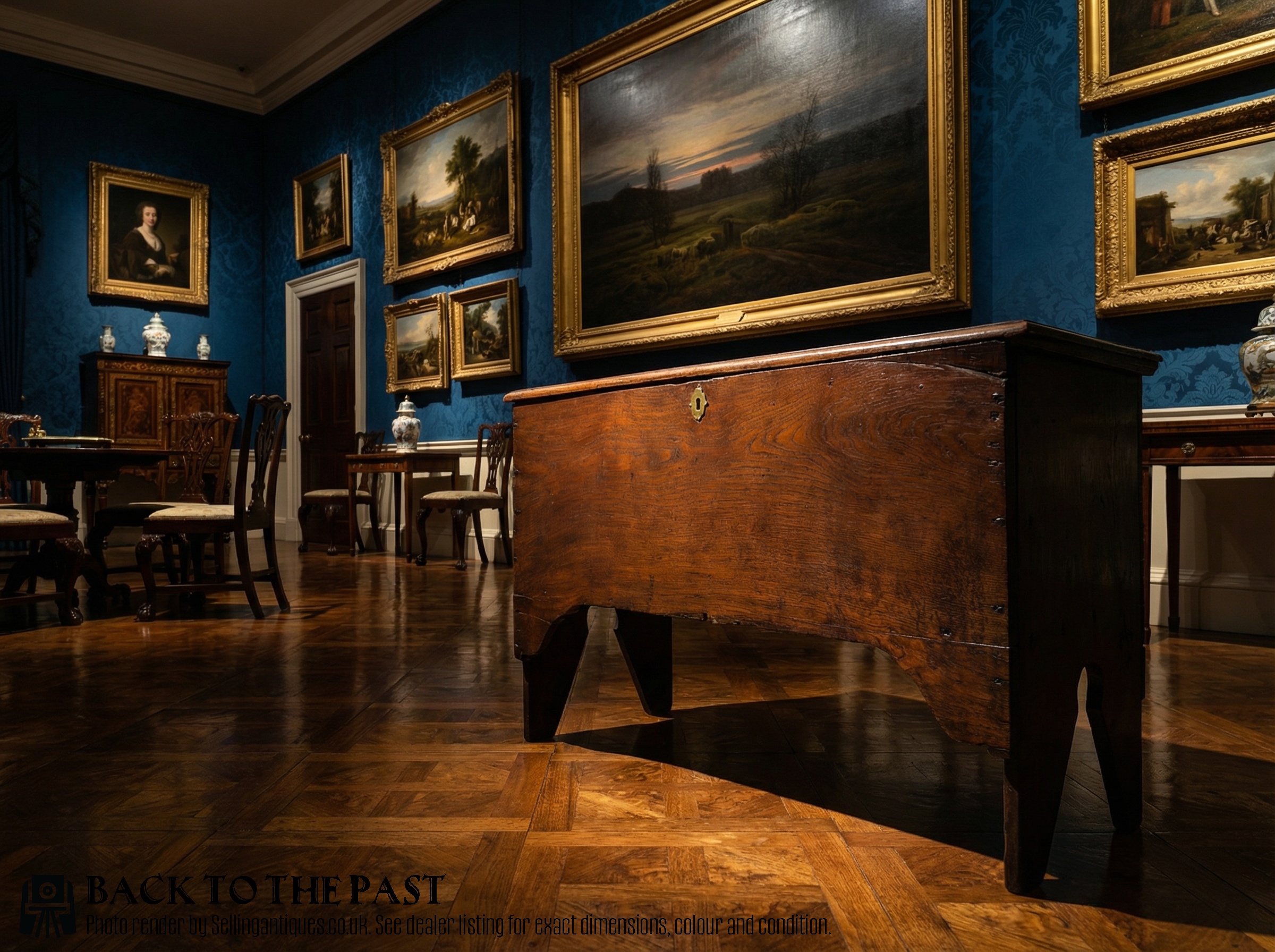
A historic oak storage trunk is most frequently encountered on this page as a coffer, blanket chest, or mule chest originating from the sixteenth, seventeenth, or eighteenth centuries. These pieces served primary domestic functions in early households, storing textiles, valuables, and provisions before fitted wardrobes and drawer chests became common. Buyers searching for a historic oak storage trunk will find examples spanning Tudor, Elizabethan, Jacobean, and Georgian periods, showcasing the evolution of English rural joinery.
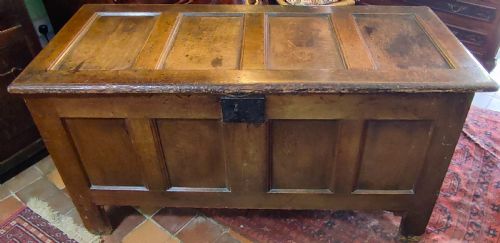
The forms listed range from boarded coffers dating to the sixteenth century to joined oak Lancashire coffers and sword chests from the seventeenth century, alongside eighteenth-century interpretations. Many pieces display carved decoration, while others rely on the plain beauty of timber boards or wood inlay. The majority of these trunks reflect distinct regional English cabinet-making traditions, offering substantial storage capacity paired with authentic period character.
Materials and construction methods
These trunks are constructed predominantly from solid oak, selected for its density, durability, and availability in British woodlands. Early examples utilise heavy planks secured with iron or wrought iron fixings, whilst joined construction employs mortise and tenon framing held together by wooden pegs. The integration of brass fittings and wood inlay appears on select pieces to enhance the surface appearance.
Makers shaped these items using hand tools such as adzes, drawknives, and chisels, leaving subtle tool marks across the timber. Carved panels feature relief work executed directly into the oak, whilst boarded coffers rely on simple edge-joined planks fastened at the corners. This combination of heavy timber and straightforward jointing accounts for the structural survival of these pieces over hundreds of years.
Historic Oak Storage Trunk Retail Price Guide 2026
Typical asking prices for historic oak storage trunk among the pieces listed under this phrase on Sellingantiques today, from the lower quarter to the upper quarter. They describe what is for sale here now, not the wider market.
Listings in this category span four centuries, featuring materials such as oak, brass, iron, and wrought iron across distinct periods.
Distinctions in quality
The quality of a historic oak storage trunk is determined by the integrity of its construction, the depth and execution of any carved decoration, and the proportion of original timber retained. Pieces featuring sophisticated joined framing demonstrate a higher level of cabinet-maker skill compared to simpler boarded constructions. Additionally, the crispness of seventeenth-century carved motifs or the presence of period wood inlay elevates the artistic merit of the piece.
Proportion and scale also dictate distinction, with larger joined Lancashire coffers or specialised forms such as sword chests commanding greater interest from collectors. The natural patination of the oak surface, achieved through centuries of handling and wax polishing, plays a significant role in the overall visual weight. Trunks that maintain their original structural stability without excessive timber replacement represent the highest standard within this category.
The Historic Oak Storage Trunk Glossary
- Coffer
- A heavy wooden chest traditionally used for storing valuables or dry goods. Most examples in this category are constructed from solid oak.
- Mule chest
- An early form of storage chest featuring one or more drawers beneath the main trunk compartment. They bridge the design gap between the simple coffer and the chest of drawers.
- Boarded construction
- A method of building chests using vertical planks nailed or pegged at the corners rather than a framed skeleton. It is typical of the earliest surviving sixteenth-century pieces.
- Joined construction
- A sophisticated method utilising mortise and tenon joints secured with wooden dowels to form a sturdy frame around inset panels. This technique allows the timber to expand and contract naturally.
- Lancashire coffer
- A regional style of seventeenth-century oak chest characterised by panelled fronts and often incorporating drawers or elaborate carved detailing unique to the county.
Historic Oak Storage Trunk: Frequently Asked Questions
What were historic oak storage trunks used for originally?
These trunks served as secure household repositories for valuable textiles, blankets, church plate, and dry foodstuffs in an era before fitted domestic storage. Their heavy construction and lidded designs kept contents safe from dampness and theft.
Over time, households adapted them for general domestic storage, utilising their sturdy tops as side tables or benches within the main living quarters.
How can I date a historic oak storage trunk?
Dating relies on observing construction techniques, hardware types, and decorative styles characteristic of specific periods like the Elizabethan or Jacobean eras. Boarded chests generally point to earlier sixteenth-century origins, whereas joined framework with moulded panels typically indicates seventeenth-century craftsmanship.
Examining the tool marks, timber shrinkage, and the nature of any carved motifs helps establish a reliable chronological window for each piece.
Are these trunks suitable for daily use in a modern home?
Their robust oak construction makes them highly functional for storing blankets, bedding, or household items in contemporary living spaces. The spacious interiors accommodate bulky textiles while providing a stable flat surface that functions well as a coffee table or blanket box.
Placing them away from direct heat sources and maintaining stable room humidity preserves the historical timber and prevents warping.
What is the difference between a coffer and a mule chest?
A coffer is a traditional trunk consisting of a deep main compartment accessed solely via a hinged lid at the top. It represents the older and simpler form of domestic storage furniture.
A mule chest incorporates one or more functional drawers beneath the main chest compartment, combining trunk storage with drawer accessibility typical of later furniture developments.