






Blue Ziegler Rug
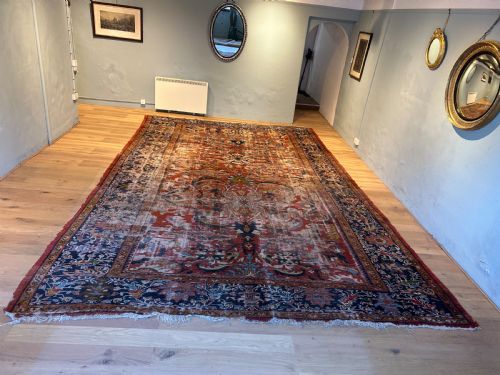
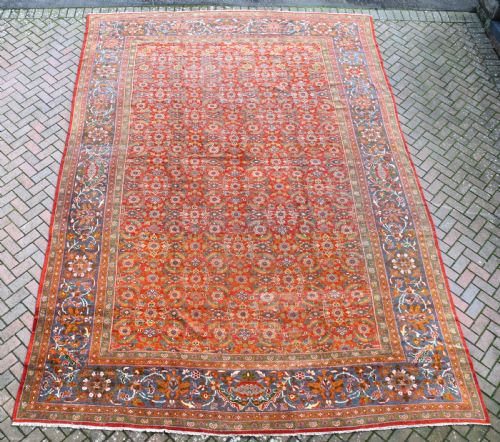
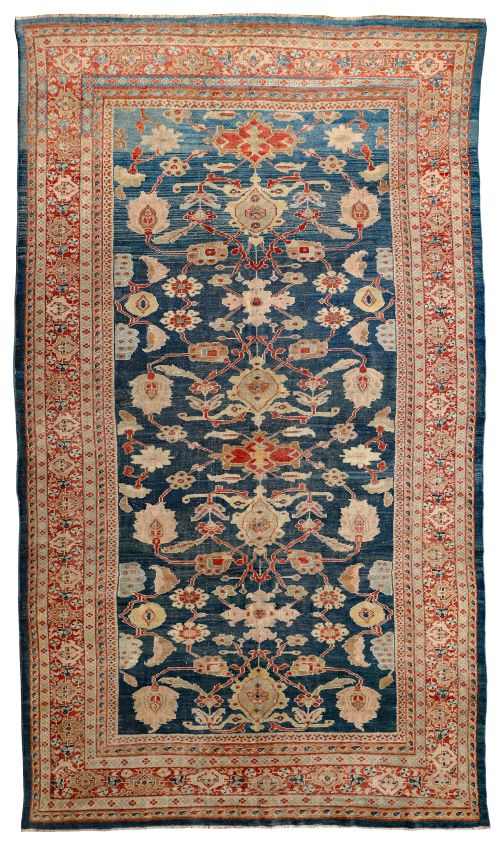
A blue ziegler rug brings nineteenth-century Persian artistry into a room, offering large-scale floral patterns on a softer palette.

Blue Ziegler Rug
When you search for a blue ziegler rug, you encounter floor coverings woven in Persia during the late nineteenth century, specifically around the eighteen-eighties and eighteen-nineties. These pieces originate from regions such as Sultanabad, Fereghan, and Mahal, often associated with the firm Ziegler and Company.
The version most commonly met on this page is the large-scale antique carpet or rug featuring expansive floral and shrub designs. They span room-size formats down to smaller area dimensions, dominated by characteristic soft grounds.
How they were made
These carpets rely on a foundation of cotton for warp and weft, providing structural stability for the heavy use a floor covering endures. Hand-knotted wool forms the pile, creating the textured surface that holds the design.
Weavers in the Sultanabad region utilised natural dyestuffs to achieve the subdued blue grounds and muted tones characteristic of these commercial workshop productions.
The listings on this site span a production window from eighteen-eighty to nineteen-hundred, featuring wool and cotton construction.
What varies in quality
The distinction between examples rests on the fineness of the knotting and the crispness of the drawing in the large-scale floral motifs. Workshop output from Ziegler and Company often demonstrates deliberate attention to proportion tailored for Western tastes.
Preservation of the original wool pile across palace-sized dimensions versus smaller area rugs dictates the standing of individual pieces. Even wear and intact original borders elevate certain carpets above heavily restored examples.
Ziegler and Co
The Blue Ziegler Rug Glossary
- Sultanabad
- A regional designation for nineteenth-century Persian carpets known for bold, oversized floral patterns and commercial workshop production.
- Fereghan
- A specific weaving district in Persia producing dense carpets closely related to the wider Sultanabad output.
- Mahal
- A term describing carpets woven in the villages surrounding Sultanabad, sharing stylistic traits with Ziegler productions.
- Pile
- The vertical loops of wool that form the usable surface of the rug above the woven cotton foundation.
- Warp
- The stationary vertical threads stretched on the loom that carry the structural tension of the carpet.
Blue Ziegler Rug: Frequently Asked Questions
Where were blue ziegler rugs made?
These pieces were produced in western Persia, specifically around Sultanabad and surrounding districts, during the late nineteenth century.
The enterprise of Ziegler and Company directed much of this workshop production to suit European and American interior design tastes of the period.
What materials are used in them?
The structural foundation relies on spun cotton for both the warp and the weft threads.
A thick hand-knotted wool pile sits above this cotton base, coloured with traditional dyestuffs to create the characteristic blue grounds.
How do I date a ziegler rug?
Dating relies on the recorded production periods of the late nineteenth century, spanning from approximately eighteen-eighty to nineteen-hundred.
Structural details, specific regional weave characteristics, and historical association with nineteenth-century workshop output confirm the period.
Are these rugs suitable for heavy traffic?
The sturdy wool pile and dense cotton foundation were originally constructed for domestic and commercial floor use.
Placing an appropriate underlay beneath the carpet helps cushion the nineteenth-century structure against modern floor surfaces.
How do Sultanabad and Fereghan differ?
Sultanabad carpets typically display much larger, bolder floral motifs spread across an expansive field.
Fereghan pieces often feature denser, finer drawing and a tighter overall rhythm in the pattern design.