

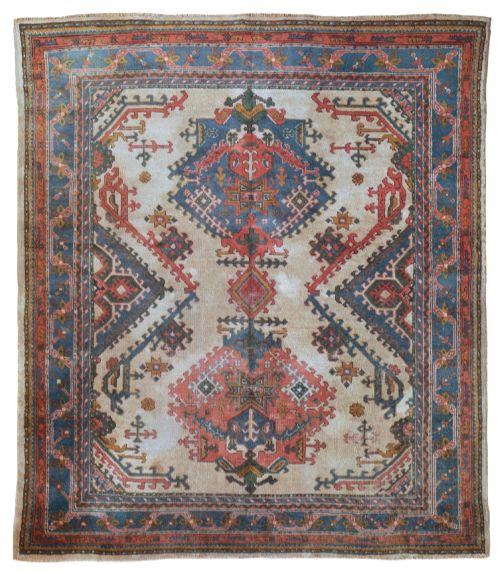
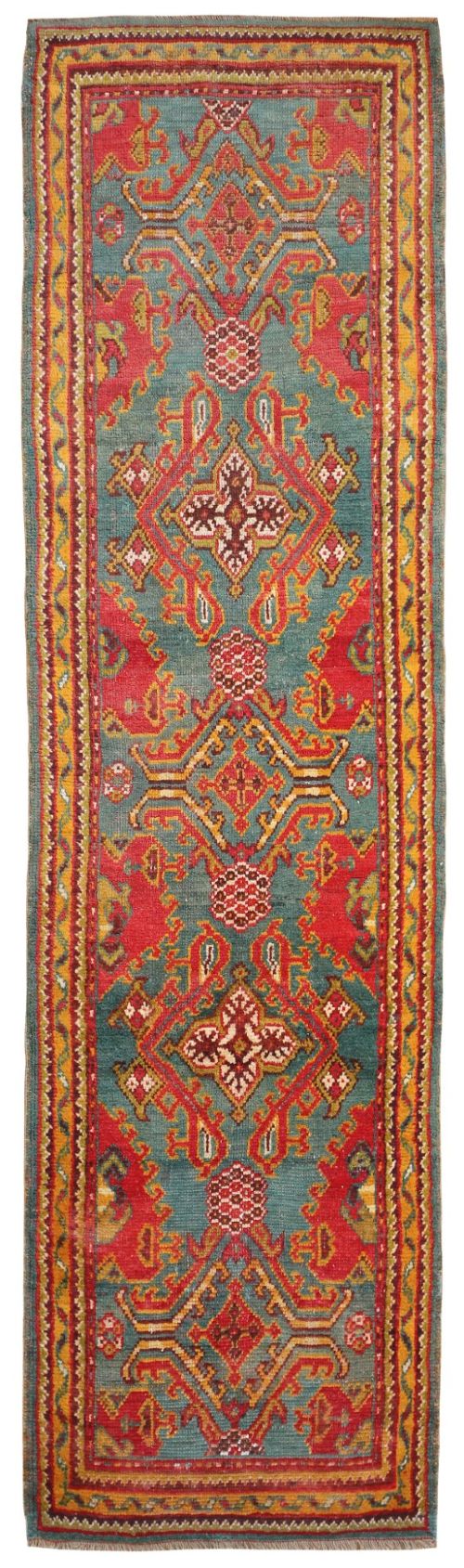



Blue Wool Ushak Rug
A blue wool ushak rug brings generous Anatolian scale and muted vegetable dye palettes to a room.
Blue Wool Ushak Rug
A blue wool ushak rug is a woven floor covering originating from western Anatolia, encompassing traditional Ottoman styles and large carpets as well as narrower runners. Buyers seeking a blue wool ushak rug will encounter pieces dated across the late Victorian era and the early twentieth century.
The format ranges from square formats and expansive carpets to long runners suited for hallways. Most examples on this page reflect the Ottoman Turkish design tradition, often featuring central medallions or star motifs on varied ground colours.
Materials and construction
These floor coverings are constructed primarily with wool piles set upon cotton foundations, utilising hand-knotted techniques traditional to the region. Certain finer examples incorporate angora wool, which imparts a distinct lustre and softer hand to the pile.
Dyers employed natural colourants to achieve the characteristic blue tones, which sit alongside ivory and secondary hues within the palette. The weave density and knot counts vary between standard commercial output and grander commission pieces.
Blue Wool Ushak Rug Retail Price Guide 2026
Typical asking prices for blue wool ushak rug among the pieces listed under this phrase on Sellingantiques today, from the lower quarter to the upper quarter. They describe what is for sale here now, not the wider market.
Materials recorded across the inventory include standard wool, cotton foundations, and soft angora wool variants.
Assessing quality and character
Quality in these carpets rests upon the fineness of the knotting and the handling of the wool fleece, particularly where angora fibres are present. Superior examples display precise execution of intricate star and medallion designs combined with harmonious dye saturation.
The structural integrity of the cotton foundation and the uniformity of the pile wear dictate the overall calibre of an individual piece. Proportion and scale also play significant roles, especially in oversized formats and matched pairs of runners.
Maples Ushak
The Blue Wool Ushak Rug Glossary
- Ushak
- A traditional weaving centre in western Anatolia renowned for producing distinctive carpets with large-scale motifs. These textiles gained significant favour in European and British interiors from the late nineteenth century onwards.
- Angora wool
- A fine fibre derived from regional goats, utilised in select weavings to produce a softer touch and subtle sheen. It distinguishes specific regional pieces from standard wool examples.
- Medallion
- A central ornamental design element placed in the field of a carpet, typical of Ottoman design traditions. It serves as the primary focal point of the composition.
- Runner
- A long, narrow carpet format designed specifically for corridors, staircases, and hallways. Surviving pairs of these formats appear in twentieth-century productions.
- Anatolia
- The historical geographic region comprising most of modern-day Turkey where these traditional floor coverings were knotted. It encompasses multiple distinct weaving districts and design schools.
Blue Wool Ushak Rug: Frequently Asked Questions
How do I clean a wool rug?
Regular gentle vacuuming without a beater bar helps remove surface dust and loose particles from the pile. Professional specialist cleaning is recommended for deep maintenance to protect the natural wool fibres and dyes.
Avoid using domestic chemical detergents or excessive water, which can damage the cotton foundation and alter the antique dyes. Promptly blot liquid spills with a clean, dry white cloth without rubbing.
Where should I place a runner?
Runners suit narrow spaces such as hallways, corridors, and galleys where length is the primary spatial requirement. They also function effectively alongside beds or in long entryways.
Ensure an appropriate underlay is placed beneath the runner to prevent slipping on hard flooring and to reduce pile compression. This simple step extends the working life of the cotton foundation.
How are different periods identified?
Dating relies upon stylistic markers, structural characteristics, and material analysis within the context of late nineteenth and early twentieth-century production. Victorian and Edwardian era imports often exhibit specific palette shifts and standard commercial sizing.
Comparison with documented examples from known weaving centres assists in narrowing down the decade of manufacture. Minor inconsistencies in the weave frequently point towards traditional hand-knotted village output.
Will blue match my interior?
Muted blue wool tones blend well with both traditional period rooms and contemporary neutral spaces. The softer vegetable dye shades act as a grounding element rather than an overwhelming focal point.
Consider the existing wood finishes and wall colours in your room to ensure the indigo or soft blue hues complement the broader scheme. Natural daylight alters how these textile colours appear throughout the day.