

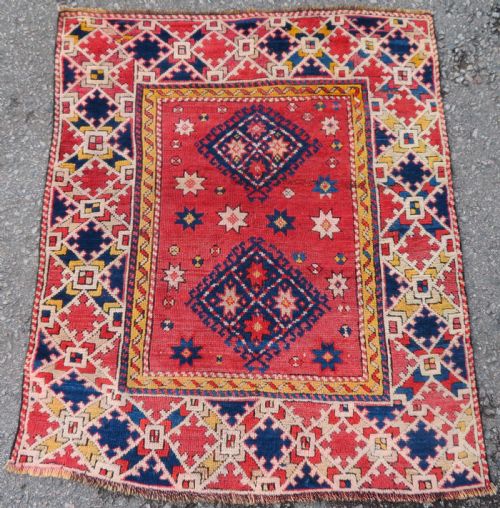


Blue Wool Anatolian Rug
These pieces are a blue wool anatolian rug, bringing authentic regional craft and rich piled texture to an interior.
Blue Wool Anatolian Rug
A blue wool anatolian rug is a hand-woven textile originating from Turkish weaving centres, featuring traditional regional motifs and borders.
The selections available include long runners, village prayer rugs, and large carpets spanning the eighteenth, nineteenth, and early twentieth centuries.
Makers often utilised specific tribal designs, geometric medallions, and floral fields characteristic of Anatolian, Ottoman, and Kurdish weaving traditions.
How they were made
Weavers relied on natural materials, predominantly wool, cotton, hand-spun wool, and angora wool, combined with traditional knotting and flat-weaving techniques.
Dyes derived from local plants and minerals produced the characteristic blue grounds and secondary palette seen across these floor coverings.
The listings span from the 18th century through to 1930, featuring wool, cotton, and hand-spun wool across various runner, prayer, and carpet formats.
What varies in quality
Fineness of knot count and precision in executing geometric or floral patterns distinguish master-woven city carpets from simpler village productions.
The integrity of the foundation threads and the uniformity of the wool pile significantly influence the physical resilience of each rug.
The Blue Wool Anatolian Rug Glossary
- Prayer rug
- A small textile featuring a mihrab or niche design, traditionally used for individual Islamic prayer.
- Runner
- A long, narrow carpet format designed specifically for hallways, corridors, or alongside larger furniture.
- Medallion
- A central ornamental design motif placed in the middle of the rug field, common in Anatolian weaving.
- Kelim
- A flat-woven carpet or rug produced without a pile by tightly interweaving warp and weft threads.
- Yastik
- A small Turkish cushion or pillow face, often woven with the same knotting technique and wool quality as larger rugs.
Blue Wool Anatolian Rug: Frequently Asked Questions
How do I clean an old wool rug?
Maintenance requires gentle vacuuming without a rotating brush bar to protect the delicate wool pile and foundation threads.
Professional specialist cleaning is recommended for deep dirt removal to prevent dye bleeding and fibre distortion.
Can I place these rugs in heavy traffic areas?
Placing these textiles in high-traffic zones depends heavily on the remaining pile depth and overall structural integrity of the individual piece.
Using a quality underlay helps absorb foot pressure and prevents slipping on hard floors.
What does a prayer niche signify?
The architectural arch depicted on prayer rugs symbolises the mihrab pointing towards Mecca during daily devotions.
Weavers often oriented these specific designs with symbolic flora or lamps hanging within the niche.
How are different regional styles identified?
Identifying regional types involves examining specific colour palettes, border arrangements, and characteristic knotting structures unique to towns like Ushak, Ladik, or Konya.
Village pieces often display bolder geometric abstractions compared to the refined floral compositions of urban workshops.