






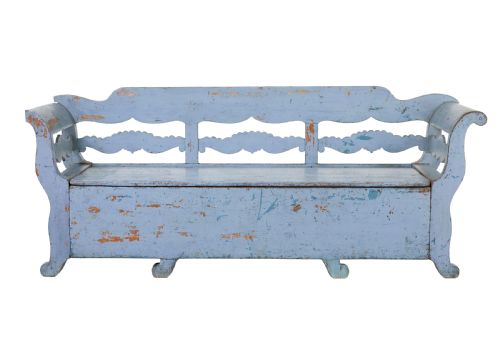
Blue Wooden Bench
A blue wooden bench brings enduring charm and practical seating to an interior, shaped by generations of domestic use.
Blue Wooden Bench
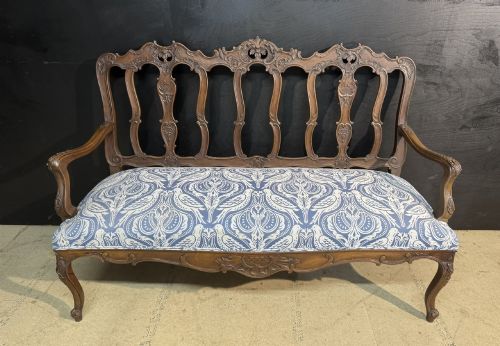
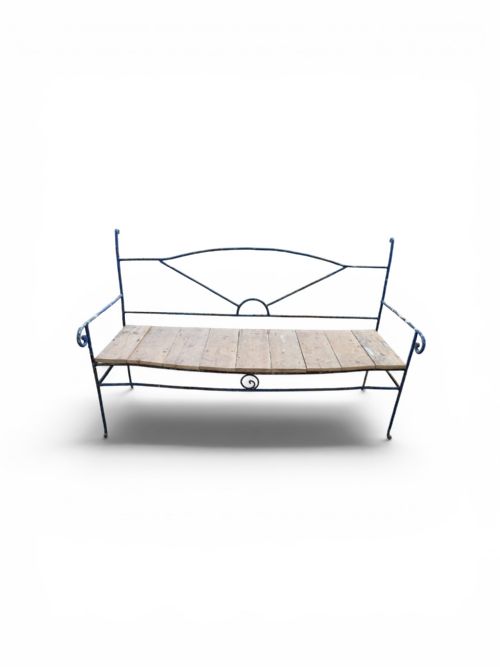
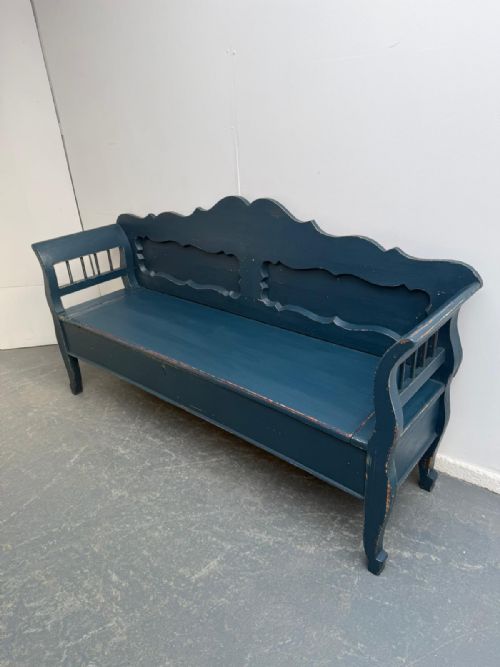
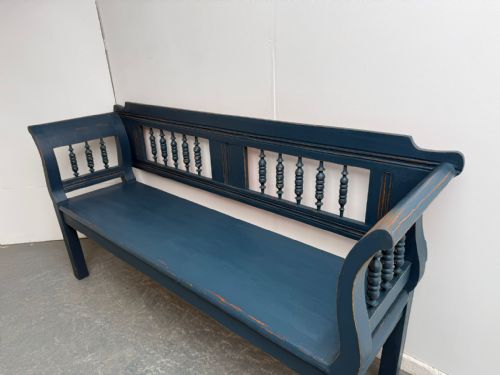
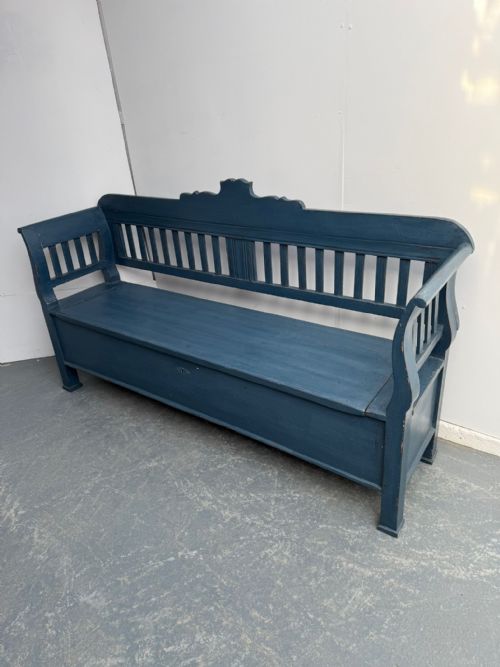
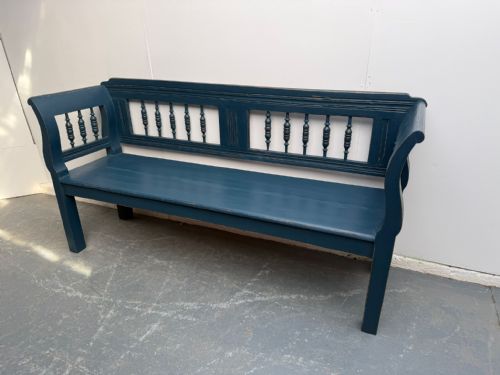
A blue wooden bench provides sturdy seating with a distinct painted surface, drawing on historical forms from country houses and rural workshops. When you search for a blue wooden bench, you encounter a variety of seating furniture ranging from elongated three-seater settles to smaller hallway and storage pieces.
The examples gathered here lean heavily towards nineteenth-century craftsmanship, with Victorian and Georgian pieces frequently appearing alongside continental European folk art examples. These items span simple pine constructions designed for everyday utility as well as more formal French and English designs.
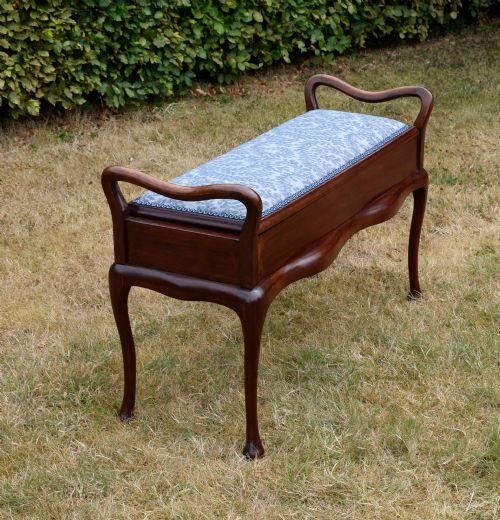
Alongside traditional benches, related forms such as storage benches and box settles emerge within the selections, offering enclosed space beneath the seat. This variety ensures that whether you seek a tall high-back settle or a low-slung garden seat, the painted wooden aesthetic remains central.
What varies in quality
Quality rests heavily on the integrity of the original timber and the authenticity of the surface finish. Pieces retaining their early or original blue paint demonstrate superior desirability compared to those with later repainting.
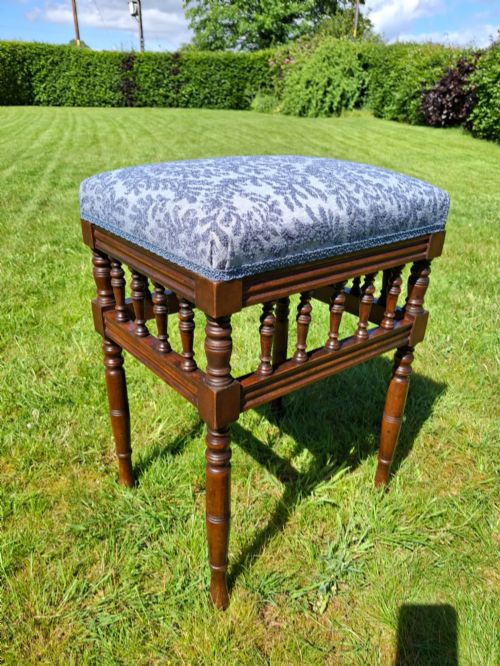
Structural proportions and the subtlety of carved or turned details also separate everyday utility items from finer workshop pieces. The weight of the timber and the depth of the box storage or back panel construction dictate the overall heft and longevity of the seating.
Hungarian farmhouses contributed robust three-seater benches so heavy they likely required half the village to move them near the stove.
The Blue Wooden Bench Glossary
- Settle
- A wooden bench with a high back, solid arms, and often a storage box beneath the seat. It was traditionally placed near hearths to block draughts in older homes.
- Box settle
- A specific form of seating featuring a hinged lid that opens to reveal a compartment for blankets or household goods. This dual-purpose design was a staple of rural domestic life.
- Folk art
- Artistic work produced from an indigenous culture or peasant society, characterised by naive or traditional motifs. In these listings, it often describes painted Scandinavian and Hungarian furniture.
- Pine
- A softwood commonly utilised for utilitarian furniture and country pieces across Europe. It accepts paint readily and forms the base for many blue-finished surfaces.
- Patina
- The surface appearance grown on materials through age, handling, and use. On these benches, it appears as softened edges and worn layers of blue pigment.
Blue Wooden Bench: Frequently Asked Questions
How do I care for an old painted bench?
Keep the wood away from direct heat sources and sudden humidity changes to prevent the timber from splitting or warping.
Dust the surface gently with a dry cloth and avoid harsh chemical cleaners that might compromise the historic paint layers.
Are these benches comfortable for daily sitting?
Many historical benches feature upright wooden backs and solid seats designed for utility rather than lounging. Adding loose cushions or pads can soften the seating for modern use.
Shorter periods of sitting suit them best unless paired with custom textiles.
How can I tell an older painted finish from a modern one?
Examine the surface for natural wear patterns, craquelure, and the integration of the paint into the grain of the wood. Older finishes typically show subtle softening around edges where hands have touched the timber over decades.
Inspect hidden underside areas for consistent ageing and layers that match the historical period of the piece.