


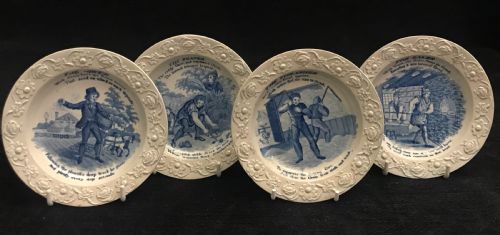
Blue White Transferware Set
A blue white transferware set brings domestic history to the table, offering matched earthenware decorated in striking cobalt prints.
Blue White Transferware Set
A blue white transferware set comprises matching ceramic items such as dinner services, tea services, and wash sets created for daily household use. These collections span the nineteenth century, including Georgian, Regency, Victorian, and Edwardian periods.
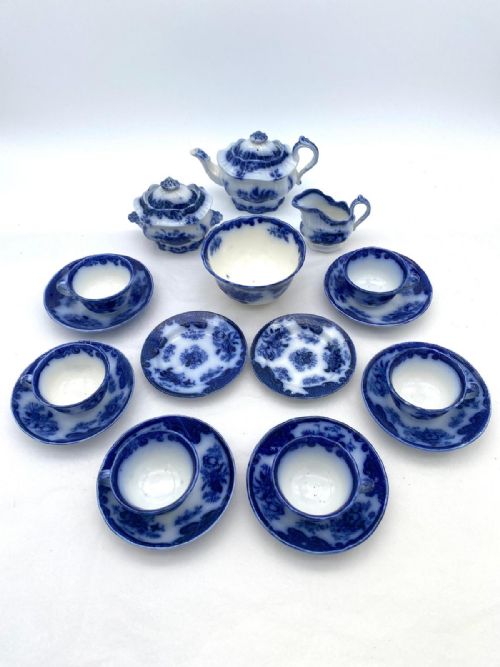
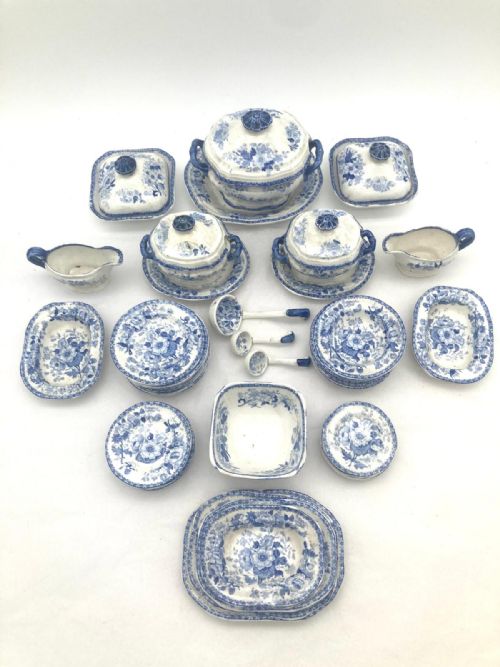
The pieces range from full dinner services and large footbaths down to miniature tea sets and child's services. Most examples rely on transfer printing techniques to apply repeating motifs onto earthenware, pearlware, or glazed ceramic.
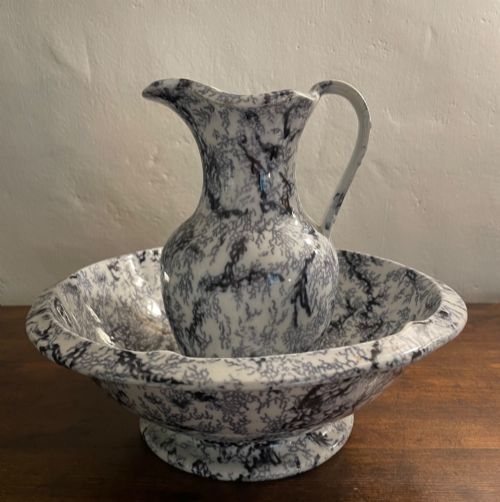
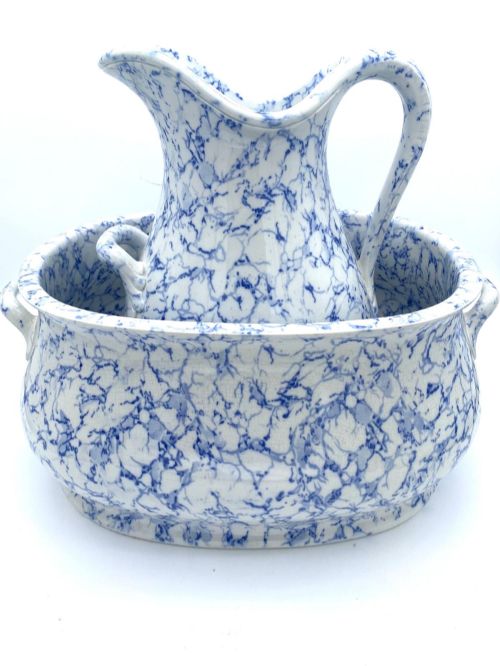
Buyers encounter everything from classic willow pattern plates and botanical designs to Italian marble patterns and scenic views like London Bridge. These groupings provide a cohesive table setting or washstand display rooted in historical ceramic production.
Materials and production methods
Potters shaped these vessels from earthenware or pearlware before applying a cobalt glaze to create the signature blue decoration. Copperplate engraving transferred the printed design onto the ceramic body prior to firing.
A glossy glaze seals the surface, sometimes enhanced with gold leaf accents on finer Victorian and Edwardian services. The transfer printing process allowed factories to produce intricate patterns consistently across entire sets of plates, platters, and jugs.
Early nineteenth-century children practiced hosting tea parties with miniatures small enough to fit in the palm of a hand.
Distinctions in quality
Quality rests on the crispness of the transfer print and the clarity of the cobalt glaze against the ceramic background. Finer sets maintain uniform pattern alignment across every component, from large tureens down to small custard cups.
The sophistication of the pattern and the reputation of the maker elevate certain services above standard domestic wares. Miniature and children's sets demand exceptional skill to scale down complex designs onto tiny plates and teapots.
Minton·Copeland·Wedgwood·Elkin and Newbon·Copeland Spode
The Blue White Transferware Set Glossary
- Transferware
- Earthenware or ceramic decorated by transferring a printed design from an engraved copper plate onto the clay body. This technique revolutionised pottery production in the nineteenth century.
- Pearlware
- A refined earthenware developed in the late eighteenth century featuring a subtle bluish glaze that pools in crevices. It provides a whiter surface to showcase cobalt blue decoration.
- Flow Blue
- A style where the cobalt blue pigment intentionally bleeds into the surrounding white glaze during firing. This technique creates a soft, hazy outline popular on mid-nineteenth-century services.
- Prattware
- Earthenware decorated with multiple underglaze colours, often associated with early nineteenth-century figures and commemorative pieces. It represents a specialised branch of Staffordshire pottery.
- Footbath
- A large ceramic basin used for washing feet or cooling wine, typically fitted with handles. These substantial vessels often share patterns with matching jugs in large bathroom sets.
Blue White Transferware Set: Frequently Asked Questions
How do I date a blue white transferware set?
Dating relies on ceramic bodies, glaze characteristics, and registry marks stamped or printed on the base. Pearlware bodies and specific cobalt tones typically point to earlier nineteenth-century production.
Style clues within the transfer print, such as costume details or architectural landmarks, help narrow down the decade. Comparing the pattern to documented factory designs confirms the era.
Were child's transferware sets meant for actual use?
Miniature tea and dinner services served as educational toys for children to practice etiquette and domestic skills. Despite their small scale, they were manufactured with the same materials and transfer methods as adult services.
Survival rates vary because these sets endured rigorous play. Finding a complete child's service remains unusual today.
What is the difference between a wash set and a dinner service?
A wash set consists of a large jug and basin, sometimes accompanied by soap dishes and footbaths, designed for bedroom hygiene. These pieces feature heavier earthenware bodies to withstand daily washing routines.
Dinner services comprise plates, platters, tureens, and gravy boats intended for serving food. Their patterns often match across dozens of individual pieces to create a unified dining table.
Can I use antique transferware sets for dining?
Using nineteenth-century earthenware requires care due to the age of the ceramic body and the fragility of the historic glaze. Hand washing preserves the cobalt decoration and prevents thermal shock from hot foods.
Many collectors prefer to display these sets or use them occasionally for special meals. The primary value lies in their historical decoration and preservation.