

Blue White Transferware Pottery
Blue white transferware pottery brings deep cobalt scenes onto earthenware and pearlware, offering collectors rich historical narratives and domestic forms.
Blue White Transferware Pottery
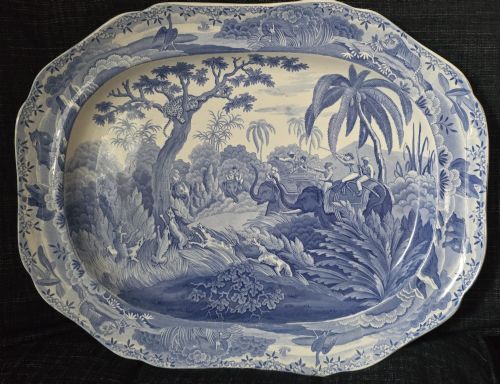
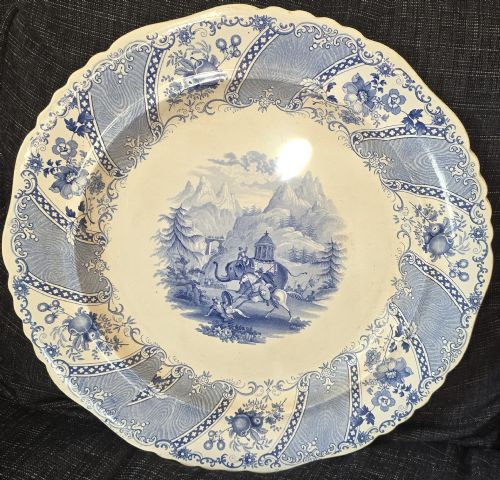
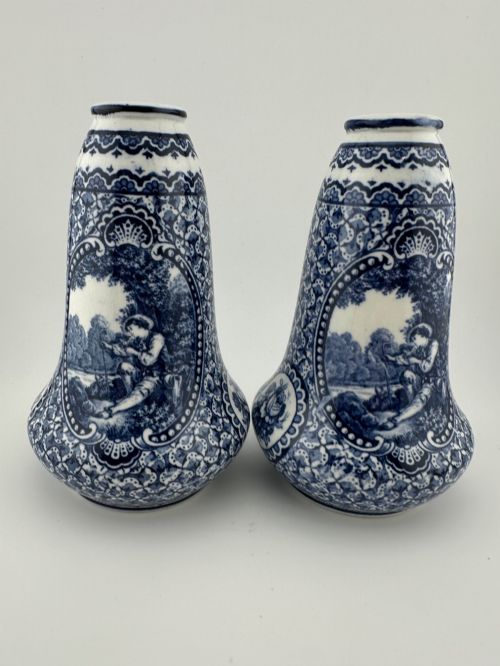
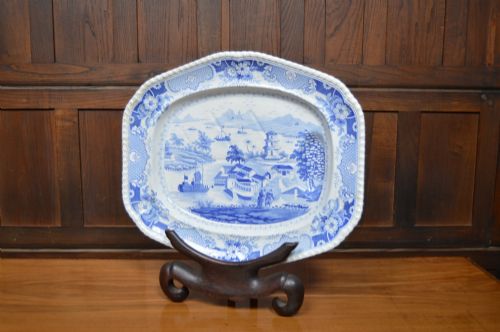
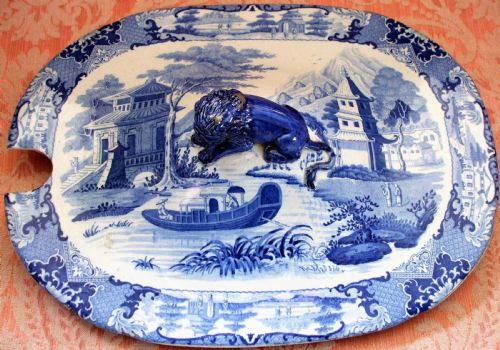
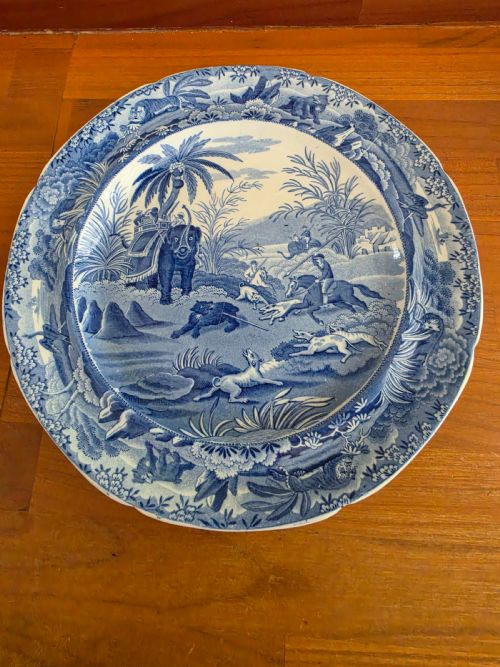
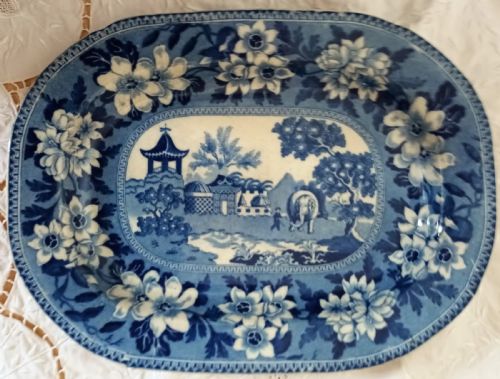
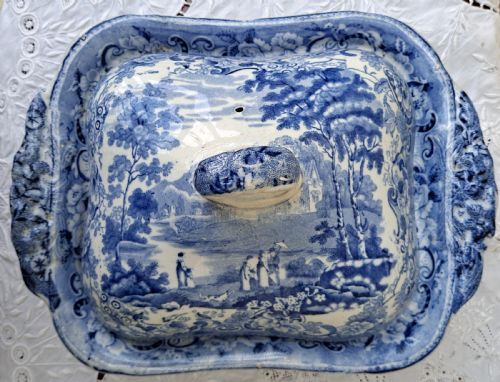
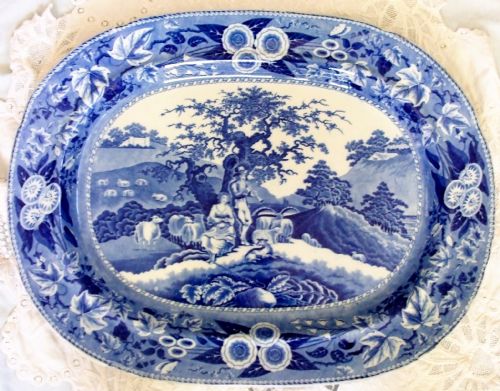
Blue white transferware pottery encompasses domestic and decorative items created primarily during the nineteenth century, spanning Georgian, Regency and Victorian periods. Buyers encounter serving platters, tureens, jugs, decorative plates and substantial footbaths bearing printed scenery.
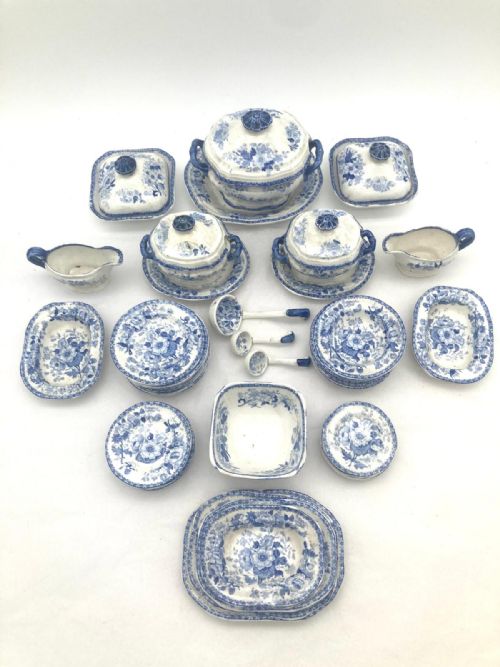
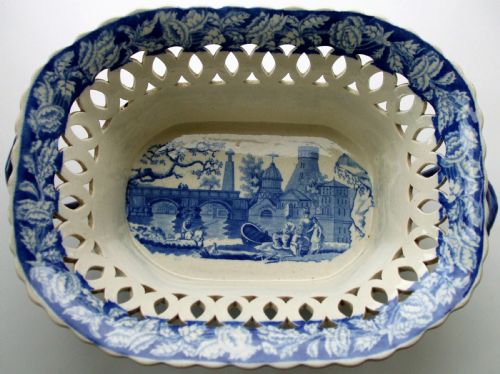
The objects derive largely from English potteries, utilising earthenware, pearlware and stoneware bodies. Pieces range from child's services and scale plates to large chestnut baskets and footbaths featuring intricate topographical or figurative subjects.
Materials and technique
Potters applied cobalt pigment onto tissue paper from engraved copper plates, transferring the inked design directly onto the ceramic biscuit before glazing. Subsequent firing fused the cobalt into the glaze, producing the characteristic blue and white imagery.
Makers utilised earthenware and pearlware bodies, occasionally finishing vessels with gilt accents or pairing them with silver plate mounts. Glaze formulations varied across potteries, creating soft pooling effects around printed outlines.
Listings feature 19th century earthenware and pearlware decorated with cobalt pigment, spanning Georgian, Regency and Victorian periods.
Assessment of standard
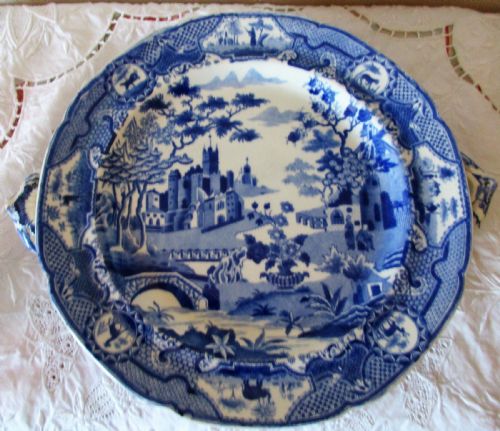
Quality rests upon the crispness of the transfer print and the depth of the cobalt pigment against the ceramic body. Finer examples maintain sharp registration without blurring, smudging or pooling of the ink across complex architectural or landscape motifs.
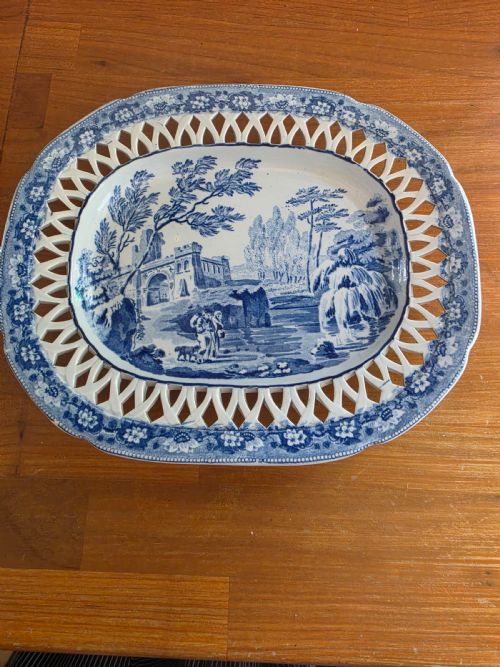
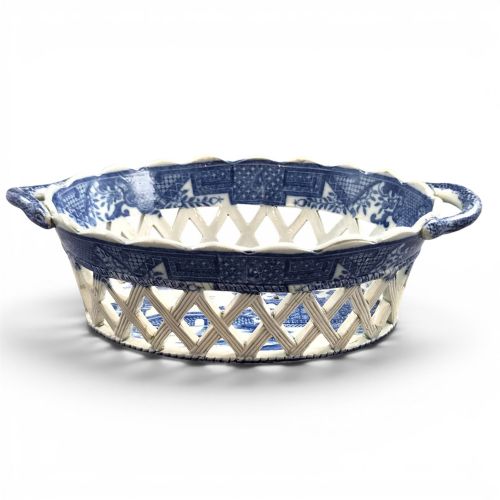
The ambition of the form dictates distinction, separating standard utility plates from reticulated chestnut baskets, pierced serving dishes and large footbaths. Potteries achieving superior engagement with copperplate engraving produced prints with distinct tonal gradations.
Davenport·Spode·Robert Hamilton·John Rogers & Son·James Wallace & Co·J. & R. Clews·J. & R. Riley·Stubbs·Mintons·Copeland·Ridgway·Doulton Burslem·Heathcote·John Ridgway
The Blue White Transferware Pottery Glossary
- Transferware
- Pottery decorated by printing an engraved design from a copper plate onto tissue paper, which was then transferred onto the unglazed ceramic body.
- Pearlware
- A refined earthenware body developed in the late eighteenth century, featuring a clear lead glaze with a faint bluish tint that pooled in recesses.
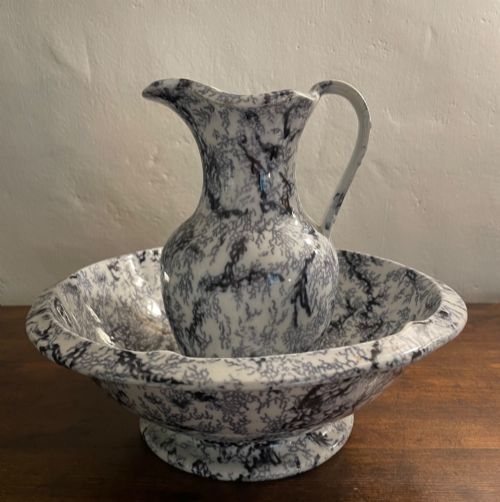
- Flow blue
- A style where the cobalt pigment intentionally bled into the surrounding glaze during the firing process, creating a hazy, atmospheric effect.
- Reticulated
- Having an openwork or net-like pattern formed by piercing the clay body before firing, often seen on chestnut baskets and serving dishes.
- Tureen
- A deep covered serving vessel used for soup, sauce or vegetables, frequently accompanied by matching platters and ladles.
Blue White Transferware Pottery: Frequently Asked Questions
How do I date blue and white transferware?
Dating relies upon factory marks, registry diamonds, ceramic body composition and the specific style of the transfer printed border. Comparing the pattern name against historical records often narrows the decade of production.
Changes from pearlware to heavier ironstone bodies across the nineteenth century also help establish a chronological window for unmarked vessels.
Can I use these platters and tureens for food?
Most antique pieces are suitable for serving dry foods, though crazing in the historical glaze can absorb liquids over time. Gentle hand washing preserves the underlying earthenware and prevents further staining.
Displaying larger platters and tureens on plate stands or tables protects the glaze from modern dishwasher detergents and thermal shock.
What is the difference between earthenware and pearlware?
Pearlware contains a higher proportion of flint and white clay, finished with a thin glaze containing a small amount of cobalt oxide. This formulation created a whiter surface designed to mimic Chinese porcelain.
Standard earthenware bodies of the period appear slightly warmer or buff in tone beneath the transparent lead glaze.
Why do some transfer prints look blurry?
Blurring often results from flow blue techniques, where manufacturers deliberately introduced volatile chlorides into the kiln atmosphere to make the cobalt bleed. In other instances, slight slipping during the tissue transfer process caused doubled or soft outlines.
Both intentional flow effects and accidental printing slips occur frequently across nineteenth century production.