
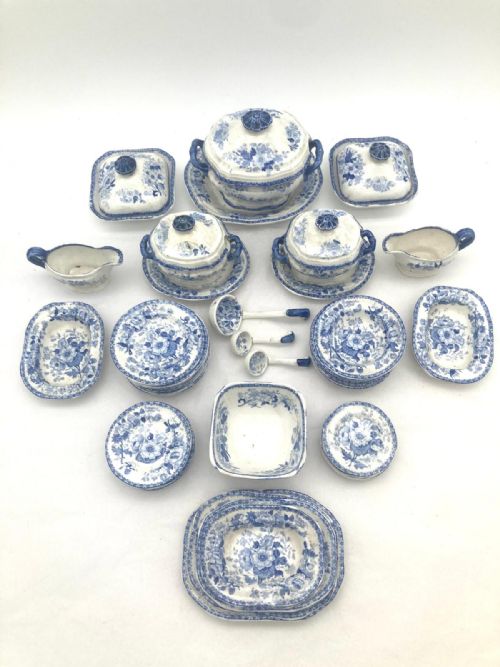


Blue White Porcelain Set
A blue white porcelain set brings the quiet restraint of cobalt decoration to the table, offering a timeless display of painted scenery or botanical patterns.
Blue White Porcelain Set
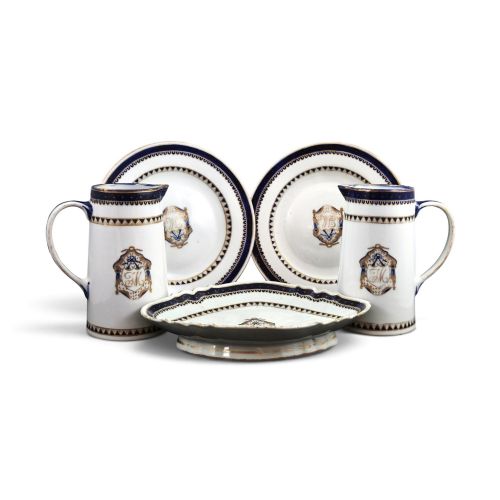
A blue white porcelain set encompasses everything from full dinner services and tea trios to washstand basins and miniature furnishings, spanning the eighteenth and nineteenth centuries. These groupings display the enduring appeal of cobalt pigment fired beneath a clear glaze on ceramic bodies.
The selections available here range from Chinese export porcelain and Dutch Delftware to English manufactories like Minton, Wedgwood, and Coalport. Tea services, toilet sets, and cabinet plates dominate the offerings, each providing a glimpse into period domestic life.
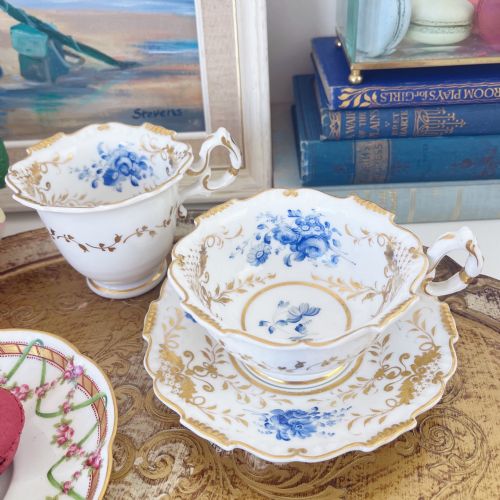
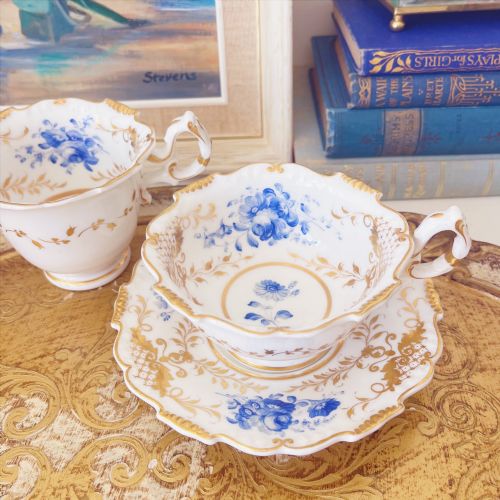
Buyers seeking a blue white porcelain set will encounter varied forms, including willow pattern plates, floral sheet transferware, and handpainted trios. The grouping reflects the changing tastes of the Georgian, Regency, and Victorian eras.
Materials and Manufacture
Potters built these pieces using refined clay bodies, bone china, earthenware, and hard-paste porcelain, often finished with glossy glazes that protected the underglaze cobalt decoration. Some iterations incorporated applied gilt, gold leaf, or brass mounts to elevate the finished appearance.
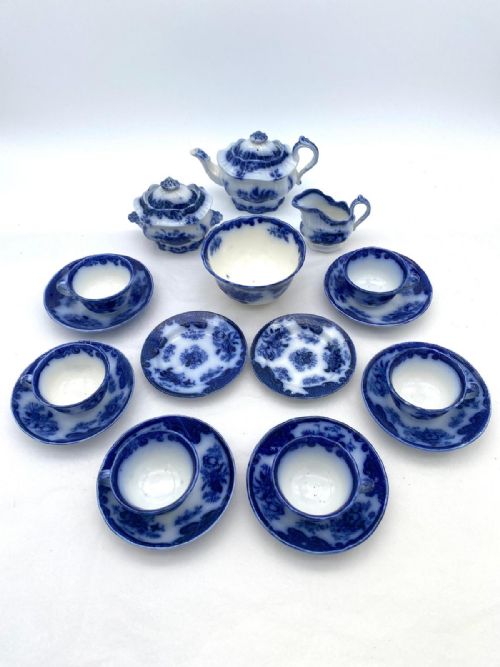
Decoration relied on handpainting or transfer printing, where engraved copper plates transferred intricate blue designs onto the ceramic surface before the final kiln firing. This dual method allowed workshops to produce both delicate brushwork on tea bowls and bold all-over patterns on child services.
Several miniature furniture pieces in blue and white Delft remind us that eighteenth-century dolls enjoyed very refined tea parties indeed.
Distinctions in Quality
Quality rests in the crispness of the cobalt transfer or the precision of the handpainted brushwork, alongside the translucency and thinness of the porcelain body. Early pieces often show greater refinement in the throwing and shaping of handles and rims.
The sophistication of the palette and the complexity of the pattern distinguish standard domestic wares from exhibition pieces produced by notable factories. Complete matching sets with uniform glaze tone command greater attention than assembled groupings.
H & R Daniel·Minton·Coalport·Doulton Burslem·Ridgway·Wedgwood·Copeland
The Blue White Porcelain Set Glossary
- Flow blue
- A Staffordshire transfer-printed earthenware style from the nineteenth century where the cobalt pigment intentionally bled into the surrounding glaze during firing, creating a soft, hazy outline.
- Underglaze
- A decoration technique applied directly to the raw ceramic body before the application of a transparent glaze and subsequent high-temperature firing, ensuring the pigment remains sealed forever.
- Transferware
- A method of decorating ceramics by pulling an inked impression from an engraved copper plate onto tissue paper, which was then pressed onto the biscuit ware before glazing.
- Hard-paste porcelain
- A true ceramic composition of kaolin and petuntse fired at extremely high temperatures to produce a dense, vitrified body that resists scratching and absorbs no moisture.
- Chinoiserie
- European artistic interpretations of Chinese decorative motifs, frequently featuring imaginary landscapes, pagodas, and figures executed in blue pigment on white ceramic grounds.
- Biscuit
- Unglazed ceramic ware that has undergone its initial firing in the kiln, leaving a porous matte surface ready for painting or glazing.
Blue White Porcelain Set: Frequently Asked Questions
How do I date a blue white porcelain set?
Dating relies on identifying factory backstamps, shape characteristics, and the chemical composition of the ceramic body. Stylistic shifts between eighteenth-century handpainting and nineteenth-century transfer printing provide further chronological markers.
Examining the glaze pooling and wear patterns on the foot rim also helps confirm the manufacturing era of the set.
Were these sets used daily or kept for display?
Many dinner and tea services served functional roles in period households, while delicate cabinet pieces and miniature sets were often intended for decorative display or children. The presence of utensil marks usually indicates active service at the table.
Robust ironstone and earthenware sets saw heavy everyday use, whereas fine porcelain trios were handled with greater care.
How should I care for antique blue and white ceramics?
Wash pieces gently by hand in lukewarm water using a mild detergent, avoiding automatic dishwashers and harsh abrasive sponges. Sudden temperature changes can stress old glaze and cause historic hair cracks to worsen.
Store items with adequate padding between stacked plates to protect delicate rims from chipping.