


Blue White Ironstone Ceramic
Blue white ironstone ceramic pieces are robust, heavily potted tableware and display items bearing transfer-printed blue decoration, prized for durability and bold design.
Blue White Ironstone Ceramic
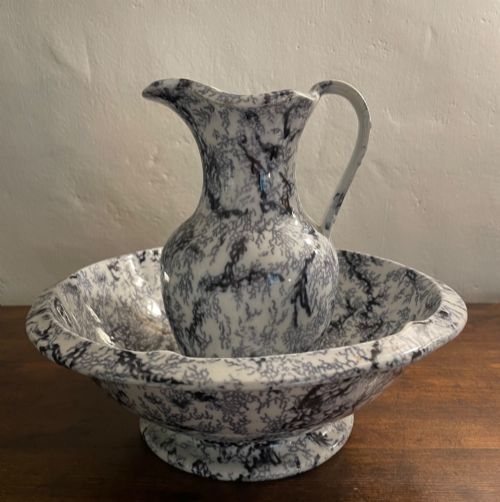
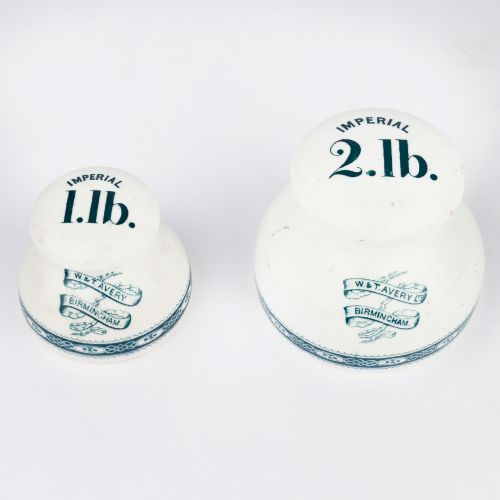
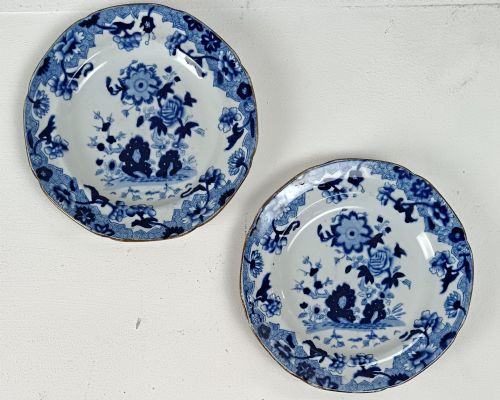
These blue white ironstone ceramic items encompass large serving platters, meat dishes, tureens with ladles, jugs, basins, vases, and scale plates spanning the Georgian, Regency, and Victorian periods.
Buyers encountering this group will frequently find robust Mason's ironstone vessels alongside transfer-printed earthenwares and stoneware plates produced across the nineteenth century.
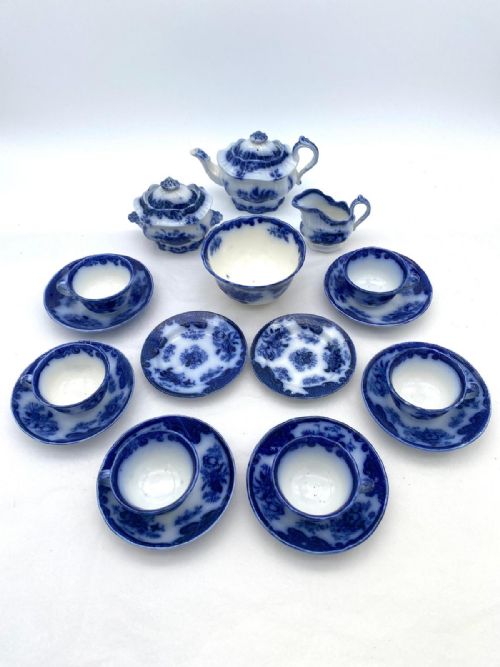
Domestic service ware and table articles dominate the selection, ranging from everyday country house meat platters to decorative tea services and pot pourri jars.
Assessing the Pieces
Quality rests upon the crispness of the blue transfer print and the balance of the overall design, distinguishing finely detailed patterns from blurred or heavily applied impressions.
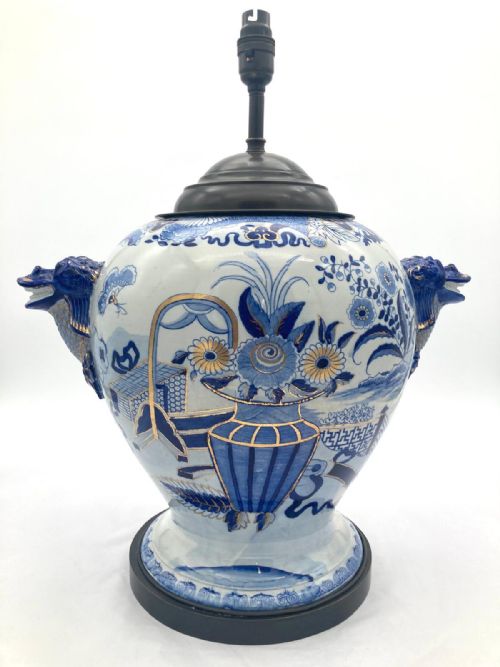
The crispness of moulded relief details on ironstone bodies and the preservation of secondary embellishments such as gilding or enamel highlights dictate the desirability of individual items.
Several heavy ironstone items started life serving grand dinners before finding new leases of life as converted lamps or household scale weights.
Spode·Copeland·Hicks and Meigh·John Ridgway·Masons Ironstone·W and T Avery·Day and Millward·Minton
The Blue White Ironstone Ceramic Glossary
- Ironstone
- A dense, heavy ceramic body patented in the nineteenth century for its durability and resistance to chipping. It served as a robust alternative to porcelain.
- Transfer Print
- A method of applying intricate designs to ceramics by engraving a copper plate, pulling the image on tissue paper, and pressing it onto the biscuitware. This technique allowed for repeatable blue patterns.
- Well and Tree
- A serving platter featuring a channelled moat and a central depression designed to collect meat juices during carving. It is typically found on large nineteenth-century dining tables.
- Platter Drainer
- A ceramic insert pierced with holes, placed inside a meat dish to keep joints elevated above accumulated juices. They often feature matching blue and white transfer patterns.
- Flow Blue
- A nineteenth-century ceramic style where cobalt blue transfer printing deliberately bled into the surrounding white glaze during firing. This produced a misty, soft-edged effect.
Blue White Ironstone Ceramic: Frequently Asked Questions
What is blue white ironstone ceramic?
It is a heavy, durable earthenware developed in the nineteenth century, finished with cobalt blue transfer-printed designs depicting floral, architectural, or exotic scenes.
The material bridges the gap between everyday pottery and fine porcelain, offering high resistance to breakage alongside decorative appeal.
How were meat platters used?
Large platters and well-and-tree dishes served joints of meat at the dining table, often paired with drainers to manage carving juices.
Deep tureens kept accompanying sauces warm, forming central components of grand nineteenth-century dining services.
How do I identify Victorian pieces?
Victorian examples frequently display registration marks, specific pattern names, or factory stamps relating to makers active during the nineteenth century.
Stylistic cues such as dense Chinoiserie motifs, flow blue glazing, and robust ironstone moulding also point directly to this era.
Can I use these items daily?
While originally designed for heavy domestic service, surviving antique pieces are best treated with care to preserve their glazes and hand-applied details.
Hand washing ensures that transfer prints, enamels, and any gilding remain undamaged over time.