


Blue White Earthenware Tureen
These blue white earthenware tureen pieces bring transfer-printed scenes and durable ceramic service to the table from Georgian and Victorian workshops.
Blue White Earthenware Tureen
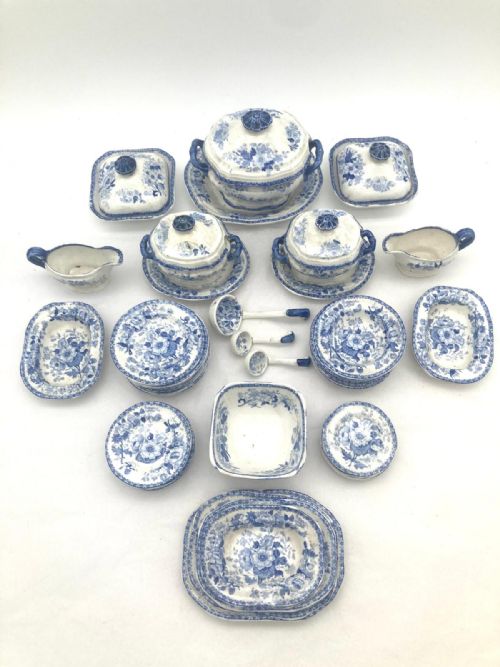
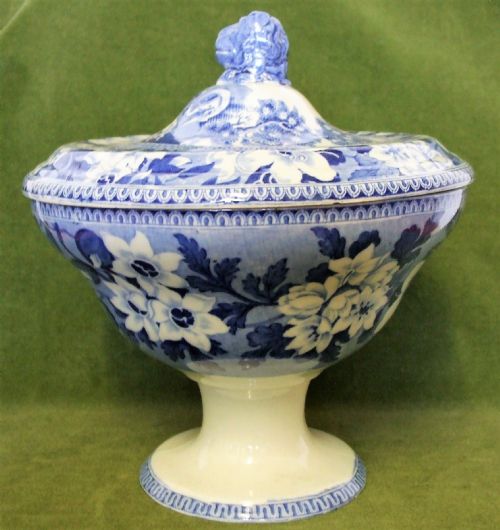
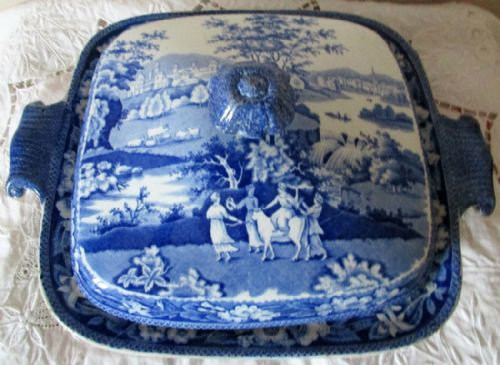
A blue white earthenware tureen is a serving vessel designed for soup, vegetables or sauce, accompanied in some instances by matching covers, stands or ladles. These pieces appear primarily across Georgian and Victorian periods, taking forms from large vegetable tureens down to miniature dinner services and child's services.
How they were made
Potters shaped these vessels from earthenware and pearlware, applying designs through blue and white transfer printing using cobalt oxide. A lead glaze or standard glaze sealed the ceramic body, creating the smooth surface typical of nineteenth-century production.
Transfer printing allowed workshops to apply detailed pictorial scenes consistently across different vessel shapes. Artisans fired the printed pottery to set the cobalt pigment beneath or within the glaze.
Listings feature earthenware and pearlware bodies decorated with cobalt oxide transfer prints across the Georgian and Victorian periods.
What varies in quality
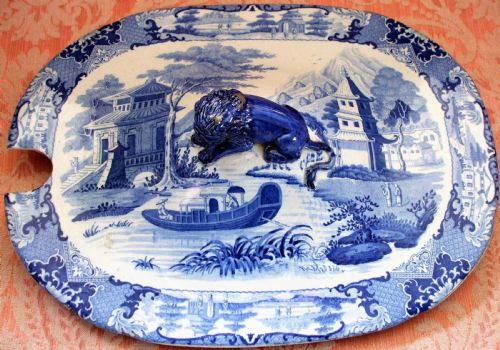
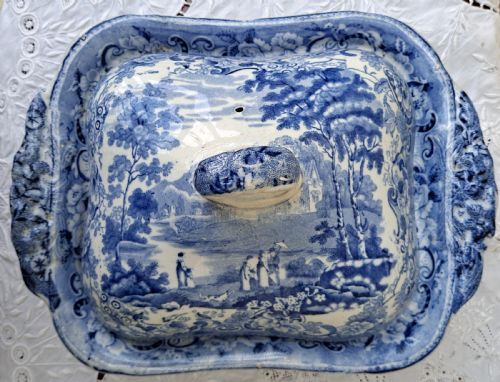
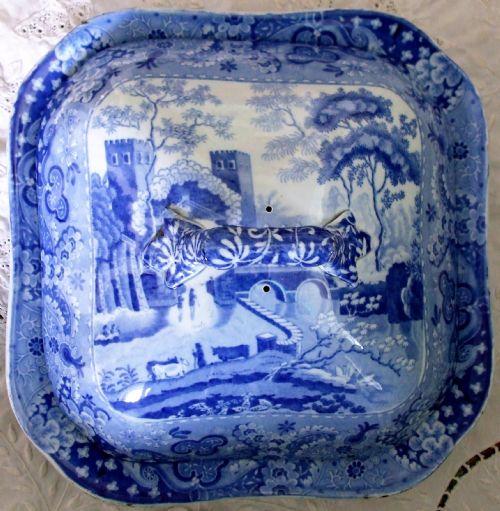
The clarity of the transfer print defines the visual strength of a piece, distinguishing sharp pictorial detail from blurred or smudged applications. The crispness of moulded elements, such as lion head covers or handles, separates standard production from finer work.
Completeness alters the character of these items, as surviving sets retaining original covers, stands, or matching ladles represent more complete examples of historical table service.
Robert Hamilton·James Wallace & Co·J & R Clews·John Rogers & Son·John and Richard Riley·Ridgway·Doulton Burslem·Wedgwood·Spode·Copeland and Garrett
The Blue White Earthenware Tureen Glossary
- Earthenware
- Porous pottery fired at lower temperatures than stoneware or porcelain, requiring a glaze to achieve impermeability. It forms the primary ceramic body for these vessels.
- Transfer printing
- A decoration technique where an engraved copper plate transfers a design onto tissue paper, which is then pressed onto the unfired or biscuit ceramic surface. This method enabled intricate pictorial patterns.
- Pearlware
- A refined form of earthenware developed in the late eighteenth century featuring a bluish-tinted glaze that pooled slightly in crevices to mimic Chinese porcelain. It appears frequently on Georgian pieces.
- Flow blue
- A style of cobalt transfer printing where vapours were introduced into the kiln during firing to intentionally blur the edges of the pattern. This created a soft, hazy effect across the ceramic surface.
- Cobalt oxide
- A metallic oxide used to produce the deep blue colour in underglaze transfer printing. It withstands high kiln temperatures without losing its distinct hue.
Blue White Earthenware Tureen: Frequently Asked Questions
What were tureens used for?
These covered vessels held soups, sauces, or vegetables at the dining table, keeping contents warm during meals.
Larger versions sat centrally for family service, while smaller sauce tureens accompanied specific platters.
How do I date a tureen?
Dating relies on ceramic bodies like pearlware, transfer pattern names, and backstamps or maker attributions from the nineteenth century.
Georgian and Victorian stylistic cues in handles and feet also help narrow the period of manufacture.
What is transfer printing?
Transfer printing is a method of applying engraved designs to ceramics using paper and copper plates.
This technique allowed factories to produce complex scenic patterns consistently across large dinner services.
Are child's services usable?
Child's services and miniature dinnerware were produced as smaller-scale functional items or display pieces during the nineteenth century.
They reflect full-sized dinnerware craftsmanship scaled down for domestic use or instruction.