


Blue White Earthenware Pitcher
A blue white earthenware pitcher carries centuries of cobalt decoration, offering practical utility and decorative presence in equal measure.

Blue White Earthenware Pitcher
When searching for a blue white earthenware pitcher, collectors encounter a diverse group of ceramic vessels spanning several centuries. These pieces range from small creamers and wash set ewers to large one-gallon jugs and specialised puzzle vessels.
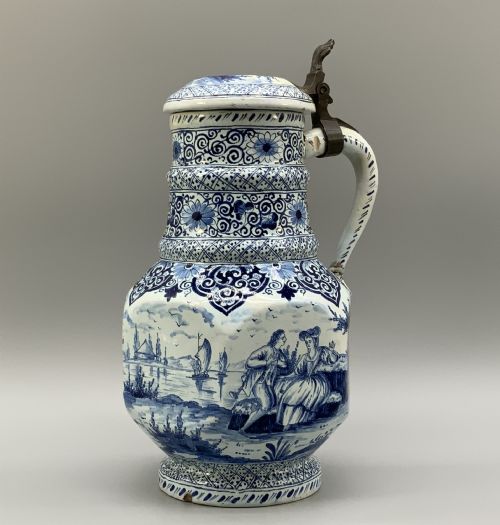
The selections on this page draw predominantly from 18th-century Dutch Delftware and 19th-century Staffordshire production, alongside pieces from Welsh potteries and factories like Minton and Doulton Lambeth. Forms vary from traditional pouring jugs to figural Toby jugs and botanical wash set components.
Originating largely from British and continental workshops, these items served everyday household functions, display purposes, and specific tasks like pharmacy dispensing or washstand ablutions. Their enduring appeal lies in the crisp contrast of blue pigment against white tin glaze or earthenware bodies.
How they were made
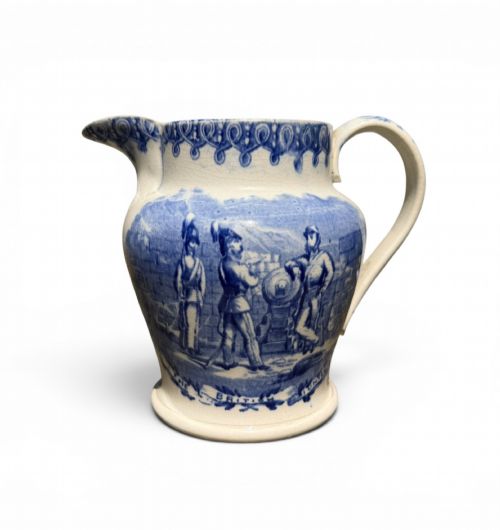
Potters shaped these vessels using earthenware clay bodies, applying tin glazes or standard ceramic glazes to create a smooth white background for decoration. Artisans then painted cobalt blue motifs directly onto the surface, often utilising floral, Chinoiserie, or transfer-printed patterns before firing.
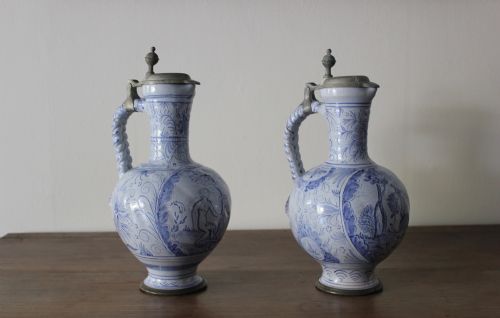
Certain Dutch and English examples integrated pewter lids or mounts onto the ceramic bodies, combining metalwork with earthenware construction. Manufacturing techniques evolved from hand-painted tin-glazed delftware towards industrial transfer printing and flow blue applications by the middle of the 19th century.
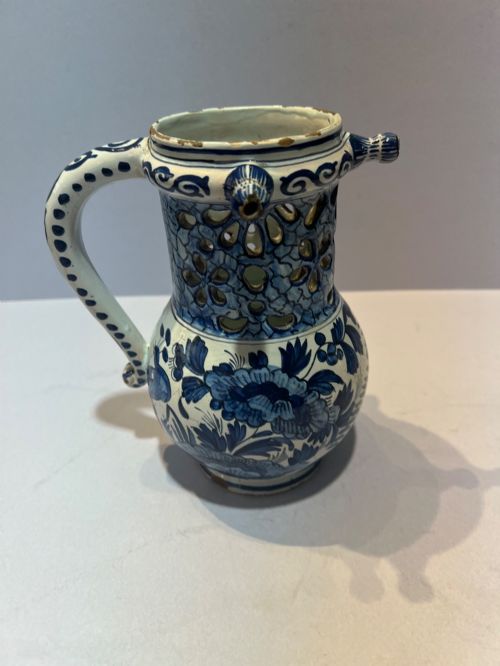
An 18th-century puzzle jug invites guests to solve a hidden drinking riddle before taking a sip.
What varies in quality
The distinction between standard domestic wares and top-tier pieces rests on the crispness of the cobalt painting, the depth of the glaze, and the sophistication of the form. Hand-painted Dutch delft and early Staffordshire items often display greater artistic expression through freehand brushwork and detailed pictorial scenes.
Maker attribution and survival of original elements, such as pewter lids or matched basin sets, elevate certain pitchers above utilitarian counterparts. The clarity of transfer-printed topographical or botanical patterns also signals superior output from established potteries.
Minton·Doulton Lambeth·Pieter Verburg·Dr Christopher Dresser·Spode
The Blue White Earthenware Pitcher Glossary
- Tin glaze
- An opaque white glaze containing tin oxide that provides a smooth surface for painted cobalt decoration. This technique defines traditional delftware production.
- Flow blue
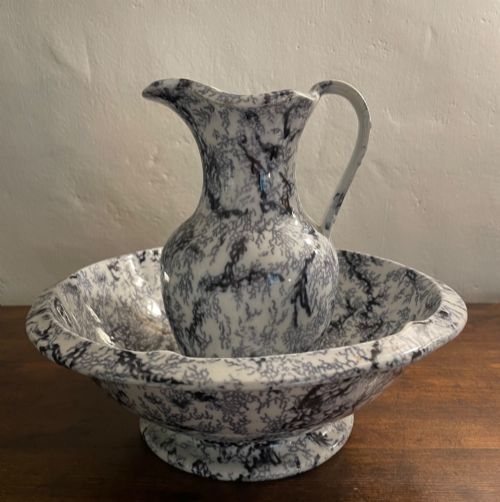
- A 19th-century transfer-printing method where lime or ammonia chloride was introduced during the kiln firing to intentionally blur the cobalt pigment. This created a distinctive misty, bleeding effect across the ceramic surface.
- Puzzle jug
- A hollow-rimmed vessel with perforated necks designed as a drinking challenge to spill liquid on the user if not imbibed correctly. These playful items date largely to the 18th century.
- Toby jug
- A pottery pitcher modelled as a stout, jovial person, typically seated and holding a mug of beer or a pipe. They appear frequently in 18th and 19th-century British ceramic traditions.
- Ewers
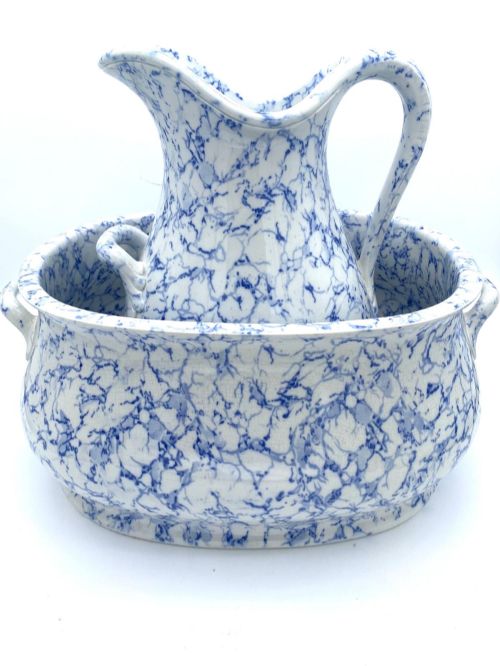
- Large pitcher-like vessels traditionally paired with basins for washing. They form central elements of antique wash set configurations.
Blue White Earthenware Pitcher: Frequently Asked Questions
How do I date a blue white earthenware pitcher?
Dating relies on stylistic markers, manufacturing techniques, and glaze types visible on the piece. Tin-glazed earthenware and hand-painted Chinoiserie motifs typically point to the 17th or 18th century.
Transfer-printed patterns, flow blue effects, and impressed factory marks generally indicate 19th-century production under Victorian or Georgian manufacturing standards.
Were these pitchers used for serving liquids?
Many examples served practical daily functions at the dining table for water, milk, or beer. Larger one-gallon capacities handled heavy domestic service.
Other variations, such as wash set ewers, pharmacy wet drug jars, and puzzle jugs, served specialised utilitarian or decorative roles within the home.
What is the difference between delftware and Staffordshire jugs?
Delftware typically utilises a porous earthenware body covered in a tin glaze, often featuring hand-painted blue floral or pictorial scenes originating from Dutch or English traditions. Staffordshire jugs frequently employ denser earthenware bodies decorated with transfer-printed historical scenes or flow blue patterns.
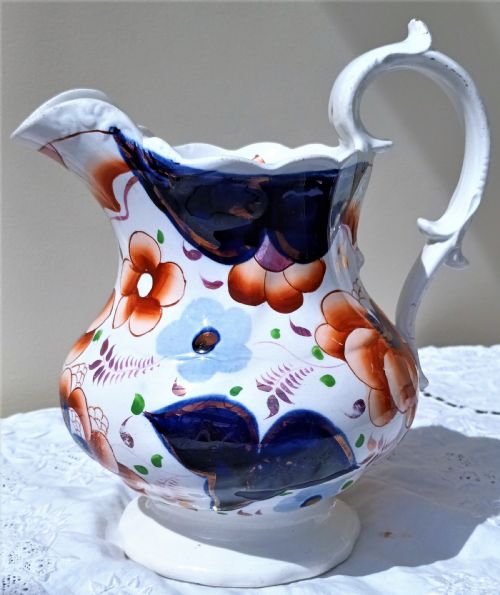
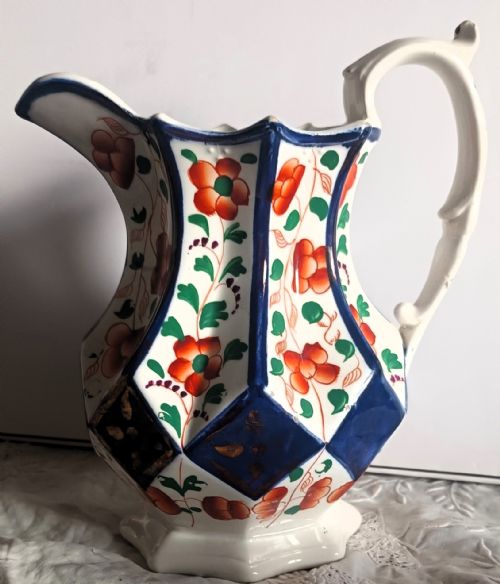
Staffordshire pieces also include distinct regional wares like Gaudy Welsh or figural Toby jugs.
How should I display an antique pitcher?
Displaying these pieces involves placing them on sturdy, level surfaces away from direct sunlight and heavy foot traffic. Open shelving or dedicated cabinet space allows the cobalt blue patterns and varied forms to be viewed clearly from multiple angles.
Avoid high-moisture areas to protect historical glaze surfaces over time.