


Blue White Ceramic Tableware
Blue white ceramic tableware brings cobalt scenes of castles, landscapes and figures straight to the dining table.
Blue White Ceramic Tableware
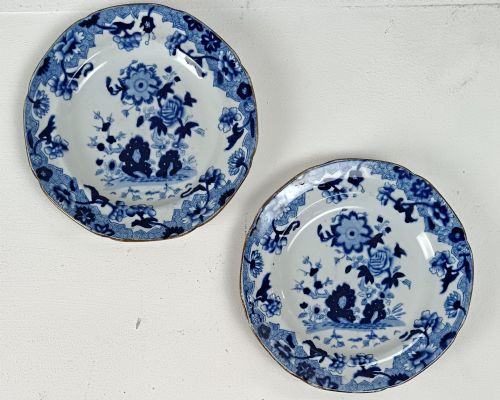
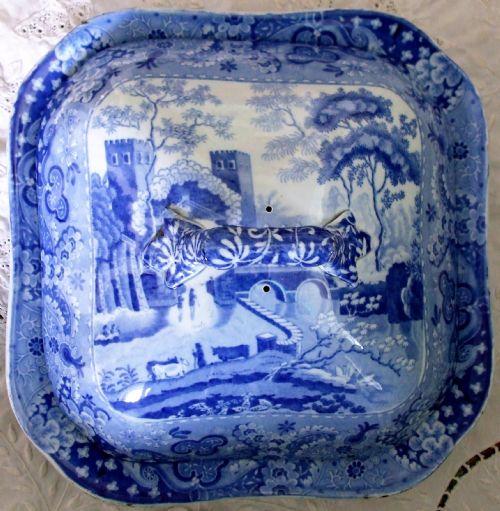
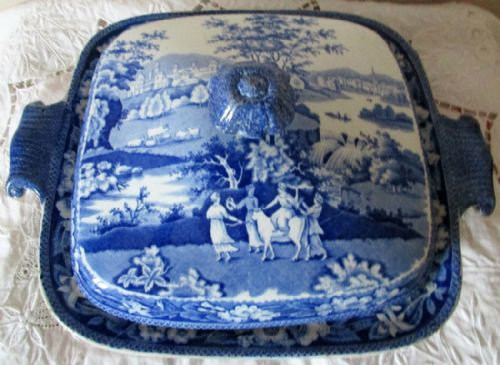
Blue white ceramic tableware encompasses everything from large serving platters and dinner services to delicate tea plates, tureens and individual sauceboats. The selection leans heavily towards 18th century and 19th century pieces, drawing on Georgian and Victorian production.
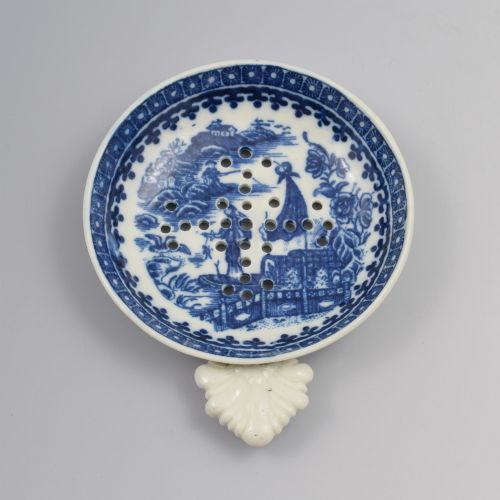
Buyers encounter transfer printed pottery alongside soft-paste porcelain and ironstone pieces. Forms range from utilitarian meat dishes with gravy wells to decorative supper sets and specialist items like egg drainers and custard sets.
Materials and methods
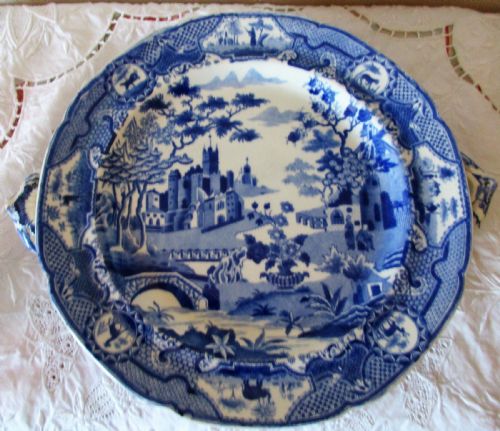
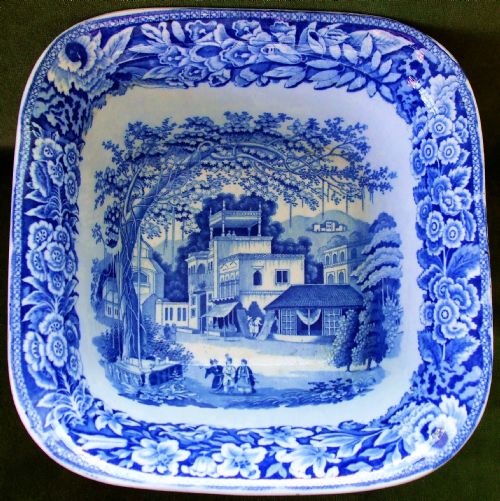
Potters relied on earthenware, pearlware, ironstone and porcelain bodies, applying cobalt glaze and enamel decoration before firing. Transfer printing allowed intricate patterns like Gothic Castle, Eastern Street Scene and Fisherman to be applied consistently to plates, bowls and tureens.
Early works from factories like Caughley, Bow and Worcester involved delicate soft-paste porcelain and hand-painted or transfer-printed scenes, whilst later Victorian production utilised robust earthenware and ironstone for durability.
A curious Imperial Russian butter dish takes the literal form of a bird, reminding us that breakfast once involved a menagerie.
Distinguishing quality
Quality rests upon the crispness of the transfer print and the purity of the white ceramic ground beneath the cobalt glaze. Finer examples maintain sharp registration in complex pictorial scenes without smudging or pooling in the wells of platters and tureens.
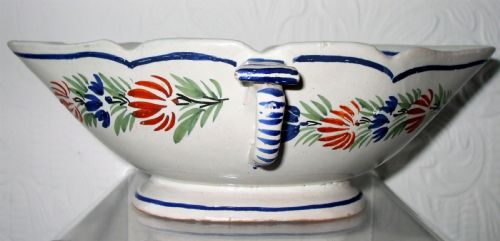
The sophistication of the modelling, particularly in sculptural forms like bird-form butter dishes, double sauceboats and lidded tureens with matching ladles, defines the upper tier of the range.
Spode·J. and R. Riley·Caughley·Worcester·Bow·Wedgwood·Copeland and Garrett·Ridgways
The Blue White Ceramic Tableware Glossary
- Transfer-print
- A method of decorating ceramics by transferring an engraved paper design coated in metallic oxide onto the biscuit or glazed surface. This technique enabled intricate narrative scenes to be mass-produced across dinner services.
- Pearlware
- A refined earthenware developed by Josiah Wedgwood featuring a faint bluish glaze that pooled in crevices to make the body appear whiter. It served as a popular transition between salt-glazed wares and later ironstone.
- Soft-paste porcelain
- A ceramic composition made from clay and ground glass or frit rather than hard-paste ingredients. It matured at lower temperatures and produced a warm, translucent body favoured by 18th-century factories.
- Tureen
- A large, deep vessel with a cover used for serving soups, sauces or vegetables at the table. Many examples include matching ladles and integral stands.
- Ironstone
- A heavy, durable type of earthenware patented in the 19th century to imitate porcelain. It resisted chipping and became standard for robust tableware and large meat platters.
Blue White Ceramic Tableware: Frequently Asked Questions
How do I care for antique ceramic tableware?
Wash antique ceramic pieces gently by hand using lukewarm water and mild detergent rather than placing them in a dishwasher. Avoid sudden temperature changes to protect the old glaze and body from thermal shock.
Store pieces securely with padded dividers between stacked plates to prevent rim chips. Display them out of direct sunlight to keep enamel colours stable over time.
Can I use these plates for everyday dining?
Many sturdy 19th-century earthenware and ironstone pieces remain robust enough for occasional modern use, though older soft-paste porcelain demands greater care. Consider reserving delicate 18th-century porcelain for display or very light service.
Inspect pieces for old hairline cracks before serving food, as historic glazes may absorb liquids through compromised surfaces. Gentle handling ensures these historic items survive for future generations.
What is the difference between a tureen and a sauceboat?
A tureen is a large, deep covered vessel designed to hold communal portions of soup, vegetables or sauces at the centre of the table. They frequently incorporate matching ladles and fixed or separate under-plates.
A sauceboat is a smaller, open vessel with a pouring spout and handle meant for individual sauces or gravies. Sauceboats often appear in pairs alongside matching meat platters.