


Antique English Transferware Set
These antique English transferware sets bring nineteenth-century scenes and patterns to the table, offering a complete service of plates, tureens, or tea wares for display or daily dining.
Antique English Transferware Set
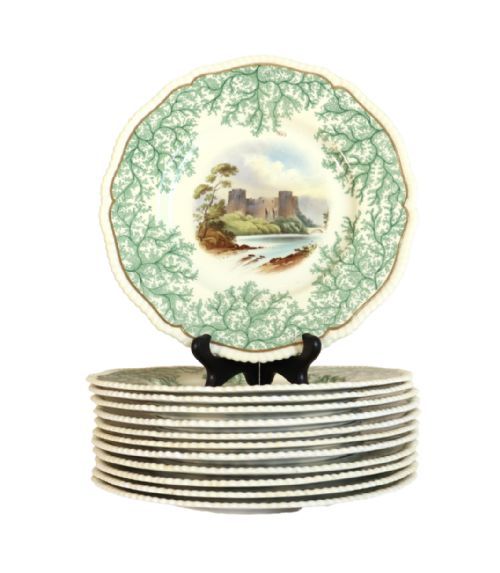
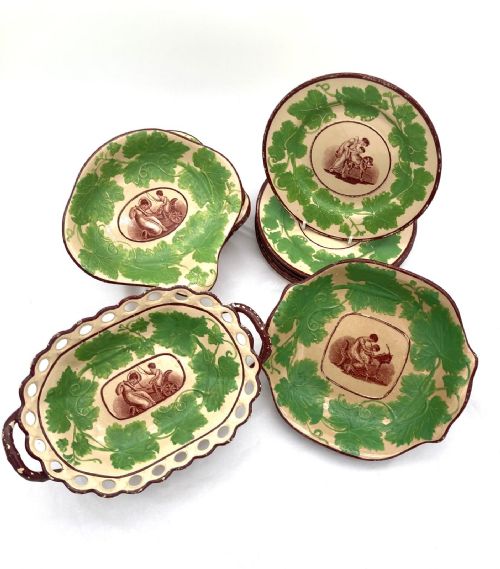
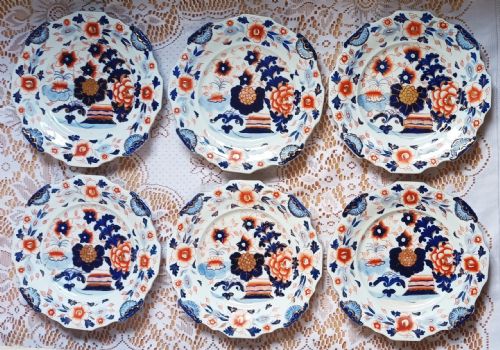
When you search for an antique English transferware set, you encounter complete services, dessert groups, and matched plates created across the nineteenth century. These groupings include dinner plates, supper set tureens, and tea bowls and saucers that preserve printed patterns beneath a glossy glaze.
The objects on this page span the Georgian, Victorian, and Edwardian eras, showing regional earthenware and ironstone bodies decorated with botanical, architectural, or exotic motifs. You meet large dessert services and smaller custard sets, each grouping held together by a consistent maker or pattern name.
How they were made
Potters formed these pieces using earthenware, creamware, and ironstone, shaping plates, bowls, and tureens before applying an absorbent ceramic glaze. Artisans then transferred engraved copperplate designs onto tissue paper and pressed them onto the damp or biscuit-fired clay bodies.
Many items received secondary hand-painting in enamel colours or touches of gilt over the printed outlines before entering the kiln for a final firing. This process fused the metallic oxides of the pattern into the glaze, creating durable surfaces designed for household service.
Listings feature earthenware, ironstone, and creamware ceramics spanning the Georgian, Victorian, and Edwardian periods.
What varies in quality
The distinction between a standard production and a finer service rests upon the crispness of the transfer engraving and the alignment of the pattern across complex vessel shapes. Superior sets maintain deep, clear lines without blurring or smudging where the paper joined the curved clay.
Quality also shows in the selection of the ceramic body, with heavier ironstone and refined creamware offering greater durability than porous earthenware. Additional hand-enamelling or gilt highlights applied over the glaze elevate the artistic ambition of the service.
Spode·Wedgwood·Sewell·Copeland Spode
The Antique English Transferware Set Glossary
- Transferware
- Pottery decorated by printing a design from an engraved copper plate onto tissue paper, which was then transferred onto the unglazed or bisque ceramic body.
- Ironstone
- A dense, durable type of earthenware patented in the nineteenth century, designed to resist chipping and mimic Chinese porcelain.
- Creamware
- A refined, pale yellow-glazed earthenware developed during the eighteenth century and continued into the nineteenth century.
- Tea bowl
- A handleless small cup used for drinking tea, frequently found alongside matching saucers in early nineteenth-century services.
Antique English Transferware Set: Frequently Asked Questions
What is an antique English transferware set?
An antique English transferware set comprises a matched group of ceramic tableware, such as dinner plates, dessert services, or tea bowls, decorated using nineteenth-century copperplate printing techniques.
These sets range from large dining collections featuring named topographical scenes to smaller tea and custard groupings produced during the Georgian and Victorian periods.
How do I care for transferware?
These ceramic pieces require gentle hand washing in warm water using mild soap to protect the nineteenth-century glaze and any delicate enamel or gilt highlights.
Avoid dishwashers, harsh abrasives, and soaking, as older earthenware and ironstone bodies can absorb moisture through tiny craze lines in the glaze.
Can I use these sets for dining?
Many collectors use their nineteenth-century sets for special occasions, though older earthenware and creamware require careful handling due to their age and historical nature.
Ironstone services offer a heavier, more resilient body for regular use, while delicate tea bowls and gilt-decorated dessert services are better suited for light service or display.
How are different periods identified?
Periods are identified through a combination of ceramic body composition, glaze characteristics, pattern styles, and factory marks stamped or printed on the reverse.
Early nineteenth-century pieces often feature refined creamware or pearlware bodies with hand-applied enamel details, while later Victorian and Edwardian services utilise denser ironstone and mechanical printing.