






Blue Vanity Box
When you search for a blue vanity box, you step into a collection of dressing table jars, compacts, and trinket cases defined by enamel, silver, and porcelain.
Blue Vanity Box
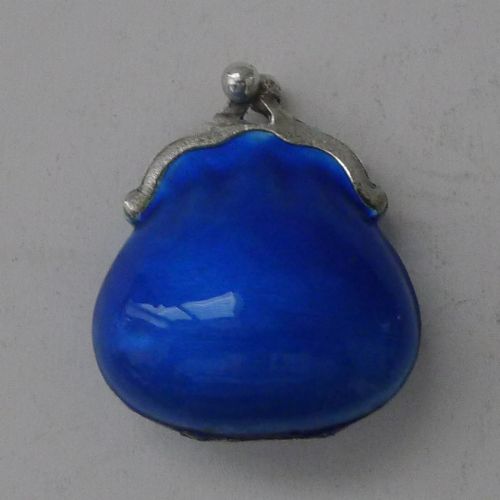
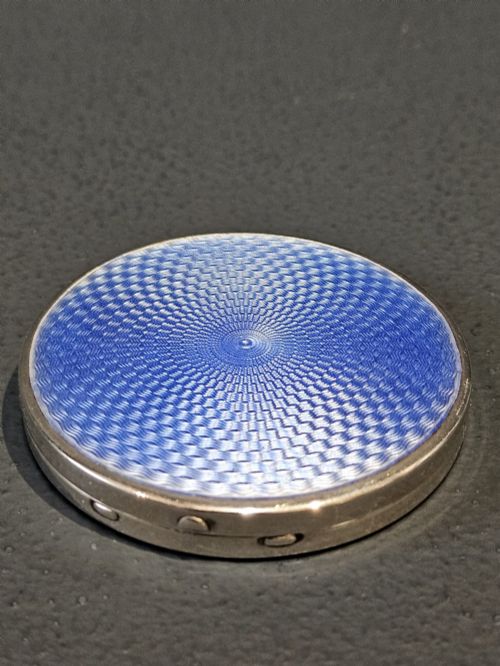
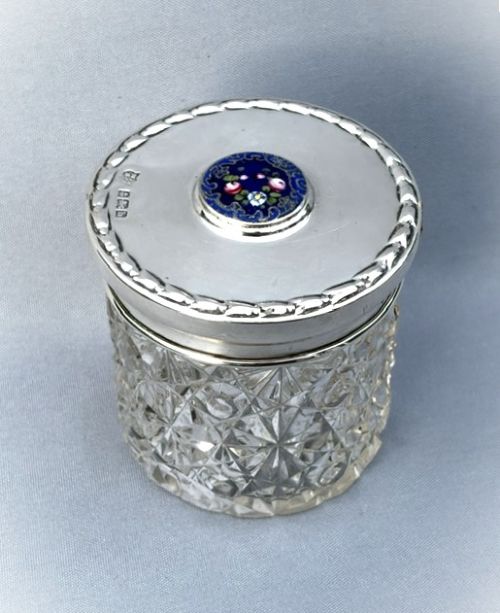
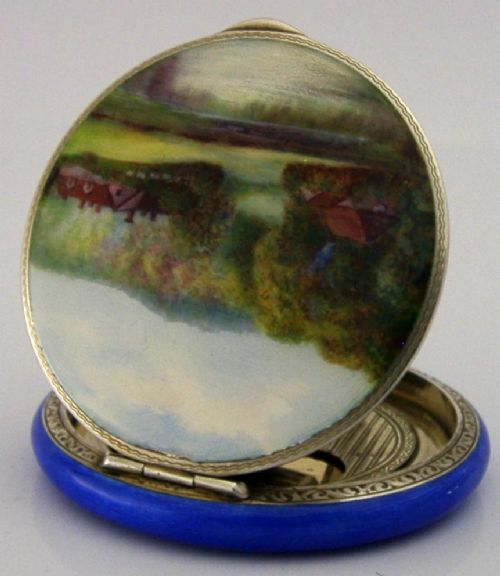
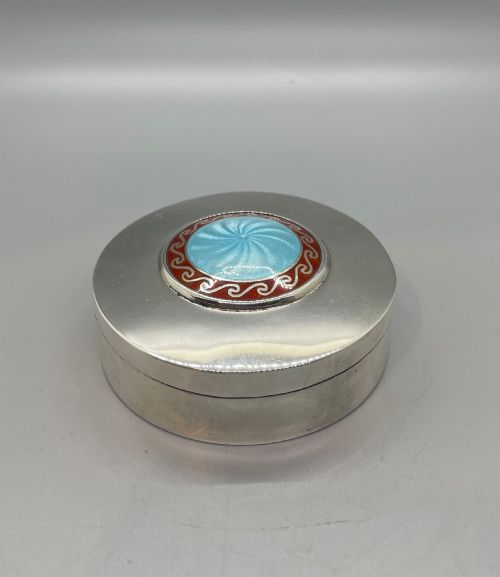
A blue vanity box encompasses a broad range of dressing table accessories, from Georgian enamel patch boxes to Art Deco powder jars and Victorian travelling cases. On this page, you are most likely to encounter compacts and lidded jars combining sterling silver with blue guilloche enamel, alongside French porcelain and Bristol glass vessels.
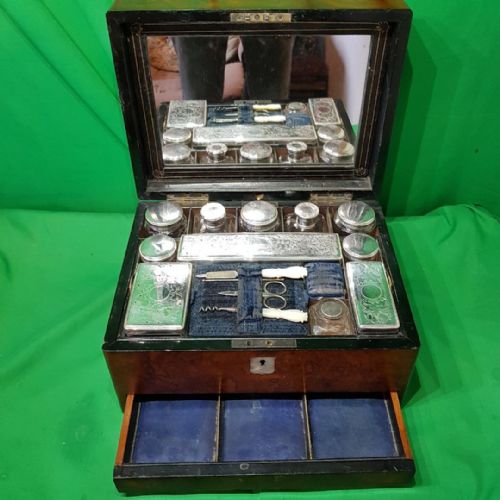
These items served to hold cosmetics, trinkets, and personal valuables on nineteenth and twentieth-century dressing tables. The form shifts from small pill pots to substantial burr walnut and mahogany fitted travelling boxes containing silver-topped jars.
The aesthetic bridges several eras, drawing on French Rococo revival motifs, Edwardian elegance, and geometric Art Deco designs. Blue enamel and cobalt glass dominate the colour palette across the selection.
How they were made
Makers combined sterling silver, brass, and precious metals with vitreous enamel, often applying engine-turned guilloche patterns beneath translucent blue coatings. Glass pieces utilise Bristol blue, cut glass, and moulded techniques, while ceramic and porcelain examples receive hand-painted or gilt detailing.
Wooden travelling cases employ burr walnut, mahogany, rosewood, and kingwood veneers over solid carcases, fitted with internal compartments and velvet or suede linings. Metal compacts incorporate mesh, while enamel patch boxes utilise copper bases with fused glass glazes.
Blue Vanity Box Retail Price Guide 2026
Typical asking prices for blue vanity box among the pieces listed under this phrase on Sellingantiques today, from the lower quarter to the upper quarter. They describe what is for sale here now, not the wider market.
Materials documented across the items include sterling silver, burr walnut, Sevres porcelain, Bristol blue glass, and enamel.
What varies in quality
The standard of execution rests on the precision of the guilloche engraving beneath the enamel and the crispness of the silver hallmarking. Intact enamel free from chipping or restoration distinguishes superior pieces from those with surface damage.
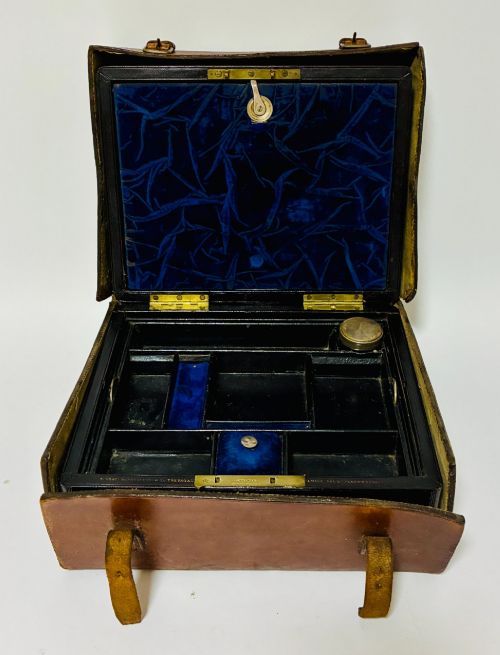
In wooden dressing cases, quality is measured by the preservation of original leather boxes, the completeness of internal silver-lidded jars, and the richness of the burl veneers. Hand-painted ceramic pieces depend on the delicacy of the brushwork and the preservation of gilt detailing.
Henry Clifford Davis·Henry Matthews·Rene Lalique·Giuliano Spinelli
The Blue Vanity Box Glossary
- Guilloche
- A decorative engraving technique where a precise, intricate repeating pattern is mechanically etched into metal before a translucent enamel layer is applied.
- Patch box
- A small container used in the eighteenth and nineteenth centuries to hold cosmetic silk patches worn on the face.
- Compact
- A small metal case containing a mirror and pressed powder, highly popular during the Art Deco period.
- Bristol glass
- A distinctive type of glass produced in Bristol, known particularly for its vibrant cobalt blue coloration.
- Trinket box
- A small lidded receptacle designed for storing rings, brooches, and other small personal jewellery.
Blue Vanity Box: Frequently Asked Questions
What is a blue vanity box used for?
These boxes held face powder, cosmetics, pins, and small pieces of jewellery on dressing tables or during travel.
Today, they serve as decorative display items and practical containers for modern trinkets.
How do I date a silver and enamel box?
Silver components carry hallmarks indicating the assay office, standard mark, and date letter for the year of manufacture.
Stylistic indicators such as geometric guilloche patterns also point clearly to the 1920s and 1930s Art Deco era.
What materials are common in these boxes?
Sterling silver, enamel, cut glass, and porcelain appear frequently alongside brass and various wood veneers.
Interiors often feature velvet, suede, or silk linings to protect delicate items.
Are French and English boxes different?
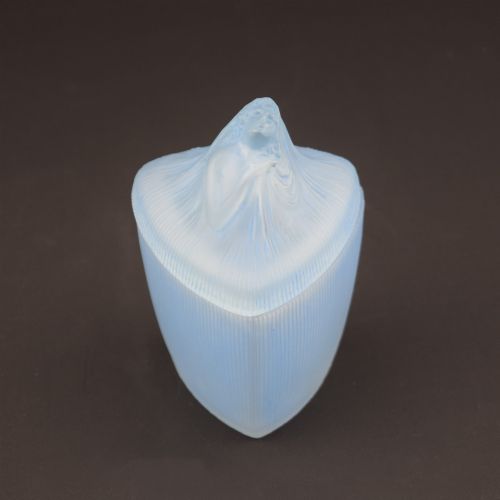
French pieces often showcase hand-painted porcelain or Sevres elements and delicate glass from makers like Lalique and Clichy.
English examples lean heavily toward hallmarked sterling silver mounts combined with engine-turned blue enamel.