

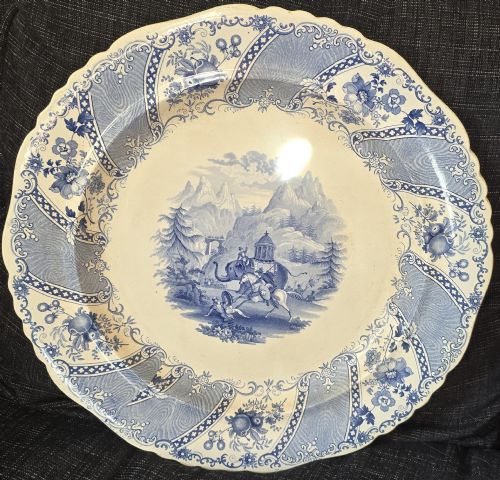
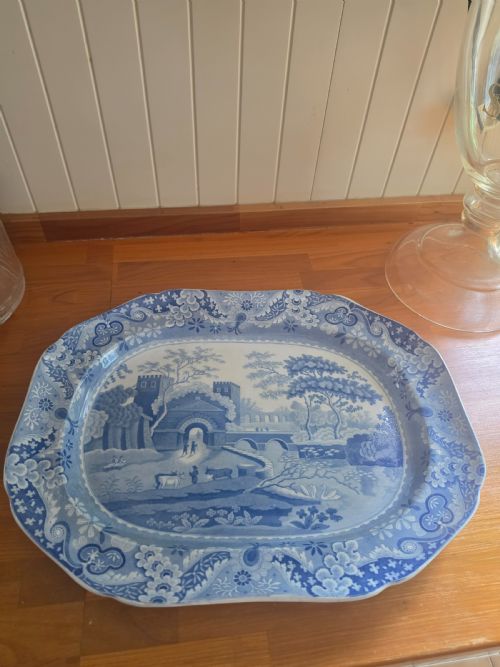
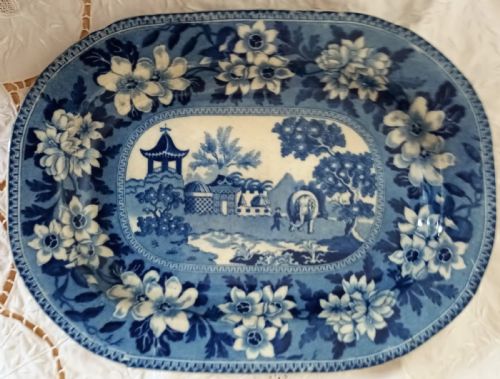
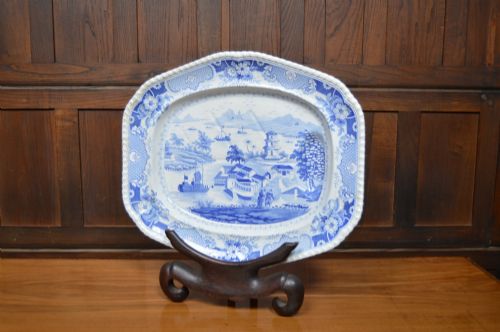

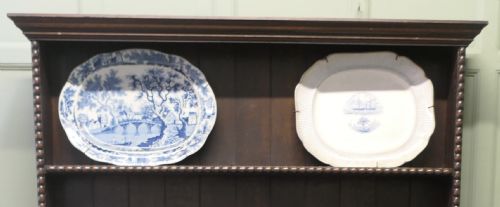


Blue Transferware Charger
Blue transferware chargers are large ceramic serving pieces decorated with printed cobalt scenes, offering a striking display of nineteenth-century pottery skill.
Blue Transferware Charger
A blue transferware charger is a substantial serving platter or decorative plate produced in earthenware, pearlware, or stone china during the nineteenth century. These large dishes functioned primarily as meat platters, serving plates, or grand wall-hanging chargers in domestic settings.
The pieces appearing on this page span the Georgian, Regency, and Victorian eras, alongside specific dates from the late eighteenth to the mid-nineteenth century. Design themes range from Chinoiserie landscapes and European architectural views to historical scenes such as Hannibal Passing the Alps.
Most examples originate from English potteries, including factories in Staffordshire and notable makers like Spode and Minton. Platters take various forms, from deep circular chargers to expansive rectangular meat dishes.
How they were made
Potters formed these chargers using ceramic bodies such as earthenware, pearlware, or stone china, which were then coated in a glaze. The distinctive blue decoration was applied using copperplate transfer printing, a technique where an engraved metal plate transferred ink onto tissue paper and subsequently onto the ceramic surface.
Following the transfer of the design, the pieces underwent kiln firing to fuse the cobalt oxide pigment beneath or within the glaze surface. This process allowed factories to produce intricate pictorial patterns consistently across large production runs of plates and dishes.
Blue Transferware Charger Retail Price Guide 2026
Typical asking prices for blue transferware charger among the pieces listed under this phrase on Sellingantiques today, from the lower quarter to the upper quarter. They describe what is for sale here now, not the wider market.
Listings feature 19th-century periods, including Georgian, Regency, and Victorian eras, alongside materials such as earthenware, pearlware, and stone china.
What varies in quality
Quality in these chargers rests upon the crispness of the transfer print and the complexity of the pictorial composition. Finer examples display sharp, detailed lines in complex series scenes, whereas simpler plates show softer impressions.
The weight and refinement of the ceramic body also differ, distinguishing standard earthenware meat plates from dense stone china chargers or early pearlware pieces.
William Smith And Co·Spode·John Rogers And Son·William Adam·Copeland And Garrett·Minton
The Blue Transferware Charger Glossary
- Transferware
- Pottery decorated by transferring a printed design from an engraved copper plate onto the ceramic body using tissue paper. This method allowed intricate pictorial scenes to be applied rapidly before glazing and firing.
- Charger
- A large decorative plate or serving dish used historically for grand table service or display. These pieces form the central focal point of a table or sideboard arrangement.
- Pearlware
- A refined type of earthenware developed by Josiah Wedgwood in the late eighteenth century, featuring a clear glaze with a faint bluish tint in the recesses. It served as a transitional body before the widespread adoption of harder white earthenware.
- Stone China
- A durable, heavy ceramic body introduced in the nineteenth century that combined traditional earthenware properties with the strength of porcelain. It provided a robust surface for large serving platters and meat dishes.
- Chinoiserie
- A European artistic style reflecting Chinese motifs and imaginary landscapes, frequently utilised in nineteenth-century ceramic decoration. These patterns depict pagodas, bridges, and figures in exotic gardens.
Blue Transferware Charger: Frequently Asked Questions
What were blue transferware chargers used for?
These large ceramic pieces served primarily as meat platters and serving dishes on dining tables during the Georgian and Victorian periods. Their generous proportions accommodated large joints of meat or served as decorative centerpieces in the dining room.
Over time, many of these chargers transitioned into display items, mounted on walls or dresser plate racks to showcase their intricate pictorial blue prints.
How do I date a blue transferware charger?
Dating relies on identifying the ceramic body, maker's marks, and stylistic characteristics recorded in the piece. Early examples from around 1780 often utilise pearlware bodies with blueish glazes, while mid-nineteenth-century items frequently employ heavier stone china or standard earthenware.
Pattern names and series titles associated with specific recorded makers also help narrow the production window to particular decades of the nineteenth century.
How should I display a charger safely?
Displaying these heavy ceramic dishes requires sturdy wall hangers specifically designed for large plates and platters. Ensure the weight distributes evenly across the rim without putting pressure on the transfer print or glaze.
When placing chargers on sideboards or plate stands, position them away from edge movement and direct foot traffic to prevent accidental knocks.
What is the difference between earthenware and stone china?
Earthenware is a porous, lower-fired ceramic body commonly used for everyday domestic plates and serving platters throughout the nineteenth century. It tends to be lighter in weight and softer in composition.
Stone china is a much denser, harder ceramic formulation developed to resist chipping and heavy wear during large-scale dining service, resulting in a heavier charger.